Category Archives: Italy

I Bersaglieri

I’ve been trying for years to capture a fanfara (band) of the Bersaglieri, and yesterday finally had my chance. Because I was commuting back home from Milan, the only equipment I had on me was my new Canon SD800IS digital camera, which I’d never tried for video before. Now I’ve learned the hard way not to use the zoom during video. But the sound quality is surprisingly good.

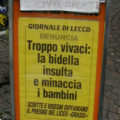
The occasion was a teaser for an exhibition of marching show bands held in Lecco last night, which we did not attend, nor did I stick around to record the interventi (speeches) by local politicians which always “grace” such occasions.

Note the military deployment of cellphone at the very end of the video!

Italy’s Amazing Summer Fruits

sculpture above done by Ross when she attended liceo artistico

Summer has arrived, and with it everyone’s favorite fruits – along with the desire to mangiare leggero (“eat light”) in the heat. At this time of year it’s not unusual to see mounds of cherries served as dessert, antipasto, or snack at parties and dinners. Juicy, sweet, bursting with flavor, all these need is a place to discard the pits and stems:

An Italian saying related to cherries (and applied to other things) is: una tira l’altra (“one pulls another”), as in: “I ate so many because they just kept coming out of the bowl, one after the other, their stems entangled…”

Have you ever seen more perfect plums? They come in many varieties and colors (blue, red, yellow, pink, purple), and all taste as good as they look:

If you’re visiting Italy in summer, here’s a restaurant tip: instead of dessert, order frutta di stagione (seasonal fruit). You may be asked what you want specifically, so here’s a little vocabulary:

  • pesche [PESS-kay] peaches
  • prugne [PROON-yay] plums
  • albicocche [al-bi-KOK-kay] apricots
  • ciliegie [chili-AY-JAY] cherries
  • pesche noci [PESS-kay NO-chee] nectarines
  • fichi [FEE-key] figs – these are often served as an antipasto, with prosciutto crudo – don’t miss it!
  • lamponi [lam-PONE-ee] raspberries
  • mirtilli [meer-TEEL-lee] blueberries

NB: Berries are known collectively as frutti di bosco (“forest fruits”). If you get a chance to eat fresh-picked wild blueberries (very occasionally available at restaurants and fruitsellers) do NOT pass it up. If you hike, keep your eyes peeled: you can find wild raspberries and blackberries free for the picking.

Peaches, plums, apricots, and cherries may be served floating in, or alongside, a large bowl of cold water. Dip the fruit in and swish it around to clean it, then eat! Many Italians peel their peaches with a knife before eating (often they are so ripe that the peel will slip away from the flesh with very little assistance), but you’re not obliged to – you’ll find that the skin is much thinner than you’re used to on American peaches.

Learn Italian in Song: Com’é Profondo il Mare

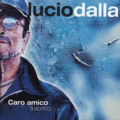
Lucio Dalla, 1978

Com’é Profondo il Mare

How Deep is the Sea

Siamo noi, siamo in tanti We are us, we are many
Ci nascondiamo di notte we hide ourselves at night
Per paura degli automobilisti for fear of the automobilists
Dei linotipisti Of the linotypists
Siamo gatti neri We are black cats
Siamo pessimisti we are pessimists
Siamo i cattivi pensieri we are the bad thoughts
Non abbiamo da mangiare We don’t have anything to eat
Com’è profondo il mare How deep is the sea
Babbo, che eri un gran cacciatore Dad, you who were a great hunter
Di quaglie e di fagiani of quail and pheasant
Caccia via queste mosche Chase away these flies
Che non mi fanno dormire that don’t let me sleep
Che mi fanno arrabbiare that make me angry
Com’è profondo il mare How deep is the sea
E’ inutile It’s useless
Non c’è più lavoro There’s no more work
Non c’è più decoro there’s no more decorum
Dio o chi per lui God, or someone in his place,
Sta cercando di dividerci is trying to divide us
Di farci del male to hurt us
Di farci annegare to drown us
Com’è profondo il mare How deep is the sea
Con la forza di un ricatto With the force of a ransom
L’uomo diventò qualcuno Man became someone
Resuscitò anche i morti He raised even the dead
Spalancò prigioni Opened wide prisons
Bloccò sei treni Blocked six trains
Con relativi vagoni with their respective cars
Innalzò per un attimo il povero He lifted the poor man for a moment
Ad un ruolo difficile da mantenere to a role difficult to maintain
Poi lo lasciò cadere Then let him fall
A piangere e a urlare to cry and scream
Solo in mezzo al mare alone in the midst of the sea
Com’è profondo il mare How deep is the sea.
Poi da solo l’urlo Then, by itself, the scream
Diventò un tamburo became a drum
E il povero come un lampo and the poor man like a lightning bolt
Nel cielo scuro In a dark sky
Cominciò una guerra began a war
Per conquistare to conquer
Quello scherzo di terra that joke of earth
Che il suo grande cuore which his great heart
Doveva coltivare should have cultivated
Com’è profondo il mare How deep is the sea
Ma la terra But the earth
Gli fu portata via was taken away from him
Compresa quella rimasta addosso including that which was still on him
Fu scaraventato he was flung
In un palazzo,in un fosso into a palace, into a pit
Non ricordo bene I don’t remember well
Poi una storia di catene Then a story of chains
Bastonate beatings
E chirurgia sperimentale and experimental surgery
Com’è profondo il mare How deep is the sea
Intanto un mistico In the meanwhile a mystic
Forse un’aviatore perhaps an aviator
Inventò la commozione Invented sympathy
E rimise d’accordo tutti And got everyone to agree again
I belli con i brutti The beautiful with the ugly
Con qualche danno per i brutti At some cost to the ugly
Che si videro consegnare Who saw themselves given
Un pezzo di specchio a piece of mirror
Così da potersi guardare so they could look at themselves
Com’è profondo il mare How deep is the sea
Frattanto i pesci In the meantime the fish
Dai quali discendiamo tutti from whom we are all descended
Assistettero curiosi looked on, curious,
Al dramma collettivo at the collective drama
Di questo mondo of this world
Che a loro indubbiamente Which to them undoubtedly
Doveva sembrar cattivo must have seemed wicked
E cominciarono a pensare And they began to think
Nel loro grande mare In their great sea
Com’è profondo il mare how deep is the sea
Nel loro grande mare In their great sea
Com’è profondo il mare how deep is the sea
E’ chiaro It’s clear
Che il pensiero dà fastidio that thought causes irritation
Anche se chi pensa Even if the one who thinks
E’ muto come un pesce is mute as a fish
Anzi è un pesce In fact, is a fish
E come pesce è difficile da bloccare And as a fish, is difficult to stop
Perchè lo protegge il mare because the sea protects him
Com’è profondo il mare How deep is the see
Certo Certainly
Chi comanda he who is in charge
Non è disposto a fare distinzioni poetiche is not disposed to make poetic distinctions
Il pensiero come l’oceano Thought, like the ocean
Non lo puoi bloccare you cannot block
Così stanno bruciando il mare So they are burning the sea
Così stanno uccidendo il mare so they are killing the sea
Così stanno umiliando il mare so they are humiliating the sea
Così stanno piegando il mare so they are bending the sea [to their will].
if you find this useful and want more, let me know!

Milan Cow Parade 2007

above: Pippi Longcow with a junior art critic – Piazza Castello

Street art didn’t fare so well in Milan. The newspapers reported that Milan set a record for the number of cows vandalized, particularly during the night that the AC Milan football club won the European championships for the seventh time. The poor cows were variously burned, thrown into a fountain, or simply taken away. They had been intended to be sold to raise money for charity. Alternative ways to raise this money are now being explored.

Here are a few I managed to salvage photographically.

metro station at Cairoli


La cow é mobile, qual pium al vento…


via Dante

Pandecena Milano June ’07 – In Which a Cunning Plot is Hatched

Famed Italian blogger Luca Conti (pictured at top right, showing off his Nokia to Sara Piperita) has pulled off what many bloggers dream of (and quite a few actually do, in other parts of the world): making a living by blogging. Or, at least, managing to get paid for various kinds of consulting (as a result of his blogging) while also running around the country blogging various interesting events he now gets invited to, plus other perks like fancy cellphones. The Italian PR world has figured out that bloggers are influential, and is courting them assiduously – or at least a small fraction of them. I am jealous that Luca’s job now includes boat trips on the Amalfi coast but, hey, it couldn’t happen to a nicer guy. (And I’ve got nothing to complain about: my own professional life is shaping up interestingly lately…)

Whenever Luca comes to town there’s a dinner (Pandecena), and these are excellent occasions for social and professional networking (aka lots of conversation with people I enjoy). This dinner was particularly well-populated because it had been scheduled for the night between the two days of a conference called Web 2.0 Oltre (Web 2.0 – Beyond) being held in Milan at which many of the “usual suspects” of the Italian blogosphere were panelists, speakers, etc. No one in the room had actually paid to attend the conference, for the excellent reason that it cost 1600 euros to do so!

I’ve been using Twitter lately (not today – stuck til I get my password fixed), which breeds an odd sense of familiarity with people I’ve barely met, and, having seen something day-to-day of how their minds work, it’s fun to then spend some face time. One such person at this event was Marco Formento, but the photos I got of him were scary…

I also enjoyed meeting Madga of Spotanatomy, a fun and insightful blog about advertising that has been referenced on this site before.

Quintarelli, Orban

^ A woman I didn’t meet, Emanuele Quintarelli, David Orban, and Marco Palazzo of DueSpaghi, an Italian social network about restaurants. The structure of the site is due to be translated soon, but that doesn’t help with the meat of the matter, the actual reviews. Translation is a thorny problem for websites. It’s so hard (and expensive) to do it well.

occhiali

^ Marco had fun with some PR stickers.

^ Thomas Christel, a Chicagoan now living in San Benedetto del Tronto, gets tagged by Lele. How one earth did he end up in San Benedetto, you may ask? (And I did.) The usual story: married into it. But he’s managed to keep a high-tech career going, in addition to running a B&B: Thomas is an executive for Yoo+, an online project management application now in beta testing.

^ I can never resist taking pictures of Fabrizio (Biccio) Ulisse – he’s so damned cute!

^ Emanuele and Luca Mascaro manhandling the spumante, courteously supplied by Reed Business.

I did have a bone to pick with Emanuele. He was (one of? chief?) organizer of the Web 2.0 Oltre conference, which somehow did not manage to feature EVEN ONE WOMAN speaker in two days of talks and panels. I had noticed (and been irritated by) this lack on the Web 2.0 Oltre site months ago, but didn’t know then who was responsible.

later – Emanuele tells me there were three women on the stage: Daniela Cerrato (who was in the original program and I must have overlooked her – my bad), Anna Masera (who was added after I saw the program), and a manager from Renault who spoke about that company’s recent push into Second Life.

I had had a battibecco* with Emanuele a few months ago in his own blog comments about the Italian Web 2.0 boys’ club he (and others) organized. He now came over to ask whether I was happy with the presenza femminile at this dinner.

I counted. Maybe ten women out of 40 people. Not great.

“Is that our fault?” he and David Orban asked.

No, not directly, obviously – anyone who wished could join this dinner. But the women aren’t coming to these events, and we need to figure out why. For starters, about that conference of yours…

Emanuele said something about not knowing any women who could have spoken.

“I’ve been online for 25 years,” I said. “And am now a Senior Web Producer for Sun Microsystems.” At which point he asked for my card.

I probably came off as bitter and aggressive in this exchange – a woman making her points strongly always risks being labelled a bitch. So be it.

I don’t believe that Emanuele (or Lele, who also recently had a restricted-invitation event to organize, and somehow ended up with very few women) is a chauvinist (or, as Italians would say, anti-feminist). But there’s a dangerous mindset in which, when you’re drawing up a list of influencers and experts to consult, invite, etc., somehow the people who come to your mind are all male. Women aren’t consciously excluded from your thinking, but… they don’t end up on your list either, do they? And that perpetuates a vicious cycle in which men are publicly identified as the experts, and women remain on the margins, waiting to be invited to the dance.

Well, I went to a school where anybody who wanted to, got out on the dance floor and danced – both literally and metaphorically. And I am by now too old and wise and bitchy to play the wallflower.

So, ladies, it’s time to do something about it. In October I will be hosting Web Women Weekend, at my home in Lecco. It will be an opportunity for girl geeks / technedonne / web women to get together, have fun, and figure out how we can support each other. (Invitation only, so, if you’re a woman in technology in Italy, let me hear from you.)

And that will be something to celebrate.

^ Coda: I took this picture just so we could start a nasty rumor that Luca only organizes these dinners because he makes money on them.
; ) – just kidding!

* battibecco – “a clash of beaks” – umm… birdfight?

What do you think? how do we get more visibility for women in technology in Italy?