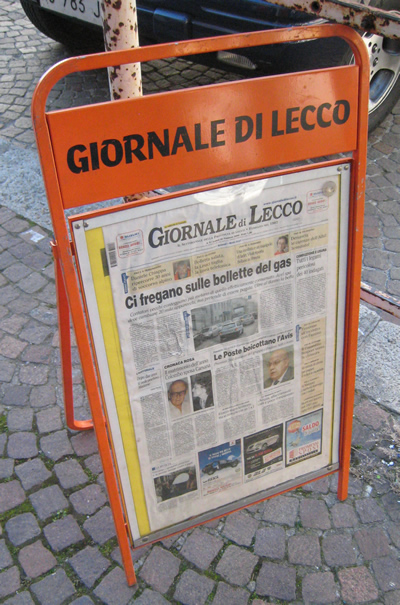
They cheat us [fregare] on the gas bills.
Tag Archives: Italian language

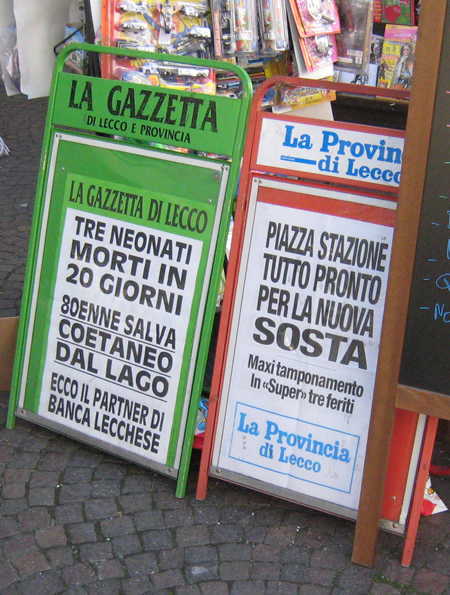
Everyday Italian: Newspaper Headlines 15
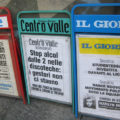
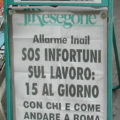
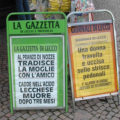
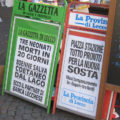
Three newborns dead in 20 days.
80 year old saves a peer [person of the same age] from the lake.
Here is the partner of the Lecchese bank.
Station plaza – all ready for the new parking.
Maxi fender-bender on the “superhighway” – three wounded.

Everyday Italian: Newspaper Headlines 14
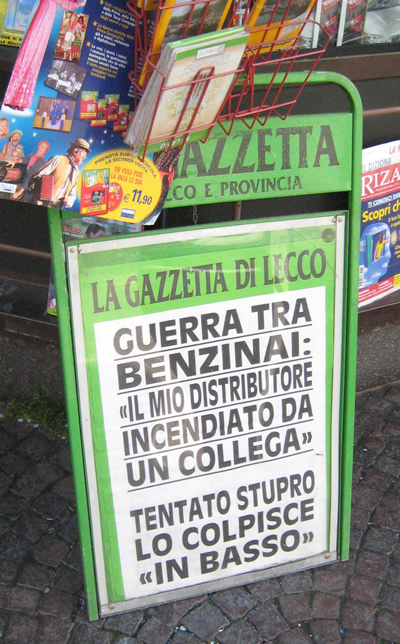
War between gas stations: “My distributor [gas pump] set on fire by a colleague.”
Attempted rape – she hits him “below the belt.” [Good for her!]
Learn Italian in Song: Tu Come Stai
|
|
|||||
|
by Zero Assoluto Nov 5, 2007 Keeley asked: "I’m going to Italy with my high school soon and would LOVE to be able to sing the songs that I may here on Deejay or MTV." Oh, dear. I don’t listen to the radio or watch TV at all, so without Ross in the house I don’t have any access to what’s new on the Italian music scene. But there’s always YouTube, and I rememberd that this summer Ross and every other young person in Lecco went to a free concert by Zero Assoluto. So here they are. |
|||||
| ritornello: | refrain: | ||||
| Tu come stai… | How are you? | ||||
| è successo cosa non so tu lo dirai | Something happened I don’t know [what], you won’t say | ||||
| fino a ieri andava tutto bene come mai? | Up to yesterday everything was fine, how on earth? | ||||
| dimmi cosa credi tu non sai | Tell me what you believe, you don’t know | ||||
| dimmi cosa credi tu non vuoi | Tell me what you believe, you don’t want to | ||||
| dimmi che sei sempre tu chi sei | Tell me that you’re always who you are | ||||
| dimmi adesso se ti va | Tell me now – if you want to. | ||||
| è passato un pò troppo di tempo | A little too much time has passed. | ||||
| come stai | How are you? | ||||
| troppo tempo che non sei quella che sai che vuoi | Too much time that you’re not the one who knows what you want | ||||
| forse c’è qualche cosa che non va | Maybe something’s wrong | ||||
| (dimmi cosa credi tu…) | (Tell me what you believe) | ||||
| forse non sai più che conta | Maybe you don’t know what counts anymore | ||||
| (che sei sempre tu) | (That you’re always you) | ||||
| quella che dice quello che pensa sempre | She who always says what she thinks | ||||
| quella che sa guardare nel fondo della gente | She who knows how to look deep into people | ||||
| (o parli chiaro o ti arrendi… | (either speak clearly or give up) | ||||
| dimmi cosa resterà…quello che senti?) | Tell me what will be left… what you feel? | ||||
| o ti confessi o ti tieni tutto dentro | Either confess or keep it all inside | ||||
| (dimmi adesso se ti va di perdere tempo) | (Tell me now, if you want to waste time.) | ||||
| che succede se ti chiamo non rispondi | What’s happening, if I call you don’t answer | ||||
| no, no, non vuoi uscire da giorni… | No, no, you haven’t wanted to go out for days | ||||
| se ti guardo ti volti | If I look at you, you turn away | ||||
| tu che se hai un problema lo risolvi | You, who if you have a problem you resolve it | ||||
| (che si fa?) | (What to do?) | ||||
| ora tu mi parli | Now you talk to me | ||||
| dei tuoi sentimenti spenti | About your extinguished feelings | ||||
| tutti quei momenti che fino a ieri mi sembravano presenti) | All those moments that up to yesterday seemed present to me | ||||
| o cerchi l’occasione dove questa situazione trovi conclusione | Either look for a chance where this situation can find a way to end | ||||
| (c’ho pensato pure troppo) | (I’ve thought about it even too much) | ||||
| dimmi allora che è così | Tell me then that this is how it is | ||||
| (dimmi che c’è sotto) | (Tell me what’s underneath) | ||||
| ah ah…hai provato a parlare lo stesso | Ah, ha, you tried to talk just the same | ||||
| (dimmi che non mi vuoi più) | (Tell me that you don’t want me anymore) | ||||
| dimmelo tu adesso | You tell me now. | ||||
| tutto è troppo semplice | Everything is too easy | ||||
| se non sai distinguere | if you can’t tell apart | ||||
| parlano dei tuoi silenzi | [others] speak of your silences | ||||
| dicono quello che pensi | they say that what you think | ||||
| contano di più | They count for more | ||||
| più di mille chiarimenti | more than a thousand clarifications | ||||
| ma se un giorno tu trovassi le parole | But if one day you were to find the words | ||||
| forse quel giorno capirò le tue paure | Maybe that day I would understand your fears | ||||
| ma adesso non riesco a non lasciarti | But now I can’t manage not to leave you | ||||
| (forse sto buttando tutto | (maybe I’m throwing away everything, | ||||
| non senza rimpianti) | not without regrets) | ||||
| cosa credi tu lo sai | What do you believe, you know | ||||
| dimmi cosa credi tu non vuoi | Tell me what you believe, you don’t want to | ||||
| dimmi che sei sempre tu chi sei | Tell me that you’re always who you are | ||||
| dimmi adesso se ti va | Tell me now – if you want to. | ||||

The Name Game: “Il Famoso…”
When my husband was young (and probably still today), Italians played a verbal game in which you made up a name for a fictional somebody of a particular nation. The name had to sound authentic to the nationality chosen, and, of course, it had to be funny.
For example:
Il famoso tuffatore giapponese: Sezoki Maspinto.
The famous Japanese high diver: [Se so chi m’ha spinto] – If I know [knew] who pushed me!
La famosa prostituta greca: Mika Teladogratis.
The famous Greek prostitute: I’m certainly not going to give it to you free! (Mica = not a chance, no way.)
La famosa prostituta del Far West: Calatemi Jeans.
The famous prostitute of the [American] West: Take down my jeans. (A pun on Calamity Jane.)
Il famoso motociclista giapponese: Tofuzo Lamoto.
The famous Japanese motorcyclist: T’ho fuso la moto – I melted your motorcycle [engine].
Il famoso investigatore rumeno: Ora Lipescu.
The famous Rumanian investigator: Now I’ll catch them (li pesco – literally "I’ll fish them").
La famosa prostituta russa: Vagina Seminova.
The famous Russian prostitute: Semi-New Vagina.
Il famoso tuffatore arabo: Momeyet.
The famous Arab diver: Mo’ me getto – (in Roman dialect) – Now I’ll throw myself [in].
Il famoso spedizioniere cinese: C’hon Furgon Cin.
The famous Chinese courier: C’ho un furgoncino = I have a little van!
Got one to add? Aggiungete i vostri!