Category Archives: bio

My Dad’s Death

I haven’t been good at long-form personal communication in the last few years, partly for lack of leisure, partly because, well, these years have been rough on many fronts (outline here). But this seems like a time when telling everybody everything at once will be more efficient, and perhaps easier on me.

My father, Al Straughan, had long been ill – although, as he often emphasized, not with anything that was likely to kill him soon. In spite of 50 years of smoking, no exercise, and a lifetime of being overweight, he had a healthy heart, and there’s no family history of cancer. The lungs… not so good. In the last three years he was in the hospital just about every month with a lung infection, and the doctors seemed unable to find a root cause, except a general diagnosis of COPD.

Several years ago they did a bronchoscopy to examine an obstruction in his lung, and found a pea that Dad must have accidentally aspirated some time before. If you’re a fan of House, you may recall an episode in which a patient coughed up part of a lung for exactly this reason. Dad’s bronchi were weakened or damaged as a result, so a stent was put in at that time. (I may be getting the details wrong because I was usually not geographically close, and such a lot happened that it was hard to keep track.)

Dad had been living in the UK for at least 15 years with his third wife, Ruth, who is British. They met in Jakarta around 1987 or ’88 – he was there on a contract job, she was working for the Hilton hotel chain as a trainer (Ruth, forgive me if I get these details wrong, too). They met at a party when Dad walked up to her and said: “For once, I’d like to dance with a woman I can look in the eye.” Ruth is 6′ tall, Dad was 6’3″.

They came together to my wedding to Enrico in 1989, and soon thereafter moved to Texas, then the Maldives, then “home” to the UK (though Ruth had been away as much as there: she’d lived in Hong Kong for 15 years, then Bali…). As it turned out, the UK, with its National Health System, was the best possible place for them. Though Dad never became a citizen nor even had time to contribute much to the national coffers, the NHS took excellent and expensive care of him. There were a few procedures they chose to pay for privately to shorten wait time when Dad was in pain, but the NHS did most of it, and bore most of the cost. I am deeply grateful for this, and wish we had a national health system here in the US – it’s a matter of social justice.

Dad’s other area of health troubles was arthritis. Being overweight and never having exercised routinely contributed to the degeneration of his bones and joints such as we all suffer as we get older. He had his first knee surgery to clean up damaged cartilage in 1982, and his first knee replacement far earlier than doctors usually like to do them: the artificial joint wears out and will eventually need to be replaced again, and this is major surgery. Over the years they replaced the other knee, had to do repair work on one or both at least once, and one of these surgeries resulted in Dad being in intensive care. He had other surgeries to try to alleviate pain that was being “referred” from his deteriorating spinal column all over his body. Recently they tried implanting electrodes in his spinal cord which he could activate using a device outside his body, to interrupt the pain signals before they reached his brain. Apparently these devices are hard to tune; it was never wholly successful in stopping the pain, which was at times so severe as to keep him confined to bed. He had been effectively disabled by pain for over 10 years.

For most of this time, I was living relatively nearby in Italy, and could get over for visits fairly often, especially once the era of low-cost airlines began (I am grateful to them, too). Those of us who have internationally-scattered families know the pains of being far away when a loved one needs us. There was one week in which my mother, in Iowa, was having a large tumor removed from her ovary, and Dad, in the UK, was having yet another major operation that could have landed him in intensive care again. I chose to stay in Europe in case Dad needed me. Mom was attended by her sister, and her tumor turned out to be benign, but she never forgave me for not being with her – one of the causes of our eventual estrangement.

In 2008 I moved to the US, and visits to Dad and Ruth became fewer. I stopped by on my way to India on my last major trip for Sun Microsystems in March, 2010, then did not travel overseas for over a year. I was finally able to see them again this June, when Joyent sent me to Italy, so I extended the trip a bit and popped up to the UK for a weekend.

I can’t say that the deterioration I saw in June was shocking; I had known most of what was going on with him (I assume), and could observe some for myself in the many phone calls during which he was coughing, quickly out of breath, or simply too tired for sustained conversation. But I was deeply saddened. Caring for him had become a full-time job for him and Ruth both. His world had shrunk to their small home, sometimes just the bedroom, and the TV. This seemed cruel for a man who had lived large, hard, and adventurously all over the world in his 72 years.

I was also concerned for Ruth, who had been his only caregiver in all this time. There was little I could do to help from Italy. Again, international divides complicate everything: neither Dad nor I was living in our passport country, and by the time I moved back to the US, he was uninsurable here and could not risk even a visit to his beloved birthplace, New Orleans. This is why I give very short shrift to the brainwashed Americans who shriek: “Socialized medicine is evil! It’s not the American way!” Justice for all? Yeah. Tell me how it is right that my father could not afford to visit his native country before he died. Then go fuck yourselves.

We all knew that this June’s visit might be the last time I would see my father. I didn’t (and still don’t) understand what all was going on, but he was clearly going downhill, and he even stated baldly that, whenever he did go, there likely wouldn’t be time for me to arrive at his bedside. But he also told me that one of his doctors had said there was no reason he couldn’t live another 15 years. Then, at another moment, he mentioned that he had looked into assisted suicide in Switzerland, but could not afford it. This was all confusing, though understandable. I can’t know for sure how I would react in his situation, and I shudder to think of becoming as reduced and confined as he was. I thought of my aunt Rosie, who told me in January of 2006 that she had had enough (after 10 years of severe health problems) and was ready to go. I had replied: “I will miss you terribly, but if you feel it’s time, you should go.” She died in late March of that year.

Last weekend I was in Austin to catch up with an old school friend who was visiting mutual friends, and for my daughter Rossella’s birthday. My brother Ian also lives in Austin.

I received email from Ruth letting me know that Dad was in hospital again, with what seemed to be yet another by-now-routine lung infection. Ruth and I spoke on Sunday; he was wearing an oxygen mask and unable to talk on the phone. The doctors were not happy with his oxygen levels, and could not get them up.

That evening (would have been the deep of night in the UK), Ruth called again. He was hemorrhaging from his lungs for unknown reasons (they suspected the stent may have got misplaced) and not expected to live til morning.

I called Ross and Ian, we sat together and talked and drank for a while, but there wasn’t anything we could do, even for each other. I guess I slept a bit that night, probably not much.

The next day Ruth reported that he had regained consciousness sufficiently to let her and the doctors know that he wanted to fight for his life. We should have expected that, I suppose – going gently was just not in his character. Later that day he was transferred by ambulance to a lung hospital some distance away. He survived the trip, and another night passed in observation (and no sleep for anybody).

Tuesday he was “well” enough for an exploratory bronchoscopy. They found that the stent had indeed moved, in a way that would require surgery under general anesthesia to fix. His other lung was also “compromised”. His condition was such that he might not survive anesthesia and, even if he did, would be on a respirator. It was kinder to opt for palliative treatment and let him slip quietly away, which he did Tuesday evening, with Ruth beside him.

Ross, Ian and I will be flying over in the next week for a funeral with our English family and friends. Sometime later in the year, we will arrange a jazz funeral and burial of his ashes in New Orleans, I hope in St Roch cemetery where his parents are. It should be one hell of a party. We hope all those who knew and loved Al will be able to join us.

My eternal gratitude goes to Ruth, who (besides being a wonderful person whom I’d love anyway) did so much for him, for so long. Not out of any spirit of self-sacrifice, but because she loved him. We could all count ourselves fortunate to be loved so well. I hope that now the rest of us will have a chance to do some things for her.


photos and other memorabilia here

Al Straughan, 1939-2011

“It’s showtime, folks!” Dad was a huge fan of Bob Fosse, and musical theater in general.

Tribute from his friend Celeste:
“Al had a positive optimism that permeated his life and work. No matter how sick he was, he always looked toward the future. He was a nurturing person who never foresook the maternal within his masculinity. We had a fantastic time together from 1959 through 1965 as the twin nexus of a group of wild scholars romping through LSU in Baton Rouge, the City of New Orleans and the Louisiana countryside with imperial abandon but doing no harm. Alton and I lost touch around 1970 to find each other again in 1992. Since then our friendship illuminated my adult life. He was a linguist, a helpful consultant to developing communities throughout the world with the US foreign service and independently, a true mystic, artist and writer. It’s hard to believe we’ll never again engage in stimulating arguments over the nature of the world and spirit or in gut-busting reminiscences of the past.”
Celeste’s visit to England (pdf with photos)

More reminiscences on Al in the comments below, and here and here.

My New Project

My new position at Joyent is SmartOS Community Manager. You can read all about it here on the new smartos.org site (now archived, so I’ve copied that text here, just in case).

Introducing Your SmartOS Community Manager

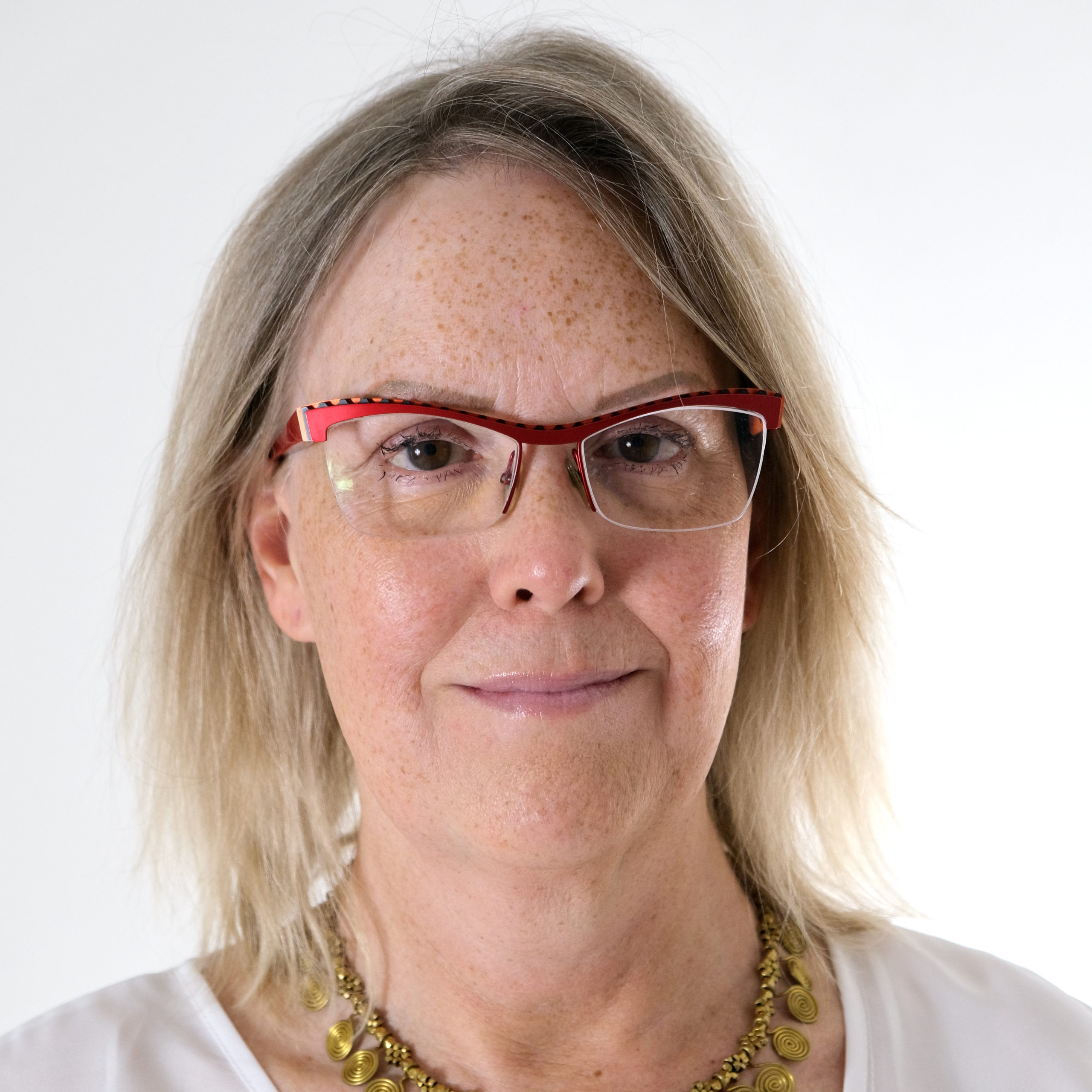
photo by Brendan Gregg

About Me

I’m Deirdré Straughan. A great deal about my personal and professional life is available on my site, Countries Beginning with I.

I have been a community manager since long before the title existed, first for the Italian startup I worked for in Milan, then for Adaptec (when it bought us), then for Adaptec’s software spinoff, Roxio. The website I designed for Roxio was probably one of the first (in 2001) to explicitly describe its customers as members of an online community.

Before I ever heard of The Cluetrain Manifesto, I was acting upon my belief that companies and customers have shared interests in the success and usefulness of products/services. I found that customers had better ideas than I did about how to help them use our stuff; my role was less about leadership than about enabling and facilitating them to work with us and each other.

The open source movement takes this attitude a logical step further: though some open source projects originate largely with a company, they need a real community (comprised of both insiders and outsiders) to thrive and grow. And I enjoy nurturing such communities.

As for this specific community… I have been working closely with Solaris and many of its creators since I joined Sun Microsystems in 2007. Though my title changed a few times, my work at Sun (and then Oracle) was always fundamentally about helping engineers communicate, both internally and externally. Part of my job was to help the OpenSolaris community, including a stint as the secretary to the OGB shortly before the end.

Specific tasks included filming hundreds of hours of experts talking about technology, and teaching others how to use video. I also did social media production for technical conferences worldwide. I also do text: among other things (blog writing and editing, articles), last year I edited (the non-code parts of) the DTrace book.

Putting it all together, I have had the privilege and pleasure of working with hundreds of smart, interesting people in tech, and that’s something I very much enjoy doing.

About the Job

Last December I began working for Joyent – once again, helping engineers and other technical types communicate what they know, including using video. Then, about a month ago, I had the chance to change roles and managers while still at Joyent. Here’s the job description as Bryan Cantrillgave it to me:

Especially as we integrate native KVM into SmartOS, we have a great opportunity to build a community around the operating system: we are the first OS to unify DTrace, ZFS, Zones and KVM under one OS kernel, and we believe that that makes us the preeminent OS for cloud computing. But to make that happen, we need to build and manage community around it. This means a bunch of things, and I’m flexible on the definition — that’s part of why I want you heading this up.

It means making available resources to the community that explain these technologies and why they are a giant win for cloud computing; making sure that we have an awesome experience for the developer and community member to download the system, learn more about it, and start building with it (which in turn means a web presence, documentation, the right downloads, etc.); that we are engaging with the illumos community to both strengthen that community and to leverage it to strengthen SmartOS, etc. This role is reporting to me because I expect it to have quite a bit of interface with the engineers.

…I was happy to accept the job, and that’s what I’m doing now.

A few words about what I am not:

  • I am in no sense a computer scientist / software engineer. I’ve attempted only one programming course in my life to date (Pascal, my freshman year at UC Santa Cruz – so long ago that I narrowly escaped having to use punch cards!). I had no particular talent for it. I see software, like music, as an art which I can admire and enjoy, while being damned near incapable of producing it myself.
  • I’m not a sysadmin. I can just about find my way around a command line, given a cheat sheet. (I took a Solaris Sysadmin course 18 months ago, but never had the opportunity to practice any of what I “learned” – and I’m more a hands-on learner.)

So you may have to be patient with me sometimes – I don’t know a lot of what you know. But I am not afraid to admit when I don’t understand things, or to ask questions until I do understand. If you’re willing to teach, I’m happy to learn.

Right now I’m just starting to learn who you are, what you want from SmartOS, and how we can help you. You can reach me at smartos [at] joyent [dot] com, and I often hang out in #joyent, #illumos, #openindiana, and related chats on irc.freenode.net. I’m a prolific Tweeter at@deirdres, and can be found on Google+ as well.

I look forward to working with you to help make SmartOS great!

Note: I should have had this post ready on August 15th, when we began telling the world about SmartOS and KVM. Unfortunately, I was then distracted by personal circumstances.

New Videos: The Gregg Performance Series

Working for Joyent, I continue to create lots of technical video (~32 hours of edited material to date). Most recent examples, here, are the start of a series I’m doing with Brendan Gregg (author of the DTrace book). In the course of his research to make these videos, Brendan even made some surprising discoveries about tools that everyone thought they knew all about.

Above: Brendan Gregg discusses vmstat, a performance tool used in Solaris-based operating systems, including Solaris 10, SmartOS, IllumOS, that shows the health of the entire system. Part 2 covers all the fields in detail. Part 3 talks about how vmstat works in Joyent’s SmartOS.

^ Brendan talks about the 1, 5 and 15 minute load averages as reported by tools such as uptime and prstat, and then explains in details how they work on Solaris-based Operating Systems including SmartOS, and reveals why they aren’t really 1, 5 and 15 minute averages.

Below: Brendan discusses the key fields of mpstat, another performance tool used in Solaris-based operating systems, including Solaris 10, SmartOS, Illumos, to shows the health of the CPUs on multi-processor systems. Part 2 covers all the fields in detail. Part 3 is a deeper dive into the fields using other tools.


illumos in the Cloud: What is Joyent Up to?

For years – decades, even – Sun Microsystems held some of the world’s greatest engineering talent fast in its cozy embrace. Then, as so often happens, acquisition unleashed a storm of change. A year later, a good deal of Sun’s top talent has moved on, including some well-known names from Solaris engineering. I’m sure this tech diaspora will benefit the industry as a whole, as Sun talent spreads far and wide.

For three years at Sun, I worked closely with top Solaris engineers. Many became friends, so I have kept in touch with those who left, and kept an eye on where they went. A number of the best and brightest settled at a cloud computing company out of San Francisco, called Joyent.

Bryan Cantrill, Jerry Jelinek, Brendan Gregg (with whom I worked very closely on the DTrace book), and several other members of Sun’s FISHworks team made the move to Joyent in late 2010. In addition, Joyent had brought on Ryan Dahl (the creator of Node.js, a hot new technology the world was beginning to hear about), Isaac Schlueter and more recently, Tom Hughes-Croucher (author of the upcoming Node.js book for O’Reilly). Putting all these elements together, it was clear that Joyent must be up to something very interesting; I had to become a Joyeur myself to find out exactly what was going on in the company!

We should first spend a few words to answer the question: What exactly is cloud computing? As Steve Gillmor said when asked at the O’Reilly Web 2.0 conference in 2008: to developers, cloud computing means being able to implement ideas at a very early stage, without having to concern themselves about future scaling up. This applies to start-ups and enterprises as well – companies too want a place to implement and deploy their applications or games quickly and flexibly with confidence they can scale rapidly if needed.

A good cloud hosting company provides the just-right amount of computing infrastructure, exactly when you need it. This includes “bursting” CPU capacity, so that your Facebook game doesn’t fall over when it suddenly goes viral, making you a victim of your own success. A good cloud hosting company has monitoring tools that can tell the difference between a short-term surge in traffic and a longer-term need to scale up capacity. Launched in early 2004 as one of the early pioneers of cloud computing, Joyent was the platform of choice for many popular web startups, including Twitter, WordPress and more. Over time, Joyent’s public cloud service became hugely popular with casual/social game studios, retail and ecommerce companies and many social networking applications. While the public face of Joyent has been a cloud computing service much like Amazon’s (but a lot faster), at heart Joyent is a software company.

I was already familiar with Joyent as one of the most innovative users of OpenSolaris: Ben Rockwood was a frequent conference speaker on OpenSolaris and related topics, and was active in the OpenSolaris community. Joyent was also one of the biggest contributors to OpenSolaris patches and is now a supporter of Illumos.

Based on Illumos, Joyent has created its own operating system, SmartOS, optimized for cloud computing. Why make a cloud kernel based on Illumos? From the cloud operator’s perspective, the advantages are obvious:

Maximize resource usage

  • Illumos virtualization (zones and Crossbow network virtualization) lets a cloud hosting provider put more customers on the physical server (each in their own SmartMachine), while still giving all of them phenomenal performance. Joyent’s servers typically run at 70% CPU capacity, against an industry standard of around 30%.
  • Creation and startup of additional zones – in other words, adding new paying customers – is nearly instantaneous.
  • 100% of RAM is allocated to SmartMachines or repurposed for SmartCache as an ARC-cache layer between application and disk.

Maximize performance

  • No hardware emulation means the machine runs much faster; SmartOS is the hypervisor.
  • In cloud computing, latency is everything. ZFS with ARC dramatically improves disk performance, reducing a major source of slowdowns.
  • 3X more transactions per second compared to Amazon EC2 of similar size and cost.

Know what’s going on

  • Users of Solaris, Illumos, Mac OS X and FreeBSD know that DTrace gives you an unprecedented view throughout the software stack. But all that power comes at a price: using DTrace effectively requires expertise. The Joyent team is now harnessing the power of DTrace in a more user-friendly form with cloud analytics, which will be available to Joyent customers via a GUI and an API.

Companies who want to take advantage of the benefits of the cloud – variable costs, flexible resource usage, and affordability – are choosing Joyent for the efficiency it offers compared to legacy cloud systems. Thank you, Illumos, for giving us much better utilization and faster performance, and hence lower costs to customers.

The power of SmartOS is now available to another kind of Joyent customer: the Service Providers (telcos, ISPs, datacenter operators) who are using Joyent’s cloud software to deliver cloud services to their customers. With the cloud market expected to grow from 30-55% in coming years, it’s no wonder that so many existing providers want to get into the cloud business too. And Joyent is making this very, very easy to do.

Led by VP of Engineering Bryan Cantrill, Joyent’s very talented engineering team has rolled up years of cloud computing experience into a powerful yet easy to use software package, SmartDataCenter 6. This is the fruit of a major engineering effort around multi-tenancy operation in the cloud, including enhancements to OS-level virtualization, DTrace and ZFS. These technologies – powerful and revolutionary as they are – are only the foundation of a cloud operating system. Using Node.js – a Joyent framework for high-throughput, evented-oriented systems – Joyent has built orchestration and management software that turns these foundational OS technologies into a revolutionary cloud offering.

I’m excited to be here at Joyent, working with amazing people on wonderful things. If you’re a current Joyent customer, or a prospect interested in learning more, please drop me a line or go to Joyent.com or JoyentCloud.com to learn more. I’mDeirdre@joyent.com.

originally published in Sun System News