Category Archives: Italy travel

High Water (Not Hell) in Venice, part 3

A Tight Squeeze

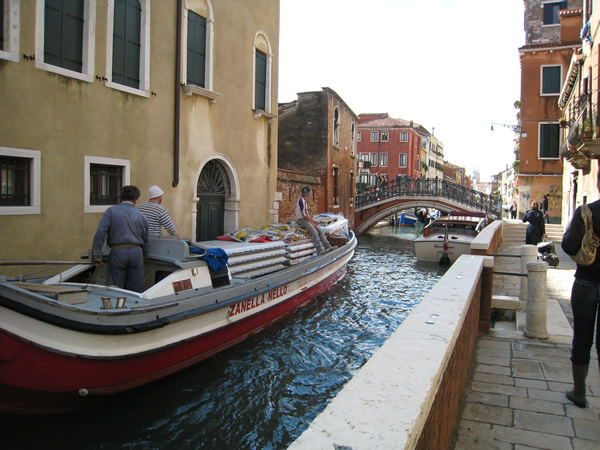
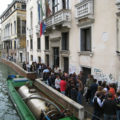
On the way home from Ca’ Rezzonico, we saw this interesting scene.

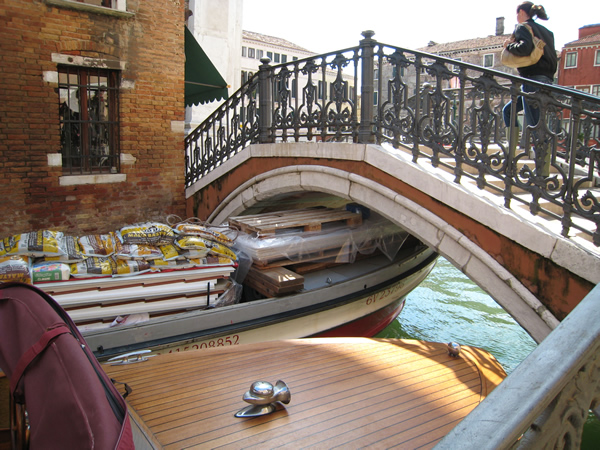
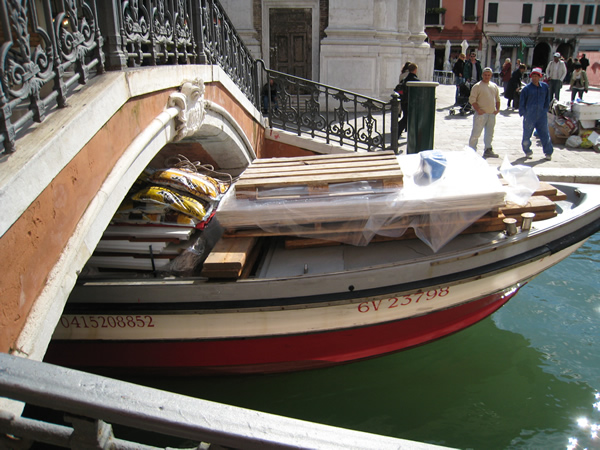
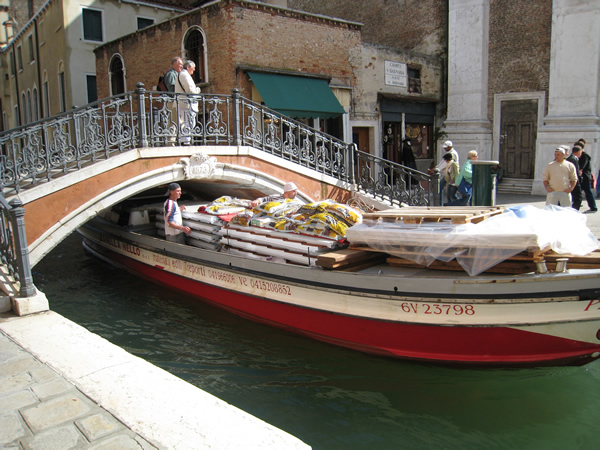
The water was still high. How was this heavily-laden boat going to get past this bridge?

Answer: very, very carefully.

Knowing exactly how far your load sits above the water is a necessary skill for any Venetian boat operator. They might, you think, have removed a few items. But then the boat would be lighter and sit higher still…

Venice 1, 2, 3, 4, 5, 6, 7 , restaurant

High Water (Not Hell) in Venice, part 2

Abuses Past and Present

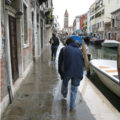
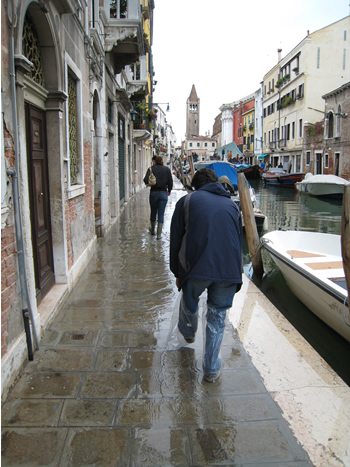
Enrico, Geraldine, and I decided to visit a museum. The only exit from our apartment was now under water. I had gone back for two more pairs of boots, but there’d been a run on them that morning, and none were left in Enrico’s size. So he improvised with the heavy plastic bags the boots had come in. Fortunately, the only area we had to walk through water was this stretch right outside our building. I felt like a kid, splashing through the puddles in my boots.

We went to Ca’ Rezzonico, an ancient palazzo stuffed with antique furniture, frescoes, statuary, and paintings. Turning the corner to enter a room, I was startled by a marble bust of a woman, head lolling, eyes half closed, mouth open as if panting or moaning, breasts spilling out of her clothing. At first glance, this seemed to be an allegorical excuse for a portrait of a woman in the throes of orgasm. Then I noticed the wound on her marble breast, flowing with marble blood. The martyrdom of saint somebody-or-other, evidently. But it still looked to me like a squirm-inducing juxtaposition of death and sex. A suspect proportion of classical art depicts voluptuous, bare-breasted women being kidnapped, tortured, or killed (or already dead).

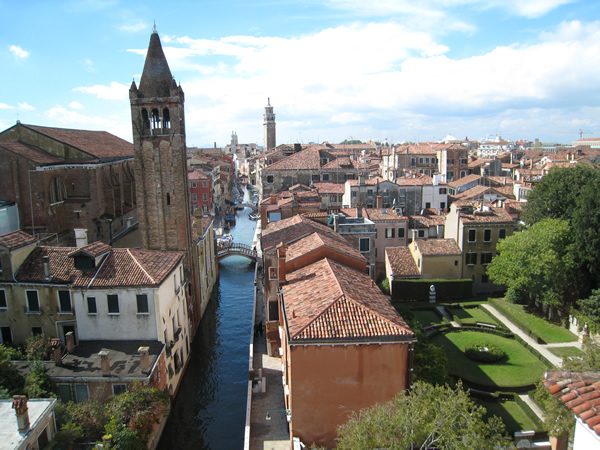
^ view from Ca’ Rezzonico (taking pictures inside not allowed)

Ca’ Rezzonico also features a set of four ebony statues of life-sized “Ethiopian warriors”, and several smaller statues of African slaves. You know they’re slaves (and not, perhaps, an appreciation of a different kind of racial beauty) because they all have iron chains around their necks, draping down to the ground. Huge chains. Unmissable. Nothing subtle whatsoever: these statues celebrate the ownership of other human beings.

Again – uncomfortable.

Tourism Frustrations

Italy bemoans the fact that it is no longer the world’s top tourism destination. But, goddamnit, Italy isn’t even trying to make itself particularly welcoming to tourists. For example: every painting in Ca’ Rezzonico had a tag with the artist’s name and dates and a title – all in Italian. What would it cost you to translate those titles? Make it just a little easier for the foreign tourist to enjoy? Each room had a single laminated sheet of text to explain – very inadequately – a vast array of fascinating objects. (We were with Geraldine, an art expert in her own right, so were far better off than most.)

Italians are justifiably proud of their national heritage of artistic and cultural treasures, and know a surprising amount about them. Pity they don’t go out of their way to share their knowledge with visitors.

Venice 1, 2, 3, 4, 5, 6, 7 , restaurant

High Water (Not Hell) in Venice, part 1

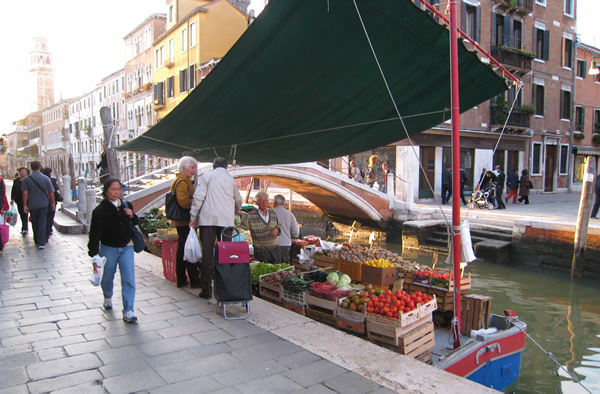
^ the best greengrocer in Venezia, near Campo San Barnaba – at low tide!

This weekend Enrico and I were invited to Venice by my Woodstock classmate, Jeet, who’s renting a large apartment from Views on Venice, and keeping it filled with friends and family. In all my years in Italy, I’ve only been to Venice twice before, and have never stayed in the city overnight. So this is new and different and fun.

We arrived by train from Milan – in this week’s heavy rain, traffic all over Italy is a mess, we would have spent hours on the highway. The train got us right into the city with no car to dispose of, and Jeet’s place on Campo San Barnaba was a simple water bus/vaporetto ride away (we paid 30 euros for the 72-hour ticket, but ended up walking more than riding). NB: We didn’t bring much luggage, a tactic I would advise to anyone travelling to Venice. If you carry more than one piece per head, they charge you six euros extra on the water buses, and it wouldn’t be any fun hauling luggage around Venice.

We met Jeet at a caffé in Campo San Barnaba, and he led us back to the apartment, which is comfortably furnished and decorated in a cool, modern style.
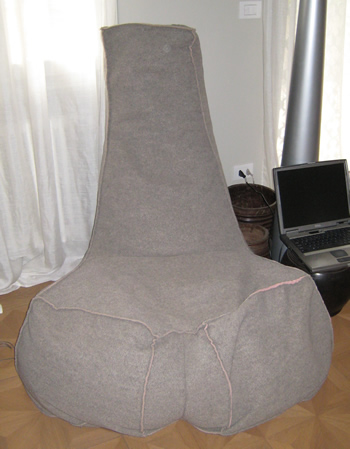
^ This chair is surprisingly comfortable to sit on… yes, I know what you’re thinking!

As always with old friends, the joy is in conversation. We talked at home over wine, talked more over an excellent dinner at the Ristoteca Oniga in Campo San Barnaba: the others had sauteed mussels and clams, followed by roast lamb shank. I had lasagne baked with fresh ricotta and pumpkin, followed by prosciutto di San Daniele with a salad of fresh pears, figs, and arugula – all excellent. The house Merlot wasn’t bad, either. Then home for conversation and cards until past 1 am.

I was awoken this morning by the bells of a nearby church, ringing so insistently that I thought it might be some sort of alarm. And perhaps it was. With the heavy rains, the canals had been near to overflowing yesterday, Jeet told us – and then it rained last night.

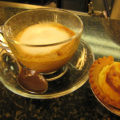
Enrico and I went out, tiptoeing through some spots to avoid flooding our shoes, in search of breakfast – coffee and croissants at a nearby bar. Venice’s own variation on coffee is the macchiattone (“large spotted”); I haven’t quite figured out what that is yet. At this particular bar, both cappuccino and espresso were served in charming glass cups.
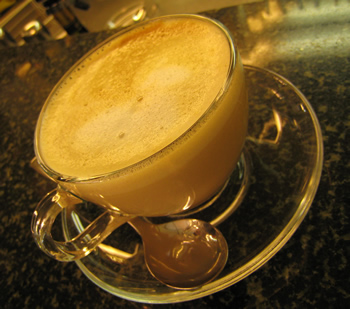
^ My first cappuccino of the cool season.

We wandered off through the calle, and eventually got on the #1 water bus to return to the apartment. The passerelle (mobile walkways) had been installed at the Ca’ Rezzonico boat stop – the pavement there was under water.

The last stretch of pavement between us and home was also now under 8 cm of water. Enrico waded through, I turned back and bought one of the last pairs of rubber boots available from a nearby shop.

Venice 1, 2, 3, 4, 5, 6, 7 , restaurant

Cartoceto: A Geometric Town in Le Marche

After the phenomenal dinner at Symposium, Susan and I shared a room at the Villa Cartoceto B&B. Though it’s a lovely place and I probably would have enjoyed it in other circumstances, I conclude that the old village houses in this part of Italy are built to withstand cold (or maybe invaders) rather than heat: our room was an oven, and by the time we got back after dinner (2 am) it was far too late to ask our hosts for a fan. We left both windows open, but there was hardly any breeze. I woke up at 5:30 am and sought relief on the rooftop terrace. If there’d only been something to lie on, they’d have found me still out there when they came to serve breakfast.

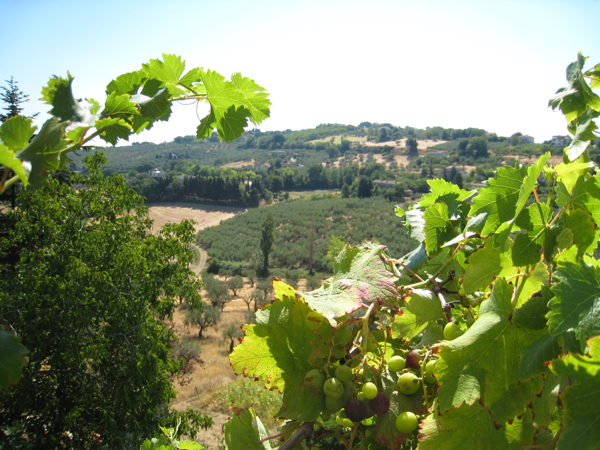
The view (above) did make up for quite a lot.

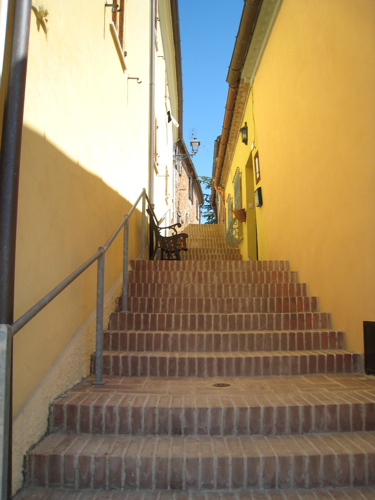
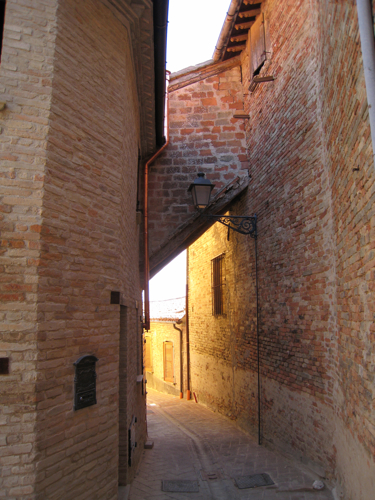
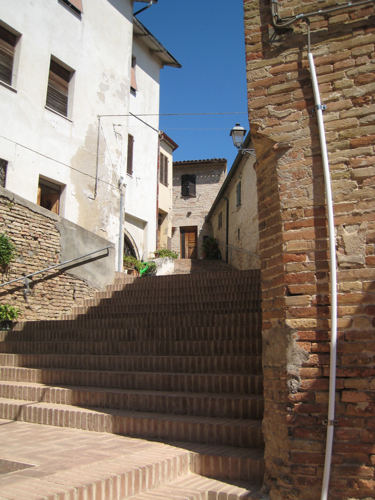
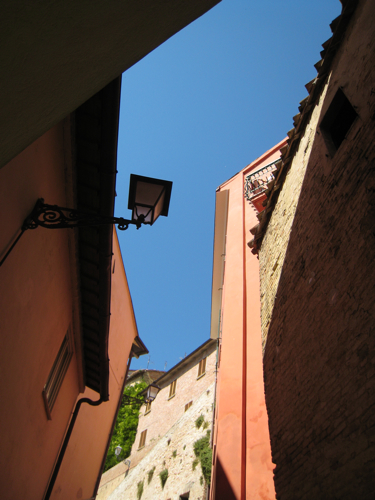
After breakfast we had some hours to kill, so we went to have a look at the village (which proved to be almost entirely stone and brick), on a day of record heat. It’s no wonder that we had the place practically to ourselves.

2007 07 20 205

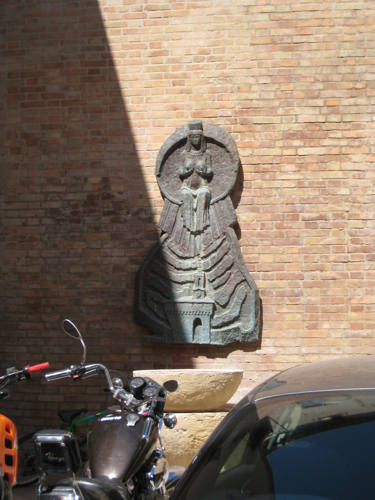
^ This goddess sort of person sits atop a map of the town and one of its churches. Very mysterious.

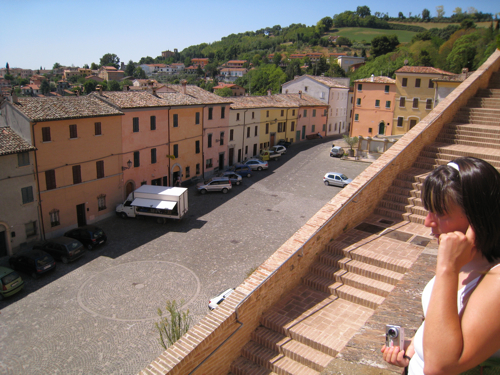
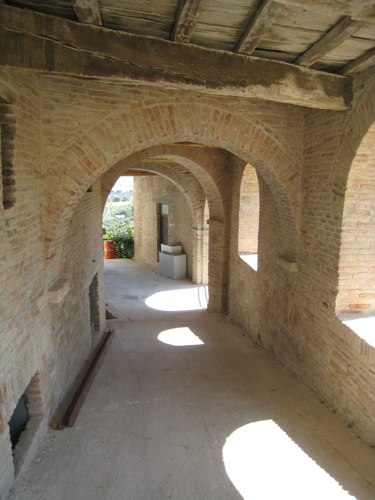
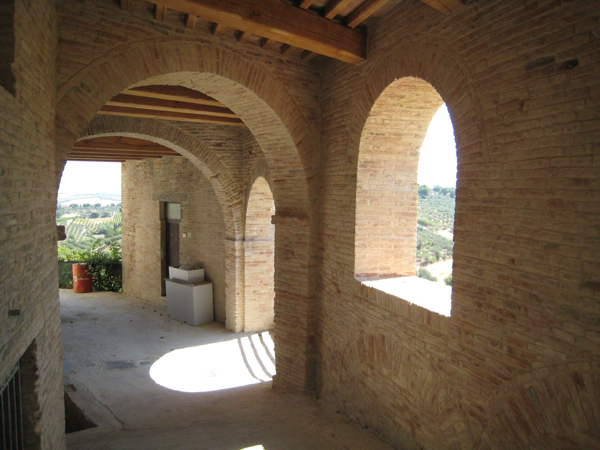
I love the geometry of Cartoceto. There’s a lot of very tasteful (and very expensive) reconstruction going on – I wonder who’s behind that, and why. There is really not much to look at in the immediate town, no particular monuments (we couldn’t look inside the churches because we were not appropriately dressed).

Many of the houses were being beautifully restored, though few seemed to be inhabited that day.

2007 07 20 291

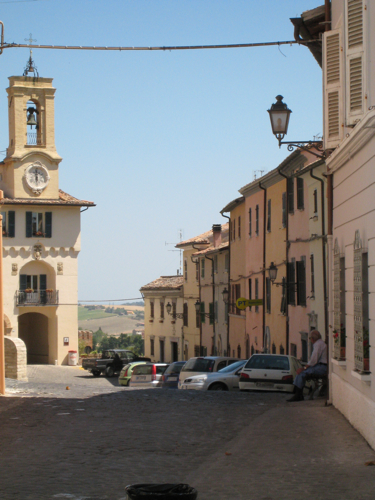
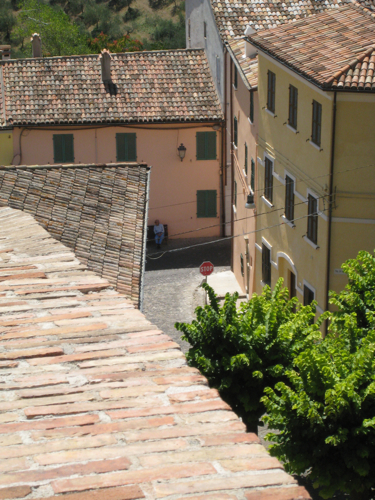
To give you an idea of the verticals, the photos above and below show the same man. He didn’t move for at least an hour. Not that I blame him: in that heat it was wiser to sit still.

2007 07 20 276 2007 07 20 272 2007 07 20 246 2007 07 20 240 2007 07 20 226  2007 07 20 203 2007 07 20 185 2007 07 20 187


full photo gallery here

Milan Cow Parade 2007

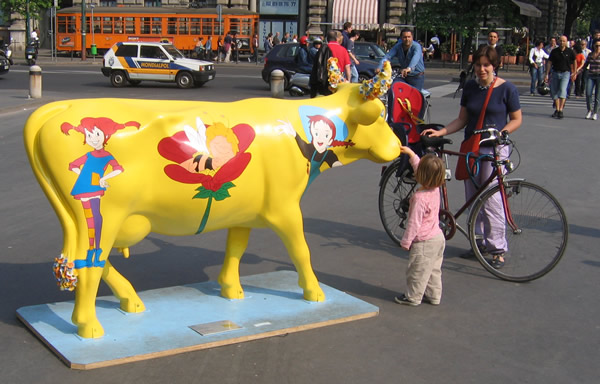
above: Pippi Longcow with a junior art critic – Piazza Castello

Street art didn’t fare so well in Milan. The newspapers reported that Milan set a record for the number of cows vandalized, particularly during the night that the AC Milan football club won the European championships for the seventh time. The poor cows were variously burned, thrown into a fountain, or simply taken away. They had been intended to be sold to raise money for charity. Alternative ways to raise this money are now being explored.

Here are a few I managed to salvage photographically.

metro station at Cairoli


La cow é mobile, qual pium al vento…


via Dante