Tag Archives: Italian culture

Italian SMS-Speak

“Texting” – sending text messages via cellphone – has been popular in Italy far longer than in the US, in part because it’s cheaper than calling. When I can’t reach someone by email, I use SMS for non-urgent communications – it’s less intrusive than a call, and I have a phobia of disturbing people.

Italian kids in particular text a lot, though many have now moved on to instant messaging on their computers. They’ve developed a shorthand which is useful for both; I give some examples here (and will expand on them as I run into new ones, particularly with illustrations).

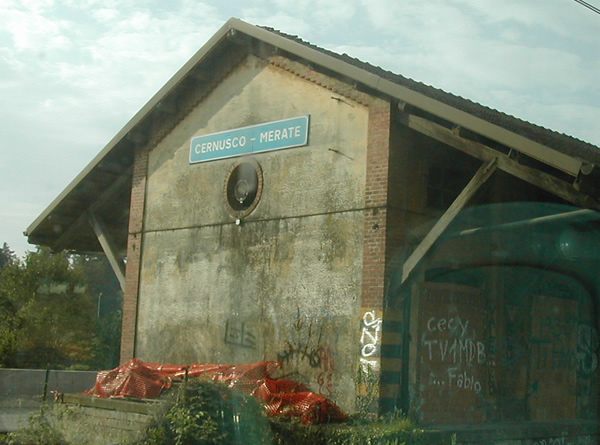
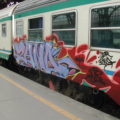
The graffito on the side of the building pictured above reads: Cecy TV1MDB… Fabio.

TVB – ti voglio bene – “I love you” – predates cellphones; I remember my daughter and her middle school friends scribbling it on each others’ school diaries and backpacks. (The advertising applications for TVBLOB are instantly apparent.)

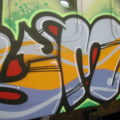
The graffito above is another variant: 1 is (obviously) uno, the number one, but it’s also the article “a” or “an”. So this reads: Ti voglio un mondo di bene – “I desire for you a world of good,” or “I love you a lot.”

Cecy, BTW, pronounced CHAY-chee, is a nickname for Cecilia [cheh-CHEE-lee-ah].

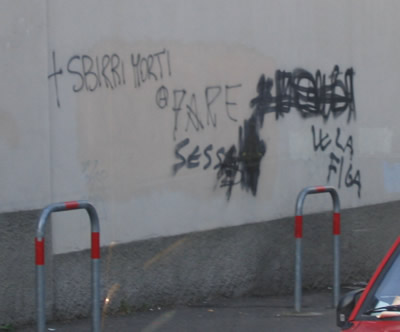
+ is of course the mathematical plus sign, pronounced piu’ [PYOO]. But piu’ also means “more”. So the ugly sentiment expressed above is “more cops dead.”

At the bottom right is the VV symbol meaning “hurray for!” – figa (cunt). (A rather pleasanter sentiment.)

Other Abbreviations

(For which I don’t yet have photos.)

6 – sei means “six” or “you are”.

cmq – comunque – anyway

k – The letter k is pronounced kappa in Italian (the name is Greek because k is not actually part of the Italian alphabet). But Italian kids, knowing that in English it’s pronounced [kay], use it as shorthand for -che, a common Italian syllable.

x – This is not the letter x, but the multiplication symbol, called per in Italian. The word per is also a preposition meaning “for”, and, again, a frequently-used syllable in Italian.

So: xk = perché – “why?” – a savings of four letters when entering text!

what are some more Italian SMS abbreviations I’m missing?

Old-Fashioned Italian Baby Names

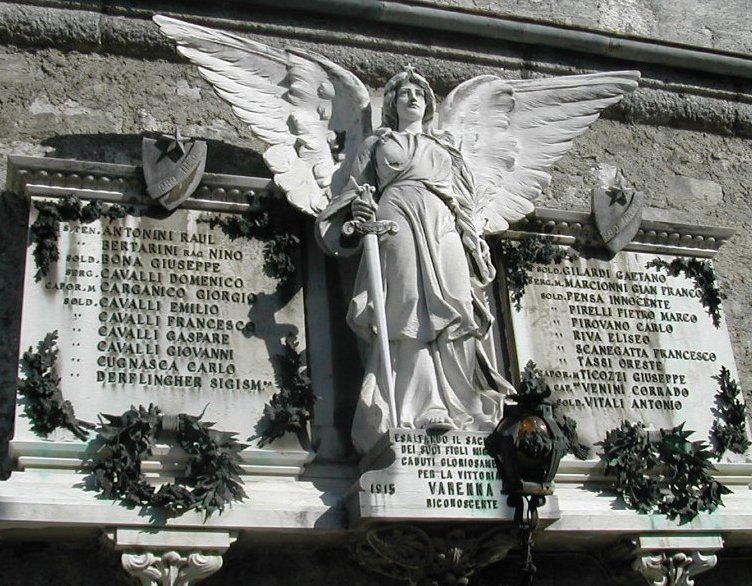
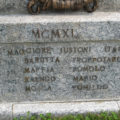
Above: a monument to Varenna’s WWI dead. If your last name was Pensa (“think”), why would you name your child Innocente? Monuments like this also give clues to names which were once common but have now fallen out of popularity: Gaspare [GAHS-pah-ray], Eliseo [ell-lee-ZAY-oh], Oreste [oh-RES-tay], Sigismundo [sih-jiss-MOON-doh] and Corrado [cor-RAH-doh] are very rare today.

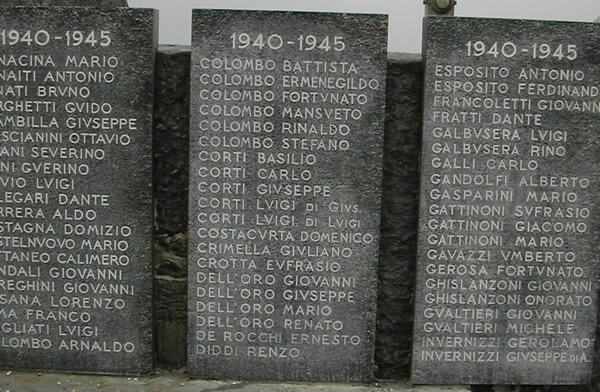
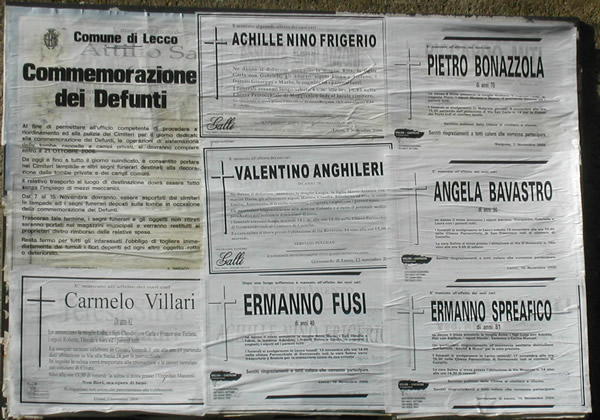
War memorial in Lecco: more names which are now rare (and might be considered funny):

  • Ermenegildo [air-may-nay-JEEL-doh]
  • Eufrasio [ey-you-FRAZ-ee-oh]
  • Mansueto [mahn-SWAY-toh] (“gentle”)
  • Fortunato [for-too-NAH-toh] (“lucky,” but this may also be the name of a saint)
  • Onorato [on-oh-RAH-toh] (“honored”)
  • Severino [seh-veh-REEN-oh] (a saint)
  • Domizio [doh-MEET-zee-oh] (Roman name)
  • Calimero [cah-lee-MARE-oh]
  • Arnaldo [are-NAHL-doh]

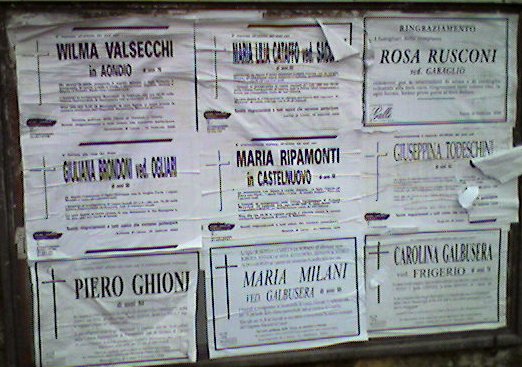
Wilma [VILL-mah] and Giuseppina [jews-ep-PEEN-ah] would be considered old-fashioned. Carolina [car-oh-LEAN-ah] is still current (my daughter has been at school with at least one Carolina).

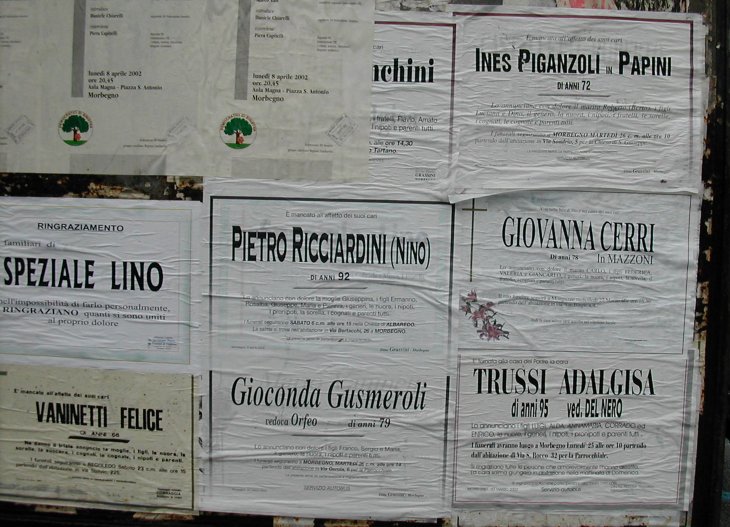
  • Ines [ee-NESS]
  • Gioconda [joe-COND-ah] – In Italy, an alternate name for the Mona Lisa is La Gioconda. Note that this one was the widow of a Mr. Orfeo [or-FAY-oh] (Orpheus).
  • Adalgisa [ah-DAHL-jizz-ah] – Very old-fashioned.

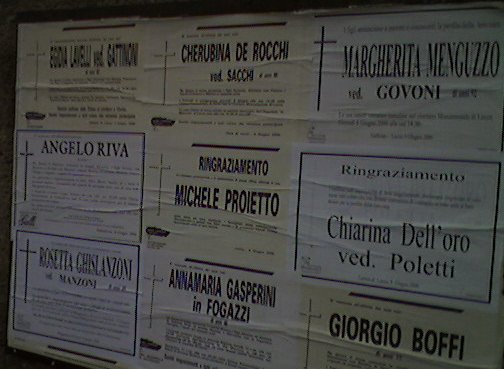
  • Egidia [eh-GEE-dee-uh]
  • Rosetta [Rose-ETT-uh]
  • Cherubina [care-oo-BEAN-uh] – “Little Cherub” – Huh?!?
  • Chiarina [kya-REE-nah] – unusual, but cute. A diminutive of Chiara [KYA-rah], meaning clear, transparent, or light.

  • Achille = Achilles
  • Valentino – well, you all know that one
  • Ermanno – no less than two of them! = Herman
  • Carmelo – very current in southern Italy

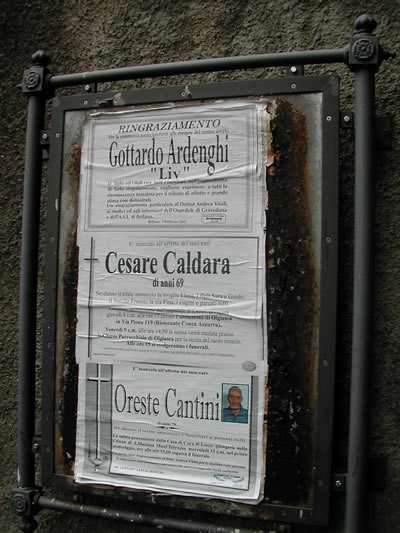
  • Gottardo [go-TAR-doh] – a saint with an important Alpine mountain pass and two major highway tunnels named after him.
  • Cesare [CHAY-za-ray] – Caesar. You knew that, right?
  • Oreste [o-RESS-tay] – the Greek Orestes

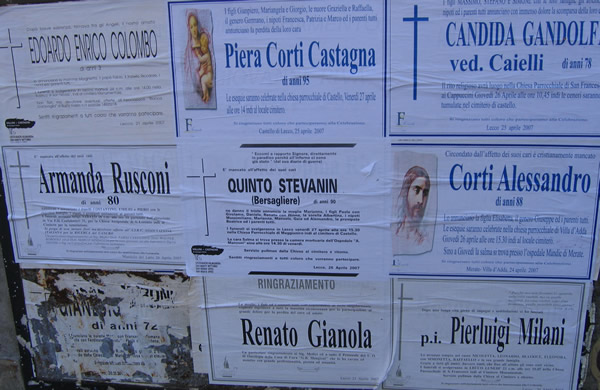
  • Edoardo Enrico – It’s unusual for an Italian to use a middle name in any context. My husband, for example, has several which may be on his baptismal certificate, but do not exist on his birth certificate or any other legal document, and which are never used. Beyond that, Edoardo [eh-doh-AR-do] and Enrico are both names that are not unusual, but not overly common, either.
  • Piera – [pee-AIR-a or PYAIR-ah] Female version of Piero, of course.
  • Candida [CAHN-did-ah] – Carries the connotation “white” or “pure.”
  • Armanda [ar-MAHN-dah]
  • Quinto [KWEEN-toh] – “Fifth”.
    In some families it seems to have been the practice, dating back to Classical Rome, to give your children numbers rather than names: Primo, Secundo, etc. Or, having grown tired of trying to find names after the first few, the parents seem to take this easy way out.
  • Pierluigi – Pier is often used as a sort of adjunct to other (male) names: Piergiorgio, Pierluigi, even Piermaria (still a male name by virtue of the Pier on the front).

Anything you can add on the lore and history of old-fashioned Italian names will be welcome!

Related: Italian Baby Names I Happen to Like

Everyday Italian: Newspaper Headlines 8

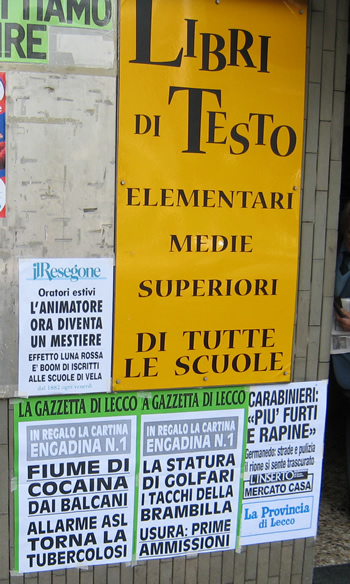
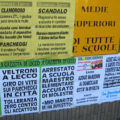
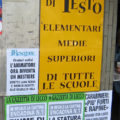
upper left: The animator becomes a profession
Luna Ross effect: boom in sign-ups for sailing school

yellow sign: Text books: elementary, middle school, high school – for all the schools

lower left: Free: Map of Engadina [a mountain] No. 1
Rivers of Cocaine from the Balkans
Local health authority in alarm: tuberculosis returns

lower center: Free: Map of Engadina [a mountain] No. 1
The height of Golfari, the hells of [Ms.] Brambilla
Loan-sharking: first confessions

lower right: Carabinieri: “More thefts and robberies”
Germanedo – streets and cleaning – the neighborhood feels neglected
Insert: Housing Market

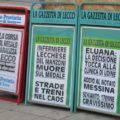
Lecco goes to the final and makes the fans dream
In Barro [a local mountain] auto in flames – driver in very serious condition

right: Schools: Historic principals and directors retire
Football: Lecco team wins and embarks on the final

Everyday Italian: Newspaper Headlines 7

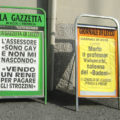
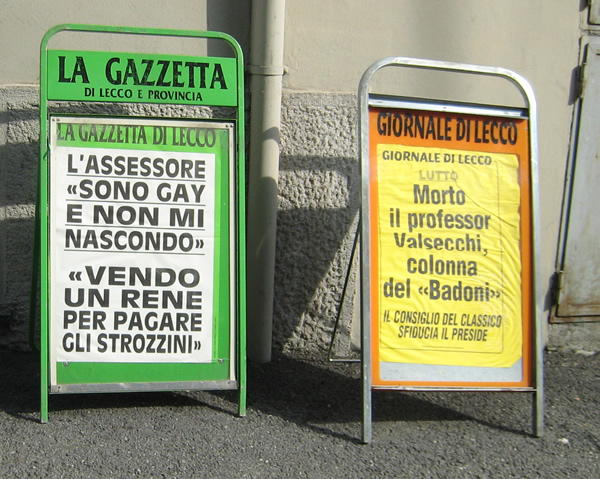
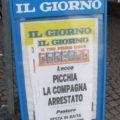
The Assessor [a position in municipal government]: “I’m gay and I don’t hide [myself]”

“I’m selling a kidney to pay the loan sharks”

Professor Valsecchi, pillar of Badoni [a school], dead

The [Teachers’] Council of the [Liceo] Classico Votes No-Confidence in the Principal

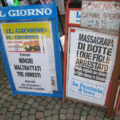
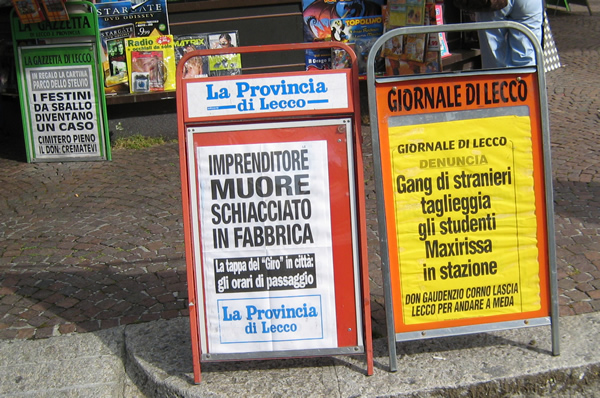
Italian newspaper headlines

[Private] “high” parties become a problem (sballo refers to getting high, whether on drugs or alcohol)

Cemeteries too full – the priest says “Have yourselves cremated”

Entrepreneur dies squashed in factory

The leg of the “Giro” [d’Italia – bicycle race] in the city: the hours when they will pass

Giornale di Lecco – denounces

Gang of foreigners [demands money from] the students – gigantic fight in the station

Don Gaudenzio Corno [a priest] leaves Lecco to go to Meda

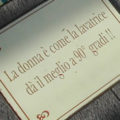
Italian Idiom and Sayings

Note: See the Italian slang section for stronger language (if you’re not easily offended…). Note: Some of the new phrases added here are rude!

Alla Come Viene, Viene

[To do something] sloppily, literally “it comes out as it comes out.”

Alla Meglio

[To do something] as best one can, in a hurry or under constraint, with the implication that this isn’t very good.

Attaccare il Cappello

“To hang up one’s hat” – used of a man who marries a wealthy woman, and (presumably) doesn’t have to work anymore.

Avere la Botte Piena e la Moglie Ubriaca

“To have the wine cask full and the wife drunk” – to have your cake and eat it, too.

In Bocca al Lupo

“Into the wolf’s mouth”. I don’t know why, but this is the phrase used instead of “Good luck” before an event, exam, etc., somewhat in the sense of “You never say ‘good luck’ on opening night” (instead you say “Break a leg”).

The proper response is Crepi il lupo (“May the wolf die” – which is to say: “I’m going into the wolf’s mouth, and may he choke on me.”)

A ruder version used nowadays is In culo alla balena – in the whale’s ass. I’m not sure whether the whale is also supposed to die.

Botte Piccola Fa Vino Buono

“A small cask makes good wine” – A friendly compliment to a short person.

Buona Notte al Secchio

Literally, “good night to the bucket”, it’s used to mean “…and then we’re screwed.” Why there should be a bucket involved I do not know.

Buono Come il Pane

“As good as bread.” A stock phrase typically used in situations when someone or something has unexpectedly behaved very badly, e.g. the Rottweiler who just killed a child, to its owner’s vast surprise: “He always seemed as good as bread!”

Caduto dalle Nuvole

“Fallen from the clouds” – Completely taken by surprise, or pretending to be.

Capita a Fagiolo

“Occurs at the bean” – happens at exactly the right moment. This derives from a time when beans were an essential and common part of the diet of many poor Italians, so to capitare a fagiolo was to turn up just in time for a (probably much-needed) meal.

Casino

[cah-ZEEN-o] A mess. Can also be used figuratively: Siamo incasinati – “We’re in a mess” (or “we’re very busy”). This one is okay for polite company. Can also be used like “a lot”: Mi piace un casino – “I like it a lot.”

Chi Me Lo Fa Fare?

Literally, “Who makes me do it?” Used as “Why should I do it?”

Comandare é meglio che fottere

A Sicilian proverb (which I cannot render in the original Sicilian) meaning “It is better to command than to fuck.” In other words, the pleasures of power are even greater than the pleasures of sex. Though, in reality, the two are usually closely intertwined.

Dalle Stelle alle Stalle

“[To go] from the stars to the [horse] stalls” – to fall from grace. I’m not sure whether this was originally used in the opposite form, about someone who’d had a meteoric career, but it seems I’ve heard it more often used this way.

Dente Avvelenato

Every now and then I stumble across a phrase I can’t easily translate from Italian into English, or vice-versa. Those are usually the most interesting ones, from a cultural point of view. Friends asked my opinion of the Italian school system; my reply began: C’ho il dente avvelenato. Literally, “I have a poison tooth,” this phrase implies: “When I speak on this topic, be aware that I am foaming-at-the-mouth furious about it, and anything I say is colored by that.”

Dio Ce Ne Scampi

May God make us avoid it – i.e., “God forbid.”

Dio li Fa, poi li Accoppia

“God makes them, then he mates them.” Said of any couple or pair who seem destined to be together by reason of sheer eccentricity.

Fuori (di Testa)

[FWOR-ee di testa] Out (of your) mind. Sometimes used in the phrase fuori come un balcone – “out[side] like a balcony” – crazy as a loon (or whatever equivalent English expression for extreme craziness.

Guai

[GWAH-ee] Troubles. Siamo nei guai – “We’re in trouble(s).”

Metterci il Cappello

To put one’s hat on (top of) – to falsely claim ownership of or credit for.

Modestamente Parlando

“Speaking modestly” or, in more colloquial English, “in all modesty…” Usually used ironically.

Most famously used by the Neapolitan actor Toto’: Signori si nasce. E io, modestamente parlando, lo nacqui.

“One is born a lord [gentleman]. And I, in all modesty, was born one.”

Occhio Scuro e Cappello Biondo é il Piu’ Bello del Mondo

“Dark eyes and blonde hair are the most beautiful in the world.” Well, of course, I agree!

Parlare Fuori dai Denti

“To speak outside of one’s teeth” – to say openly what’s on your mind. I suppose this is the opposite of speaking through clenched teeth, as you tend to do when restraining yourself from saying what you really think.

Peli Sulla Lingua

Literally, “hairs on the tongue.” Usually used in the negative form: “He doesn’t have hairs on his tongue,” meaning that he speaks plainly (perhaps even viciously), without flattery. I suppose the idea is that having hairs on your tongue would make your tongue less harsh, but – ick! Who would want hairs on their tongue anyway?

Peli Sulla Pancia

Literally, “hairs on the stomach.” Again, usually used in the negative form: not having hairs on one’s stomach means to be tough, able to stand up to criticism.

Piove sul Bagnato

“It rains on what’s [already] wet” – too much of a good thing.

Sposa Bagnata, Sposa Fortunata

“A wet bride [is a] lucky bride.” What you say to console her when it rains on her wedding day!

Ti Amo vs. Ti Voglio Bene

Two different ways to say “I love you” in Italian.

Tira piu’ un pelo di figa che un carro di buoi

“A cunt hair pulls [attracts] more than an oxcart.” In other words, the power of sex overcomes all other forces!

“Every Death of a Pope”

Apr 3, 2005

Italians have (at least) two sayings related to the deaths of popes. One is the phrase ogni morte di papa – “every death of a pope,” used for rare events, much like the English “once in a blue moon.”

The other is Morto un papa, se ne fa un’altro – “one pope dies, they make another.” Which shows just how blasé Italians are about popes and the workings of the Vatican. It is widely believed in Italy that the pope who preceded John Paul II was murdered (after only a month in office) because he showed radically liberal tendencies. This cannot be proven: the Vatican is a sovereign state, so it can (and did) refuse the Italian police permission to autopsy.

But the Italians are making as much fuss as the rest of the world about the death of this particular pope (John Paul II). I found the papal deathwatch disgusting, about on a par with the Terry Schiavo* mess, and have ignored both as much as possible (which hasn’t been easy).

And that is all I’m going to say about it.

Note: See the Italian slang section for stronger language (if you’re not easily offended…).

What Italian sayings am I missing? Let me know!