Tag Archives: Valtellina

Guests of Conti Sertoli Salis: Part 3, Wine!

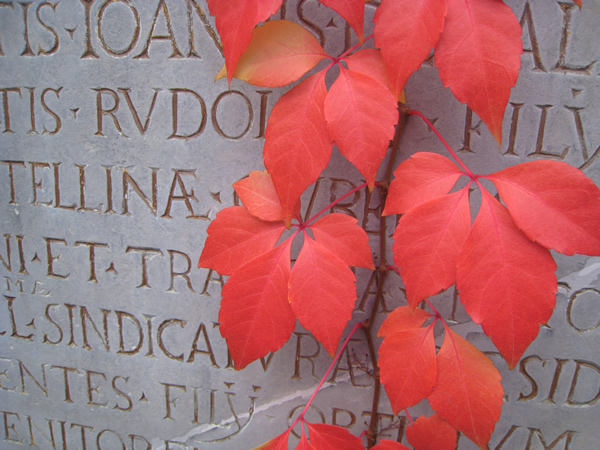
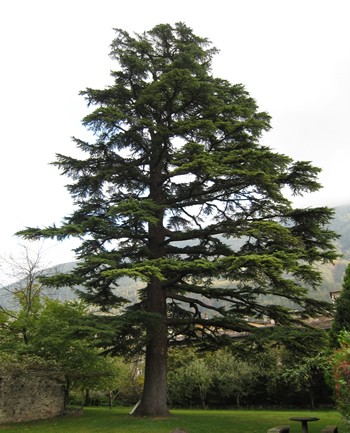
When we finished seeing the palazzo, we had a little stroll in the garden, in which an intricate, manicured geometric hedge is winningly juxtaposed with overgrown and out-of-control everything else. My favorite photo of the day is above – autumn red vines draping down a stone plaque. The boast of the garden is a glorious, ancient cedar of Lebanon. I wish I owned a tree like that one.

^ a tromp l’oeil gazebo built into a wall in the garden

Then we were invited inside for the wine tasting. A large party of retirees occupied the canua (a semi-underground kitchen/taverna) usually used for tasting, and they didn’t look like leaving anytime soon, so we had to improvise. Pancrazio helped carry a table and chairs from another part of the palazzo

…and we sat in an anteroom full of antique winemaking implements.

We had:

  • Torre della Sirena – white
  • Il Saloncello
  • Canua (a sfursat)

…and two others that I don’t now remember – I’m a very disorganized wine reporter! “I don’t know anything about art, but I know what I like.” I liked these. And I was very pleased to be given six bottles of the Canua to take home as wages for my translation.

There was also bread, cheese, and salame – had we known to expect that, we could have skipped lunch (though that would have been a pity to miss).

The Sertoli Salis winery is well worth a visit, both as a historical site and, of course, a place to try and buy some great wine. Tours can be arranged in English.

Part 1: Lunch

Part 2: The Palazzo

Part 3: Wine!

Favorite Restaurants, in Italy and Elsewhere

Note: All prices may be severely out of date. Quality not likely to have changed.

Lake Como Area

These are full reviews – also see brief listings below for some more restaurants.

Elsewhere

Vegetarian Restaurants

Some tips for eating in restaurants in Italy.

Don’t want to eat out all the time? It’s also possible to eat cheaply in Italy.

Opinions

Some More of Our Favorite Restaurants

NB: My data on prices may not be entirely reliable; costs refer to a full meal (antipasto, primo, secondo, dessert) with wine, per person. You can of course save money by eating less! (By 2010, these prices are likely out of date! I have not eaten at any of these places in at least two years.)

But you don’t always have to go to restaurants; it’s also possible to eat cheaply in Italy.

Milan

Lo Scugnizzo

via Cassala 59

near the Romolo metro stop

tel 02 5811 1957

Fresh mozzarella from Naples daily, amazing seafood of all kinds. Pizza is also good. ~ euro 20-30

Vecchia Napoli pizzeria

via Chavez 4

tel 02 2619056

Fantastic pizza. Closed Mondays. Pizzas cost euro 7-12.

Osteria Grand Hotel

via Ascanio Sforza 75 (naviglio Pavese)

tel 02 89511586

Fabrizio, the owner, is head of one of Milan’s Slow Food groups. Excellent food, great wine list. euro 30-40

La Veneta

via G. Giusti 14

tel 02 342881

Antique recipes from the Veneto. Don’t miss the pasta e fagioli with radicchio, but everything else is wonderful as well. The owner is idiosyncratic and sometimes perceived as rude, but really he just has strong opinions on what should be eaten (and drunk) with what, and he’s probably right. Leave room for amazing desserts. euro 30-50

Ristorante da Bruno

via Gonzaga 6 (Duomo metro stop)

tel 02 804364

An old family favorite. Everything’s good. ~ euro 25-40

Gatto’

via Castel Morrone 10

tel 02 70006870

Mon 17:30-23:30, Tue-Sat 12:00-23:30

A brief but excellent Neapolitan-influenced menu, with an emphasis on top-quality ingredients. Possibly the best tuna steak I’ve ever eaten, lightly seared with a Japanese-style dipping sauce. Don’t miss the desserts.

near Menaggio

Locanda San Martino

Santa Maria Rezzonico and then way up the hill

tel 0344 50167 – reservations recommended

Excellent regional specialties including boar and polenta uncia (with cheese, garlic, butter, and sage), very cheap. euro 15-20

Lecco

Osteria del Viaggiatore

Corso Promessi Sposi

see my review

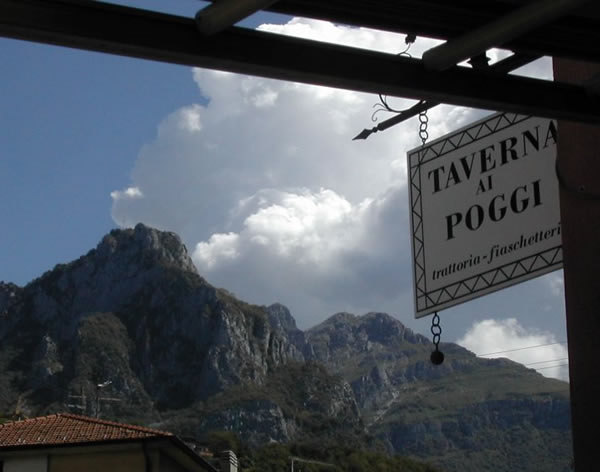
Taverna ai Poggi

via ai Poggi 14

phone: 0341 497126

Large selection of salumi and wines. Especially try the lake fish carpaccio and of course the local specialty, pizzoccheri (buckwheat pasta cooked with vegetables, cheese, garlic, butter, and sage). euro 25-35 at night, much cheaper at lunchtime (weekdays).

l’Azzeccagarbugli

Piazza XX Settembre

tel 0341 288063

A little pricey, but the servings are large by Italian standards. Particularly good meat, and an excellent selection of wines.

Morbegno

Ristorante Vecchio Fiume

Contrada di Cima alle Case

Nouveau twist on regional specialties. euro 30-40

Chiavenna

La Lanterna Verde

Fraz. SAN BARNABA, 7

VILLA DI CHIAVENNA 23029 SO (on the road going to St. Moritz)

Our absolute favorite, well worth the trip. During the day, eat outside and enjoy the amazing view of forests and waterfalls. euro 40-50 (cheap at the price!). See my review liked above.

Crotasc

via D.P. Lucchinetti 67

23020 Mese (SO)

map | my detailed review

Restaurant associated with the Mamete Prevostini winery.Specializes in salumi and insaccati (dried meats) and wild game. Five-course menus euro 25 and 30.

Il Capriolo

Subiale, Tel. 0341 875.017 – Cell. 328 749500

See my review; closed Thursdays.

Chianti

I Tre Castelli
Loc. Cintoia Bassa

Strada in Chianti

tel 055 8572227

Open for lunch and dinner, except Wednesdays.

Rita and Lino took us here. Excellent and unusual dishes such as a very spicy boar goulash.

Rome

Osteria Le Mani in Pasta

via dei Genovesi 37, Trastevere

Antica Taverna

via Monte Giordano, 12

da Alfredo e Ada

via Banchi Nuovi 14

An old-fashioned Roman osteria. Get there while you can – places like this won’t last much longer. euro 15-20Also go here

Mantova

Outside Italy

London

(locations in Brussels, Copenhagen, Paris, Delhi, Dubai, and Beirut
as well)

La Porte des Indes

Indian-French cuisine based on recipes from the old French colony of Pondicherry. I have had a lot of Indian food (lived there 5 years), but never anything like this. Amazing. Expensive.

Virginia/Suburban DC

Busara

Some of the best Thai food I’ve eaten outside of Thailand.

France

Le Ménestrel, Nimes

Barcelona

La Provenza, Barcelona


Guests of Conti Sertoli Salis: Part 2, The Palazzo

After an excellent (if somewhat hasty) lunch, the four of us had a private tour of Palazzo Sertoli Salis, which is still the home of the Sertoli Salis family, as well as the headquarters of the winery.

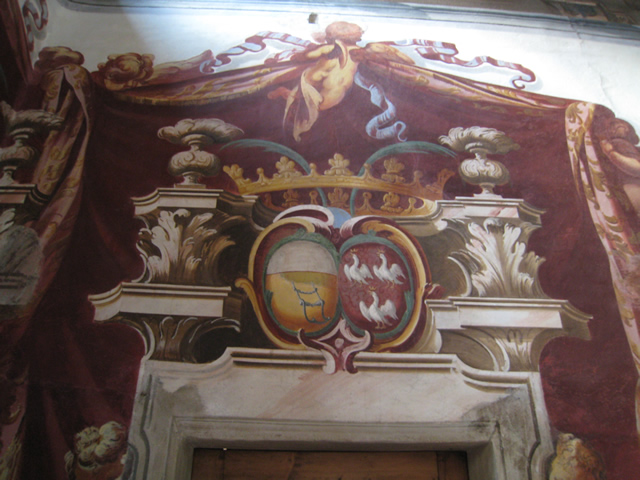
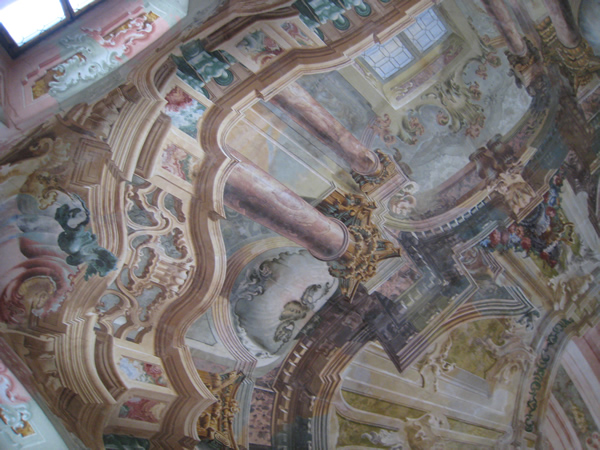
My photos don’t do justice to it: the palazzo is charming, rich with newly-restored tromp l’oeil frescoes cleverly designed to make the ceilings appear far higher than they are.

The paintings and furniture were intended to display wealth, yet the style is somehow appealing and cozy. Some of the family’s collection of antique documents and pictures is displayed museum-style, with (unusually for Italy) explanatory text in several languages.

^ Detail of the saloncello (small salon). Sertoli Salis’ “titled” wines are named after features of the palazzo.

Part 1: Lunch

Part 2: The Palazzo

Part 3: Wine!

Guests of Conti Sertoli Salis: Fine Food and Wine in Valtellina

Part 1: Lunch!

Many moons ago, spurred by a question on Fodors.com, I wandered the Internets, looking up wineries in the nearby region of Valtellina. Several had sites, some gorgeously produced. Sertoli Salis particularly caught my eye because the site was so very beautiful, and I knew the wines to be good, but the English translation was laughable.

Desperate for extra income, I wrote them, hoping to be offered the job of re-translating the site. They replied that, having just spent a lot of money to redo the site, they couldn’t pay cash, but there might be some wine in it for me.

They sent me the files, I translated a small piece and sent it to them, then my life got busy, I changed computers and lost some of the subsequent work I had done. The winery must have liked what they saw: they wrote asking if I could do the rest. Eventually I found the time (and some new wine-related vocabulary) to finish this not-small job and send it off.

NB: The English on the site today is not mine! It will be quite a job to replace the text on the site as it’s mostly embedded in the Flash – an unfortunate mistake made by many Italian web designers. The site is still well worth visiting for the beautiful photos.

I therefore had a standing invitation to visit the palazzo and winery for a tasting and a gift of “our very best wines”. Finally, last Saturday, we were able to make good on this offer.

Enrico and I set out with Pancrazio (a TVBLOB colleague) and Emanuela. Between bad weather and traffic we were an hour late for our lunch reservation at Ristorante Jim, which meant that we had to rush, while this fine establishment deserved more leisurely attention! Jim offers very interesting seasonal menus (in addition to a far-from-boring regular menu); this time the specialty was mushrooms and wild game.

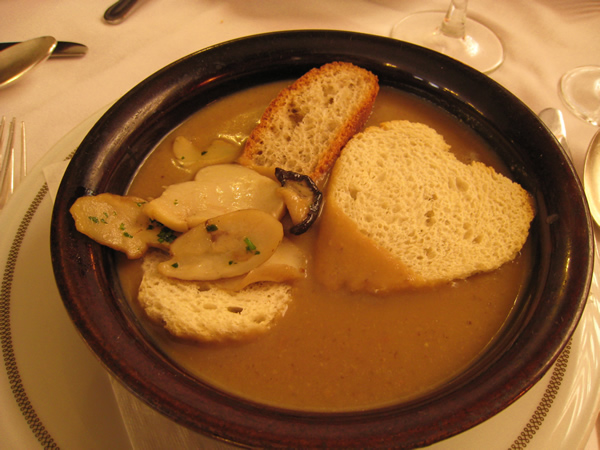
porcini soup

Emanuela and I started with a vellutata di porcini (wild boletus mushroom soup). Oh, my. That was special. I want to go back and eat more of that.

The boys had tagliatelle al sugo di lepre – home-made egg pasta with wild hare sauce. Very gamey, very tasty.

For secondo, Emanuela had bocconcini di capriolo (“bites” of roebuck), which she said were tender enough to melt in your mouth. I had breast of wild duck in a balsamic vinegar reduction – I love duck, and this was even more flavorful than usual. Umm… don’t remember what Enrico and Pancrazio had, except that they both managed to squeeze in dessert afterwards!

Then we headed off to the object of our visit, the winery.

Part 1: Lunch

Part 2: The Palazzo

Part 3: Wine!

Sunday Hike: Canete to Tabia Dasci

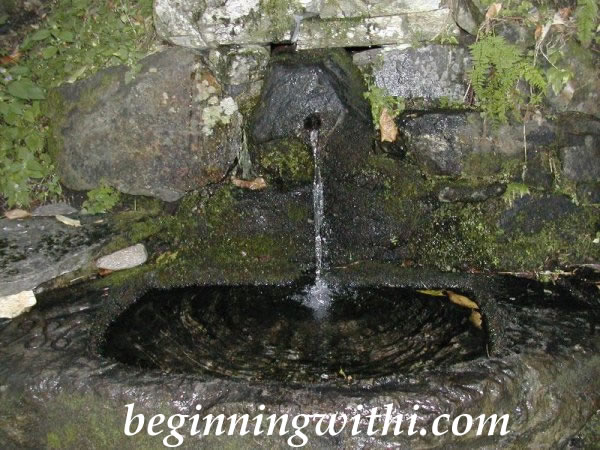
On Sunday Enrico and I woke up early, not wanting to waste what promised to be a beautiful end-of-summer day. We drove north through Chiavenna (stopping along the way for a second coffee and a slice of strudel) and up the tiny mountain road that leads to our favorite restaurant, la Lanterna Verde. Just beyond there we stopped for water: we save up the plastic bottles from mineral water, juice, etc., and refill them (dozens at a time) with good mountain water. Not that there’s anything wrong with our tap water, but mountain water tastes better, and is free. And it’s easy to find: every mountain community in Italy has an open tap connected to an underground spring. Traditionally this was where people got water for their homes, and washed their clothes (the wide ledges on the lower trough of this fountain are designed for scrubbing).
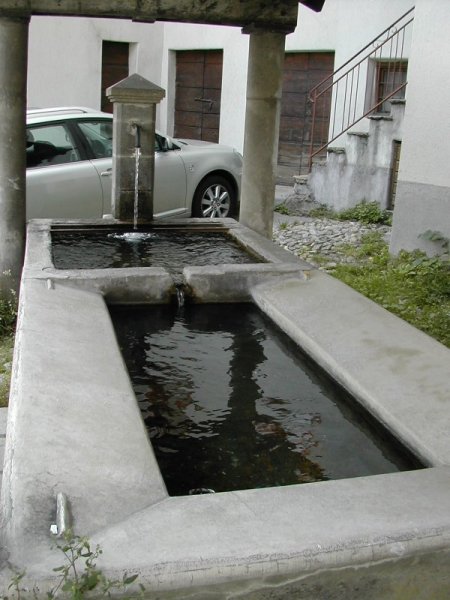
ancient stone laundry tub, Italian Alps

We got our first batch of water at a fountain in the woods near the village of Chete, which had been recommended to Enrico by some locals during an earlier visit, as having particularly good water.

Though the water was very good, we didn’t fill all our bottles at the fountain above – it was a bit of a walk back to the car carrying them.

We drove on and parked near the village of Canete, at the point where the road becomes “permit only,” such permits being given (we would later find) to people who have summer homes up on the mountain.

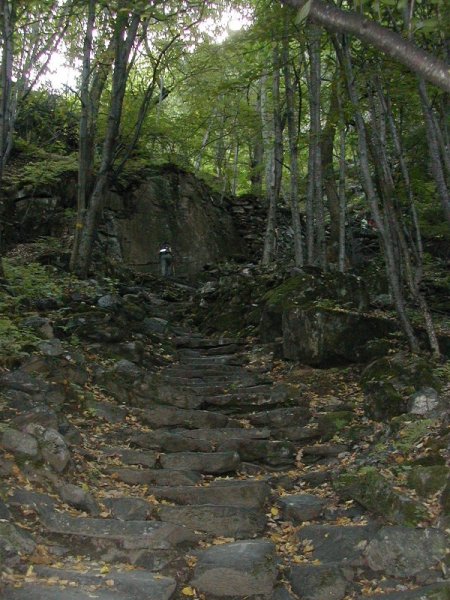
large stone stairs on a mountainside, Italian Alps

From here we started up a path that was around 400 years old (according to something Enrico read somewhere), a lot of which looked like this the above, a granite staircase, built into the mountainside, going up and up and up… These paths were built to reach the alpeggi (Alpine pastures) and malghe – buildings where cheese is made.

In the typical example below, the spaces between the logs are not sealed, so there’s plenty of air flow. There are dozens, if not hundreds, of these buildings all over the mountains in the area, though many are now in disuse – few people make their own cheese nowadays. (Those who do are very good at it – the bitto cheese made here is similar to parmigiano, but wilder, being made from the milk of cows and goats that pasture in the high Alps all summer.)
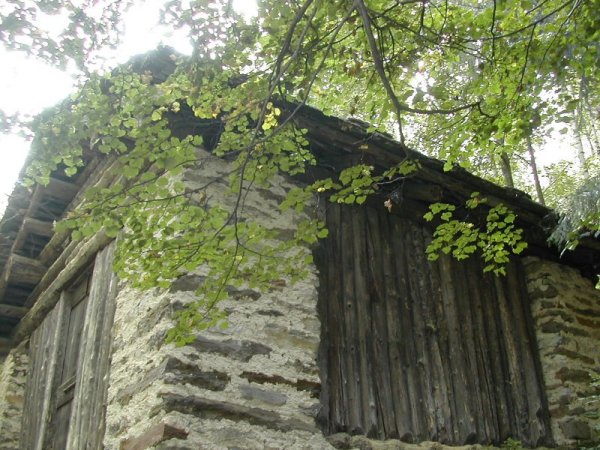
malga - Italian Alpine cheese-making hut

We stopped early to eat part of our sandwiches, at an open space on the mountainside where several families had built or were building summer homes. A man sat up on a scaffolding, sanding (by hand) the end of a wooden beam. It must have been his own house, because no one would be working for pay on a Sunday. All these little houses had photovoltaic panels on their roofs, probably just enough to power a few lightbulbs – the usual water, gas, and electricity lines don’t reach up there.
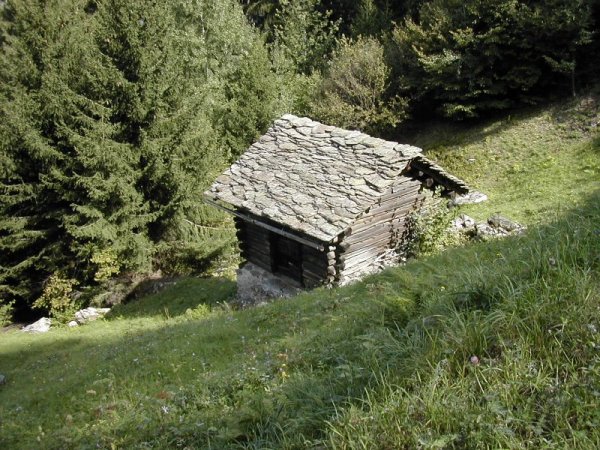
stone roof of an Alpine hut, Italy

Here’s an example of a different kind of mountain hut, likely used for storage as it is smaller and more tightly sealed. I love the stone roofs.

Somewhere along this road we came to a fork with signs pointing to Monte Cantone in one direction, and “Tabia Dasci” in the other. We had no idea what Tabia Dasci might be, but it was probably closer than Monte Cantone, so we went that way.

We crossed paths with a dozen or so people along the way, many of them coming back down from an early-morning mushroom expedition – with enviable hauls of porcini (boletus – Italy’s favorite ‘shroom). Any mushrooms left in plain sight were likely to be poisonous. (And some, even to our untutored eyes, very clearly were.)

We eventually reached what must have been an ancient village, with many buildings still standing. I’m not sure whether these clumps of rock had also once been buildings, or had simply been piled up to clear the pasture land (there was evidence of goats in the area).
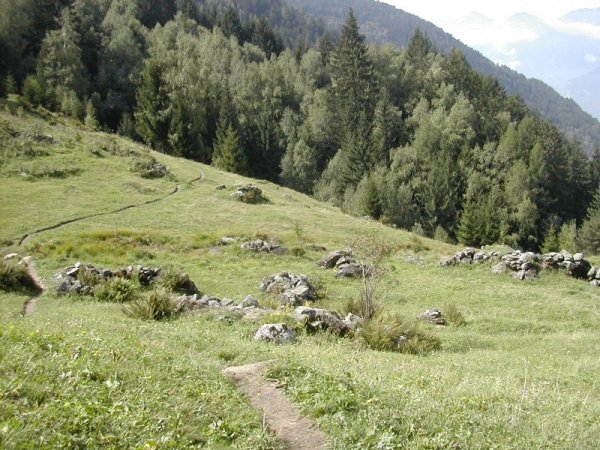
rock piles, Italian Alps

The old malghe here were all in good condition and possibly still in use, while many of the huts had been turned into comfortable vacation cottages.
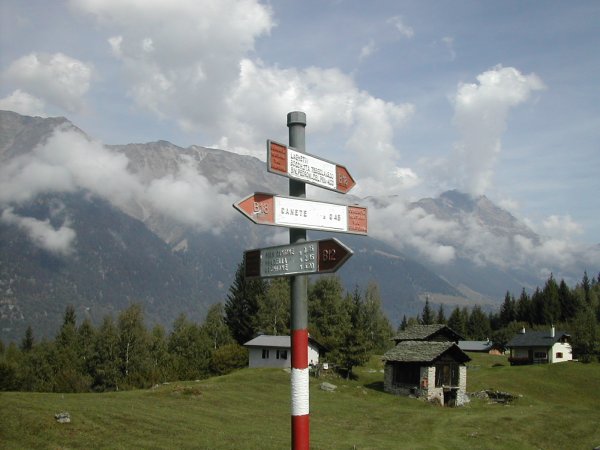
mountain path signs, Italian Alps

Only for fairly hardy residents, however – the road had ended some way down the mountainside, at least 20 minutes’ stiff walk from here.

Tabia Dasci proved to be this house (why it had its own signpost we never did find out):
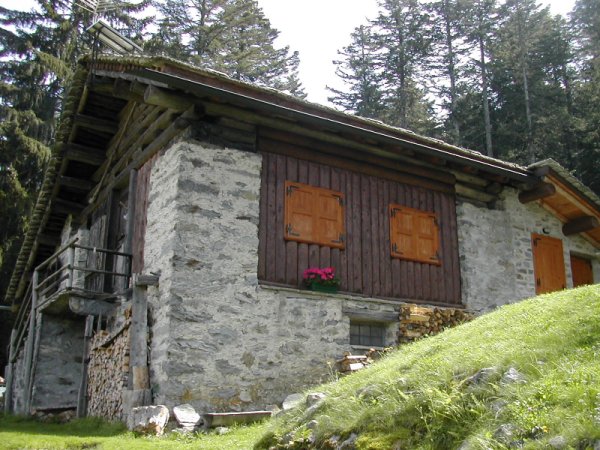
Tabia Dasci

…which I photographed mainly for the geraniums. They look charming, and someone must have gone to a lot of effort to get them all the way up here!

Its owner directed us, in a thick, non-Italian accent (his house is only about a kilometer from Switzerland), to the laghetti (little lakes) further along the path, but warned us that they were hardly there – no water. And in fact, though we could see the bed of the stream that probably had fed them, we never found any water at all.

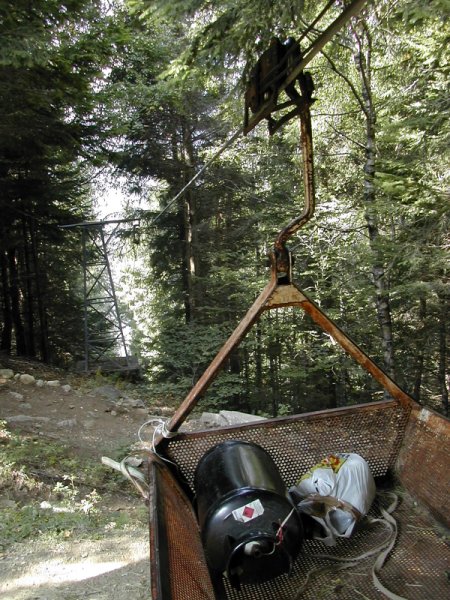
It’s likely that the man at Tabia Dasci is the only person who lives up here year round (if he does). In spite of the community’s isolation, the local health authorities keep an eye on garbage disposal. Residents have to send their garbage down the hill on the teleferica, a cable car for goods that runs up and down the mountain on a weekly schedule:
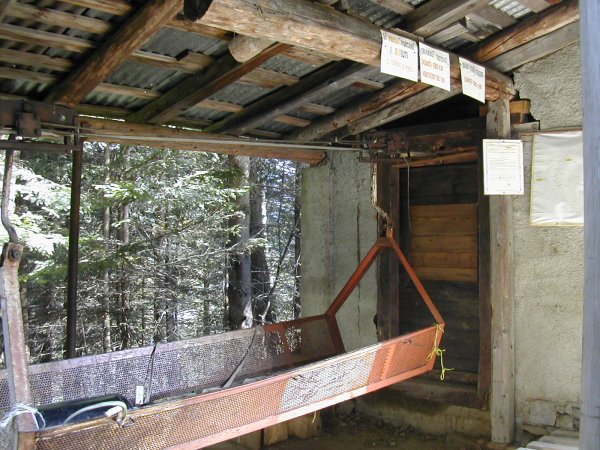
teleferica

^ Here you can see it loaded with somebody’s gas cannister, ready to go down for exchange and refilling.

We couldn’t ride the teleferica down, so we had to retrace our steps part of the way on the steep path, til we reached the mostly-paved road. That was the longer way back than the granite stairs, but easier on my knees.
teleferica, Italian Alps
We stopped in Chiavenna on the way back to sample the Sagra dei Crotti (food festival of the local cavern-restaurants – more on those some other time!). I was hungry again from all that walking and happily put away a serving of luganega (the local sausage) with polenta.

We had also picked up some local food to take home: bisciola [bih-SHOAL-ah] – a round, lumpy-looking cake, heavy with dried figs, raisins, and nuts – and a tub of promising-looking jam made from wild blueberries.

see the complete photo gallery here