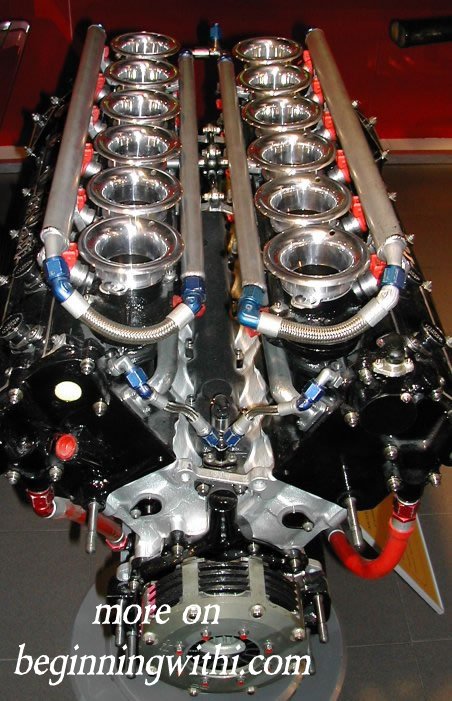
We visited the Galleria Ferrari in July, 2004. The museum is not large, but crammed full of fascinating Ferrari memorabilia and, of course, dozens of beautiful cars.
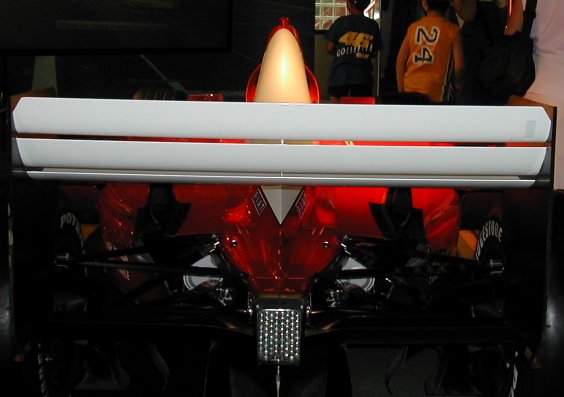
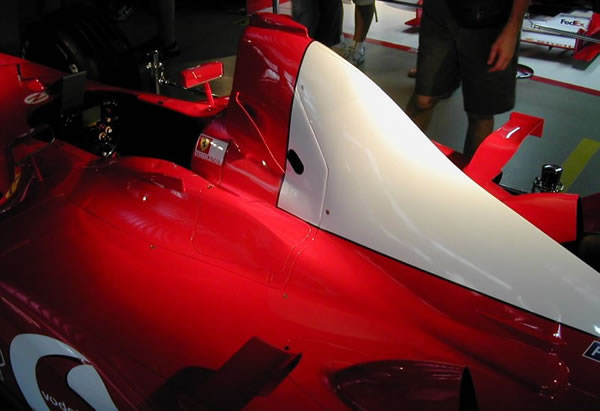
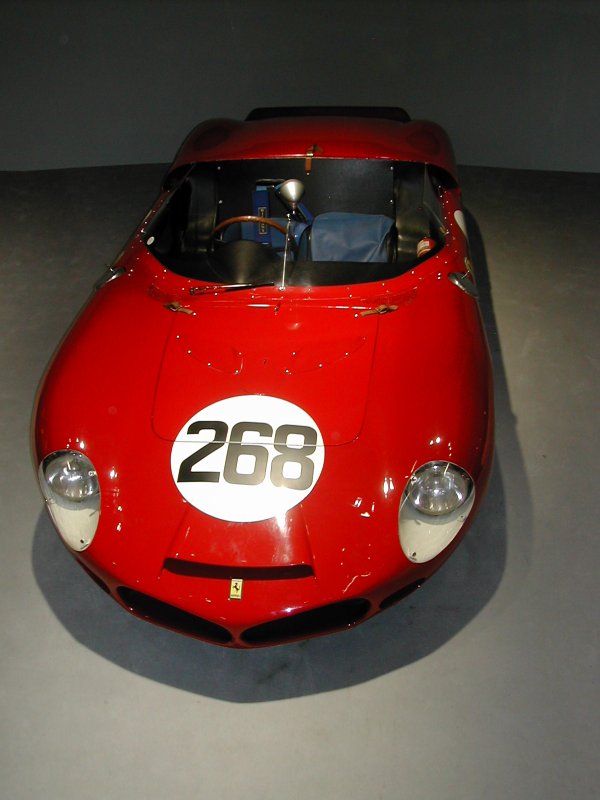
full Ferrari gallery here

We visited the Galleria Ferrari in July, 2004. The museum is not large, but crammed full of fascinating Ferrari memorabilia and, of course, dozens of beautiful cars.
full Ferrari gallery here
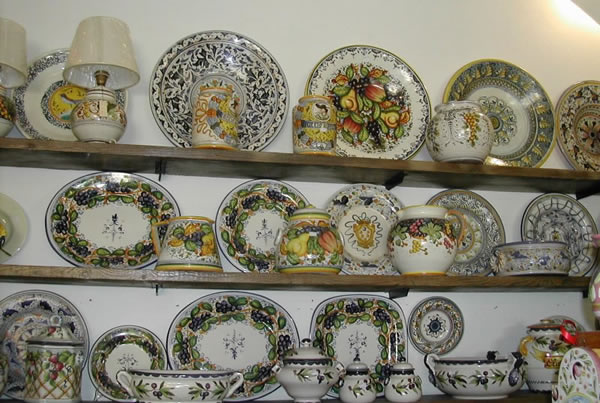
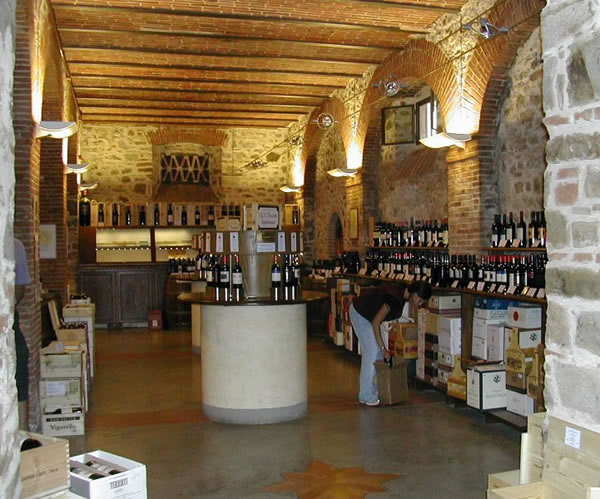
End your shopping day at the wine center, where you can taste “Super Tuscans” and all the other wonderful wines of Chianti.
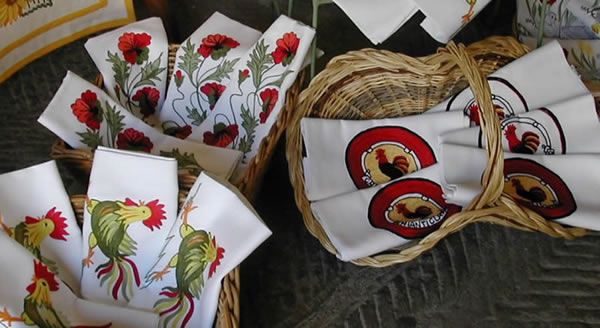
^ top: This is the only town I’ve seen in Italy with its own logo.
video shot July 27, 2004 – 3.2 MB
Roseto degli Abruzzi
Most Italians spend at least part of their summer vacation at a beach somewhere. Many have vacation homes, others stay in hotels. The cheapest option is camping, but Italian campgrounds have little in common with the KOA campgrounds I remember from some American parts of my childhood.
An average Italian campground has (of course) designated areas for campers and/or tents (some also have bungalows with small kitchens and bathrooms, which you can rent in lieu of bringing a tent or camper – those cost more, of course). There are central bathrooms with toilets, sinks, and showers with hot water. Most also have a restaurant and coffee bar, and a small market where you can get camping necessities as well as food. Some have swimming pools and other recreational facilities – at the very least, table soccer and a few arcade video games. Some have swimming pools, and of course beach access.
The upscale campgrounds also have organized activities and entertainment, such as karaoke, discos, and dance lessons. These are run by animatori (“animators”), young people hired for the summer who all seem to be good-looking, talented, energetic, and endlessly cheerful.
This video was shot at a friend’s campground in Abruzzo, you can probably recognize the young man and young woman who are this year’s animatori. They and the dance class participants (mostly kids) had worked up a little show; parents and other spectators were sitting in rows of chairs to watch.
NB: The word written across the underwear is SO-RP-RE-SA (surprise).
My Woodstock School classmate Anne is working in Afghanistan for a humanitarian organization called Medair, as a medical administrator. Below is an excerpt from the periodic letter she sends to friends and family (shared with you with her permission). You may not understand all the references and issues she mentions (I don’t), but this will give you an idea of the difficulties and dangers of development and humanitarian work, especially in situations as extreme as Afghanistan.
It also shows how very important such work is, and how very rare are the people who do it. I have deeply admired Anne for a long time (she previously spent 12 years in Hong Kong, pulling HIV-infected junkies off the street where they had been thrown by their families), and now only respect her more, even as I worry about her. And she faces it all with very British/Scottish aplomb. The world needs more people like Anne.
…The last few months have been hectic and pretty hard going. I will never attempt to do 4 people’s jobs at the same time again! …
The primary health care project in Behsud has now been handed over to another NGO [non-government agency] according to government policy. Medair worked very hard to set it up and really involve the community in supporting health workers etc. Both clinics were running well and everyone was very happy. I had been in discussions with the other NGO since January in an attempt to ensure a smooth handover so that the service could continue to provide health care for these very remote communities who would otherwise have at least a day’s walk to a clinic. Unfortunately it didn’t work like that. The NGO had made no plans and even failed to turn up to one of the official handovers to which the whole community came to. Bit strange handing over to no one and the community was certainly not impressed. They did come to the second one but did little to make the community feel happy. Both clinics are now closed and locked up with medicines inside. They haven’t decided yet whether they will bother to find staff as our staff refused to work for them. At both clinics all the women were in tears when we left. The men offered to storm the Ministry of Health to petition for Medair to be allowed to continue there! It was a very sad time but I hope that something of what Medair did in that 2 years there will last.
I have now moved up to Badakshan to be based in the ‘big city’ of Faisabad. I only have one job – medical project manager. The project is going well but there is a long, long way to go. The fact that our Behsud staff did not want to work with the other NGO and wanted to stick with Medair meant that I suddenly had a lot of staff to fill all the vacancies!! Badakshan is even more remote that Behsud and not many Afghans want to go there. We have 3 clinics – you can drive to all of them if you have a good 4×4 in the summer but in the winter it is a minimum of 2 days on a horse. Our main clinic (in Yawan) has an emergency obstetric service as well. The province has the highest ever recorded maternal mortality rate – largely due to the total lack of access to health care and the general attitude towards women which means that they get absolutely no attention. I was there for a week in May during which time I assisted in the first ever operation in the district – a section for a ruptured uterus. Interesting operation – no electricity, assortment of instruments sterilised in the pressure cooker outside on the fire, swatting flies away etc. By some sort of miracle the woman survived and word got out. We had an official delegation from the local governor and commander to congratulate us! 3 days later we did the second one. This time the woman had been in labour for 7 days (the last 2 days on a horse to get to the clinic) and was severely malnourished but again, miraculously survived. Jacqui, a consultant obstetrician, is based in Yawan and has been kept busy.
In order to keep our donor happy we had to do a household survey of the 4 districts that we are responsible to provide health care for. We completed the 3 districts that we already work in during May. The 4th district, Khwakhan, we did in June as you could not actually get there until then. There is no road and it is cut off from the rest of the province due to snow and then flooding when the snow melts. One of the doctors from Yawan is there just now getting things in place for opening the clinic in the next 2 weeks. There is a particularly high rate of TB there and no medicines available so the community are desperate for us to go there. It takes about 3 days by horse from Yawan to get there so it could be interesting getting staff and supplies in there!
Medair has just completed building an all-weather airstrip in Yawan and I happened to be there for the first landing and opening. The whole village showed up and there was lots of excitement. The strip is on a steep hill which I guess helps the plane to stop on time! It can only take a small plane but at least when we have an emergency case that needs more than we can do in Yawan we have the option of an air evacuation.
There has been an increase of security incidents throughout the country. Most of you will have heard of the killing of 5 MSF [Doctors Without Borders] workers on their way to their clinic. Several NGOs have now pulled out of the country because of the insecurity. Presidential elections are scheduled for October and there are plenty of powerful people who do not want these to happen. We are waiting to see what happens but will probably all come to Kabul the week before and stay for at least a week after just in case.
I am slowly getting to know officialdom in Faisabad. There is a new provincial health director who is difficult to deal with. I had to request that he signed something the other day and ended up having to explain to him what his government’s policy for primary health care was. People in power in this country tend to be in their positions mainly because of who they are or who they know and it makes for frustration for people trying to work for the good of the country/people. I suspect I will be developing better diplomatic skills and patience!
The next few months promise to be hectic with lots of new and daily-changing policies and requirements in reporting etc. I am still in search of female staff – doctors and midwives. There will be training courses and expansion of our services. There is also the daily challenge of keeping staff happy. Certainly not a lack of challenges to be faced. It can be all very exhausting and sometimes I wonder if it is really worth it all though most of the time I do not really have time to think about it!
It really means a lot to hear news of what all of you are doing. Thanks so much to those faithful people who keep in touch. We do have internet access in Faisabad and I will still get post sent to the address in Kabul. I like to know what is happening in the big bad world!!! Bless you all.
Lots of love,
Anne
Dear All,
Thought I would just write a quick note to let you know the latest excitement in my life – one that I could definitely do without.
Unrest has gradually been building up in all of Afghanistan and over the last few days I have felt it in Faisabad. 2 days ago we heard a rumour about another NGO – Focus which is the humanitarian arm of the Agha Khan foundation. There are several stories but the most common one was that 5 of their Afghan female staff had been drugged at lunch time so that they became unconscious and then were raped. We were a bit shocked but didn’t really think much about it.
Yesterday morning two of our Afghan male staff drove into the bazaar for some things and as they were returning they came across a demonstration that had something to do with the rumours about Focus. They saw a car belonging to another NGO being attacked. They said it looked like they were going to be stopped also but someone in the crowd shouted that they were Medair and okay. So they drove off. John was coming back from Kabul with Tom – John’s replacement – so the two of them went off to the airport to pick them up. Lynda had gone to Yawan that morning. I decided to go across the street to see if Jessica was okay as they had told me that her husband had been in the car that was being attacked. She knew nothing about it so we went up to another couple’s house and he said he would send one of his staff to find out. In the meantime I just had a really bad feeling and decided that I would stay with Jessica in her house which is literally just across the street from us.
About 20 minutes later we heard a huge crowd approaching – shouting and blowing whistles etc. We heard a lot of banging on the metal gate of Medair and lots of noise. There was banging on our gate too but we just stayed out of sight. Then we saw smoke rising from the Medair compound and finally some police cars arrived and gun shots began. I had no idea of exactly what was happening but the noises were enough. We prayed a lot and then after about half an hour I thought it was maybe safe to go and see what was happening.
John and Tom had arrived about 5 minutes before the mob of between 800 and 1000 men broke down the gate and stormed our compound. They both got fairly badly beaten and at the moment are at the German ISAF hospital getting checked over. Our chowkidar (guard) and the 2 office guys also got beaten but managed to escape. They set fire to the chowkidar’s room, the kitchen and the generator. All the windows are broken, everything that can be smashed is smashed and they found some money though not the safe where most of the money was. They took our sheep which has been our lawnmower for the last few months and which was heading for a barbeque as a goodbye party for John – it was probably the fattest sheep in Faisabad! All in all it was incredibly sad and a really horrible experience. I don’t think I have been that scared before.
We got in touch with [Medair in] Kabul and they got in touch with HQ. Within 2 hours we were all on a plane going to Kabul. I had a few minutes to pack things but wasn’t really thinking straight so have a weird assortment of stuff with me! HQ have been very good and I spoke to 2 of them yesterday on the phone. I went with the two guys to the ISAF hospital this morning but it was going to take a long time and they wouldn’t let me in so I came back here. Tomorrow we are going to see a counselor.
No idea what the plan will be now. I had planned another trip to Khwakhan on Sunday and may still go as I can fly from here to there and not go anywhere near Faisabad. Obviously we will need to reassess what we are doing in Badakshan and the country as a whole. I have no desire to go back to Faisabad at this point in time and I am sure I would not be allowed to anyway. For the project in Badakshan we really do need a base there and Faisabad is the obvious place.
I had already decided to end my contract after my first year i.e. end of November. This incident has reinforced the feeling of wanting to get out of this country! It is an incredibly difficult place to be, especially as a woman. The workload has been too much especially over a long period of time and I think I would like to retain at least some of my sanity. I will let you know!
Lots of love, Anne
NB: Anne left Kabul Sept 22nd for Mumbai, where she stayed with our classmate Sanjay for a couple of weeks, before heading up to Mussoorie for the Woodstock School 150th anniversary reunion. It was wonderful to see her, and especially to see her out of danger.
High tech companies have often used rock ‘n’ roll to show how cool their products are. When Windows 98 was launched, with great fanfare, Bill Gates personally chose the Rolling Stones’ “Start Me Up” as its advertising song, to emphasize Windows’ cool new Start button. He apparently forgot the rest of the lyrics, which include: “You make a grown man cry.”
At a computer show one year I heard Philips’ new jingle, the Beatles’ “Getting Better All the Time.” They were using a version re-recorded by other singers, but in so similar a style that I wondered why they didn’t just use the original. Then, as I listened, I realized why. After “I’ve got to admit it’s getting better, a little better all the time,” the new version elided the line: “it can’t get no worse” !