Tag Archives: bio

When is a Mountain a Hill?

I suppose that what I see out my office window are technically Alps, but I can’t get used to calling them “mountains”. In Mussoorie, we lived at 7000 feet (2133 meters) and called that a “hillside.” Here in Lecco I live at 400 meters, and it’s supposed to be a mountain. The Alp on whose slopes we live, il Resegone, reaches a mere 1874 meters (6148 feet).

In reality, this nomenclature problem originates with the British, who founded Mussoorie and other towns in India and called them “hill stations.”

“To use the word ‘hill’ to refer to stations balanced precariously on the edges of ridges some six to eight thousand feet in elevation seems, on the face of it, a rather odd choice of terminology. It has been argued that the Himalayan stations seemed as though they were situated on little more than hills because they were set against the backdrop of the high country. But the universal adoption of the term ‘hill station’… also suggests an etymological effort to minimize the disturbing implications of the sublime… To speak of hill stations rather than mountain stations rhetorically scaled back the overwhelming force of the landscape.”
Dane Kennedy, The Magic Mountains

I also have trouble adjusting to the Alps visually. They’re much steeper than the Himalayas I grew up on, so they look (to me) taller and further away than they actually are. From my window (and in the photo above) I see the Medale, a sheer-sided mass of rock, and, to my Himalaya-formed perceptual habits, it should be very big and very far away. But it’s not far at all – Rossella’s school is practically at its foot, and from where I’m sitting I can see the windows of the houses on its lower slopes.


The God Gene: Why Some of Us Just Don’t Get Religion?

In this new book, Dean Hamer discusses possible genetic components of “a personality trait known as self-transcendence, originally identified by Washington University psychiatrist Robert Cloninger. Cloninger found that spiritual people tend to share a set of characteristics, such as feeling connected to the world and a willingness to accept things that cannot be objectively demonstrated. … Hamer confirmed what earlier studies had found: heredity is partly responsible for whether a person is self-transcendent or not.” (quoted from a review on Amazon)

The book has been attacked on various grounds; I won’t bother to attack or defend since I have not yet read it. But the theory that religious feeling (or spirituality) may be genetically determined would explain something that otherwise puzzles me greatly: why do many intelligent people believe in god?

A number of religious people have been part of my life, including some who, while not following any organized religion, believe in or crave some sort of “spirituality.” I try – I really do! – to be respectful of their beliefs, because I respect these folks personally for other reasons.

But, frankly, I just don’t get it. I don’t feel a need for god or spirituality. I can feel connected to the world, and delight in its many wonders, without needing to thank anybody. I have my own strong moral compass that tells me how to treat people and the world, without reference to any scripture. I have no belief in a spiritual world I can’t see, and don’t feel the lack of that belief. Some people are born color-blind; I guess I was born god-blind.

Religions have an explanation for people like me: we haven’t been exposed to, or have refused to accept, the word of god – we haven’t seen the light (as I said: god-blind).

Until now, I’ve been groping for a way to explain them. “Opiate of the masses” only covers the ignorant and easily-led, and assumes complete bad faith on the part of every spiritual leader who ever lived. I can’t go that far. So I’ve had to assume that people whom I know to be intelligent in every other way are just dumb in this particular area, or victims of a traditional upbringing. Which, of course, is no explanation.

I therefore like the idea that the need for religion may have a genetic component. This would explain why some people feel this need strongly, and others not at all. The desire for this feeling of self-transcendence is independent of any specific religion, and even of the question as to whether there is a god. There may or may not be something “beyond” what science will ever be able to explain; for genetic reasons, some of us care a lot about being in touch with whatever it may be, and others don’t. In either case, we can’t help it – we were born that way.


 

Meeting Cat Stevens

Everyone’s had their brush with fame, or at least with famous people. My personal biggest to date occurred in Bangladesh in 1976 or ’77, when Cat Stevens came to give a lot of money to UNICEF, and to visit some of the projects he was funding in various parts of Bangladesh. (I guess this was just before he officially converted to Islam.)

There wasn’t a lot going on in Dhaka in those days, and a famous person even landing in the country was huge news. It happened that a friend of the family, part of our usual weekend music group, was a huge Cat Stevens fan. He learned Stevens’ travel schedule, and showed up at the airport every time Stevens and his entourage of one (his lead guitarist) passed through. Eventually, our friend managed to invite them over for an evening.

The result was a private concert, for about 30 of us, at someone’s house in Dhaka. I was already familiar with many of the songs, and was surprised that the two of them alone sounded just like they did on the albums, without benefit of the rest of the band or any studio mixing. Cat Stevens also looked just like his album covers, with the long curly hair and beard. He did sing one song I hadn’t heard before,”My Lady d’Arbanville.”

I don’t know if anyone got any pictures with him, but I definitely didn’t, so all I have is the memory and the story to tell. And there you have it.

Side Effects

I have for a couple of years been under treatment for glaucoma – just eyedrops, but the first ones that I tried for 6 months didn’t work, so now I’m using a new kind. This is a beta blocker which, the doctor mentioned, could adversely affect my athletic performance – not a big problem!

Another potential side effect, according to the information sheet in the package, is that the drops could make my irises darker. That would be hard to notice – my eyes are already dark brown.

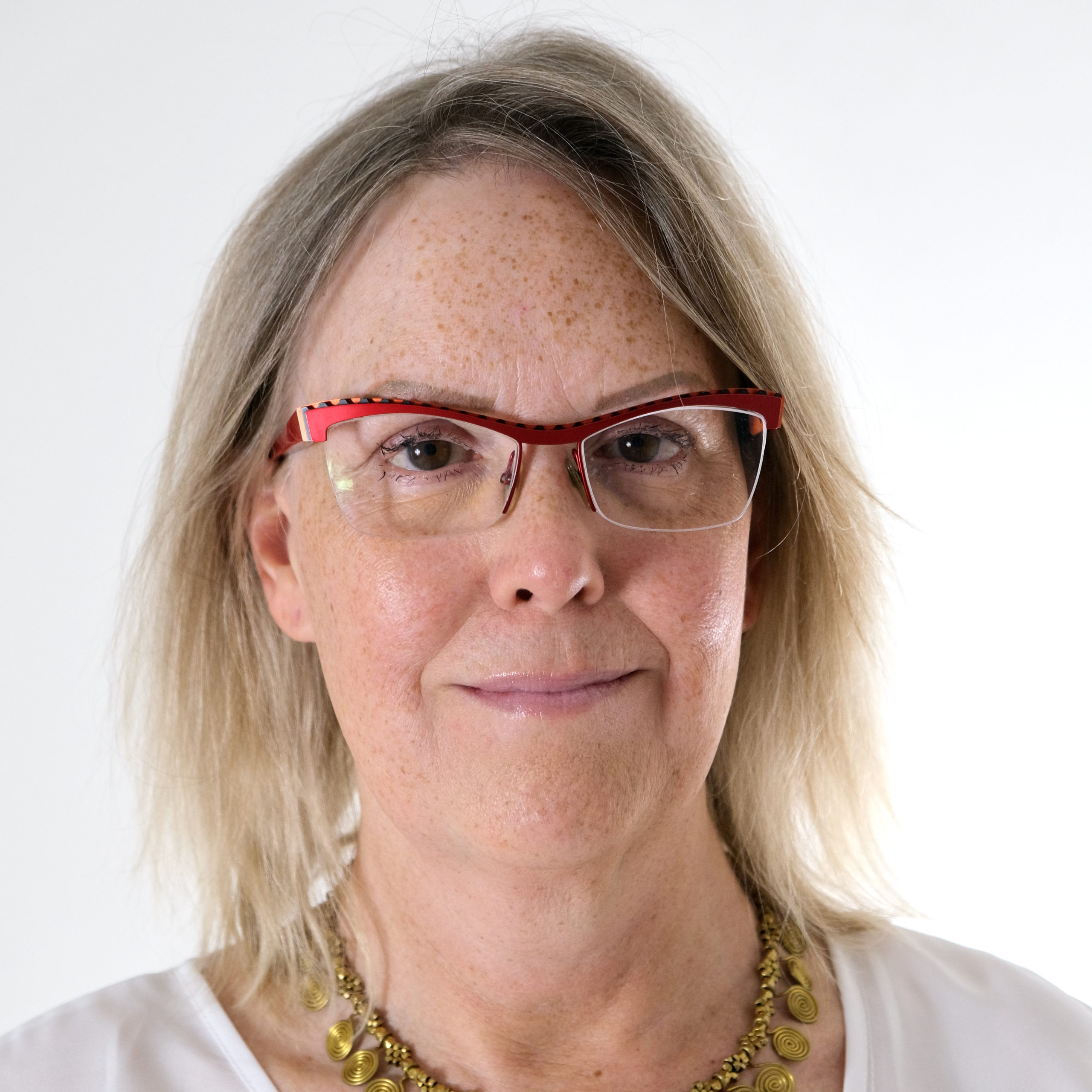
People assume that blonde hair perforce means blue eyes. When Rossella was born with big brown eyes, some people looked me straight in the face and said “Brown eyes! She must have got those from her father.” Actually, my eyes are darker than Enrico’s.

The side effect I have noticed is that my eyelashes have become thicker and longer. Not darker, alas – I still need mascara, but it’s a lot more effective now. Cool.

The Bride’s Bouquet

A year after we met, Enrico and I attended the wedding of two high school friends of mine (I was a bridesmaid). At the end, I stood among the other unmarried women while the bouquet was thrown. I wasn’t particularly keen to catch it, and am no good at catching things, so I didn’t even raise my arms. I looked up, watching the trajectory, as the bouquet arced high and then fell – straight down into my startled face (good thing I wear glasses). It bounced off and into my hands, and so I “caught” the bouquet.

I took the accidental and unsought catch as a sign that, whenever I did get married, there would be something unusual and surprising about the circumstances. Turned out I was right about that, too. But that’s another story.