Category Archives: Italy

Teenagers and Cellphones – Standard Equipment for Italian Adolescents

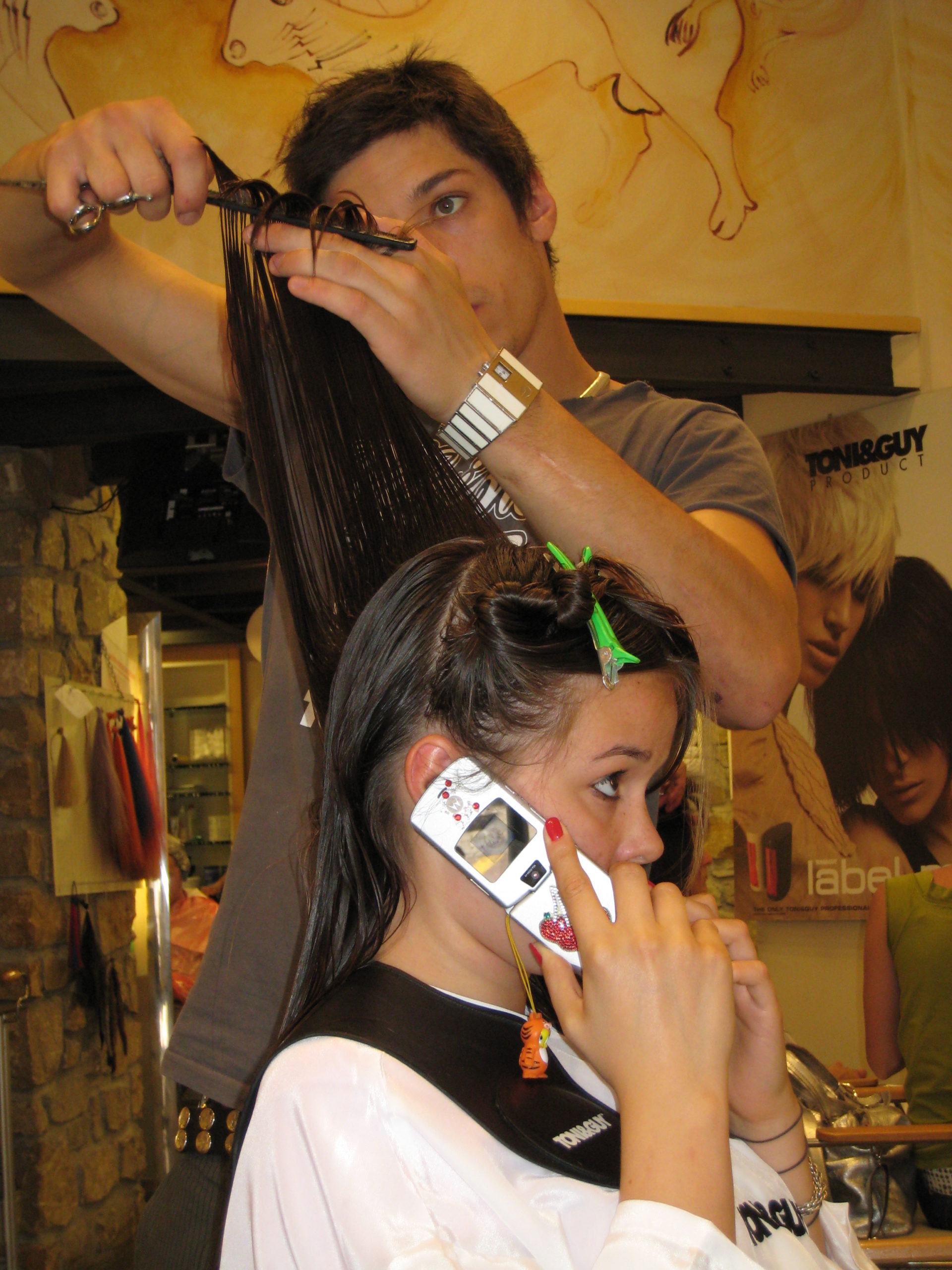
David Pogue, technology writer for the New York Times, mentioned in his weekly column (some time ago) some ways in which Europe is technologically ahead of the US. We’re certainly far ahead in the use of SMS (short message service), by which you can use your cellphone to send text messages to someone else’s cellphone. I read elsewhere that SMS recently became available in the US, but not many people are using it. The problem, I believe, is that US cellphone companies have not yet captured the attention of the teenage market.

Italy has one of the world’s highest ratios of cellphones to people. They spread years ago from well-heeled to ordinary folk, with the introduction of pay-as-you-go plans: you buy a phone and “recharge” it with calling time whenever you need or can afford to, with no credit check or monthly fee. This has been a boon to people who cannot qualify for or afford a land-line phone, and to parents of teenagers: give the kid a set phone allowance each month, and when it runs out, they either do without or pay their own way.

Still, the cost per minute of talk is fairly high, and varies wildly depending on whether you’re calling a phone in the same network, a different network, or a land-line. SMS cost only 10 to 12 cents per message, and are less intrusive than calls; the default signal for an incoming message is a single beep. Or you can set your phone to silent mode, and keep an unobtrusive eye on it. Some kids get away with using SMS to pass notes in class.

A familiar cliche’ about teenagers is that, as soon as they come home from school, they are on the phone for hours, much to the frustration of anyone else in the family who needs to use it. But the cliché no longer matches the reality. In the US, kids come home from school and immediately get online with their computers, to text chat with the friends they just saw at school. In Italy, they come home and start tapping out SMS. With SMS, you’re more likely to reach everyone you want to talk to, as there are far more cellphones than computers with Internet connections in Italy. Plus, with a cellphone you can reach your friends no matter where you or they are – neither party is tied to a desk.

Being able to communicate textually instead of orally is great for adolescent boys, who tend to be tongue-tied in comparison with – and especially when speaking to! – their female peers. The same boy who blushes and stammers when confronted with a real live girl, sends wildly romantic SMS. At the beginning of the school year, my daughter was baffled by a boy who would spend hours in SMS conversation, but was too shy to speak with her in person. Later she was courted by a boy who doesn’t yet own a cellphone, which she considered an advantage as he was forced to actually speak to her.

Like many adults, I initially didn’t use SMS much, but am finding it increasingly useful. If I need to communicate a change of plans to my daughter while she’s in school, I can send a message. She’s got the phone set to “Silent” so it won’t disrupt classes, but I know she checks it during breaks.

School rules have evolved rapidly to cope with changing mores. At first many schools banned cellphones altogether. Some have or had rules that they must be turned off completely during school hours – rules which were routinely flouted, as so many rules are in Italy. I guess that by now most schools have given up.

There are downsides to being constantly in touch. I’ve seen my daughter (and others) sit in a roomful of friends, tapping away on her phone. I don’t get that: why not enjoy the friends you’re with, and catch up with the others later? Adults aren’t much better; during breaks in business meetings, everyones dive for their phones, missing that potentially very valuable informal time with their colleagues.


Holiday Hell – Italian Vacation Traffic

Almost every Christmas, we drive halfway down Italy to Abruzzo, where my in-laws are retired by the seaside. This puts us on the road with millions of other Italians going home for the holidays. Much of the flow is north to south: the many southern Italians who migrated to northern Italy decades ago to find work, but still have strong family ties in Sicily, Calabria, etc. So we are part of the grand “exodus,” carefully monitored by the media, with pre-analysis, traffic predictions, minute-by-minute developments, and (afterwards) death toll reports. In recent years we’ve driven on the 24th, when there’s the least traffic (except Christmas Day itself, which we may resort to one of these years). The Sunday before Christmas is also good, as no trucks are allowed on the highways.

There are trains, of course, but travelling by train with a lot of luggage is a pain, and trains have their own risks: The holiday season is when many public services choose to cause the greatest possible disruption, by going on strike. Trains don’t do it too often, but everyone else does. Public transit workers in Milan, Rome, and Genova were on strike for several days during the week before Christmas, causing huge traffic jams as everyone then had to drive to work. This probably put a considerable dent in holiday shopping; I suspect shop owners are not feeling very charitable about anyone’s right to strike at the moment.

Then another protest group got into the act. Italian milk producers are aggrieved because they keep getting fined for producing more milk than European Union quotas allow. For the last several years, they have brought attention to their plight (and won government support for discounts on their fines) by blocking major roads around Milan just before Christmas, particularly near Linate airport. There have been cases (though not this year) of holiday travelers having to walk the last five kilometers to the airport, carrying their own luggage.

(No, this has nothing to do with Parmalat, and I will refrain from any Parmalat jokes as I am sick of them already.)

Between Christmas and New Year’s there is a smaller but still significant movement of people, as many, having spent the obligatory “Natale con i tuoi” (Christmas with your family), now escape to go skiing or for more exotic destinations.

The big “counter-exodus,” of people returning to their working homes from wherever they’ve been, takes place around the Epiphany, January 6th. This year the air traffic controllers are adding to the fun by going on strike January 8th.

Italian Accents

“Stanlio, non fare lo stupeedo!”

When an American speaks Italian with a particularly bad accent, Italians often refer to Stanlio e Ollio: Laurel and Hardy, whose accents in the Italian versions of their films are legendarily hilarious, full of flat Rs and words stressed on the wrong syllable.

I used to wonder why these films had been dubbed so badly. Laurel and Hardy are funny enough without silly accents, and why pick on these guys in particular in the dubbing? Everyone else gets dubbed into a normal Italian accent, usually very well.

Then I learned that the films were not initially dubbed by Italians; the voices are those of Laurel and Hardy. When their first talkies came out, it was impossible to dub a new soundtrack onto an existing film. The only way to make an Italian version was to reshoot the whole thing, with the actors doing the Italian dialog themselves. They either read it off cards or memorized it phonetically (as some Italian actors do today when acting in English films). But no one had instructed them in the finer points of Italian pronunciation, so they made mistakes like ‘stuPEEdo’ instead of ‘STUpid-oh.’

Italians found this so funny that, even when technology improved and it became possible to use Italian voices to dub a new soundtrack, the silly accent was maintained, and sticks to this day as a cliche of Americans (or Brits) speaking Italian.

Ask an American to imitate an Italian speaking English, and most of the time you will get the sort of accent heard in American mafia movies, which appears to be loosely based on the pronunciation of someone’s Sicilian or Neapolitan ancestors.

To an Italian ear, there are marked differences in regional accents, and some regional dialects are so different in pronunciation and vocabulary as to be unintelligible to outsiders. Many northern Italians despise the ‘uncouth’ accents of southerners, and would be offended to be lumped into a language category with them.

But maybe that’s changing.

I’ve been meaning for some time to talk about Andrea Camilleri’s Montalbano books, a series of police mysteries set in a small town in Sicily. Part of the appeal is that they are written in a semi-Sicilian dialect, giving a flavor that could be achieved no other way, though the publishers and Camilleri himself initially feared that the general Italian public would not be able to understand it. It turned out not to be a problem, even for me; after the first chapter or so, I didn’t find the language difficult. I’ve noticed that the language is becoming more and more Sicilian as the series goes on; perhaps Camilleri assumes that his devoted fans are now trained to handle it.

Montalbano in book form has been popular for years, and now has been made into a series of TV movies. Accent was again expected to be a problem, so for the first series our hero was made to sound ‘more Roman than Sicilian.’ For the second series, airing now, the accents sound quite Sicilian to me, though not so much that I can’t follow the dialog. Montalbano is wildly popular with all age groups, which seems to be having an interesting side effect: the Sicilian accent is now considered cool. My daughter and her Milanese classmates yesterday begged their school custodian, a Sicilian, to say ‘quattro’ (four), which he pronounces ‘quacchro’. He was baffled, and probably thought at first that they were making fun of him. But they explained that they like to hear him speak because he sounds just like Montalbano; then he was flattered!
The Montalbano books are being translated into English and appear to be selling well. They must lose something without the dialect, but they are still interesting stories with great characters, so I recommend them to mystery-lovers, and to anyone who might enjoy descriptions of Sicilian scenery and food. Montalbano loves good food, and so, presumably, does the author; the stories are frequently side-tracked by mouthwatering descriptions of dishes that Montalbano puts away with pittito lupigno (wolfish appetite). This is one aspect that, sadly, is not preserved in the television series; I guess they didn’t want to make it into a cooking show.

Montalbano links:

Bormio: An Ancient Hot-Spring Spa in the Italian Alps

We took a family mini-vacation to Bormio again. This time we stayed at the hotel of the Bagni Vecchi (old baths), whose price includes unlimited admission to the spa, and breakfast and dinner.

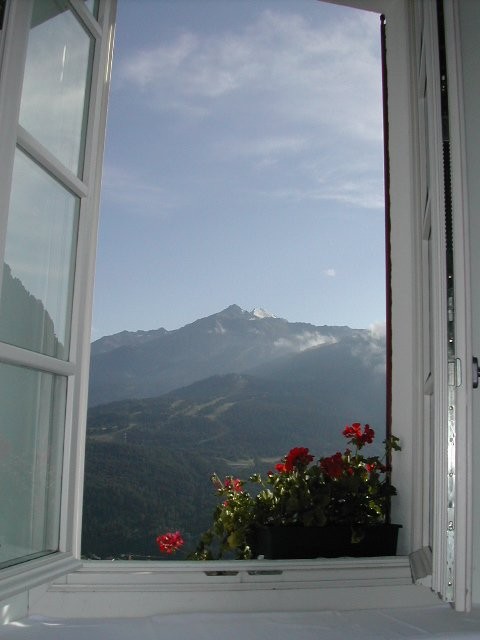
above: View from the window of the hotel restaurant

Tourist information for Bormio

Our previous trip carved wooden building struts

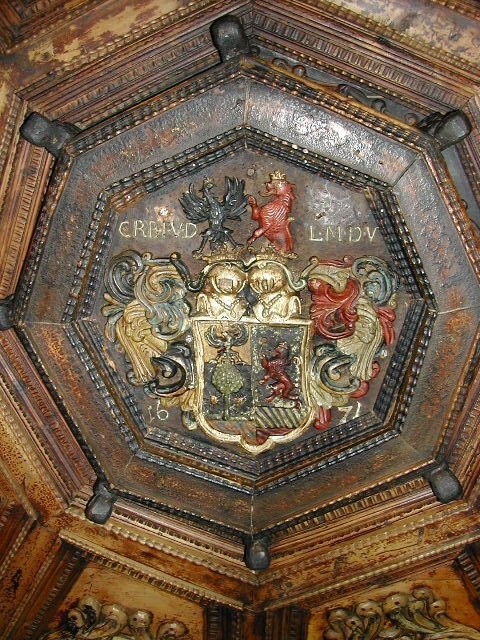
carved wooden Ceiling decoration of a pharmacy built in 1555

^ Ceiling decoration of a pharmacy built in 1555

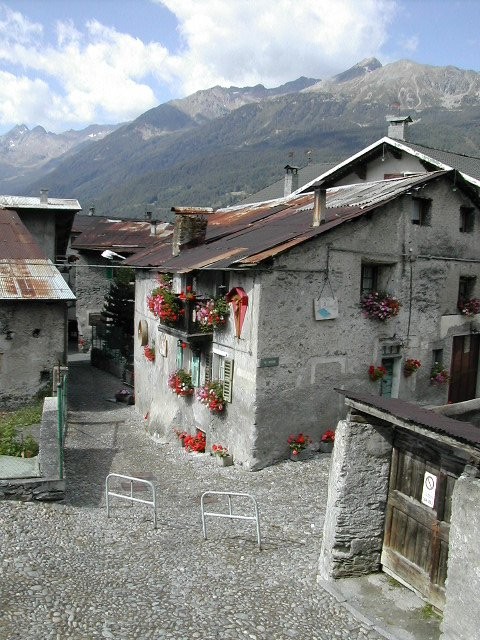
Bormio is a typically beautiful Alpine town, with ancient stone houses, their gray exteriors enlivened by bright flowers

^ Bormio is a typically beautiful Alpine town, with ancient stone houses, their gray exteriors enlivened by bright flowers

Tourist information for Bormio

Our previous trip

Slow Food, Good Wine, Hot Baths

Last September I joined the Slow Foodassociation, dedicated to the appreciation and conservation of good food worldwide. We’ve been to three dinners so far, two of which emphasized wine, and one in which every dish somehow involved chocolate. The wine dinners also featured excellent food, and vice-versa. The international Slow Food association is divided into local groups, in Italy called condotte. Outside of Italy they’re called convivia, which fits: after you’ve been drinking good wine together for an hour or so, everyone does get very convivial!

The most recent dinner we attended began with a tasting of Sfursat, a wine from Valtellina, an Alpine valley northeast of Lake Como. Sfursat (dialect for sforzato – “forced”) is made by drying the harvested grapes for three months before pressing, so that their sugar content – and therefore the percentage of alcohol in the wine – is high, at least 14.5%.

The best of the four Sfursat we tasted that night was Sfursat 5 Stelle from the Nino Negri vineyard, and we had the privilege of sharing a dinner table with Casimiro Maule’, the vintner who created it. He told us a great deal about winemaking in Valtellina, most of which I can’t remember (too many glasses of Sfursat and other grand Valtellina wines!). I do remember that it’s difficult to grow wine there; the terrain is steeply mountainous and the soil not extremely fertile. But Sig. Maule’s Sfursat, and other excellent wines from the region, prove that it can be done, and done very well indeed.

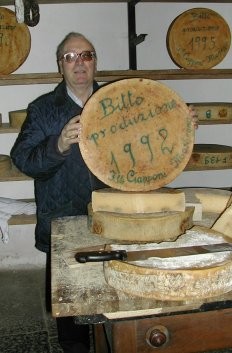
Signore Ciappone

I’m not sure how easy it is to obtain Valtellina wines outside of Italy, but if you love good wine, it would be worth the effort to track them down or demand them from your local supplier. A more common type is called Inferno – yes, it’s a hell of a wine. A good example of this is Giuseppe Rainoldi’s Inferno Barrique, which has a wonderful complex flavor because it’s aged in small wooden casks.

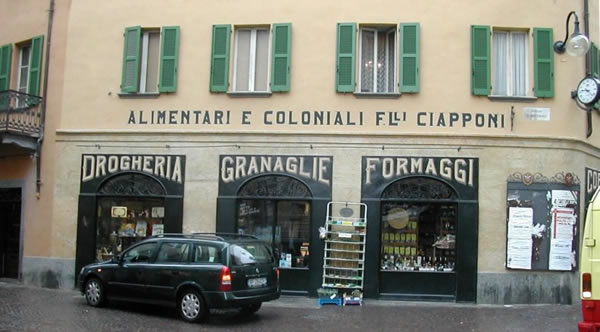
In the spirit of Slow Food, last week Enrico and I explored Valtellina, making our first stop in Morbegno at the renowned shop of Fratelli Ciapponi. We spent two hours there with one of the senior brothers Ciapponi, taking a tour of the shop and its underground wine and cheese rooms, and got a complete explanation of how the local bitto cheese is made and successfully matured. (“I caress these cheeses more than I do my wife,” said Sig. Ciapponi, probably not for the first time.) We tastedbitto of various ages. There were noticeable differences at one, two, and six years, partly due to ageing, but also because this is a handcrafted cheese that depends heavily on environmental conditions: more rainfall means better grass in the high Alpine pastures, and tastier milk from the cows and goats who produce the raw materials.

Sated with cheese, we continued on our way to Bormio, a ski resort town. I don’t ski, and it’s been a bad season for skiing anyway, so why did we go there? For the natural hot spring spas. These date back at least to the Romans; Pliny the Elder described the baths in the first century AD. The Bagni Vecchi (“Old Baths”) have been expanded and refurbished over 2000 years to their present glorious state, which includes:

  • a 30-meter y-shaped tunnel dug into the mountain, debouching into a natural steam room on one side and a channel full of very hot (46 Celsius) water on the other
  • pools with hot waterfalls – natural massage!
  • mud baths
  • steam rooms and saunas
  • an outdoor hot water pool with a view of the mountains all around

It was heaven. We spent all afternoon there, and I went back the next day while Enrico went skiing. If you love to get into hot water, this is the place to do it.

Caveat: The Bagni Vecchi are closed in May, and in the summer the water is not nearly so warm – for some odd geothermal reason, when the ground freezes, the water gets hotter. Best and least crowded times to go are probably November before the ski season really gets underway, and March/April when the season is ending.

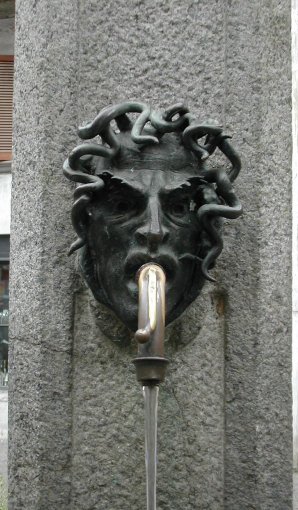
Morbegno Fountain