Tag Archives: bio

That Italian Shoe Thing

My daughter has a shoe fetish, sympathizing whole-heartedly with Carrie Bradshaw‘s need for Manolo Blahniks. Ross herself owns about six pairs of sports shoes – not to run in, but because they’re fashionable (who would actually jog in Pradas?). She also owns various stylish flats, and of course riding boots. She still fondly remembers shoes she owned when she was small, such as the pink and white sneakers with cat faces and, more recently, the pink Converse All-Stars with Spongebob Squarepants laces. At least the pearly violet Fornarinas with the clunky heels didn’t last too long; she outgrew them and gave them away to a friend’s daughter, who stands in awe of Ross’ fashion sense.

I undoubtedly owned some shoes as a child, but I couldn’t tell you anything about them. Whenever possible, I went barefoot, even on the blistering-hot sidewalks in Bangkok. Yes, they were literally blistering hot, at least for novices. When Julianne moved into the big house up the soi (lane) from us, I offered to show her the neighborhood, including the pool next door that we were entitled to use. “Should I put my shoes on?” she asked (in Thailand, no one wears shoes in the house). “Oh, no, it’s only around the corner.” By the time we got there, the soles of her feet were covered in blisters. I guess mine were too callused to feel the heat.

I also went barefoot at my aunt’s place out in the country in Texas, where the hazards were bull nettles and cowflops. If you had to step in something, cowflops were preferable to bull nettles.

Anyway, growing up in the tropics, I didn’t need much shoeing, and to this day am most comfortable in sandals, or no shoes at all. But, having moved to colder climates, I had to come to terms with closed shoes much of the year.

This wasn’t a huge problem in high school and college, where I could usually get away with sneakers (as we used to call sports shoes). Sneakers were even cool. I remember how impressed we all were with the first running shoes we ever saw (Adidas) in Delhi, around 1979.

But now I live in Italy, where an adult wearing sports shoes outside of an actual sporting event (aside from the odd – very odd – jogger) is immediately marked as an American tourist.

I ignored this for years in Milan, didn’t much care what people thought. My sole concession was to buy a pair of leather shoes for the winter – Timberland hiking boots, but at least they’re black, and a bit more elegant than the classic clumpy boot. I love those boots, and was looking forward to getting back into them this winter.

However, I’ve found that, while hiking boots still have their place around the stables, they aren’t good enough for downtown Lecco. This is a small town where everyone knows, or at least notes, everyone else, and I don’t want to disgrace my family. Well, unless it’s raining.

Which brings me, kicking and screaming, into the world of fashion. It’s hard in Italy to buy the simple “classic” shoe styles that I like and find comfortable; all you’ll see in the shops are this season’s trends. For the last few years, the trend has been extremely pointy. In fashion, what goes around comes around – again and again and again. At school, rooting around backstage in the costume trunks, we once found a pair of very old, very pointy shoes. We took turns clomping around in them and had a good laugh. “Cockroach stompers!” – so pointy that you could easily reach into a corner to stomp a cockroach. That’s what’s in the shop windows in Italy (and on my daughter’s feet) these days.

Fortunately, I had bought a couple of pairs of semi-respectable shoes a few years ago, when square toes were in fashion. I don’t like square toes much more than pointy ones, but at least they don’t pinch my toes together and make my feet look even longer than they already are.

I don’t wear high heels, either. I love the look, but lack the balance. My favorite shoes, and the most comfortable heels I own, are cowboy boots, which Sue and I bought after an epic six-hour search all over Dallas (Sue is the only person with whom I could have survived and actually enjoyed this). They’re dancing boots, mid-calf height, black, with fringe. They’re some comfortable that I used to travel in them, though they’re very noisy on hard flooring – people would turn around in airports to stare.

I will say for Italian shoes that they’re very well-made and comfortable. Other shoes you have to “break in,” which really means that they’re breaking you in – you first develop blisters, and then calluses, where they rub. With Italian shoes, I simply put them on and start walking, and have never gotten a blister.

The Italian Proposal

Enrico and I maintained a long-distance relationship for over two years; he was doing his PhD at Yale, I was working in Washington, DC. At first, we saw each other about once a month, then about every three weeks, then about every two weeks… Luckily, there was an airline price war on in those days, and a roundtrip NYC-DC could be had for as little as $59 (DC-NYC cost more, I suppose because more DC residents wanted to escape to New York for the weekend than vice-versa).

We took our first vacation together in the spring of 1987. Neither of us could afford much more than airfare, so we flew to Texas and stayed with my aunt Rosie, in Coupland, about an hour’s drive outside Austin. One night we were driving back from Austin, not knowing that there had been a fatal accident on the county road the night before, and the local police were jumpy. We got pulled over because Enrico, true to his Italian heritage, was speeding. Worried about the culture clash I thought likely to ensue, and how much it might cost us, I started to get out to go around the car and talk to the nice policeman.

“Get back in that car!” he yelled. The road was very dark; he was concerned about someone driving into me. He talked to Enrico for some time, then came around to my side of the car.

“Where did he say he was from?” asked the policeman.

“He’s from Italy.”

“Well, you tell him that we don’t drive that way in Texas.” And he let us go – without a ticket.

My first visit to Italy was Christmas, 1987. I don’t now remember much about it, except being intensely frustrated that Italians, when in a group with other Italians, will not speak anything EXCEPT Italian – regardless of whether that leaves someone (me) completely out of the conversation. Which did provide motivation for me to learn Italian, though this was difficult to do well, with only weekly evening classes at the US Department of Agriculture (why the Dept. of Ag. sponsors language classes is a mystery to me, but they do, and that’s how I started).

For spring break ’88, we went to California. It was either on the flight over or the flight back that Enrico finally proposed. Well, sort of. He didn’t actually say: “Will you marry me?” or anything of the kind. What he said was: “I’d like to have children with you.”

“Uh, okay, but aren’t we missing a step?”

So we agreed to get married, at some unspecified future date.

It seems that this is not an unusual way for an Italian man to propose. Another American woman married to an Italian told me that her husband “proposed” in much the same words; they now have three lovely daughters. And Enrico and I have just had our 15th anniversary. Well, one of our two anniversaries. But that’s another story.

  1. The Italian Proposal
  2. Tanzania Surprise
  3. Coca-Cola, and an Ostrich
  4. Justice of the Peace

Recycling: A New Italian Tradition

Growing up in Bangladesh and India, I observed that every scrap of paper, or anything else potentially useful, was re-used. Peanuts bought from a roadside stand were given to me in a little bag, carefully handmade from a page of a Singapore telephone directory. At school, the kabadi-wallahs (second-hand men) would come around collecting paper, cloth, and tins, for which they would pay by the kilo. This meant that our school papers and love letters could (embarrassingly) turn up as bags in the bazaar; we took great care to burn anything that we wouldn’t want anyone to read.

Woodstock School and its environment encouraged thrifty habits. There simply wasn’t a lot of stuff to buy, let alone throw away. Sometimes even the basics, like electricity and water, went missing. In a drought year (the spring and summer after a failed monsoon), power frequently went out because there was no water in the mountain rivers to generate hydroelectricity. Studying by candlelight sounds romantic for Abraham Lincoln, isn’t so great in real life. (Woodstock now has generators, and uninterruptible power supplies for its computers.)

Then the local springs dried up, and we had no water to take showers or even flush toilets. Servants would bring up water from a rainwater tank, and we flushed using buckets. Nowadays, although I love taking hot baths, I always wince at the water left in the tub afterwards, wasted. In our previous (small) apartment, the bucket used for mopping the floors lived under the bathroom sink, so I would simply leave the water in the tub, and flush with that water until it ran out or we needed to drain the tub to take showers. I have had to explain this habit to people who couldn’t understand why I do not reflexively pull the plug after a bath. I’d like a house designed to use bath and shower water to flush toilets.

India’s recycling habits meant that there was very little trash on the Mussoorie hillsides, until recent years when plastic shopping bags and packaging became popular. Suddenly, the garbage bloomed. I suppose increasing wealth (for some) also meant that people were less careful, because plastic bags weren’t the only thing being thrown away. Dick Wechter, a Woodstock staff member keenly interested in mountain environmental issues, found a solution. He paid local sweepers (untouchables, the poorest of the poor) to collect trash from the hillsides, which they sold to the kabadi-wallahs, in the end making more than enough money to pay the collectors’ salaries. Dick has also been promoting the use of biodegradable paper bags or reusable cloth bags for shopping, and composting wet waste.

Italy was becoming recycling-conscious just about the time we got here (1991). It started with glass, which you would put into a large plastic bell, usually located on a traffic island or sidewalk within a block or two of your home. The bell had little round portholes near the top, into which you would push one bottle at a time, dropping it with a satisfying crash to the bottom. Once a month or so the glass truck would come along. It had a miniature crane on the back, with a hook which would pick up the bell by a loop of steel cable sticking out of its top. The crane would swing the bell over the open bed of the truck, and then a second hook would pull a second loop which opened the bottom of the bell – MEGA CRASH as hundreds of glass bottles fell. This was a less pleasing sound, especially at 6 am.

A little later, paper recycling bins turned up on the streets as well, though they were sometimes set on fire by vandals. Then plastic. For a while, in Milan, we had to separate out “humid” (organic, compostable) garbage into special containers and biodegradable bags, but the Comune of Milan gave that up when it was found to cost more to make it into fertilizer than farmers were willing to pay for it. A couple of years ago, Milan’s sanitation authority also moved recycling closer to home, by putting bins for paper, plastic, and glass into the courtyards of apartment buildings. This was a good idea, but the execution was confusing. Aluminum (soft drink) cans were supposed to be placed with glass; I never did figure out what to do with other kinds of cans. Some kinds of plastic could be recycled, others not. The city also tried to increase recycling rates by fining anyone who messed up. In a building complex with hundreds of people, this meant fining the entire complex, since no individual culprit could be identified. One irritated resident of a fined building noticed that sometimes the garbage men themselves weren’t fussy: he photographed a truck loading both recyclable and general garbage into the same compartment, clearly wasting the public’s efforts at recycling.

Lecco was up for an award last year as one of the most recycling cities in Italy, and I can see why. We have three bags: umido (compostable “wet” waste), sacchetto viola (violet bag, for plastic, paper, cardboard, wood), and sacchetto trasparente(transparent bag – non-recyclable). I assume that the stuff in the sacchetto viola is hand-sorted somewhere along the way, which is more sensible than trying to make confused old ladies do it at home. I recycle even more paper now that I don’t have to tear the plastic windows out of envelopes and food cartons. We have separate (small) garbage bins under the sink for umido and general garbage. Glass, unfortunately, still has to be carried to a bin down the road. We collect it into a plastic container out on the balcony, and every now and then Enrico takes a walk with a big bag of glass.

The plastic shopping bag problem is somewhat mitigated in Italy by the simple expedient that supermarkets charge 5 cents each for them. So people tend to take fewer of them (I am always left gasping at the profligacy with which American supermarkets bag groceries), and/or bring re-usable bags of their own. Also, kitchen garbage pails are small enough that these bags can be used to line them, saving the expense of buying garbage bags. You have to take the garbage out more often, but you can take it anytime, down to a trash room in your building, where the people responsible for cleaning the building will get it out to the street on the correct day for collection.


Jan 10, 2004

Mike Looijmans writes:

“In Belgium it is very common to collect rain water (usually from the roof) in an underground tank, and use this water for things like flushing toilets, washing and so. In many Belgian places, tap water is not drinking water but usually untreated ground or rain water. ‘Clean’ water for cooking and drinking is usually provided from separate taps.

In the Netherlands, all tap water is drinking water. In the east and south of the country, the water is taken from underground wells and is the same stuff which is sold in bottles at exorbitant prices in supermarkets. In fact, some types of bottled water sold internationally would not pass the Dutch criteria for tap water. Though it sounds like a terrible waste to use this water for car washing and such, the water as it is pumped up from the ground needs very little treatment, just filtering out the sand is usually enough. The water companies use trout to monitor the quality. A trout swimming in the water stream is monitored by a computer system. When the fish makes a sudden movement, alarm bells start ringing as these fish are very sensitive to pollution.”

How My Italian Adventure Began

Strangely enough, my Italian adventure began in India. In June, 1986, I finished up my study abroad year in Benares. It had been a fun but intense time, and I looked forward to a vacation in Mussoorie, my “home town,” site of Woodstock School. My dad was supposed to join me, having just finished a contract in Indonesia, and we would travel back to the States together. When I got to Mussoorie, I used most of my remaining rupees to rent a house on the Landour hillside. I was just settling in, organizing food deliveries with the various wallahs, getting scorpions out of the sink, etc., when a telegram arrived from Dad: “Not coming to India. I’m broke. Make your own way back to the US.”

Umm. This presented difficulties. I did have a return ticket, but we were now in the airlines’ peak season, so I’d have to pay a $100 premium to leave right away. Which was a lot of money in India then, and I didn’t have it. There was no prospect of getting the rent money back from the landlord, nor did I have enough cash to stick it out in Mussoorie til the end of peak season. So I went to Delhi, sold my beloved Nikon, and booked a flight out. I used more of my scarce cash to call my friend Julia at Yale. (We had seen each other the summer before, when she was just returning from her own study abroad year, in Italy, and I was just leaving for Benares.)

“I’m arriving in the States flat broke,” I said. “Please rescue me.”

“Of course,” she said. What are friends for?

I flew into New York on July 6th with $32 in my jeans pocket. Julia’s dad picked me up at Kennedy airport and took me to his home, where I stayed for two weeks, doing odd jobs at his printing company in Darien, CT. I figured I should earn enough to get back to Austin, where most of my stuff was, and I could live with my aunt Rosie til I figured out what to do next.

Julia was spending the summer in New Haven, so I took the train up from Darien to visit her. My return to the US had been so abrupt that she already had a full social schedule for the weekend, and all I could do was fall in with that.

“We have to have a picnic with this Italian guy,” she said, “because I told him I would. I think he likes me, but I’m not interested.”

I shrugged. Whatever. But I had time on my hands, Julia being off at an audition, so I baked banana bread. I had missed cooking in Benares.

When Enrico arrived, Julia introduced us, and I was careful to pronounce his name precisely, rolled R and all; it was oddly important to me to get it right. I don’t know what he saw when he looked at me; something exotic, no doubt: my hands were decorated with henna, a parting gift to myself in Delhi. The three of us picnicked in East Rock Park; Enrico loved the banana bread. After lunch he climbed a tall pine tree.

“Do you think he’s doing this to impress me?” asked Julia.

“No, I think he’s doing it because it’s fun,” I replied.

We parted in the afternoon knowing that we’d meet again in the evening; Enrico and Julia had both been invited to a party by a mutual friend. But Julia received a last-minute invitation to a classical music concert that she couldn’t bear to miss.

“Do you mind if I go? You can go to the party with Enrico.”

No, I didn’t mind.

I met other people at the party, but don’t remember them. Susan, now a family friend, years later said about that evening: “I had just broken up with someone, and had my eye on Enrico, but when I saw you two together, I knew there was no chance.”

We left the party for a concert on the New Haven Green, where we ran into Gabriel and Inger, friends of Enrico’s. The four of us went to a disco in Gabriel’s car, and stayed very late – the club provided a breakfast buffet. I kept trying to call Julia to let her know I wouldn’t be back that night, finally reached her around 3. “I’ll just crash at Enrico’s,” I said.

We did more than just crash. I guess I’ll never be able to lecture my daughter about not kissing on the first date. Oh, well. I never did play by The Rules, and look where it’s got me.

The next day I went back to work in Darien, not sure how to regard the events of the weekend. Just a fun fling, I first thought. Then Enrico began calling: “When are you coming back?”

It took several months. I first returned to Austin, where I realized that I actually had enough credits to graduate from the University of Texas with a degree in Asian Studies and Oriental & African Languages & Literatures (double major). I didn’t need to stay in Texas, and the economy was in a slump, so there didn’t seem much point. I might as well be… somewhere on the east coast?

My next port of refuge was with family friend Donna and her teenage daughter, in the Virginia suburbs of Washington, DC. I stayed with them for several months, working temp jobs to stay afloat. I looked for the cheapest possible way to get to New Haven, and found a ride board in one of the Congressional office buildings. A Federal employee with a large car drove every weekend to his other home in New York state, to tend his garden on the Hudson River. For a share of the gas costs, he’d get me as far as NYC, where I could catch a commuter train into Connecticut.

Also riding in the car that Friday was a woman with a wild history that she was eager to share with us. She was an anthropologist who had studied the Coptic Christians in Egypt, and for years had been the mistress of the prince of all the Copts. She told us lots of interesting things. The poor, mild-mannered Federal employee shrank into the leather seat of his Lincoln, turning various shades of crimson.

“So why are you going to New York?” she finally asked me. I explained that I was going to visit a graduate student at Yale with whom I might be starting a relationship.

“Oh, you can do better than that,” she said. “Let me fix you up with a rich man.” I declined, and continued on my way to New Haven.

Some weeks after this, I landed a “permanent” job as an administrative assistant in the political department of the American Consulting Engineers Council. (Which was an instructive look into the workings of K Street, but that’s another story.) The office overlooked a green square, diagonally across from a Washington Metro stop. So, when Enrico came to visit, he took the train to Penn Station, and then the Metro to meet me at the office. I waited eagerly, looking down from our 5th-floor window, and recognized him across the square by his walk. The thought floated into my mind: “That’s the man I’m going to marry.”

And I was right, though it took him another 18 months to figure it out.

Everyday Movies

I’m astonished at how regular a part of my life movies have become these days. When I was a kid in Bangkok, few English-language movies were shown, still fewer that were suitable for kids. I dimly remember Camelot (very long – I fell asleep before the depressing ending), being scared at Diamonds are Forever, and The Wizard of Oz – which I didn’t see very well because I had forgotten my glasses, not yet being used to carrying them with me.

At the end of every film in Thailand, they played the national anthem while showing patriotic pictures of the king and the flag. Everyone had to stand to attention until it was over, so there would be a stampede during the final credits to get out of the theatre before the anthem began. The authorities eventually caught on, and enforced respect by playing the anthem right before the film started.

In Pittsburgh we had TV, which was a novelty to me. We had only gotten a TV in Bangkok in 1969 to see the moon landing, which everyone stayed up all night to watch. Thai TV didn’t show much at all in those days, let alone in English, so after the moon show was over, the TV went out to the servants’ quarters. I would sometimes go there to watch Bewitched; you could get the English soundtrack by tuning to a special station on the radio.

Back in the States, I liked some shows, especially Saturday morning cartoons, but I never got used to the American attitude towards television. In many households it was (and still is) constantly on, which I found distracting; I couldn’t just ignore it or half-watch it, blaring away in a corner, as everyone else seemed to do. I would go to a friend’s house to visit and play, and be disappointed because she’d want to watch TV; this was not my idea of a social activity.

When I was in 7th grade, the public television station PBS began showingMonty Python’s Flying Circus late on Tuesday nights, followed by the International Animation Festival; it was a great treat for me to be allowed to stay up til 11 to watch both.

American TV also gave me a chance to catch up on classic movies I had missed. “The Wizard of Oz” was shown once a year, around Thanksgiving, and it was a very big deal, advertised for weeks beforehand. One year Dunkin Donuts came out with their “Dunkin Munchkins” (the holes instead of the donuts), and used this annual TV event to launch them. Then there were the classic Christmas movies like Rudolph the Red-Nosed Reindeer and Frosty the Snowman sung by Burl Ives. (I never liked those; I preferred real animation.)

In 1976, we moved to Bangladesh, and were again cut off from English-language media. (We entertained ourselves by making music – no bad thing, but a topic for another article.) One of the American government services showed a film once a week; they were mostly films I didn’t particularly want to see, but I’d go out of sheer boredom, with the result that I wouldn’t sleep for weeks after seeing things like Carrie.

Up at Woodstock, we didn’t even have that. The school would show a film once a semester or so. It never occurred to me to go see a Hindi movie in town, partly because my Hindi wasn’t that good. Once or twice we saw English films at Picture Palace. I was mystified by the popularity of Bud Spencer and Terence Hill, a pair of apparently English actors who made a series of farcical westerns, very popular in India; how was it that I’d never heard of them in the States? I learned many years later that they’re both Italian, and the films were shot entirely in Italy; both were still making silly movies when I moved to Italy in 1991.

During my Woodstock years, my dad moved back to Thailand, where mass entertainment had come a long way. There was more TV, though I only watched The Muppet Show, again listening to the English soundtrack on the radio. Movie theatres were now equipped with glassed-in sections where you could sit if you wanted to hear the English soundtrack, and all the big Hollywood movies reached Bangkok not long after their US release. There were also “movie restaurants,” where you could eat a meal while watching a movie.

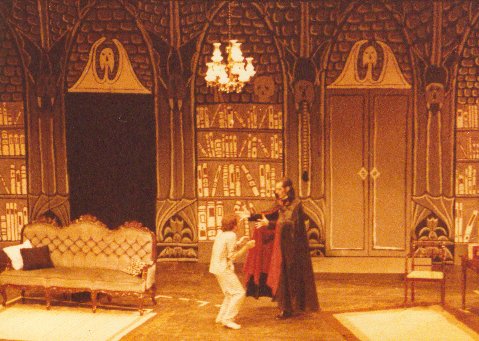
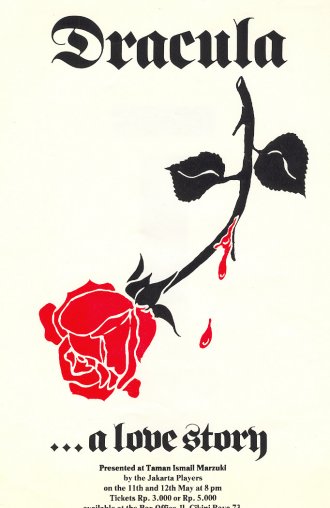
During home leave in the States in the summer of 1979, I gorged on movies, forcing my dad to accompany me to The Muppet Movie (he fell asleep) andDracula, but refusing to see Alien (“In space, no one can hear you scream” – but in the theatre they would have!). And I saw The Rocky Horror Picture Showfor the first – but far from last – time.

My university years were film heaven. I took a film course at UC Santa Cruz, analyzing such classics as The Rules Of The Game, Rome: Open City, andPather Panchali. Santa Cruz being the funky alternative town that it is, there were several art house theatres. My boyfriend and I got carded going to see the X-rated gay film Taxi zum Klo. Even when she’d established that we were old enough, the ticket seller asked: “Are you sure you want to see this?” We did, and found it mostly funny, and very touching at the end.

When I transferred to the University of Texas, I was delighted to discover that the Student Union cinema showed about 15 different movies a week, plus there were other film societies around campus, and of course lots of theatres in town for the first-run stuff, and friends to go see them all with. (Poor John, I was still a wimp – I dumped popcorn all over him after swearing I wasn’t scared inSomething Wicked This Way Comes.)

When I visited my dad in Indonesia in 1984, I feared movie withdrawal. My attempt to see a movie in Semarang, during an earlier visit, had been a disaster – it was A Fistful of Dollars, not bad in itself, but smoking was allowed in Indonesian cinemas, and everyone smokes clove cigarettes. After 3 or 4 hours of Sergio Leone, you come out smelling like a baked ham.

In Jakarta, however, we had the video man. Videocassette players were well established by this time, but not video rental stores. So this guy would come around once a week with huge cases of videos; you could pick as many as you wanted, and pay a small fee to keep them for the week. All pirated, of course, which made for great variety. We even saw an Australian television mini-series about an ugly rich woman whose husband dumps her into an crocodile-infested swamp to be eaten. Unbeknownst to him, she survives. After extensive cosmetic surgery and a long recovery, she is unrecognizably gorgeous and bent on revenge… why on earth does this thing stick in my mind?

My daughter’s generation is growing up with no concept of media scarcity. We have a VCR and DVD player, and a large collection of films in both formats. Blockbuster Video arrived in Italy years ago, and our local one in Milan had a small section of English-language tapes. Now, with DVD, there are multiple soundtracks, so language is no longer a problem. My only gripe with Blockbuster is that they don’t have classic or unusual films (I remember fondly a video rental shop near a friend’s house in San Francisco that I could have spent a lifetime exploring). So I end up buying a lot of the older films that I want to see. (I’ve discovered that the HMV shop at Heathrow Terminal 1 almost always has something interesting on sale, cheap.)

Ross’ generation also doesn’t realize how privileged they are to be able to watch a film over and over again, something you used to be able to do only in film courses. If you have a small child and a VCR, you’re familiar with the phenomenon: a kid will watch the same movie constantly for weeks or months, in the same way she might demand a beloved story every night for weeks or months. Ross has long outgrown Disney movies; she now watches Stanley Kubrick films, over and over. My 14-year-old film auteur.