Tag Archives: Illumos

The Last of OpenSolaris

The summer of 2010 was largely a painful mess. I had moved to San Francisco in April, and by late May was very ill with a sinus infection that would eventually require months of antibiotics and two procedures to clear out. On the work side, Sun had been bought by Oracle, and we were in the throes of a merger that caused enormous pain to most former Sun employees.

I had an office in building 18 of Sun’s Menlo Park (MPK) campus, but I didn’t spend much time there. The building already seemed very empty: whole teams had been laid off, and those remaining preferred to work from home so as not to be constantly reminded of those who were gone.

By midsummer, we knew for sure that MPK would be sold and we’d all be moving to Sun’s Santa Clara offices. As a minor part of preparing for the move, I was asked to clear out 10 or so storage rooms that had belonged to various groups. I was ideal for this assignment: I’m very good at sorting and packing. I also hate waste, so I was anxious to find good homes for as much stuff as possible, though this was a lot more work than just “recycling” it all.

First, I took inventory:

  • Over 3000 t-shirts. Most had been made for OpenSolaris user groups (why were there so many for Poland?!?). We were no longer allowed to give these away outside the company, because the OpenSolaris brand had been “deprecated”.
  • Hundreds of baseball caps, also OpenSolaris-logoed. Ditto.
  • A gigantic shipping pallet full of copies of the OpenSolaris Bible. The information in them was (and is) still useful, but, again – wrong branding.
  • Hundreds of copies of Solaris Internals, Solaris Application Programming, and others, but only 28 of Solaris Performance and Tools – which proved to be the most in-demand of the books.
  • Huge amounts of office supplies, which we gave to a program that gives this stuff to teachers.

There were a few unique items, such as Solaris-logoed boxer shorts. Thousands of plastic license plate frames intended for a dismally-failed promo for the Sun cloud (nothing to do with these but put them in the recycle bin).
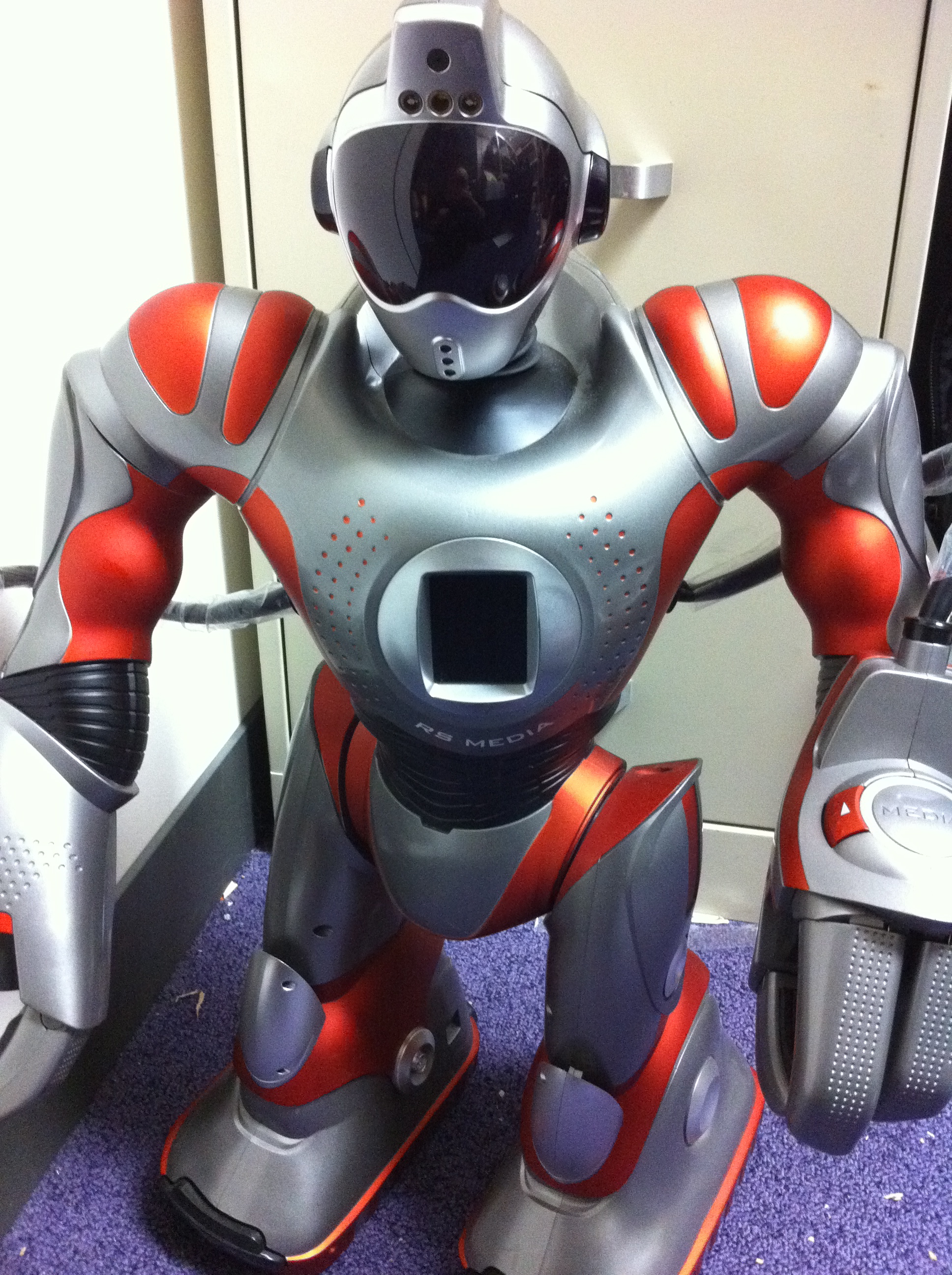
^ I found two of these robots in a closet that had belonged to the Java team. Online research showed that they had been part of one of Gosling‘s toy shows at JavaOne some years before. They came home with me; one has since gone on to pursue a career in Hollywood, the other is at the Joyent offices (matches the decor) went to live with Ben Rockwood’s family. I assume that Number 3 still lives with Gosling.

And OpenSolaris-labelled champagne:
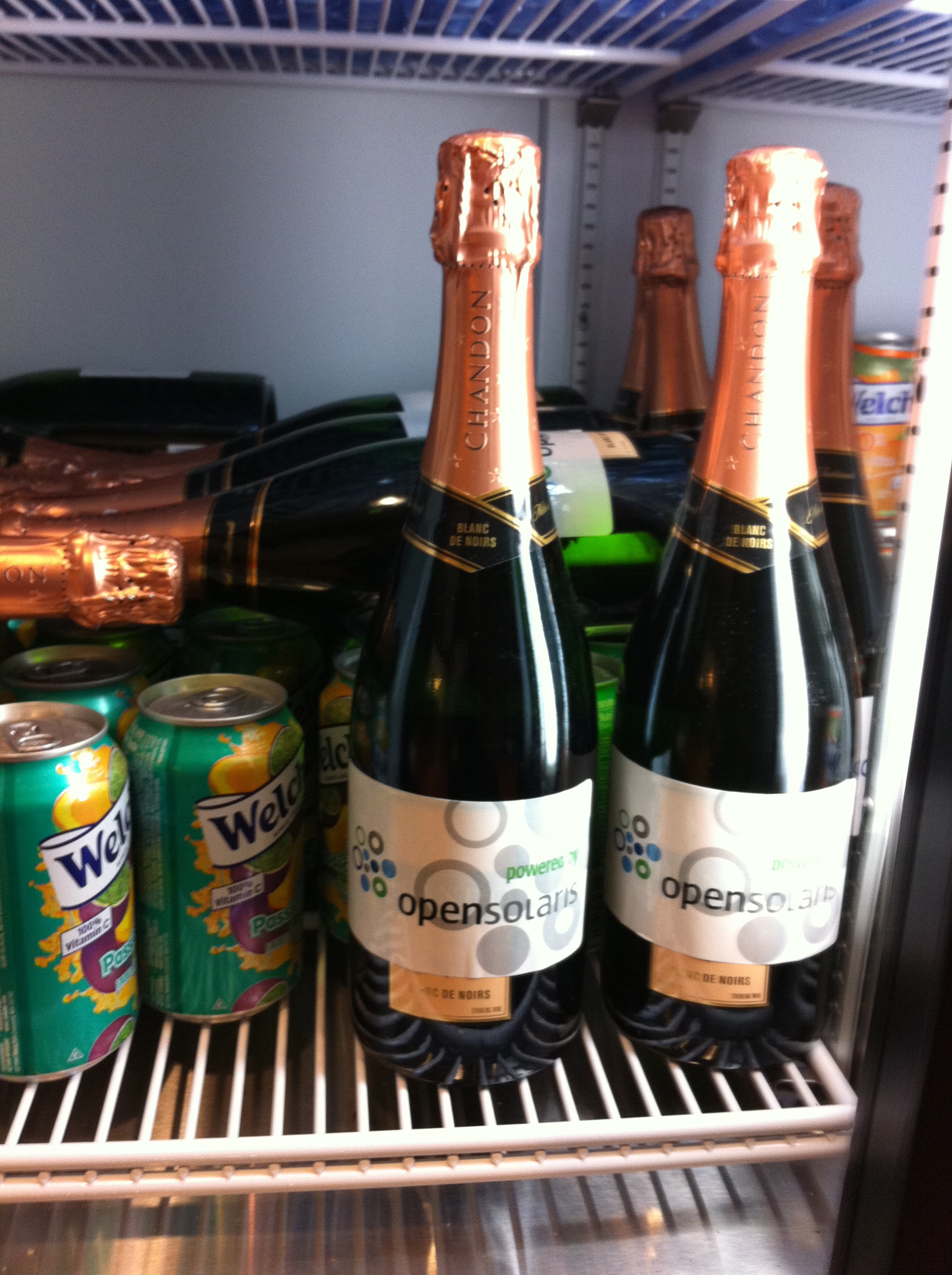
I remembered this: it had been served at a party during CommunityOne in 2008. Lynn and I snagged a case of the remainders to take back to our colleagues in Broomfield. The case or so that I later found in a store room in MPK we served at a farewell-to-MPK party in August, 2010.

Making endless trips between buildings with trolleys full of heavy boxes, I consolidated all the books and apparel into one large storage room. Then I advertised within the company to find “buyers.” To my surprise, everyone wanted an OpenSolaris shirt. None had been given out within the company: only people who had attended conferences and user group events had them. Which left out most of the engineers who had actually created (Open)Solaris! So I packed up dozens of shirts to send to Sun offices around the world. I took piles of stuff to the engineering meetings that I attended as part of my regular job – which turned out to be a good way to warm up engineers who were previously too shy to even speak to me.

But there was still a lot of stuff left. Towards the end of summer, when I was on a deadline to get Building 18 cleared, I started having lunchtime “store hours” when people could come rifle through piles of shirts and pick up books.
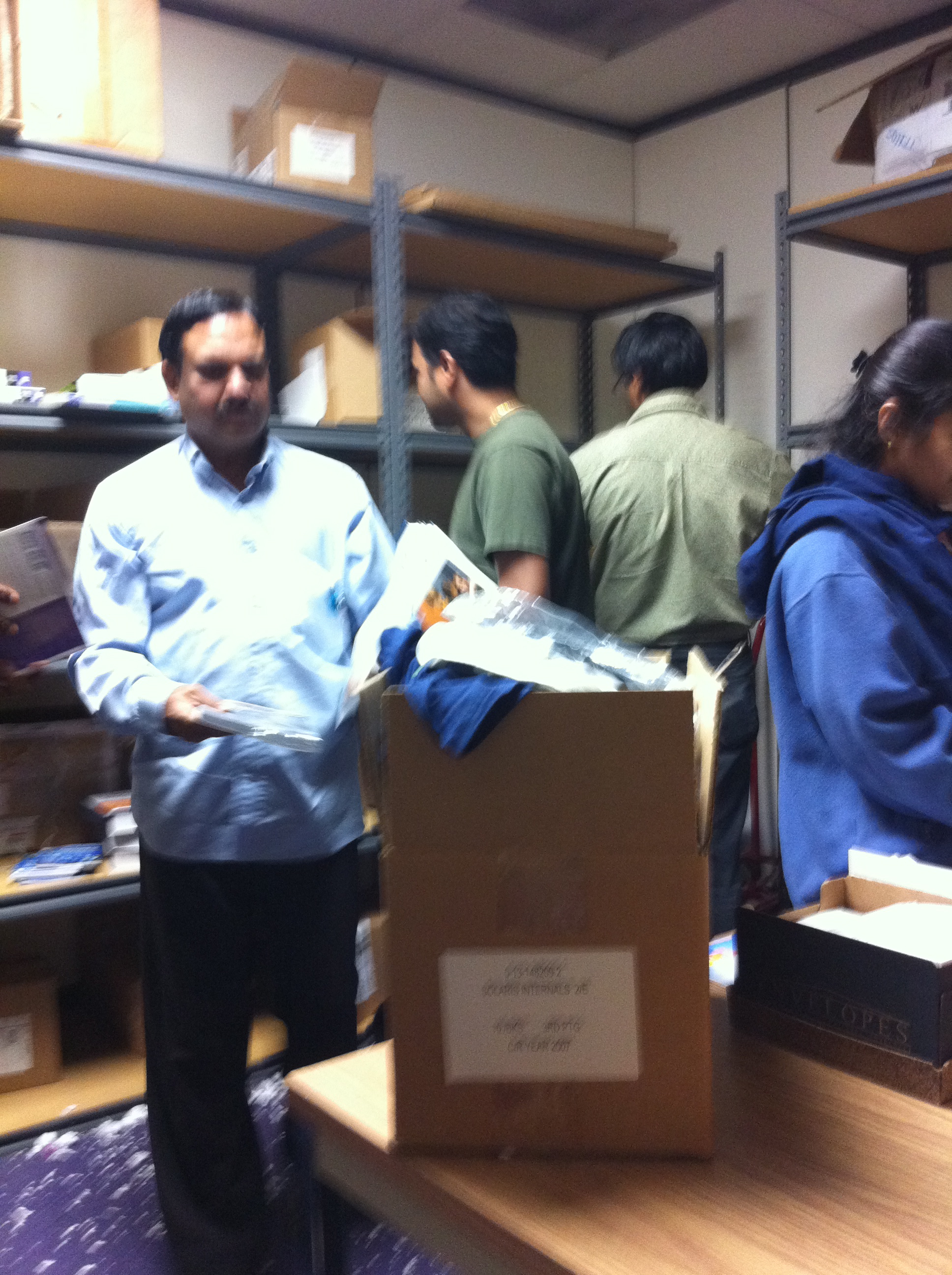
An Oracle VP of software drove down from Redwood Shores to get copies of Solaris Internals for his team – said he didn’t have budget to buy them. ???
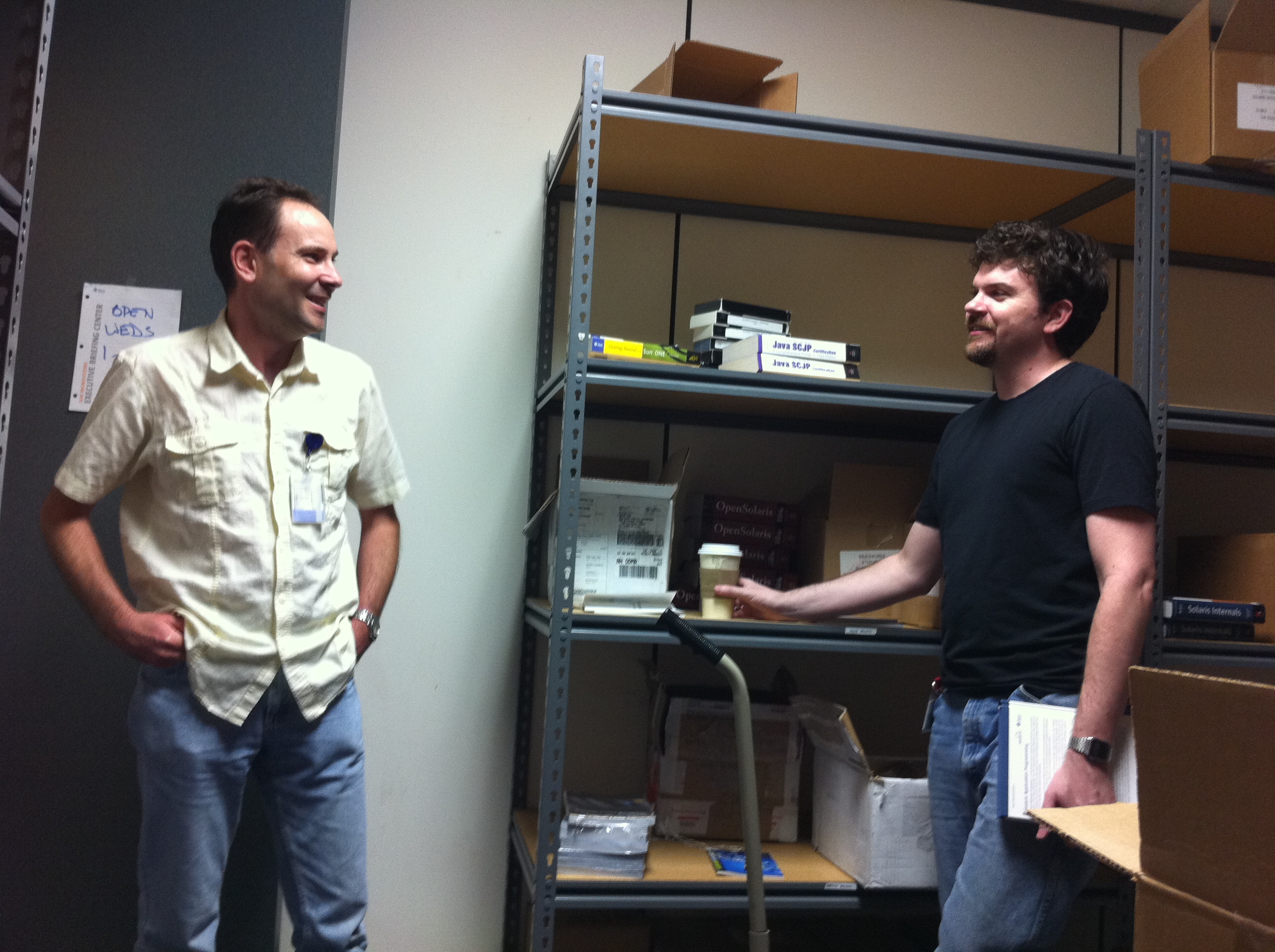
Dozens of people came to grab some remnants of Sun history. There were historic encounters, such as the above meeting in my storeroom/showroom between Solaris book authors Darryl Gove and Brendan Gregg.

Some of the schwag has had interesting later lives. Several dozen hats went to a church, to help keep people together during a hike in Yosemite. Another bunch ended up at a school event, and are still seen on that campus today. I gave a hat to a friend who had nothing to do with Solaris, but now gets chatted up by random geeks in San Francisco whenever she wears it.
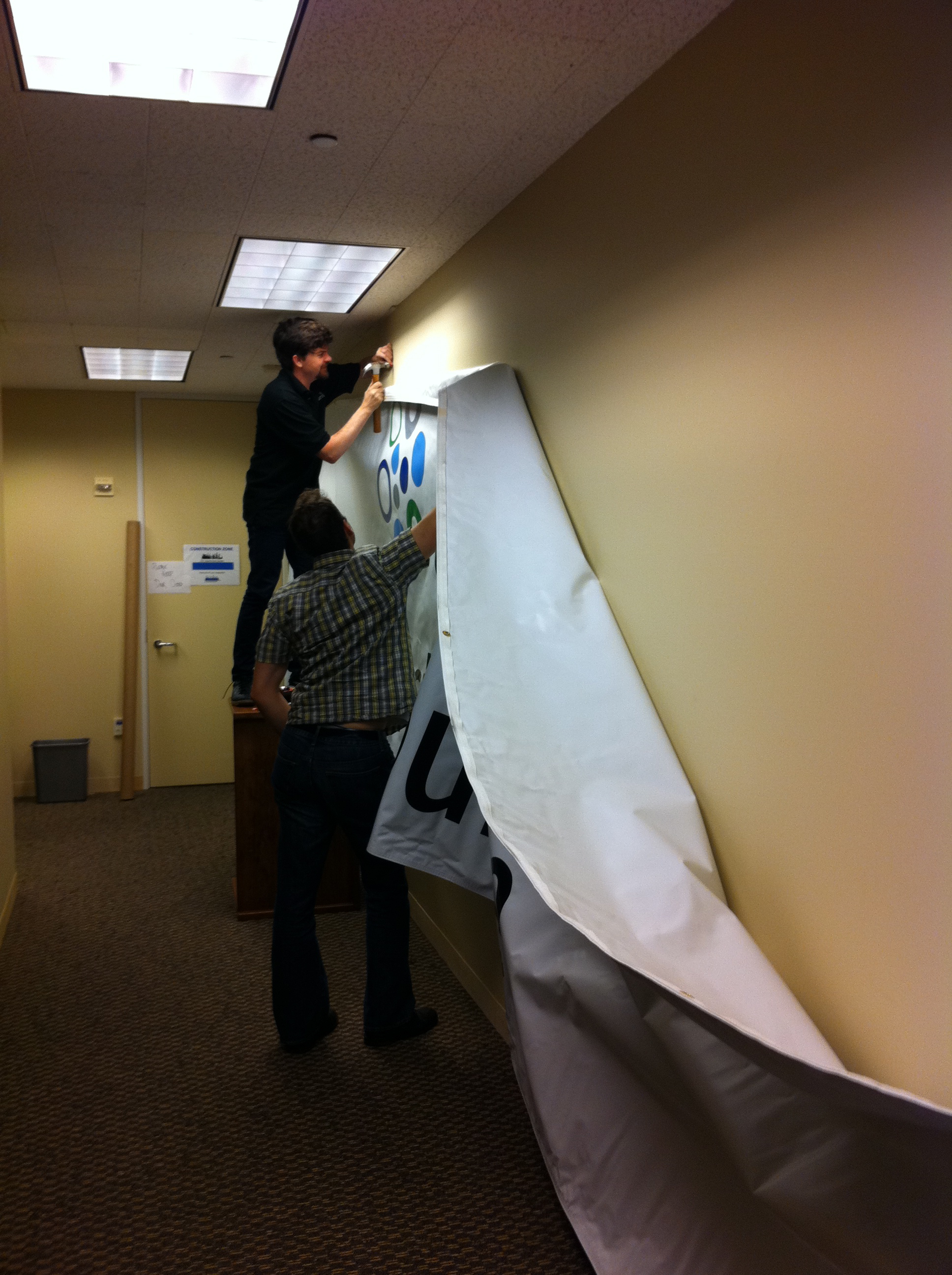
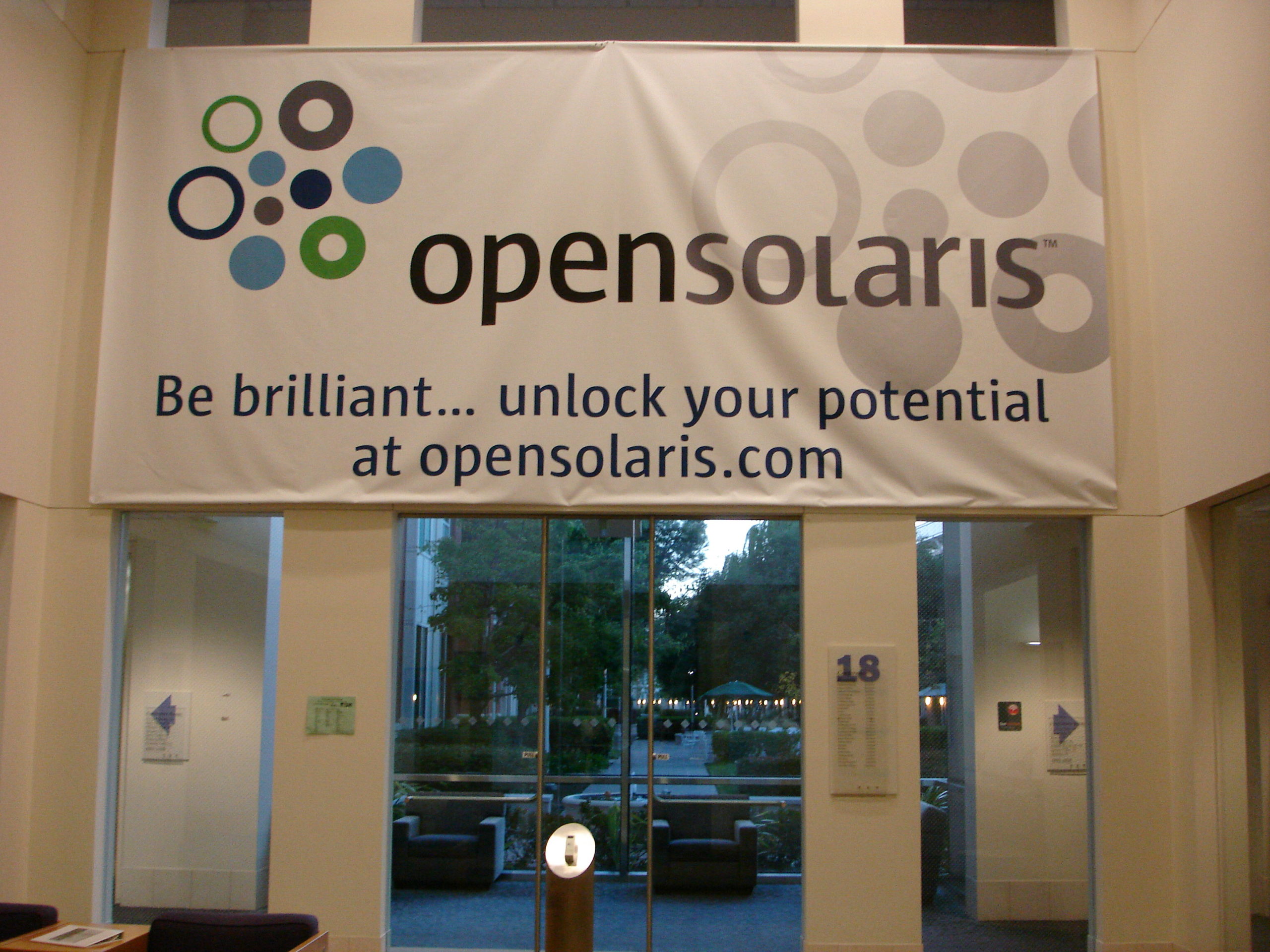
^ One of the largest things we kept was this 40-foot banner, which we later used to decorate a Solaris Family Reunion.

While the last of the OpenSolaris branding was thus being purged from Sun/Oracle, two significant things happened for the future of the technology itself:

(More history and what happened next is here.)


Part 1: Resistance is Futile: The Oracle Acquisition

Part 2: What to Expect When You’re Expecting – to Be Acquired

Part 3: Fishworks and Me

Part 4: Into the Belly of the Beast

Part 5: The Last of OpenSolaris
Coda: Letting Go of a Beloved Technology

Stuff I Do: dtrace.conf 2012

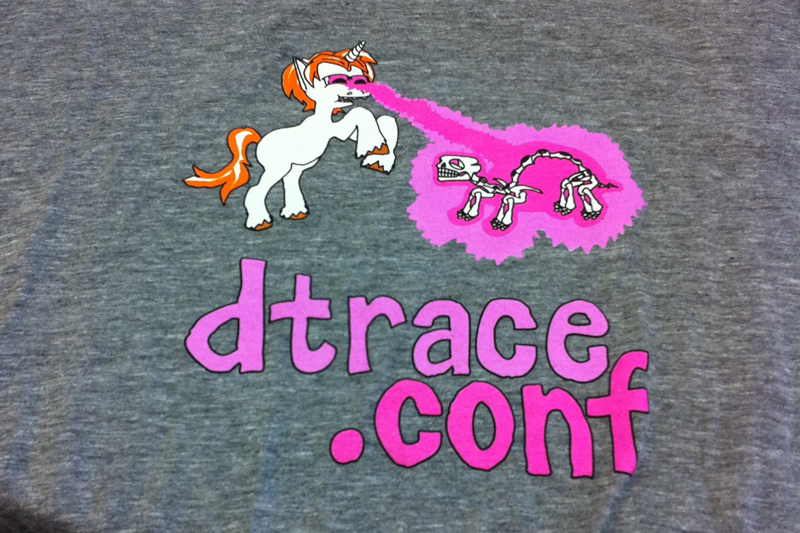
^ above: the famous DTrace laser pony designed by substack. Why a pony? Read here.

This week was eventful for me professionally. I organized and ran dtrace.conf 2012, a highly technical conference, for my employer and others of the tech community that works with this technology. Yes, this is the same DTrace as in that book that I edited in 2010.

I also filmed it and ran a live video stream, while publicizing it via Twitter. And making sure everyone got fed and, at the end of the day, had beer to drink. A very busy day, but all went very well. The final, edited video is now making its way to YouTube, see the playlist of videos above.

Introducing Your SmartOS Community Manager

About Me

I’m Deirdré Straughan. A great deal about my personal and professional life is available on my site, Countries Beginning with I.

I have been a community manager since long before the title existed, first for the Italian startup I worked for in Milan, then for Adaptec (when it bought us), then for Adaptec’s software spinoff, Roxio. The website I designed for Roxio was probably one of the first (in 2001) to explicitly describe its customers as members of an online community.

Before I ever heard of The Cluetrain Manifesto, I was acting upon my belief that companies and customers have shared interests in the success and usefulness of products/services. I found that customers had better ideas than I did about how to help them use our stuff; my role was less about leadership than about enabling and facilitating them to work with us and each other.

The open source movement takes this attitude a logical step further: though some open source projects originate largely with a company, they need a real community (comprised of both insiders and outsiders) to thrive and grow. And I enjoy nurturing such communities.

As for this specific community: I have been working closely with Solaris and many of its creators since I joined Sun Microsystems in 2007. Though my title changed a few times, my work at Sun (and then Oracle) was always fundamentally about helping engineers communicate, both internally and externally. Part of my job was to help the OpenSolaris community, including a stint as the secretary to the OGB shortly before the end.

Specific tasks included filming hundreds of hours of experts talking about technology, and teaching others how to use video. I also did social media production for technical conferences worldwide. I also do text: among other things (blog writing and editing,articles), last year I edited (the non-code parts of) the DTrace book.

Putting it all together, I have had the privilege and pleasure of working with hundreds of smart, interesting people in tech, and that’s something I very much enjoy doing.

About the Job

Last December I began working for Joyent – once again, helping engineers and other technical types communicate what they know, including using video. Then, about a month ago, I had the chance to change roles and managers while still at Joyent. Here’s the job description as Bryan Cantrill gave it to me:

Especially as we integrate native KVM into SmartOS, we have a great opportunity to build a community around the operating system: we are the first OS to unify DTrace, ZFS, Zones and KVM under one OS kernel, and we believe that that makes us the preeminent OS for cloud computing. But to make that happen, we need to build and manage community around it. This means a bunch of things, and I’m flexible on the definition €” that’s part of why I want you heading this up.

It means making available resources to the community that explain these technologies and why they are a giant win for cloud computing; making sure that we have an awesome experience for the developer and community member to download the system, learn more about it, and start building with it (which in turn means a web presence, documentation, the right downloads, etc.); that we are engaging with the illumos community to both strengthen that community and to leverage it to strengthen SmartOS, etc. This role is reporting to me because I expect it to have quite a bit of interface with the engineers.

I was happy to accept the job, and that’s what I’m doing now.

A few words about what I am not:

  • I am in no sense a computer scientist / software engineer. I’ve attempted only one programming course in my life to date (Pascal, my freshman year at UC Santa Cruz €“ so long ago that I narrowly escaped having to use punch cards!). I had no particular talent for it. I see software, like music, as an art which I can admire and enjoy, while being damned near incapable of producing it myself.
  • I’m not a sysadmin. I can just about find my way around a command line, given a cheat sheet. (I took a Solaris Sysadmin course 18 months ago, but never had the opportunity to practice any of what I €œlearned€ €“ and I’m more a hands-on learner.)

So you may have to be patient with me sometimes – I don’t know a lot of what you know. But I am not afraid to admit when I don’t understand things, or to ask questions until I do understand. If you’re willing to teach, I’m happy to learn.

Right now I’m just starting to learn who you are, what you want from SmartOS, and how we can help you. You can reach me at smartos [at] joyent [dot] com, and I often hang out in #joyent, #illumos, #openindiana, and related chats on irc.freenode.net. I’m a prolific Tweeter at@deirdres, and can be found on Google+ as well.

I look forward to working with you to help make SmartOS great!

Note: I should have had this post ready on August 15th, when we began telling the world about SmartOS and KVM. Unfortunately, I was then distracted by personal circumstances.

Originally published on smartos.org

Note: Around December of that year, I also took on the community for illumos, the open source operating system kernel which is SmartOS’ parent.

New Videos: The Gregg Performance Series

Working for Joyent, I continue to create lots of technical video (~32 hours of edited material to date). Most recent examples, here, are the start of a series I’m doing with Brendan Gregg (author of the DTrace book). In the course of his research to make these videos, Brendan even made some surprising discoveries about tools that everyone thought they knew all about.

Above: Brendan Gregg discusses vmstat, a performance tool used in Solaris-based operating systems, including Solaris 10, SmartOS, IllumOS, that shows the health of the entire system. Part 2 covers all the fields in detail. Part 3 talks about how vmstat works in Joyent’s SmartOS.

^ Brendan talks about the 1, 5 and 15 minute load averages as reported by tools such as uptime and prstat, and then explains in details how they work on Solaris-based Operating Systems including SmartOS, and reveals why they aren’t really 1, 5 and 15 minute averages.

Below: Brendan discusses the key fields of mpstat, another performance tool used in Solaris-based operating systems, including Solaris 10, SmartOS, Illumos, to shows the health of the CPUs on multi-processor systems. Part 2 covers all the fields in detail. Part 3 is a deeper dive into the fields using other tools.