Tag Archives: Italy travel

High Water (Not Hell) in Venice, part 6

Venice’s Bad Karma

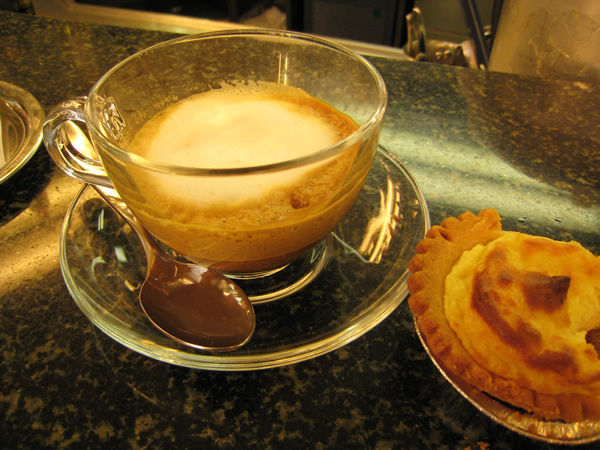
On Saturday morning, I learned what a macchiatone (“big spotted one”) is: it’s basically a caffé macchiato (coffee “spotted” with steamed milk), with a bit more milk – so, somewhere between a macchiato and a cappuccino, served in a cappuccino cup. I had it with a delicious little torta di riso (rice cake).

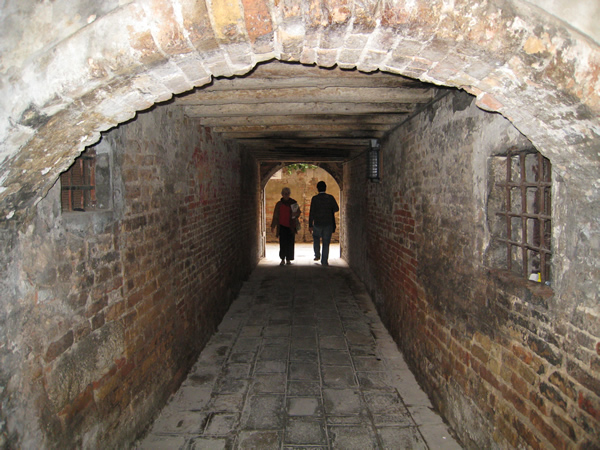
Then Enrico and I explored some more.

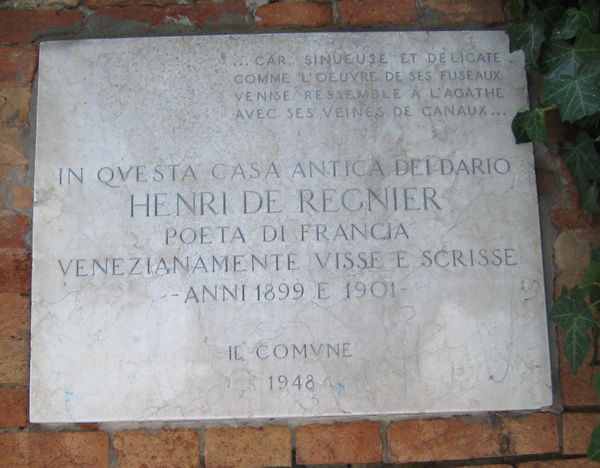
^ “In this antique home of the Dario family, Henri de Regnier, poet of France, Venetianly lived and wrote in 1988 and 1901.” Venetianly?

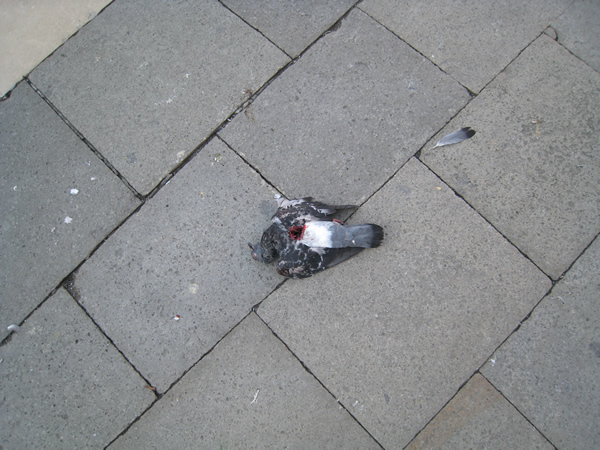
^ This was a mystery. Was the pigeon already dead when someone gored it with an umbrella?

The apartment we were staying in was owned by a Jewish family. On the wall near the kitchen was a framed edict of 1777, issued by a prince of Venice on the orders of an “Inquisitor of the Arts”, detailing horrifying restrictions on Venice’s Jewish community. Sobering reading. The Venetians invented the concept of ghetto, apparently.

Venice is indeed a beautiful city, but it has many centuries of bad karma to pay off.

Venice 1, 2, 3, 4, 5, 6, 7

restaurant

High Water (Not Hell) in Venice, part 5

When in Venice, Eat… Curry

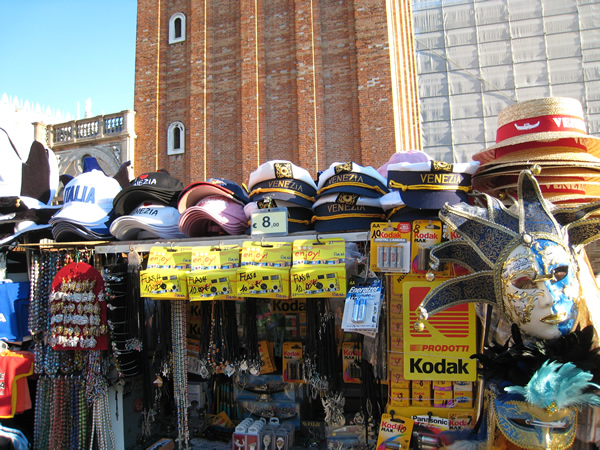
In St. Mark’s Square, Jeet bought some necessary props (above).

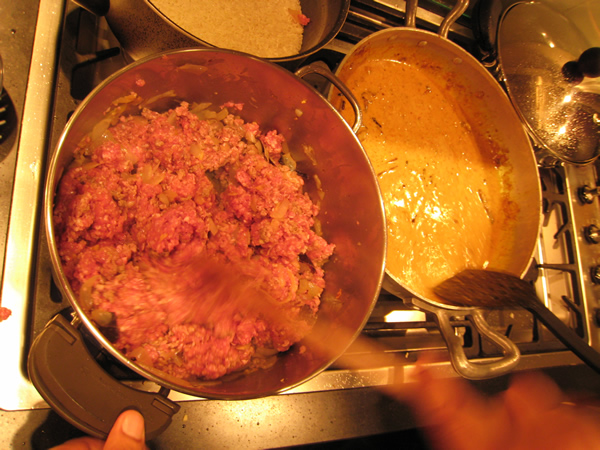
We returned to the apartment to greet Andrew and Victoria, arrived from Paris. Jeet and Andrew set to work making a fantastic Indian meal.

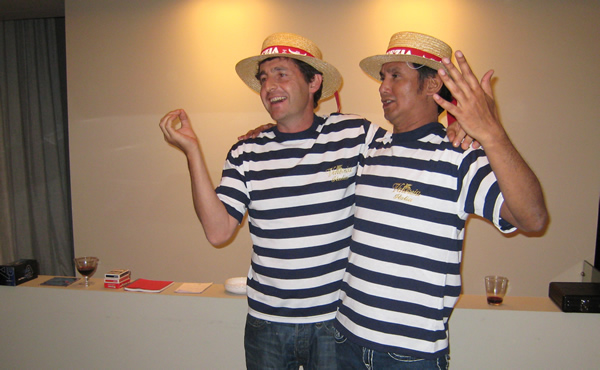
Which they served in appropriate national costumes:

(Hey, I just live my life, in all its glorious weirdness – don’t ask me to explain it!)

Jeet learned his Indian cooking from Tsering and Tenzing, old friends from Woodstock. While we were enjoying the results of their lessons in Venice, our daughter, on quarter break from school, was staying with them at their home in Mussoorie. Yes, we’re all just one big happy family!

Venice 1, 2, 3, 4, 5, 6, 7 , restaurant

High Water (Not Hell) in Venice, part 4

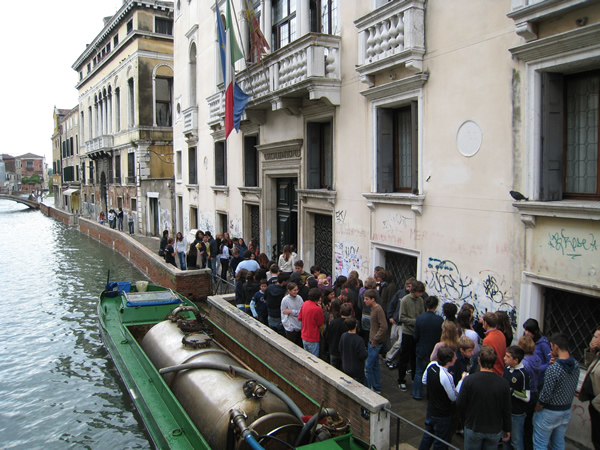
^ Even in Venice, kids go to school, and furnaces must be refueled.

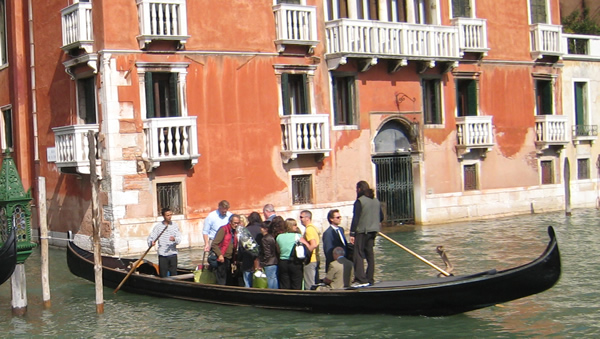
^ How real Venetians ride in gondolas – none of your touristy lolling about on plush sofas!

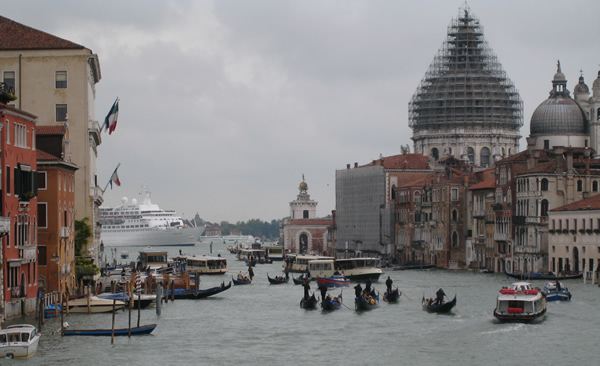
^ The modern world is out of proportion to Venice (look closely).

Venice 1, 2, 3, 4, 5, 6, 7 , restaurant

High Water (Not Hell) in Venice, part 3

A Tight Squeeze

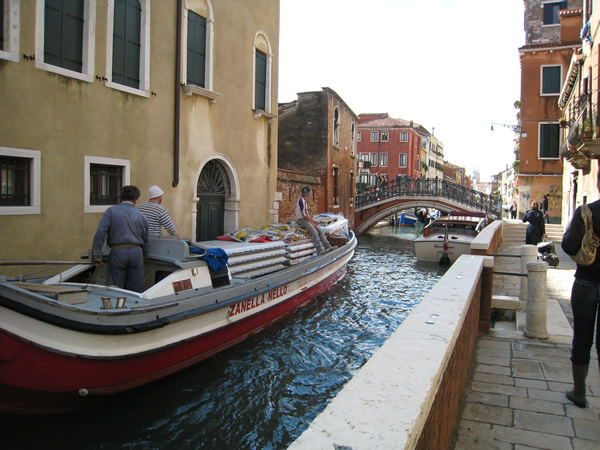
On the way home from Ca’ Rezzonico, we saw this interesting scene.

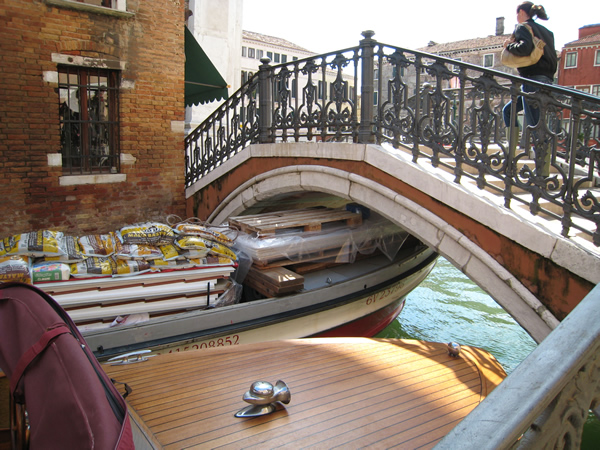
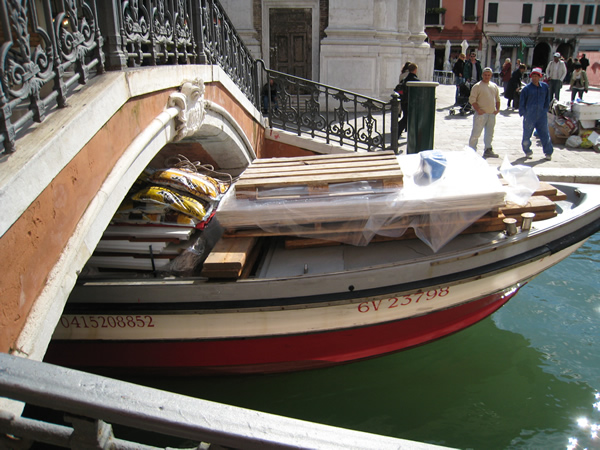
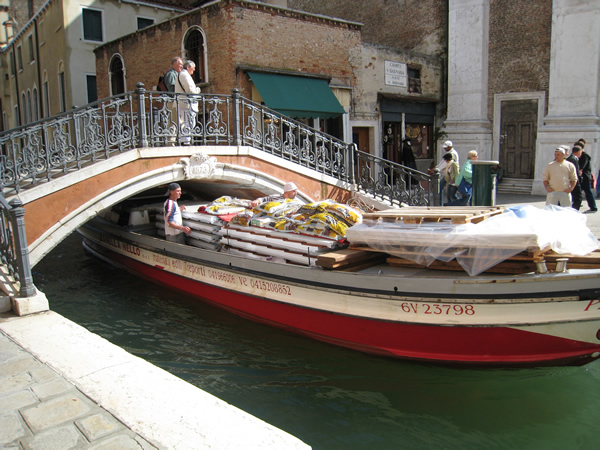
The water was still high. How was this heavily-laden boat going to get past this bridge?

Answer: very, very carefully.

Knowing exactly how far your load sits above the water is a necessary skill for any Venetian boat operator. They might, you think, have removed a few items. But then the boat would be lighter and sit higher still…

Venice 1, 2, 3, 4, 5, 6, 7 , restaurant

High Water (Not Hell) in Venice, part 2

Abuses Past and Present

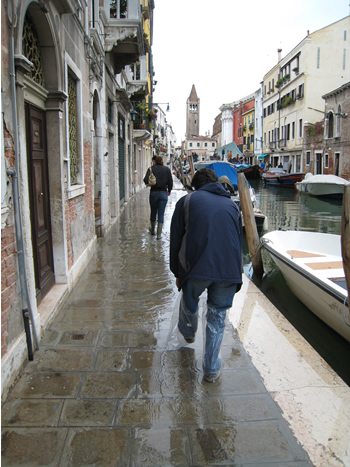
Enrico, Geraldine, and I decided to visit a museum. The only exit from our apartment was now under water. I had gone back for two more pairs of boots, but there’d been a run on them that morning, and none were left in Enrico’s size. So he improvised with the heavy plastic bags the boots had come in. Fortunately, the only area we had to walk through water was this stretch right outside our building. I felt like a kid, splashing through the puddles in my boots.

We went to Ca’ Rezzonico, an ancient palazzo stuffed with antique furniture, frescoes, statuary, and paintings. Turning the corner to enter a room, I was startled by a marble bust of a woman, head lolling, eyes half closed, mouth open as if panting or moaning, breasts spilling out of her clothing. At first glance, this seemed to be an allegorical excuse for a portrait of a woman in the throes of orgasm. Then I noticed the wound on her marble breast, flowing with marble blood. The martyrdom of saint somebody-or-other, evidently. But it still looked to me like a squirm-inducing juxtaposition of death and sex. A suspect proportion of classical art depicts voluptuous, bare-breasted women being kidnapped, tortured, or killed (or already dead).
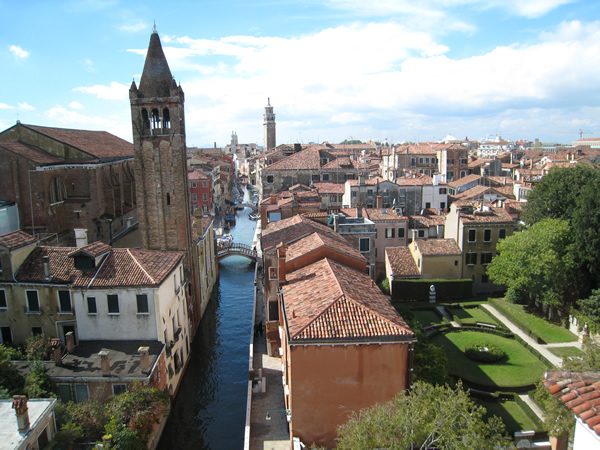
^ view from Ca’ Rezzonico (taking pictures inside not allowed)

Ca’ Rezzonico also features a set of four ebony statues of life-sized “Ethiopian warriors”, and several smaller statues of African slaves. You know they’re slaves (and not, perhaps, an appreciation of a different kind of racial beauty) because they all have iron chains around their necks, draping down to the ground. Huge chains. Unmissable. Nothing subtle whatsoever: these statues celebrate the ownership of other human beings.

Again – uncomfortable.

Tourism Frustrations

Italy bemoans the fact that it is no longer the world’s top tourism destination. But, goddamnit, Italy isn’t even trying to make itself particularly welcoming to tourists. For example: every painting in Ca’ Rezzonico had a tag with the artist’s name and dates and a title – all in Italian. What would it cost you to translate those titles? Make it just a little easier for the foreign tourist to enjoy? Each room had a single laminated sheet of text to explain – very inadequately – a vast array of fascinating objects. (We were with Geraldine, an art expert in her own right, so were far better off than most.)

Italians are justifiably proud of their national heritage of artistic and cultural treasures, and know a surprising amount about them. Pity they don’t go out of their way to share their knowledge with visitors.

Venice 1, 2, 3, 4, 5, 6, 7 , restaurant