All posts by Deirdre Straughan

The Painting Banker

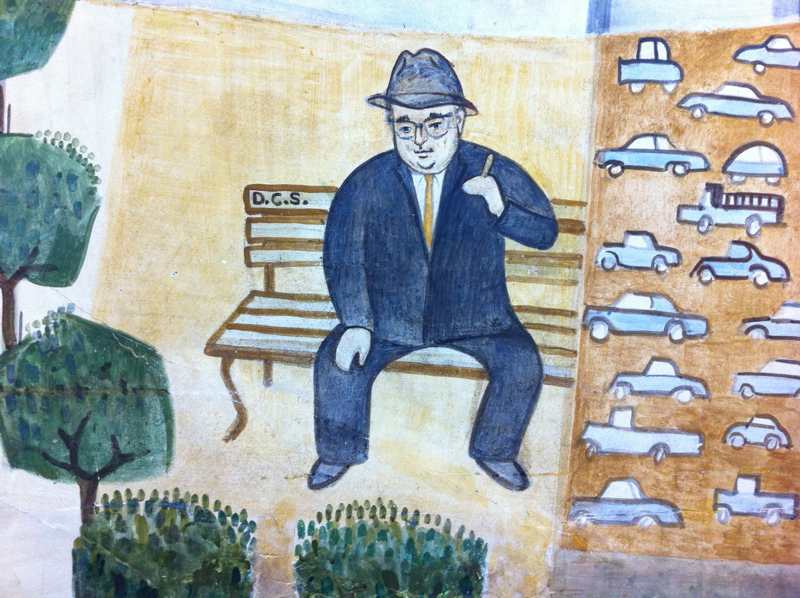
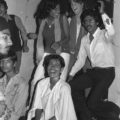
I recently visited my local Citibank branch (California and Battery Sts., San Francisco) to open an account for the nascent illumos Foundation. The walls are charmingly decorated with huge murals of San Francisco. The banker I was working with said that these were painted decades ago by the original bank’s manager, who included a wry self-portrait, complete with cigar, in the detail photographed above. Presumably “DCS” is his initials. I’d love to get photos of the whole thing – they would make great decorative posters for those of us who love the city.

Family Lies

I’ve never been good at any form of lying; I prefer to deal with life and people straightforwardly, to have nothing to hide and nothing to be ashamed of.

My father made this hard. He burdened me from a young age with secrets too big for a child, things I could not tell anyone because they would get him into trouble or hurt people’s feelings or whatever. The very worst of these set off a cycle of pain and revenge that had decades-long repercussions – for me.

When my parents separated and Dad and I moved to Pittsburgh, he was still a young and handsome man, with no intention of staying single. He dated a number of women, some of whom I liked, some I didn’t. But it wasn’t long before he met Nancy, and we both fell in love with her.

She was very young – barely ten years older than I, she might have been only 19 when she met him – beautiful, sexy, a good cook, and, perhaps surprisingly, very loving and attentive to me, as well as head over ears for Dad. He courted her with attention, pet names, worldly sophistication, custom-made jewelry…

I suppose he was presented to her parents some months before I was. They were Slovaks who had immigrated to the US soon after WWII, and owned a blue-collar café on Pittsburgh’s South Side. Devoutly Catholic, they would never have allowed their daughter to be in what they considered an adulterous relationship: my parents had been married in the Catholic Church, and were divorced (actually, at that time, only separated) only in the eyes of the law: the Church grants no divorces. Nancy still lived at home with her parents, under their control to an extent that might surprise a young American woman of today. What could she and Dad do?

They lied.

They told Nancy’s parents that my father was a widower, valiantly raising a young daughter on his own after the death of his wife. My mother.

This went down smoothly (and I didn’t know about it) until things had progressed enough that it was natural for Nancy’s parents to invite us all over for a meal one day, to meet the poor motherless child. Then I had to be instructed to go along with the lie.

I was stunned and terrified. On the one hand, I loved Nancy very much and was afraid that, if I said the wrong thing, I would lose her from my life forever, because her parents would not allow her to be with my dad. On the other hand, I was deeply uncomfortable with the idea of actually saying such a tremendous lie as that my mother was dead. Children, consciously or otherwise, believe in the power of words and wishes: surely to speak of my mother as dead was disloyal, tantamount to wishing her dead – and then, who knew, she might actually die – and it would be my fault.

It was a crushing burden to lay on a nine year old. I remember being acutely uncomfortable through that first meal, afraid someone would ask about my past and my mother, and I would have to speak the dreaded words: “My mother is dead.” I don’t think anyone actually said anything; perhaps John and Mary thought or had been told that it would be kinder not to mention it to me, so I was at least spared any “Oh, you poor thing” scenes. But my interactions with them were thereafter constrained by my fear that I would say the wrong thing, let slip that I had a mother and a brother still very much alive somewhere. To not be able to talk about someone is also to make them die a little.

About a year after we arrived in Pittsburgh, my mother came to visit, all the way from Bangkok. According to my dad, her primary reason for visiting was to get the divorce papers signed, and he later claimed that I overheard her say so, but I do not remember this. I also don’t remember how she found out about the lie I was being forced to perpetuate – from me? from Dad or Nancy? Most of the subsequent events do not exist in my own memory, but I heard about them later, over and over, in varying versions from Dad and Mom both.

However it happened, Mom did find out, and was rightly appalled. But, whatever she may have said about it at the time, she took no immediate action. I continued to live a lie with Nancy’s parents, and don’t recall whether I was aware that Mom knew about it.

It must have been the following summer that the three of us drove cross-country in my granddad’s old VW camper. Dad and Nancy dropped me off in Texas with my aunt Rosie (perfectly fine with me – Rosie lived out in the country, and had horses! as well as cats, dogs, and my cousin Casey), while they went on to Mexico. Some weeks/months later they picked me up and we went back to Pittsburgh in time for the school year to begin. A few months after that, around Christmas time, Dad had to be hospitalized as a result of a parasite he’d picked up in Mexico. It wasn’t life-threatening, but bad enough that I was shipped off to Rosie again, where I attended the tiny Coupland public school for a few months.

Meanwhile, Dad and Nancy proceeded with plans for a big, Catholic wedding, to take place in April (1974) in her home parish with the family priest. That’s when Mom struck.

Dad had managed to keep Mom from learning enough details about Nancy to contact her parents directly, but Mom worked around this obstacle. She wrote to the archdiocese of Pittsburgh, to let them know that Dad and Nancy could not be married in the Church, since Dad was still, as far as the Church was concerned, married to Mom. I suppose it was the beloved family priest who had to break this news to Nancy’s horrified parents. I guess it was too late to back out of the wedding altogether, but the ceremony was hastily moved to a chapel at the University of Pittsburgh, to be conducted by a Unitarian minister.

I did not know any of this, having returned from Texas just in time to be in the wedding ceremony, in a lovely dress that had been made for me by Mrs. Garcia in Coupland. My dad’s old friend Harry came up from New Orleans to be his best man, and my grandparents from Shreveport. For me, it was a thoroughly happy occasion, and I truly believed all the words I was given to recite about how we’d be a family forever and ever. I had no idea of the tensions that underlay it all.

At some point thereafter I was told that John and Mary now knew the truth about my mother, so I wouldn’t have to lie anymore. I don’t think they ever asked me one way or another. I might not have had an easy relationship with them regardless, there was such a gulf of culture and experience and belief between me and them. But, knowing that they now knew we had all lied was almost as bad as the lying itself had been. I hated that I had been dishonest, and it didn’t occur to me that, as a child, I wasn’t responsible for what I had been made to say. I had already shouldered many adult-sized emotional responsibilities in my young life, and assumed that I was supposed to, though this one was larger than most.

This was all ammunition in the continuing war between my parents, which by no means ended with their divorce or any of their remarriages. With this and other weapons, they fought through me for 40 more years. It never stopped, until now: my father is dead, and I no longer speak to my mother. Perhaps, left finally in peace, I can now get past it all.


Hand-Writing

Being a left-handed person in a right-dominated world can be hard, especially in elementary school. It’s difficult to write: if you hold the paper “normally” and write straight across from left to right, your hand covers over and smears what you’ve just written. Many lefties turn the paper sideways and then write from top to bottom across the page. Others hook their hand over the line and write from the top. Either is at least as awkward as it sounds, plus you’re pushing rather than pulling your pen across the page, creating extra friction and resistance.

As you may imagine, handwriting was hard and even painful for me. I always got poor grades in penmanship, although I could draw well and got good grades in art.

I loved reading and language, so the putting-words-together part of writing was no problem for me – I was a wordsmith from a very young age. But getting my words down on paper was almost beyond me.

My parents separated when I was 9 and I moved with my dad to Pittsburgh, where he attended grad school. My mother remained in Thailand with my infant brother. In those days it was next to impossible, and impossibly expensive, to make international calls, so the only way Mom could hear from me was for me to write letters.

I wanted to stay in touch with her, but I was up against the handwriting problem: I just hated writing anything. It was slow, irritating, and my hand cramped. But Mom nagged me to write more, and Dad nagged me as well, probably because Mom was nagging him about it. It was an ongoing battle, resulting in infrequent letters containing roughly: “How are you? I am fine.”

Finally, Dad hit upon a solution. He had bought a Selectric typewriter to use for his grad school papers. This was in 1971, when a Selectric was new and sexy technology. We had never had any kind of typewriter at home before; the old mechanical ones would probably have been too hard for my child hands anyway. The Selectric was easy and fun, and I found the mechanism fascinating. I could only hunt and peck, but this was still so much easier than handwriting that I was happy to type long, chatty letters to Mom.

The change in style and increased length, and the bare fact that my letters were now typewritten, made Mom suspicious. She became convinced that Dad was writing the letters for me and that I was being deliberately kept incommunicado – um, why? to hide something from her? (I’m not sure what that would have been.) She was very nasty about it, accusing Dad of god knows what.

I was crushed and furious. I had finally found a way to write in a length and style natural to me, and I had assumed this would make Mom happy. Instead, she rejected my efforts and said it wasn’t even me doing the writing. I was offended on my dad’s behalf, that she would think that badly of him, and further angered that she’d think he could stop me contacting her if and when I wanted to.

There was only one way to prove it to her: I recorded a cassette tape. My voice shaking with hurt and anger, I told her that the suspect letters had indeed been written by me, and if she didn’t appreciate them, I’d stop writing altogether. When she received that, she had to accept that my letters were in fact mine. Not that I felt much like writing to her after that.

The upside of this dismal episode was that I got comfortable with a keyboard early on. Later, in high school, I took a typing class, and soon began typing papers for other people, as well as everything of my own that I possibly could – much to the relief of my teachers. I resented having to write exams by hand (still do): it’s a handicap that affects my grades, though I’ve never been able to convince any academic institution to find a solution to this. Fine, then don’t bitch about how hard it is to read my handwriting – I told you it would be!

My keyboard skills had a further benefit: they led to my career in tech.

Back to School

Getting back to Woodstock School at the beginning of each new semester was an undertaking, and sometimes an adventure. The journey was never short: most of us lived in other countries in Asia or the Middle East. We’d take a plane or train to Delhi, then a bus or taxi to Mussoorie, 7000 feet up in the Indian Himalayas. Especially for younger students, these trips were coordinated with the school so we could be met at the airport by staff members and escorted on school-arranged buses, and more or less watched over until safely checked in at our dorms.

However, between the difficulties in communications to and within Asia 30 years ago, and the general unruliness of teenagers, the school couldn’t always keep track of everybody.

I don’t remember what year it was that I came back to Delhi after winter break and managed not to join a school party, or at least not to be on the bus with the others. It can’t have been my senior year, because a couple of kids older than myself were along on this adventure (Kim, Tajchai – do you remember this? I think you were part of this story). Somehow, five or six of us needed to get up to school, and weren’t on the school bus. None of us had much money.

There were (and are) cheap ways to travel in India, such as public long-distance bus lines (the Indian version of Greyhound) of all classes and prices, from rattling, hard-seated, overcrowded tin cans to air-conditioned “luxury” buses. But, if you were willing to stuff enough people into it to share the cost (about Rs. 500 total, if memory serves), a taxi was nearly as cheap, and at least you could ask when you needed a stop. So we pooled our resources and hired a taxi to take us from Delhi to Mussoorie, putting four in the backseat and two in the front seat (plus the driver) of a capacious Ambassador.

A taxi was more comfortable than a bus, but not by much over six or more hours of stop and go traffic on terrible roads – also very stressful driving conditions. I don’t remember what time we left Delhi, but by the time we reached Dehra Dun (the town in the valley below Mussoorie), our driver was tired, and well aware that it would take another one and a half to two hours to get us up to school. A native of India’s plains, he may also have felt daunted by the winding mountain road, falling darkness, and cold weather ahead. He decided to hand us off to a local driver in Dehra Dun for the final leg of the trip – which may have saved all our lives.

Heading up the two-lane “highway” to Mussoorie, we soon ascended into clouds, fog, and sleet. The driver went slower and slower; we could only see a few feet beyond our front bumper, then even less that that. The headlights on the taxi either hadn’t been working from the start, or failed as we were going. None of us could see anything but a dark gray fog of cloud and condensation against the car windows, but we were familiar with this road. Even though we couldn’t see it, we knew that, at many points along the way, there was no barrier to stop us plunging several hundred feet down the mountainside. Fortunately, the driver – a young local man (and a Sikh, I recall) – knew it, too.

Our group had started the day cheerful and chatty, but by now we were tired and increasingly frightened. I was nightmarishly reminded of a dim childhood memory of a similar drive up a volcano in Hawaii when I was about four.

Suddenly the car ground to a halt, crunching on roadside gravel. The driver peered out over the hood, but couldn’t see anything. He opened the door and looked down at the road. “Oh my god,” he said, quietly and hoarsely. Our front wheels were inches from a precipice.

He backed up carefully, and we continued the slow, painful journey. I don’t remember how long it took, or really anything about the trip after that point, but we obviously did eventually make it to school, and then (on foot, as ever) down to our dorms. We probably got told off for being late and not arriving with the other students.

Harrowing as it was, this wasn’t much of an adventure by Woodstock standards. Ask the students who escaped the Iranian revolution in 1979. Or the boy who, arriving home in Bombay after the partition of India in 1947, found that his parents had had to move abruptly to Lahore, and had left no forwarding address (probably didn’t know it themselves when they left). He had to make his own way, but eventually did find them, of course. Or the one who, even earlier, was home in Burma with his missionary parents for Christmas. When it was time to return to school, his father pulled out a map and said: “The Japanese are coming from here; I suggest you start walking in this [other] direction.” And he did – three weeks through the jungles with a group of missionaries fleeing the invading Japanese army, to reach Calcutta and thence take a train back to school, where he was eventually reunited with his parents.

I guess you could say that Woodstock students are resilient and know how to take care of themselves. Sometimes, we just didn’t have a choice.