Category Archives: Woodstock School

Getting Girls Into Science Early

During my recent trip to Colorado, I stayed with Tin Tin Su, a Woodstock School classmate who is now an associate professor in Molecular Cellular Developmental Biology at the University of Colorado in Boulder.

Tin Tin is good at explaining what she does, and delights in sharing her knowledge with people of all ages. I was thrilled to be able to capture her giving a first lesson in fruit fly genetics to a highly intelligent – and highly interested – girl named Sasha. Tin Tin was thrilled, too: as a “sideline” she heads up a project at CU aimed at helping to equalize the number of men and women in sciences. Showing girls from a very early age that science is a cool and fun career – she considers that part of her mandate.

Our Lady of Drosophila

Jul 15, 2007

Tin Tin is also a painter. A few years ago she made a painting as a gift for her lab, which she explains in this video.

Woodstock School Questions & Answers

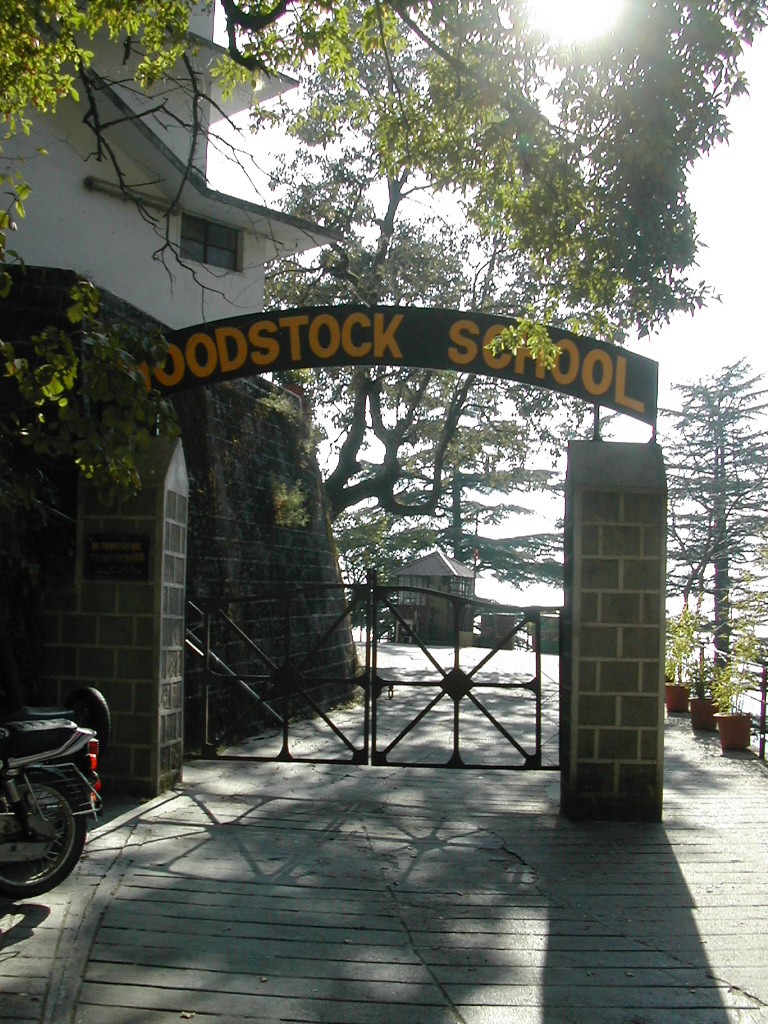
If you search Google for Woodstock School, one of the top results you find is my site. This means that I’ve become an unofficial source of information on the school and what it’s really like to go there.

Back in February, I was delighted to receive email from a prospective student, who wrote: “I recently came across a study abroad program called SAGE. They send students to the Woodstock school for a semester or year, and I am extremely interested. I found your site and read your pages about Woodstock. It sounded like a great experience! I was wondering if I could ask you a few questions about it because I am beginning the application process and would like to hear more about the school from alumni and current students.”

She then asked a list of questions, which she has graciously given me permission to publish, along with the answers I sent to her.

1. What was the best aspect of Woodstock?

The people, both staff and students. We had our teenage falling outs etc., but mostly everyone got along even back then, and now we are all each other’s best friends, in spite of (because of?) a wide variety of backgrounds, experiences, lifestyles, and opinions.

I am class secretary for my class and have kept in close touch with most of them over the years, but also with lots of other Woodstockers. For example, Nathan [Scott, head of the SAGE Program] is the younger brother of my classmate Chris, and Nathan and his wife spent part of their honeymoon at our home in Italy. Woodstock relationships last, and that’s been very important to me.

These contacts are also of practical use in later life. At various points in my career I have found jobs for WS’ers, and yesterday a WS alumnus whom I met after we’d both been in Milan for many years took me to lunch to offer me work!

2. What could have been better?

The food! It was legendarily bad in our day and we were always hungry. I’ve been back on quite a few visits in recent years and can testify that it is much improved. Although we’re still talking about a remote place in India where you don’t always find the ingredients you might want… I’m told the students still complain. ; ) That’s why everyone goes to the bazaar on Saturday to eat.

3. What was the most valuable lesson you learned while at Woodstock?

Hard to say – I learned so much in so many ways. I guess it would be something to do with getting along and working and living with all kinds of people.

4. Why do you think diversity is important for a school setting and how did it help you learn?

Even if you’re fortunate enough to go to a school where they try to teach you about world cultures, religions, etc., you’re never going to really get it until you’ve been living and interacting daily with people profoundly different from yourself. And it’s especially valuable to do this while you’re young. Woodstockers understand right down to their bones that someone can think and believe and act differently than they do, and still be a good person with basically the same motivations as themselves. I think that’s a foundation of real understanding, and a place from which to negotiate our differences. I truly believe that, if there were more schools like Woodstock, there would be less war in the world.

5. What were the teachers like? Were they easy to understand?

In our day they were a mix of Americans, Brits, New Zealanders, Canadians, Indians, and probably more that I don’t now remember. They were mostly very good teachers. They certainly prepared us well – after Woodstock, college seemed pretty easy!

Another advantage of WS is that class sizes are small, so every student gets a lot of teacher attention. And you’re living in a small environment with the staff as well as students, so you are in constant contact with them. Staff are involved in all sorts of activities besides teaching – chaperoning hikes and trips, supervising study halls in the dorms, some play in the band and orchestra and sing in the choir, etc.

It takes a special kind of person to want to go live in a remote corner of India to teach international students. They tend to be more dedicated teachers, and truly interested in being involved in their students’ lives. Any Woodstocker will tell stories of specific staff members whom they remember fondly. I’m still in close touch with several of my favorite WS teachers.

6. Did Woodstock prepare you for the future well?

Yes, though I use what I learned in my extra-curriculars more than what I learned in classes. I was on the newspaper and yearbook staffs, and in student government, and I tended to be called upon for public works art projects (“The elementary school looks a bit drab – why don’t you do 12 enormous batiks to brighten it up?” “We need an ass’s head for Midsummer Night’s Dream…”).

Because there are relatively few students, everyone has a chance to get into everything. My roommate was captain of the basketball team and the cheerleaders (we weren’t very serious about cheerleading – a bunch of girls just decided they wanted to do it, so they did it. However, that meant that only the boys had any cheering since the same girls played on all the girls’ teams!). My roommate was also in band, orchestra and choir, and we worked on the yearbook together. There were also opportunities for volunteer work, which is even more strongly encouraged today.

And then there was the environment we were in – lots of India to explore even within the immediate area.

So WS taught us to be true all-rounders. The result for me has been a career marked by flexibility and quick adaptation to whatever situation I found myself in. And I have no fear at all of plunging in and learning new things as I need them, which is a key requirement in today’s working world. Woodstock (or any other school) could not have prepared me specifically for my career – the things I do now were undreamt-of in 1981. But my preparation at WS gave me confidence that I can learn anything I need to, and invent the things that no one else knows how to do yet.

I also learned to write well at Woodstock, and that’s a skill that will always be important in almost any kind of work.

7. On a scale from 1 to 10, how difficult were the classes?

I don’t know what to compare them with. I was a lazy student, and worked to keep my average above B only because that let me spend the compulsory evening study hall period in my dorm room instead of the dining hall. Some things like English and History I did well in without much effort, sciences were harder for me.

If it helps for comparison, I can say that I did very well on PSATs and SATs. And, as I said, I found university fairly easy after Woodstock. So I guess WS classes were fairly rigorous, though they didn’t seem that way to me at the time. On the other hand, the nephew of one of my classmates attended WS briefly last fall (he returned home to the US for family reasons after only a few months), and said he found WS easier than his school in northern California. Which surprised me. He might have found that it got harder as the year went on.

Why Send My Child to Woodstock School?

Someone who has never attended Woodstock School may legitimately wonder why anyone would wish to send their child there.

I went to Woodstock in 1977 because I had no better educational choice (except to continue with correspondence school in Bangladesh, where my parents were living and working – a year of which had already been more than enough). “No other choice” was the case for many Woodstock students in those days, when jobs in development, missions, or international business were more likely to send Westerners overseas, and there were fewer international schools in odd places around the world for their kids to attend.

Woodstock nowadays is one of Asia’s elite schools, preparing students for still-much-desired admission to universities in the US and UK (as well as Asia’s own top universities). But it’s not so obvious why any student should come from outside of Asia. And there are plenty of reasons not to. Let’s look at some of those first.

(Some of) The Reasons Against

It’s Boarding School

Woodstock is a boarding school, a concept foreign to American and most European culture: if you love your child, how can you bear to send him/her away? In Italy, boarding school is widely considered something that parents do with children whom they cannot control at home, and/or it’s thought to show a lack of proper parental feeling. (Although we have several Italian friends who went to boarding schools in Italy and elsewhere and loved it: the negative attitude seems to come from Italians who have no actual experience of boarding.)

It’s in India!

Secondly, Woodstock is in India, specifically in the small town of Mussoorie, 7000 feet up in the foothills of the Himalayas. A location which, much as I love it, is what the foreign service used to call a “hardship post”. It’s cold and wet during the monsoon, cold and sometimes snowy during the winter (though fall and spring are gorgeous and not too hot).

School facilities and infrastructure are enormously, unrecognizably improved since I attended 25 years ago, but most of the buildings are still old and unheated, many cannot be reached except on foot, and the overall level of comfort is well below what we in “the West” are accustomed to.

Physical discomforts are bearable, perhaps even character-building, but there are worse potential dangers. Health is a concern: it’s a lot easier to get catastrophically sick in India, and a near-certainty that at least some “Delhi belly” will befall any traveller there (although, during our 2005 trip to India, I got sick and Ross did not. My own fault – I should not have had that lassi in Jaipur…)

On the other hand, India has very good health care these days – so good that people are travelling from the US, Canada, and UK to have non-urgent surgery and other treatment far more cheaply in Indian hospitals than they could at home (“medical tourism” they call it, and it’s a booming business).

…and there are plenty more aspects of India that the average Western parent inexperienced with Asia will find frightening, bizarre, and incomprehensible. But let’s not dwell on them for the moment.

The Reasons For

It’s a Nurturing Environment

At a Woodstock reunion long ago I talked with an older alumnus whose own children were then college age.

“How come your kids never went to Woodstock?” I asked him.

He explained that his daughter had done very well at home in Canada, was well-adjusted, made good grades, had lots of friends, etc. He had never even considered sending her to Woodstock, because there was no reason to take her out of her happy situation.

His son, on the other hand, had had both social and academic problems at school, and didn’t seem to be going anywhere with his life after high school. The alumnus thought his son might well have benefited from Woodstock, as a total change of scene if nothing else, but his wife would not hear of it: the idea of sending her son off to school in India was just too strange and scary. The alum regretted that they hadn’t tried it.

I’ve spoken with many alumni who feel that they benefitted enormously from Woodstock, even if they were there only a year or a semester. One of my own classmates came for her senior year, having done all the rest of her schooling in a standard US high school, where she was considered something of a weirdo. She credits Woodstock with making her feel that she was fine just the way she was, giving a huge boost to her self-confidence. (Years later, my own daughter said the same.)

For me, Woodstock had a tremendously positive impact on my life, as I have written before: “The four years I spent there nurtured me, gave me self-confidence, and helped to heal the wounds of my parents’ divorce and other upheavals. Years later, my therapist told me that if I hadn’t gone to Woodstock, I would probably have ended up ‘gibbering in a corner somewhere.'”

Do you have to be among the walking (psychologically) wounded for Woodstock to do you good? Of course not. Plenty of healthy, well-adjusted kids have gone there and enjoyed it. The Woodstock environment is nourishing and nurturing for just about everyone. How and why it is this way is a topic for a much longer article!

It’s in India!

At a reunion in London in 2003, I met the parents of a German boy who had just gone to Woodstock for his junior year abroad. The parents had travelled to London to meet alumni because they knew very little about the school or the people it produced. How on earth did their son end up there?

He had been doing well in school in Germany, but was not satisfied with the level of English he was learning. (I assume that his father, an international businessman, had drilled into him how important it is in today’s global world to speak good English.) So the boy wanted to go to a school where he could study in English, but exchange programs in the US or Canada did not appeal to him (possibly for the same reason – no choice of the actual school – that similar exchange programs from Italy did not appeal to Rossella).

His father, whose business took him frequently to China, suggested that he look for a school in Asia: “Asia is the future,” he told his son.

The boy did a search online, and came up with Woodstock. His father stopped by for half a day on one of his China trips, approved of what he saw, and off the boy went. I believe he stayed there a second year as well, and graduated with his class.

Unusual? Certainly. Weird? Maybe. But the father had a point. The Economist recently stated that “India may overtake Germany as the world’s fifth-biggest consumer market by 2025.” The future, indeed.

Indian culture is already felt throughout the world. In a recent episode of the American TV show Heroes, the Indian character used the word goondas without explaining it, clearly expecting both the character he was speaking to and the audience to understand it (the meaning was clear enough from the context: goondas are thugs – and thug is also originally an Indian word). Anyone who wishes to be successful in an increasingly globalized and Indianized world will certainly benefit from knowing India well! (China, too, but I don’t know of any Woodstock-like schools there. Maybe Woodstock should offer courses in Chinese language and culture.)

Enduring Friendships

Many alumni and former staff gathered in Mussoorie to celebrate Woodstock’s 150th anniversary in 2004, some bringing family. My classmate Deepu’s daughter said to her afterwards: “I see you with all your old friends and hear the great stories you tell. When I’m old, I want to have stories like that, too.” She has now been at Woodstock for several years herself, and presumably has her own friends, and stories to tell with them.

more reasons to send your child to Woodstock

Getting Ready for Woodstock School – Some Practicalities

So my daughter will be going to Woodstock School. Given my obvious enthusiasm for the place, you may assume that I’m ecstatically happy about this – and I am. But there is also plenty of room for doubts and worries and sorrow. What do I do with feelings like these? What I always do: write about it! <wry grin>

First, there’s the practical side: we have a lot to do to get ready. So, for the benefit of other current and future Woodstock parents, I figured I might as well write about that.

Health

Every seasoned traveller knows that before travelling to (what used to be called) third-world countries, you need to get shots. Ross and I went through this two years ago in preparation for our trip to India in the summer of 2005. The travellers’ health clinic of our local health agency in Lecco was able to advise on and administer everything we needed. Ross made an appointment to check what was needed this time around. Since she’s still a minor, I had to go with her.

Turns out we had forgotten to get her Hepatitis A booster that was due 6-12 months after the first one – the nurse scolded us, but didn’t seem to think it was really a big deal. She gave us a lecture (again) on when Ross should take malaria prophylaxis, and that was that – at a cost of 45 euros.

Enrico is concerned about health care for Ross at Woodstock – not that she has any special needs, he’s just worried about health in India in general (although, during our trip in 2005, it was me who got sick, not Ross).

There wasn’t much information on the school or SAGE website about this (an oversight now being remedied), but I know that the school has its own health center with nurses and a doctor, and that Landour Community Hospital (LCH), where many Woodstockers were and still are born, is just outside the school gates. I also know that India can boast world-class healthcare these days, at least in the big cities – indeed, “health tourism” is becoming a booming business.

As it turns out, LCH is getting a facelift (maybe much more – I don’t have details yet), thanks to my classmate Sanjay (who has also revamped the school’s kitchens – an area of natural interest for him as he’s in the restaurant business). So the quality of care available right on Woodstock’s doorstep is improving.

There is also some sort of catastrophic health insurance available through SAGE I think, we’re waiting to hear about that from them. I’m not sure it provides for a medical evacuation to the home country, but someone mentioned that it would pay a ticket for a parent to come in case of serious hospitalization. I’ll report the details when I have them.

The SAGE package we received recently includes a medical history and a form to be filled out by our family doctor with data from a physical exam, plus Ross will have to get blood, urine, and stool tests. This all makes sense – the school needs to know up front that these kids don’t have health problems when they arrive. But it’s going to be a mad scramble to get it all quickly – SAGE wants these forms back by June 1st.

Normally such tests might be free or subsidized in the Italian health care system, but waiting times can be so long for non-emergency testing that I’ll probably have to pay to have the lab work done privately. At least the exam by the family doctor shouldn’t cost.

What to Bring?

It may seem ironic for a school in India, but my greatest concern in this category is warm clothing. Woodstock is 7000 feet up in the “foothills” of the Himalayas, where it’s plenty cold and snowy in winter, and most of the buildings are far too old to have anything like central heating.

For this reason, the school year traditionally ran from late July to late June, with the long vacation from early December to mid February. It could still be bitterly cold even in late February – I remember one year when music practices were suspended because our fingers were too stiff to play.

Lucky Ross: the school calendar is changing this year, with classes starting August 8th, vacation December 14-Jan 22, and graduation May 30th. The idea is to align Woodstock with US schools and colleges, in part to have more time to prepare for AP exams in the spring. So the students will be in Mussoorie for much of the winter – brr!

Ross initially pooh-poohed my suggestion of long underwear (SO unfashionable). I have tried to explain to her that you’ve never known real cold until you’ve had chilblains. I’m buying her the long underwear anyway – and she’s more convinced now that she’s seen it on the packing list we just received from SAGE. At least she recognizes the depth of motherly love demonstrated by my offer to give her my very warmest ski socks (I have a fetish for socks, and my feet are always cold).

Ross has also been put in touch with a current SAGE student whose advice she can ask on what else is and isn’t needed.

One major purchase will be a laptop; though the school has computers for student use, Ross is accustomed to having her own: at home she uses my “old” desktop, and she can’t imagine life without it close at hand to organize and PhotoShop her photos.

Student Visa

I dread facing the Indian consulate in Milan again, it’s always chaos. We will have to go there to get Ross a student visa for India, but we can’t do it until after June 1st (at the earliest), because the visa is good for exactly one year. Getting the visa should be straightforward – the school is sending a “bona fide student” letter vouching for her status. But I’m always afraid that something will go wrong with this, so I won’t really rest easy until she’s got that damned visa in her passport.

It’s amusing to compare and contrast all this with my own thirty-year-old memories of preparing for Woodstock.

Your thoughts?

Pilgrimage

original

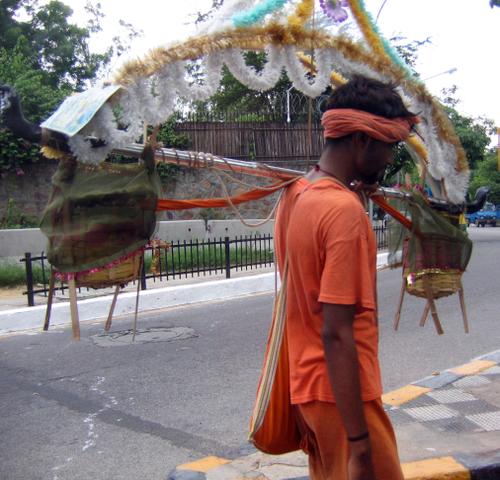
Indian man on a pilgrimage [title of the photo, which Ross took during our trip to India in 2005]

Pilgrimage: a voyage of devotion and penitence towards the sacred places of every religion.

Sitting for hours in front of the computer.

I’m waiting for a great idea for some logical thread or thesis to follow, to write an excellent admissions essay, to arrive from this sad, gray sky.

For months I have decided to hide, at least from the fotolog community, my intention, if circumstances permit, to do a school year out of the country, and I have never explained my reasons for “wanting to participate in this program and attend an international, multicultural and multireligions school in India” – which I need to [explain] by tomorrow and, of course, I have waited right up to the deadline to do it.

So, why go?

Why leave a decidedly comfortable life which gives me, with little or no effort on my part, everything I need and many things I could just as well do without, but still leaves me unsatisfied, with a constant sensation of incompleteness?

Why say goodbye – for a not-short time – to the friends I depend upon, the lifestyle I’m used to, my habits, vices, tastes, caprices, constructive pains, infinite gossip, hysterical laughter, frustrated crying, and the long list of unconnected things that come to mind when I think about HOW I LIVE.

The harder list to make, however, is the things I will have to get used to if I go, and the list of what I hope and expect to gain:

I wouldn’t have the same freedom, but – freedom to do what, anyway?

I would have to learn to be independent in a very different way from how I am now. This would no longer mean coming home when I feel like it Saturday night, feeling adult because I got drunk and went to the disco.

I would have to live with habits and customs completely different from those of Lecco, substituting rice for pasta, H&M with the local tailor, and things like that.

It will no longer be an option to leave all my clothes on the floor until they form a mountain that takes on a life of its own and becomes an independent being (seriously, my clothes will soon open their own fotolog: fotolog.com/wevebeenonthefloorforayear).

[Many other things] will no longer be an option (alcohol, smoking, immoral sex – what “immoral” means I don’t yet know!)

But I still haven’t given my reasons [for wanting to go]:

I’ve already visited India. Thinking about it brings back those sensations that I feel when I watch a documentary or hear ethnic music in the waiting room at the beauty shop: the strumming of the sitar carries me back to the heat, the spicy odor in the air, the brown faces with huge black eyes that I’d like to photograph, one by one, I’m so moved by their beauty. It carries me back to lime water, to the streets full of cars from several epochs ago, side by side with rickshaws magically pedalled by very skinny legs. To how I wanted to cry the first times that the children, seeing white people, surrounded them like ants on a crumb.

It’s difficult if not impossible to explain in words this desire to run away, because in the end it would mean running away in the hopes of finding a better life when I return. It may be that I have it in my blood. I’m resigned to the fact that, even if I had never spoken of India with my mother, the desire to go would have started pulsing in my veins sooner or later.

Writing this essay is like waiting for a flight to board, when with a thousand books and magazines I try to calm myself and hide the fact that I’m jumping out of my skin with curiosity and excitement to go to a land other than my own, and explore it in all its aspects. I am excited about the world because it’s international, multicultural, and multireligious.

Why not take a risk – risk not having everything, not living comfortably, risk seeing sad, ugly things and then crying from the joy of having been so fortunate as to feel an emotion so strong?

Why not say goodbye to the people who love me, knowing that, if they really do love me, distance and time will be irrelevant; to search for different people, perhaps more like myself, who will understand exactly what I’ve gone through, once everything is done and I return home with one more huge suitcase / new “baggage”.