Tag Archives: travel in India

2011 India Trip: Timeline

2011 was a rough year in many ways, but I did have a fantastic vacation in India! Here’s an outline, more detailed articles to follow (er, sometime…).

Saturday, Oct 15: Depart SFO
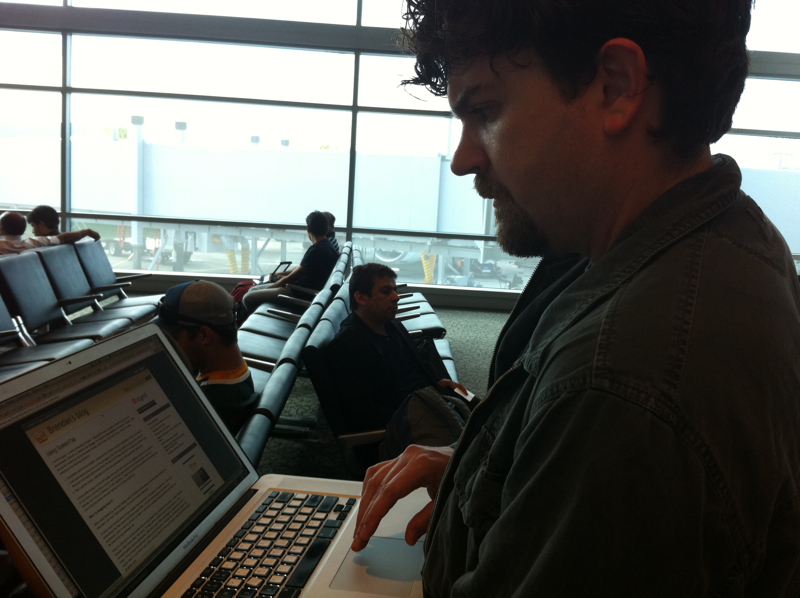
Brendan Gregg

As his last piece of work before vacation, Brendan had to get that blog post out. We were actually standing in line at the gate when he finally posted it.

Sunday, Oct 16: En Route

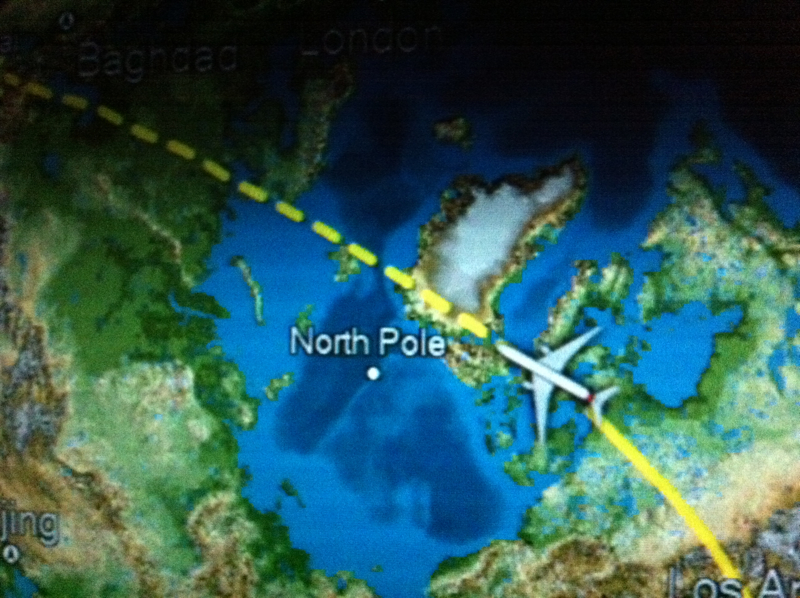
We flew Emirates Airlines from San Francisco to Dubai to Delhi – polar route FTW! Emirates has a great seat-back entertainment system, including views from cameras mounted under the plane’s belly and on its nose – so we could see a lot even though we didn’t have a window seat. When the cabin lights were dimmed for sleep, constellations appeared in the ceiling panels – a nice touch.

Monday, Oct 17: Dubai, Delhi

Delhi:
Tuesday, Oct 18: Delhi

Wednesday, Oct 19: Delhi

Shopping with Denise.

Thursday, Oct 20: en route, Mussoorie

Friday, Oct 21: Mussoorie

Explored Landour bazaar.

Saturday, Oct 22: Mussoorie

  • Got up to see the sunrise at Fairy Glen (video)
  • Classmate Sanjay hosted a Diwali party for all the gathered alumni, staff and friends. Jeet sang a song he had composed for us: Thirty Years On (video)

Sunday, Oct 23: Mussoorie

Saw my first ever live cricket match between teams of alumni, spouses, offspring, and friends:
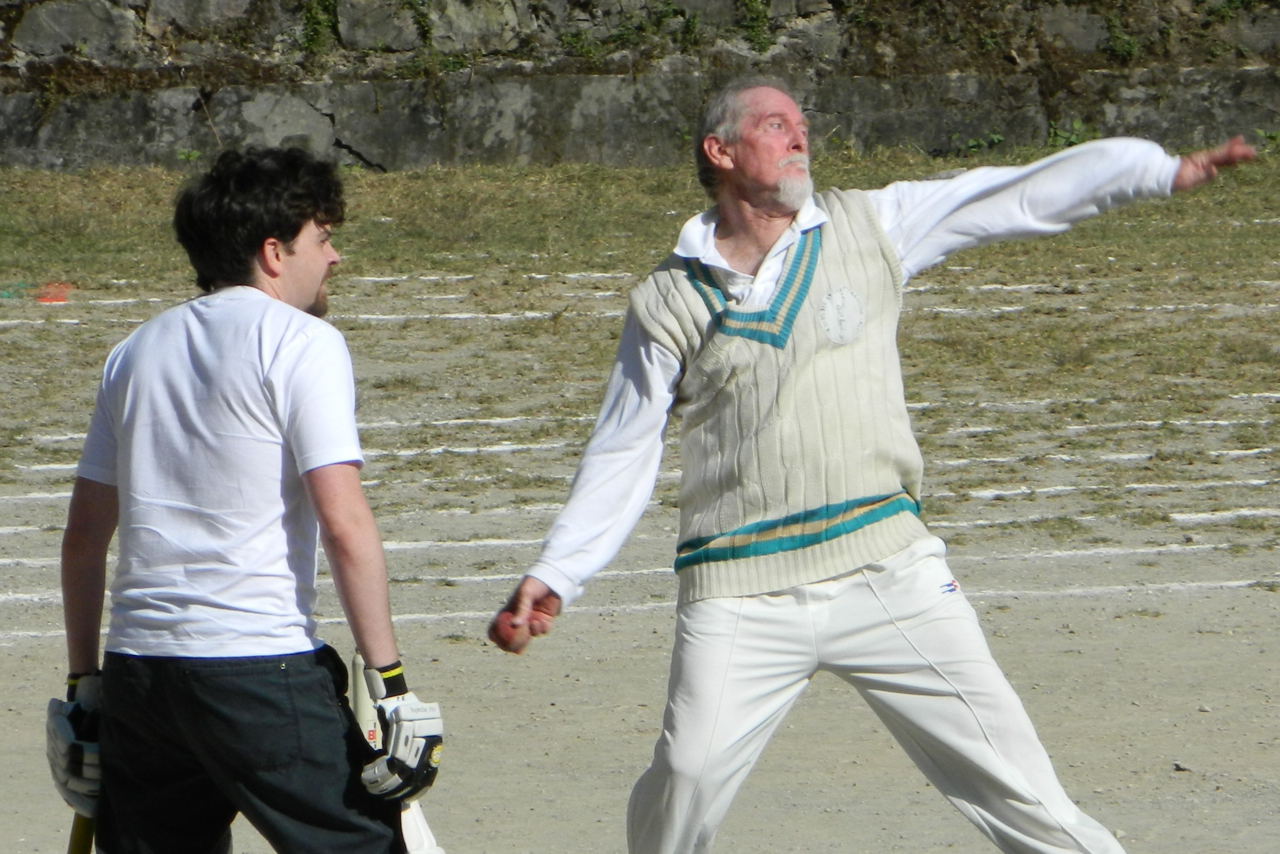
^ Brendan Gregg and Tom Alter

Monday, Oct 24: en route, Kesroli

We took a taxi from Mussoorie to Dehra Dun airport – a much longer journey than I had bargained for. Then, in the last kilometer, we ran into a roadblock:

After a short plane ride to Delhi, we were met by a car from Uday Tour, which drove us another three hours to the Hill Fort, Kesroli:

Tuesday, Oct 25: Kesroli

Wednesday, Oct 26: Kesroli

Thursday, Oct 27: en route, Agra

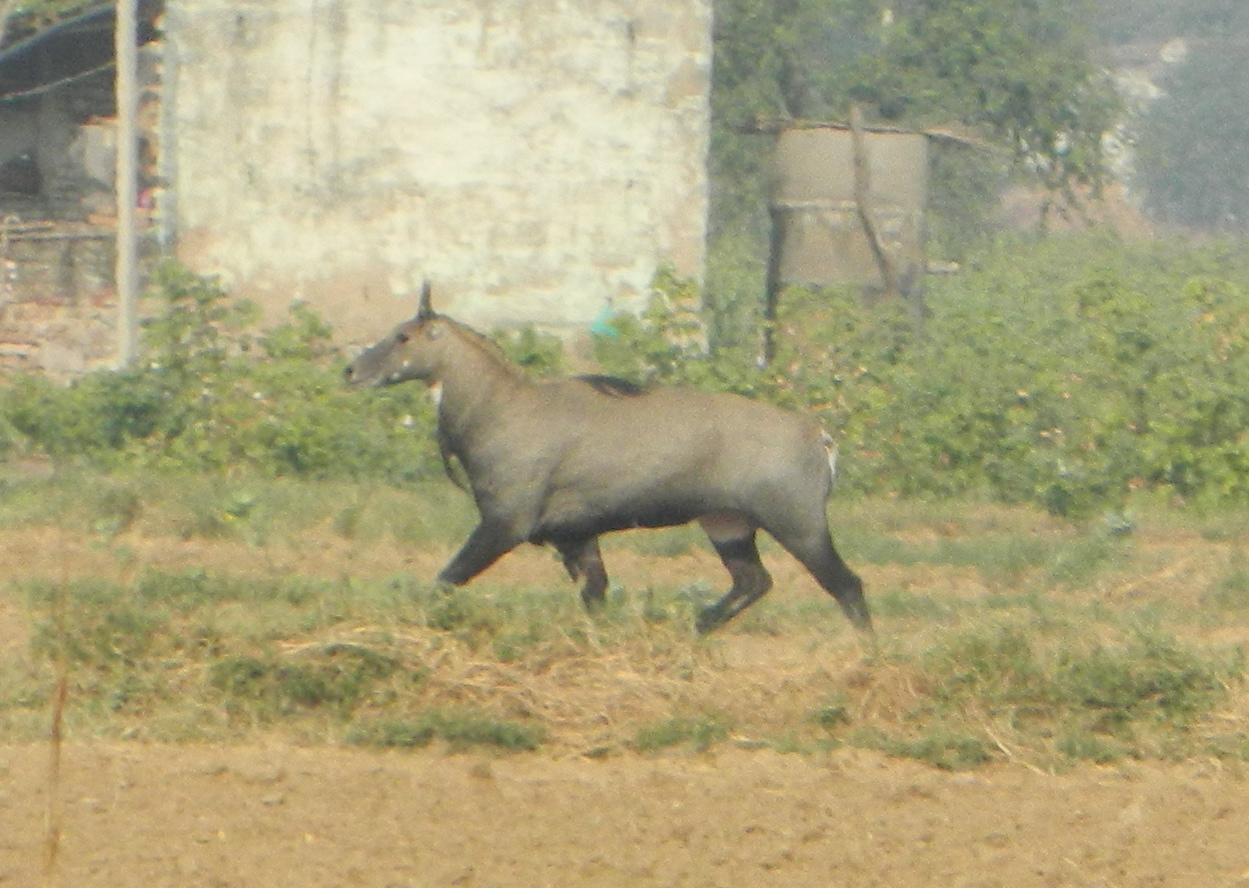
Another driver from Uday Tour came to take us to Agra. I had not travelled by road in India (other than Dehra Dun-Mussoorie and back) for some time; it gives a different perspective on Indian life. I was very surprised to see this example of Indian wildlife – a nilgai – just off the road:
We stopped en route at Fatehpur Sikri, then went on to the Taj Mahal – my first visit in thirty years.

Friday, Oct 28: Agra, en route, Bombay

On the way out of Agra we saw the Red Fort, where I got a video snip of a Chittering Chipmunk. We drove straight to Delhi airport (about five hours on the road), and flew to Bombay.

Saturday, Oct 29: Bombay

Shopping, seeing friends.

Sunday, Oct 30: Departure

Left for the airport around midnight Saturday for a 3 am flight. Connected through Dubai again, then on to one of the worst flights of my life – yelling kids whose parents seemed to have no notion of even attempting to calm or quiet them… Finally, back to SFO and “real life” – whatever that may be!

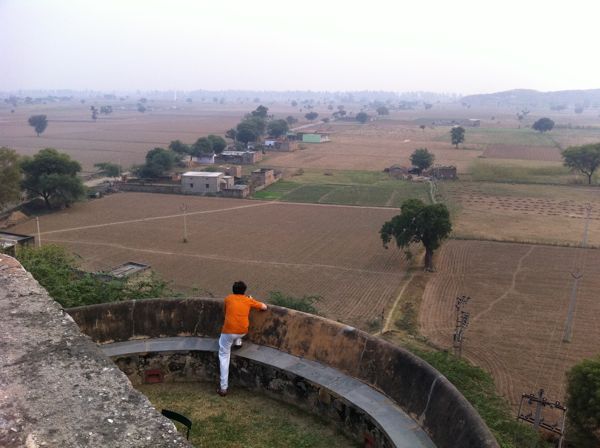
View from the Hill Fort, Kesroli

This is the view from one of the round towers of the fort on the village side. We look down in lordly splendor as perhaps its original owner did – although, in the 14th century, the sights and sounds would have been very different!

Later, as dusk descended, we saw dozens of headlights on the road below as the locals returned home from the day’s work on motorcycles and tractors. The fact that they apparently had paying jobs elsewhere, and vehicles to commute to them, indicates an astonishing and heartening level of prosperity in this part of rural India. 60% of India’s population still lives in villages, but it seems that fewer and fewer of them subsist on farming alone.

Diwali Celebrations

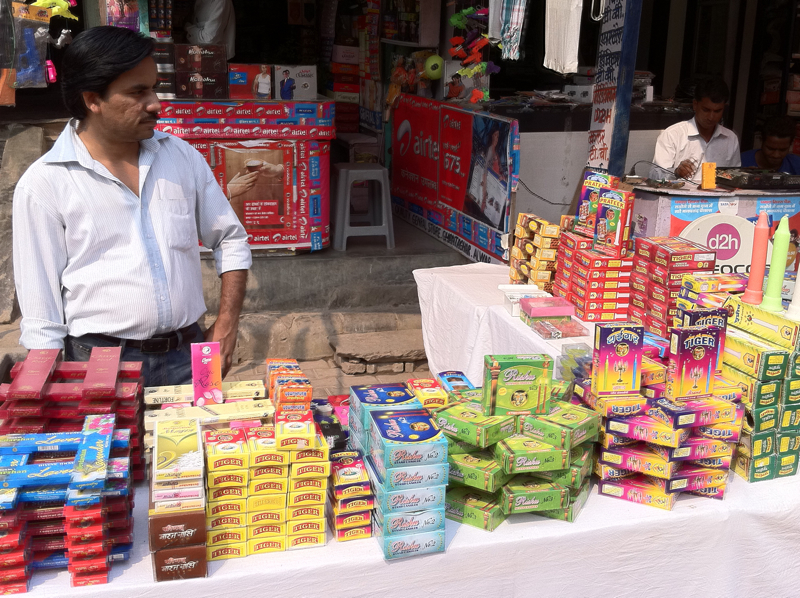
Diwali is the Festival of Lights, so the market in Alwar was full of light-making apparatus: candles (above),

fireworks and diyas (above): add a wick of twisted cotton and some oil to make a very ancient kind of lamp, shown in action below:

(Yes, I was startled by the firecracker going off.)

^ The hill fort was lighted with both diyas and electric bulbs, more on the side which could be seen from village below…

…which was in turn lit up. I could see people moving about with lighted diyas on a tray, placing them atop their walls and roofs. There was a cacophony of music and fireworks, and in the distance we could see much bigger fireworks from Alwar and elsewhere.

Earlier in the evening we had wandered into a room signed as the “TV lounge,” which we hadn’t bothered with because we had no interest in TV. We were surprised to find that it was the former royal hall of this mini fort-palace:

I didn’t know what the white cushions on the floor were for. Later on, all became clear: the room was set up for a puja, with a small altar on the table containing a poster of Saraswati, Ganesh, and Lakshmi, and offerings of sweets and a coconut. A Brahmin priest was brought from somewhere, and all the guests of the hotel were invited to participate, sitting on the cushions along with the staff. The participating guests were an older Sikh couple, a young Indian couple whose religious affiliation I could not determine, and ourselves. We all took turns to wave a tray of offerings with a smoking lump of camphor in front of the altar, while the priest led us in Hindu hymns (from a book, which I thought was cheating – Brahmins are supposed to know everything from memory). One of the hymns was about loving all your fellow men, which the priest gestured should include all of us.

We were each given a sweet and a choice of “dried fruits” (including nuts) from a fancy package, and a multiple thread dyed red and yellow was looped several times and tied around each of our right wrists. (I’d seen balls of this thread for sale in the market earlier and wondered what it was for.) The priest marked each of our foreheads with a thick red paste and stuck a few grains of rice into it; when I washed the paste off later, it smelled like the powdered poster paints we used to use in school.

We should perhaps have tipped the priest, but we’d been summoned to the puja from drinks on the terrace, and didn’t have any money on us. No one seemed to mind.

A(nother) sumptuous dinner followed, and the fireworks went on into the night.

Diwali Market in Alwar

When we reached Alwar it was, as expected, bustling with holiday crowds. The Diwali tradition in Rajasthan is to perform a puja (worship) of Lakshmi, the goddess of prosperity, in which sweets and coconuts are offered first to the goddess, then to the guests. So everyone’s shopping included:

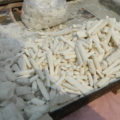
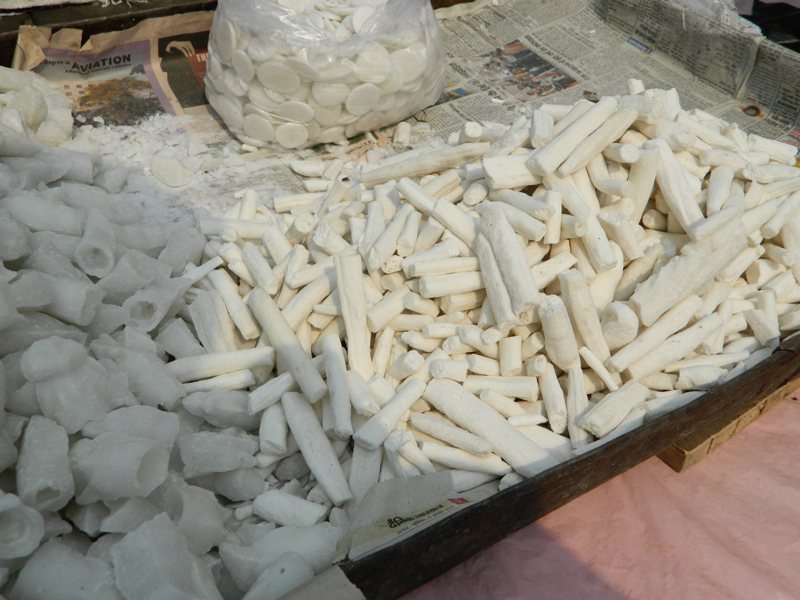
We were mystified by the stuff shown at top, until someone offered us a taste – pure sugar candy, apparently.

Petha, a gumdrop-like sweet made from melon and sugar. Photo by Brendan Gregg

^ This is petha, candied melon, traditional in this part of India. Later, in Agra, we saw shops offering petha made from other fruits. Don’t worry about the bees, they don’t eat much.

^ The festival is decorated in garlands (malas), both real and artificial.

photo by Brendan Gregg

Diwali is also a time for giving gifts, more or less lavishly depending on the local economy and your family budget.

^ Sweets are the biggest tradition, and may be dressed up in…

^ fancy boxes.

photo by Brendan Gregg

^ And, if you’re short on idols for at-home worship, you can stock up. Ganesh is also traditionally worshipped at this time, along with Saraswati, goddess of the arts and learning.

Scooter Taxi Ride to Alwar

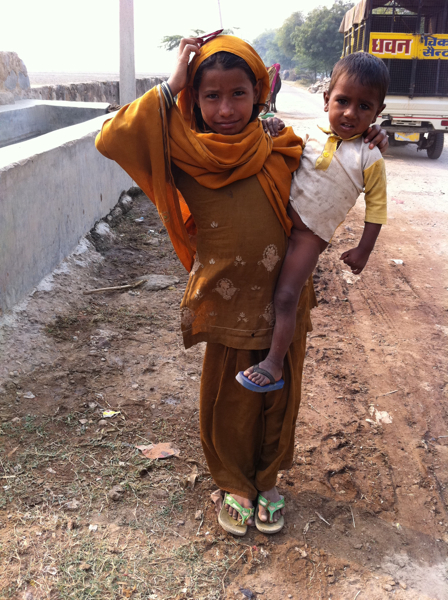
While staying at the Hill Fort Kesroli, one morning (which happened to be Diwali, the biggest festival in the Hindu calendar) we walked the two kilometers of country road down to State Highway 14. Along the way we attracted curious stares from the local villagers, many of whom were going off to jobs elsewhere on their own motorbikes. We saw no one else walking, except children, who wanted their pictures taken (above), and only one couple on a bicycle.

I was pleasantly surprised by the prevalence of motor transport and amount of commuting from what probably used to be an isolated rural community, 12 km from the nearest town. Although 50-60% of India’s population still lives in villages, clearly many of them no longer depend on the land for their sole subsistence.

At the junction we caught a scooter taxi, a three-wheeled mode of public transport. In the cities, these are designed to carry three people. Out in the country, they’re a bit more robust.

The hotel manager had told us that the 10-km trip into Alwar should cost 10 to 20 rupees. We had the driver wait for us about two hours while we ambled around the market – this seemed easier than trying to explain to another driver later on where we were trying to get back to. When we arrived back at the Fort, neither of he nor I knew what I should pay him. He was embarrassed to ask too much: “This is my village.” I gave him Rs. 270 ($5), which I hope was several times the going rate. India’s economy works on so many different scales that it can be hard for a non-local to do the right thing.

Here’s some footage of the ride over to Alwar: