Tag Archives: Italian language

Sandokan – an Italian Children’s Classic

We saw Pirates of the Caribbean in Italian, though I felt it lost something in translation. But it was fun, pretty much what you’d expect from a movie developed from an amusement park ride. And it reminded me that I’ve been meaning to write about Sandokan.

Sandokan, a character created in 1883 by an imaginative but completely untravelled Italian named Emilio Salgari, is a Malaysian prince, deposed by the British and Dutch colonialists who have taken over his country. Unable to reclaim his throne, “the Tiger of Malaysia” takes to piracy, harassing the colonialists, along with his fearless band of seamen and his Portugese sidekick, Yanez.

I find very amusing the reversal on typical colonial literature of the period: here the baddies are the white men, such as the real historical character, James Brooke, the “White Rajah of Borneo.”

Salgari wrote over 80 novels, stories of adventure set in exotic lands from Malaysia to India to the Caribbean. His work enjoyed periods of great popularity in many languages and countries, but has only very recently begun to be translated into English. For those who read Italian, some works are available for download.

Sandokan was made into several TV miniseries in Italy in the 1970s, starring Kabir Bedi, a half-Indian half-Italian actor. Rather too tall for a Malaysian, but awfully handsome, so who’s complaining? Besides, the Englishman James Brooke was played by an Italian (who also once or twice played James’ Bond’s nemesis Blomfeld), and Yanez the Portugese by a Frenchman, and since the series was apparently shot in India, all the “Malaysians” must be Indian. Oh, well. Inaccuracies notwithstanding,the series is fun, and is available on DVD.

Pictures etc. from the TV series

learn the song!

Salgari was never high literature, and even in the original Italian the writing is a bit clumsy (how many times in one paragraph can you use the word cupo – dark?). You read these for the grand adventure tales they are, so, if that’s what floats your boat, I do recommend them – and now two of them are available in English:

Nov 24, 2007

The kind people at ROH Press wrote to let me know:

“ROH Press has just released a new modern translation of The Tigers of Mompracem. You can read sample chapters on our website.

Next year marks Sandokan’s 125th anniversary so we’ve also issued The Pirates of Malaysia  and The Two Tigers.”

Naming a Multicultural Baby

Having been saddled all my life with a name that no one can spell or pronounce, I am always curious about how people get their names – especially, of course, the unusual ones. In July, 2003, the New York Times ran an article about what people are naming their kids, based on the Social Security Administration’s data on popular baby names; the writer, expecting her own child, used this as the basis for research on what not to name her baby.

The upside of having an unusual name is that you’ll probably be the only person of that name in any given group. At UC Santa Cruz, I learned that a girl in my college was called Deidre, which she pronounced “Day-dree” (I’m Deirdré pronounced “Dear-druh”) – close enough for me to get excited about it, though she wasn’t impressed. Things got very weird when we ended up sharing a house the following summer, along with a third woman (named Mary). Since no one could spell or pronounce either of us, poor Mary never knew who the phone messages were for.

If you’re Italian, you most likely know someone else with the same name as you. According to my friend at Zoomata.com (and my own observations), most Italians have traditional names out of the calendar of Catholic saints, though they may get them by way of a grandparent or other relative. (The exceptions to the saints are classical Roman names such as Olivia, Livia, Lavinia, Massimo.) This gives parents a very limited pool of names to choose from, and non-standard names are rare.

The result is that, for any given name, you probably know a bunch of people who have it. Enrico and I can never refer to “Paola” without having to qualify which of several Paolas we’re talking about. Enrico himself is in the fortunate category of names which are easily recognized and not considered weird, but uncommon enough that you probably don’t know more than one. Well, maybe two.

When we had to choose a name for our own baby, we had several criteria to consider. We didn’t know that we were having a girl (we had asked not to be told, and when people asked us “What are you having?” we answered: “A baby.”); nonetheless, by some instinct, we put a lot more thought into a girl’s name than a boy’s. We wanted a name that would be easily spelled and pronounced by both sides of the family, and that might somehow signify the baby’s multiculturalness. Among others, I considered one of my favorite Indian names, Gayatri, but Enrico was afraid that would be too weird for Italy, though I argued that it’s similar to a classic Latin name, Gaia.

I initially wanted to choose a “Rose” based name, to honor my beloved aunt Rosie (Roselyn), who had been a friend as much as a relative, and an important influence on my personality and attitude. But Enrico didn’t like the Italian names Rosalia or Rosalinda – he said they sounded old-maidish. (Perhaps they were more southern Italian and/or old-fashioned).

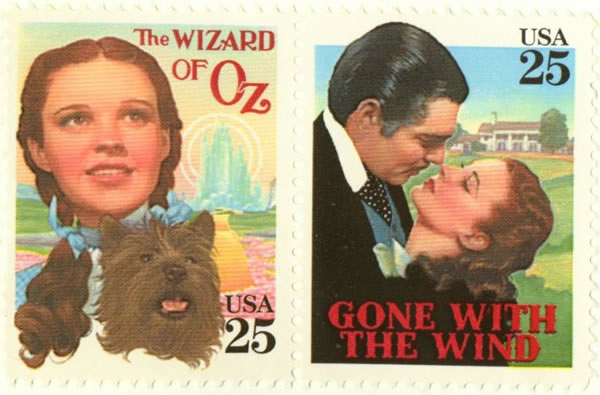
We were reading Gone with the Wind at the time; we used to read together, alternating chapters so that Enrico could hear my English pronounciation, and practice his own with corrections from me. Yes, hang on, this is relevant. When the film “Gone with the Wind” reached Italy just after WWII, the heroine’s name was translated as Rossella O’Hara. The name Rossella, meaning “little red” (originally applied to redheads) already existed in Italy, but was extremely rare until the film came along. Then it suddenly became popular, so there is a generation of Rossellas, just over 50 years old now.

“Rossella” seemed like a good name for several reasons: being best known as the Italian translation of a very American character, and that character being a strong, resourceful woman (though she certainly has her flaws). I thought it would be fairly easily spelled and pronounced by Americans, though that has proven not to be true; everyone wants to spell it with only one S, and pronounce it accordingly: Rozella. It’s a long O and a soft S: Rohss-ella (don’t forget to roll the R!). Rossella herself generally tells English-speakers to call her Ross (rhymes with “Boss”).

The name, after a period of popularity in Italy, went into decline again and isn’t used much these days, so we thought our Rossella wasn’t likely to be confused with any other Rossella in her age group. This, too, proved not to be true: there was another Rossella in her elementary class.

But we didn’t know these things when she was born. As I held my beautiful new baby in my arms, the labor nurse asked me: “What are you going to name her?”

“Rossella.”

“Oh, that’s beautiful. And thank god it isn’t Morgan or Brittany.”


^ top: 1989, the year of our daughter’s birth, was the 50th anniversary of the releases of Gone with the Wind and The Wizard of Oz; these commemorative stamps were issued in the US.

Fess Up: What Happens when a Name Can’t Be Translated into Italian?

During our US trip last year, Ross and I visited the Texas History Museum in Austin (new since I graduated from the University of Texas in 1986). They had a temporary exhibit on Davy Crockett, the near-mythical frontiersman who was a Senator from Tennessee before moving on to Texas, where he died at the Alamo. The exhibit included a section on the Crockett revival of the 1950s or 60s, when Disney did a movie and kids wore coonskin caps (raccoon skin, with the tail on). There was a huge poster for the movie, evidently taken from the Italian release.

Most Americans probably remember that the actor who played Davy Crockett was named Fess Parker. Fess is a weird sort of name even in the US, I can’t think what it would be a nickname for. But in Italian, “fesso” means a complete idiot – not the name you want to associate with a movie hero! So the Italian movie poster renamed the actor “Fier Parker.” Fier is a non-existent name in Italy (and probably everywhere else), but you would assume it’s related to the word “fiero” – proud.

I laughed out loud in front of the poster, drawing inquiring looks from a man standing nearby, so then I had to explain to him what was funny.

August 20, 2003

John Sanders tells me that “Fess Parker was born Fess E. Parker. The E. did not stand for anything. Also Fess Parker is a graduate of the University of Texas. I read that Fess Parker learned as a young boy that fess meant ‘Proud’ in England of old.”

Richard Munde adds: “I remember my seventh grade French teacher telling us that Fess Parker was a huge star in France because of the Disney Davy Crockett series. Fess, she said, was French slang for ass and so he was re-named there too. (Can’t remember what they called him, though.)”

Raising a Bilingual Child

Our daughter is bilingual in English and Italian, and some people have asked “how we did it.” There really wasn’t much to it. While I was pregnant, I read the only book  I could find on the subject (The Sun is Feminine Amazon UK | US), which happened to be written (in English) by a German linguist married to an Italian. She suggested following the “one parent, one language” rule: each parent should speak only one language (preferably his or her native one) with the child, right from birth, so that the child is able to identify each language with a specific person, and thereby learns to keep the languages separate.

So that’s what we did. For the first 15 months of her life, Ross was mostly in the US, from then on she was mostly in Italy, but, wherever we were, I addressed her only in English, Enrico only in Italian. Enrico and I communicated in English, as a matter of habit – I didn’t speak Italian when I first met him! But when we were with Italian speakers I spoke Italian, and Ross heard me doing it. So by age three she decided that, while she could understand English perfectly well, there was no need for her to go to the effort of speaking it, since it was obvious that everybody understood Italian. I would always speak English to her, and she’d always reply in Italian. Heads would turn on the street as people tried to understand what was going on.

The summer she turned four, we took her on a trip to other parts of Europe, visiting various friends. One couple were English and German, raising their own bilingual kids in Germany. Rossella realized that she had to speak English to be understood by these adults, but for some reason she remained convinced that all children spoke Italian. My friend’s son, the same age, was similarly convinced that all kids must speak German. They struggled for days to communicate, until Ross finally said to him, in great frustration: Ma tu devi parlare inglese! (“But you have to speak English!”)

We didn’t have a TV for the first couple of years we were in Milan; we got one around Ross’ third year so that she could hear more English, on videotape. We got a multistandard VCR so we could watch films imported from the US, and built up an impressive collection of Disney movies. (Fortunately, Enrico and I liked them, too.)

If Ross were growing up in the US, it would probably be difficult to get her to speak Italian. Many American schoolkids don’t value the ability to speak a foreign language, and of course no child wants to be observed doing something uncool or different. But, in Italy, she gets lots of positive reinforcement for being bilingual. When she was in elementary school, her friends’ parents used to say: “Go play with Rossella and learn some English!” And everyone tells her how lucky she is to speak it so well.

We know several other multilingual families, and it’s interesting to observe which language the kids will drop into, depending on environment or what they’re talking about. In one family we know, she’s a multilingual Italian (speaks Italian, English, French, and Spanish fluently), he’s German. Between them they communicate in English, the only language they have in common. He speaks only German to the kids, she only Italian. So they hired an English-speaking nanny, and the kids are trilingual. Another couple are Americans whose kids were born in Italy, attended Italian schools, and spoke English at home. The parents sometimes spoke French as their “secret” language when they wanted the kids not to understand something, which motivated the kids to learn French! (Ross has been taking French in school; many schools offer English and a choice of French or German.)

It’s no longer necessary to maintain linguistic purity for Ross’ sake, so our family language has become an idiosyncratic mix that still causes heads to turn. I was wondering recently why people stare at Ross and me in the subway when we speak English; English speakers are not rare in Milan. Then I realized that they’re probably staring because we’re not speaking pure English; we blend it freely with Italian, especially when talking about activities that take place in Italian, such as riding or school.

Being bilingual has disadvantages. I sometimes realize after the fact that I’ve said or written something that was far too literal a translation from one language or the other. An American friend, who’s been in Italy even longer than I, once said to me: “I’ll make a jump at the new house on my way back.” This sounded weird in a way that I couldn’t immediately put my finger on. Then I realized that she had translated literally the Italian “Faro’ un salto;” Italians use “make a jump” the way English speakers use “stop by.” That’s what she meant and what I, being fluent in both languages, heard. Anyone who wasn’t bilingual in English and Italian would have been thoroughly confused.

Italian Accents

“Stanlio, non fare lo stupeedo!”

When an American speaks Italian with a particularly bad accent, Italians often refer to Stanlio e Ollio: Laurel and Hardy, whose accents in the Italian versions of their films are legendarily hilarious, full of flat Rs and words stressed on the wrong syllable.

I used to wonder why these films had been dubbed so badly. Laurel and Hardy are funny enough without silly accents, and why pick on these guys in particular in the dubbing? Everyone else gets dubbed into a normal Italian accent, usually very well.

Then I learned that the films were not initially dubbed by Italians; the voices are those of Laurel and Hardy. When their first talkies came out, it was impossible to dub a new soundtrack onto an existing film. The only way to make an Italian version was to reshoot the whole thing, with the actors doing the Italian dialog themselves. They either read it off cards or memorized it phonetically (as some Italian actors do today when acting in English films). But no one had instructed them in the finer points of Italian pronunciation, so they made mistakes like ‘stuPEEdo’ instead of ‘STUpid-oh.’

Italians found this so funny that, even when technology improved and it became possible to use Italian voices to dub a new soundtrack, the silly accent was maintained, and sticks to this day as a cliche of Americans (or Brits) speaking Italian.

Ask an American to imitate an Italian speaking English, and most of the time you will get the sort of accent heard in American mafia movies, which appears to be loosely based on the pronunciation of someone’s Sicilian or Neapolitan ancestors.

To an Italian ear, there are marked differences in regional accents, and some regional dialects are so different in pronunciation and vocabulary as to be unintelligible to outsiders. Many northern Italians despise the ‘uncouth’ accents of southerners, and would be offended to be lumped into a language category with them.

But maybe that’s changing.

I’ve been meaning for some time to talk about Andrea Camilleri’s Montalbano books, a series of police mysteries set in a small town in Sicily. Part of the appeal is that they are written in a semi-Sicilian dialect, giving a flavor that could be achieved no other way, though the publishers and Camilleri himself initially feared that the general Italian public would not be able to understand it. It turned out not to be a problem, even for me; after the first chapter or so, I didn’t find the language difficult. I’ve noticed that the language is becoming more and more Sicilian as the series goes on; perhaps Camilleri assumes that his devoted fans are now trained to handle it.

Montalbano in book form has been popular for years, and now has been made into a series of TV movies. Accent was again expected to be a problem, so for the first series our hero was made to sound ‘more Roman than Sicilian.’ For the second series, airing now, the accents sound quite Sicilian to me, though not so much that I can’t follow the dialog. Montalbano is wildly popular with all age groups, which seems to be having an interesting side effect: the Sicilian accent is now considered cool. My daughter and her Milanese classmates yesterday begged their school custodian, a Sicilian, to say ‘quattro’ (four), which he pronounces ‘quacchro’. He was baffled, and probably thought at first that they were making fun of him. But they explained that they like to hear him speak because he sounds just like Montalbano; then he was flattered!

The Montalbano books are being translated into English and appear to be selling well. They must lose something without the dialect, but they are still interesting stories with great characters, so I recommend them to mystery-lovers, and to anyone who might enjoy descriptions of Sicilian scenery and food. Montalbano loves good food, and so, presumably, does the author; the stories are frequently side-tracked by mouthwatering descriptions of dishes that Montalbano puts away with pittito lupigno (wolfish appetite). This is one aspect that, sadly, is not preserved in the television series; I guess they didn’t want to make it into a cooking show.

Montalbano links: