Tag Archives: vlomo11

Diwali Market in Alwar

When we reached Alwar it was, as expected, bustling with holiday crowds. The Diwali tradition in Rajasthan is to perform a puja (worship) of Lakshmi, the goddess of prosperity, in which sweets and coconuts are offered first to the goddess, then to the guests. So everyone’s shopping included:

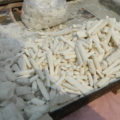
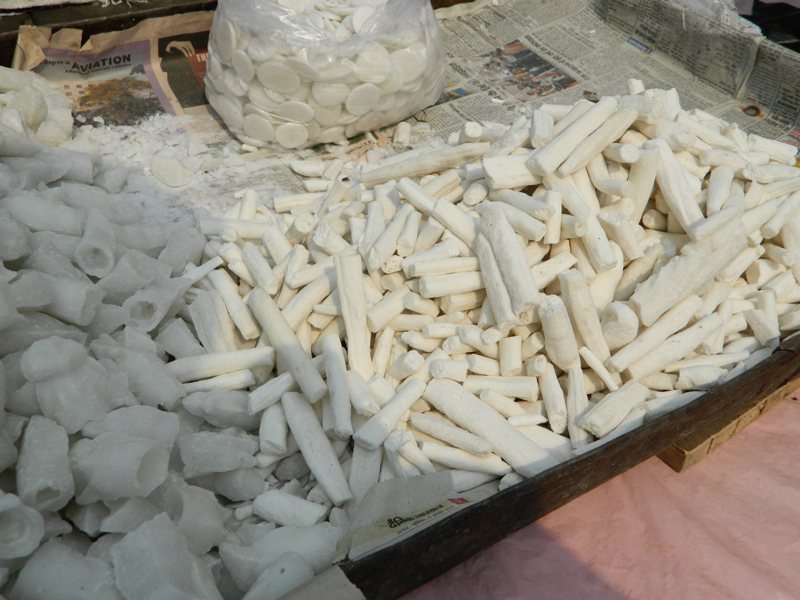
We were mystified by the stuff shown at top, until someone offered us a taste – pure sugar candy, apparently.

Petha, a gumdrop-like sweet made from melon and sugar. Photo by Brendan Gregg

^ This is petha, candied melon, traditional in this part of India. Later, in Agra, we saw shops offering petha made from other fruits. Don’t worry about the bees, they don’t eat much.

^ The festival is decorated in garlands (malas), both real and artificial.

photo by Brendan Gregg

Diwali is also a time for giving gifts, more or less lavishly depending on the local economy and your family budget.

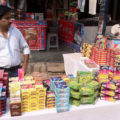
^ Sweets are the biggest tradition, and may be dressed up in…

^ fancy boxes.

photo by Brendan Gregg

^ And, if you’re short on idols for at-home worship, you can stock up. Ganesh is also traditionally worshipped at this time, along with Saraswati, goddess of the arts and learning.

Scooter Taxi Ride to Alwar

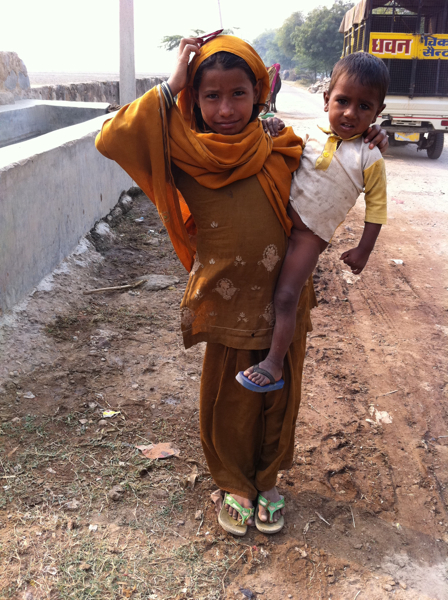
While staying at the Hill Fort Kesroli, one morning (which happened to be Diwali, the biggest festival in the Hindu calendar) we walked the two kilometers of country road down to State Highway 14. Along the way we attracted curious stares from the local villagers, many of whom were going off to jobs elsewhere on their own motorbikes. We saw no one else walking, except children, who wanted their pictures taken (above), and only one couple on a bicycle.

I was pleasantly surprised by the prevalence of motor transport and amount of commuting from what probably used to be an isolated rural community, 12 km from the nearest town. Although 50-60% of India’s population still lives in villages, clearly many of them no longer depend on the land for their sole subsistence.

At the junction we caught a scooter taxi, a three-wheeled mode of public transport. In the cities, these are designed to carry three people. Out in the country, they’re a bit more robust.

The hotel manager had told us that the 10-km trip into Alwar should cost 10 to 20 rupees. We had the driver wait for us about two hours while we ambled around the market – this seemed easier than trying to explain to another driver later on where we were trying to get back to. When we arrived back at the Fort, neither of he nor I knew what I should pay him. He was embarrassed to ask too much: “This is my village.” I gave him Rs. 270 ($5), which I hope was several times the going rate. India’s economy works on so many different scales that it can be hard for a non-local to do the right thing.

Here’s some footage of the ride over to Alwar:

Driving in India’s Himalayas

No, I did not drive – I leave that strictly to the experts. And, no, this video is not speeded up in any way. (It is, however, silent – I removed mostly me talking about unrelated topics.)

This was what the drive looked like on our way down (way, way down) to Woodstock School’s Hanson Field for an alumni cricket match.