Category Archives: Italy

Italian Brats

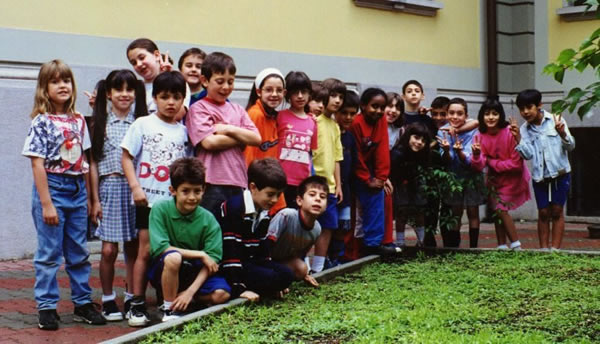
A survey cited by Zoomata says “a recent poll of 2,500 travel-industry professionals voted Italian kids the most obnoxious and unruly in the EU. … according to UNICEF, only 50% of parents [in Italy] reprimand their kids.”

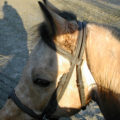
I’d have to agree that many Italian parents are over-indulgent with their kids, and many young Italian children noticeably lack discipline and common courtesy. At my daughter’s riding school, I waged a never-ending battle to keep other people’s kids from running amok and scaring the horses during lessons. (Horses scare easily, and when they do, their riders often fall.)

This led to some surprising run-ins with small children. One three-year-old not only would not stop making noise, but gave me lip when I asked him to:

Me: “Stop that. You’ll scare the horses and someone could fall.”

Him: “I don’t care.”

Me: “Someone could get hurt!”

Him: “I don’t care. Anyway, it doesn’t hurt to fall.”

Me: “Oh, yes, it does. Want me to show you?”

Another child, when I asked him to be quieter, said “No.”

I asked: “Where’s your mother?”

“I’m not going to tell you.”

So I tucked him under my arm and carried him off to find her, to general astonishment. At least I resisted the very strong urge to spank him!

The teacher in my daughter’s elementary school put up with far worse. One boy called her a whore. She pretended not to hear, which surprised me. I’ve attended many schools, and in every one of them, that would have got the kid sent to the principal’s office, or suspended.

Raising a Bilingual Child

Our daughter is bilingual in English and Italian, and some people have asked “how we did it.” There really wasn’t much to it. While I was pregnant, I read the only book  I could find on the subject (The Sun is Feminine Amazon UK | US), which happened to be written (in English) by a German linguist married to an Italian. She suggested following the “one parent, one language” rule: each parent should speak only one language (preferably his or her native one) with the child, right from birth, so that the child is able to identify each language with a specific person, and thereby learns to keep the languages separate.

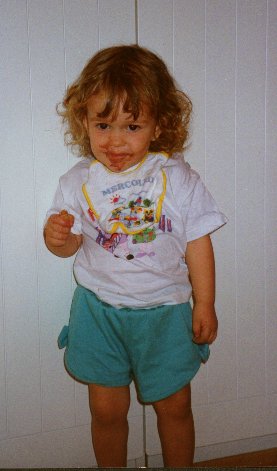
So that’s what we did. For the first 15 months of her life, Ross was mostly in the US, from then on she was mostly in Italy, but, wherever we were, I addressed her only in English, Enrico only in Italian. Enrico and I communicated in English, as a matter of habit – I didn’t speak Italian when I first met him! But when we were with Italian speakers I spoke Italian, and Ross heard me doing it. So by age three she decided that, while she could understand English perfectly well, there was no need for her to go to the effort of speaking it, since it was obvious that everybody understood Italian. I would always speak English to her, and she’d always reply in Italian. Heads would turn on the street as people tried to understand what was going on.

The summer she turned four, we took her on a trip to other parts of Europe, visiting various friends. One couple were English and German, raising their own bilingual kids in Germany. Rossella realized that she had to speak English to be understood by these adults, but for some reason she remained convinced that all children spoke Italian. My friend’s son, the same age, was similarly convinced that all kids must speak German. They struggled for days to communicate, until Ross finally said to him, in great frustration: Ma tu devi parlare inglese! (“But you have to speak English!”)

We didn’t have a TV for the first couple of years we were in Milan; we got one around Ross’ third year so that she could hear more English, on videotape. We got a multistandard VCR so we could watch films imported from the US, and built up an impressive collection of Disney movies. (Fortunately, Enrico and I liked them, too.)

If Ross were growing up in the US, it would probably be difficult to get her to speak Italian. Many American schoolkids don’t value the ability to speak a foreign language, and of course no child wants to be observed doing something uncool or different. But, in Italy, she gets lots of positive reinforcement for being bilingual. When she was in elementary school, her friends’ parents used to say: “Go play with Rossella and learn some English!” And everyone tells her how lucky she is to speak it so well.

We know several other multilingual families, and it’s interesting to observe which language the kids will drop into, depending on environment or what they’re talking about. In one family we know, she’s a multilingual Italian (speaks Italian, English, French, and Spanish fluently), he’s German. Between them they communicate in English, the only language they have in common. He speaks only German to the kids, she only Italian. So they hired an English-speaking nanny, and the kids are trilingual. Another couple are Americans whose kids were born in Italy, attended Italian schools, and spoke English at home. The parents sometimes spoke French as their “secret” language when they wanted the kids not to understand something, which motivated the kids to learn French! (Ross has been taking French in school; many schools offer English and a choice of French or German.)

It’s no longer necessary to maintain linguistic purity for Ross’ sake, so our family language has become an idiosyncratic mix that still causes heads to turn. I was wondering recently why people stare at Ross and me in the subway when we speak English; English speakers are not rare in Milan. Then I realized that they’re probably staring because we’re not speaking pure English; we blend it freely with Italian, especially when talking about activities that take place in Italian, such as riding or school.

Being bilingual has disadvantages. I sometimes realize after the fact that I’ve said or written something that was far too literal a translation from one language or the other. An American friend, who’s been in Italy even longer than I, once said to me: “I’ll make a jump at the new house on my way back.” This sounded weird in a way that I couldn’t immediately put my finger on. Then I realized that she had translated literally the Italian “Faro’ un salto;” Italians use “make a jump” the way English speakers use “stop by.” That’s what she meant and what I, being fluent in both languages, heard. Anyone who wasn’t bilingual in English and Italian would have been thoroughly confused.

Rites of Passage: Italian School Exams

The Italian education system is big on big exams. At the end of elementary, middle, and high school, everyone has to take an exam, with both written and oral components. When it came time for Ross’ 5th grade exam, I was terrified on her behalf; the teachers had made such a big deal of it, saying months ahead of time: “This will be on the exam, you have to start studying now.”

So I assumed that her exam results would be of interest to the middle school she’d be going on to, and asked the teachers when I should come to collect a report.

The teachers seemed surprised. “You don’t have to pick up the results.”

“Doesn’t the new school need to see them?”

“No.”

“Then who does see them?”

“No one. We put them in a file, and no one ever looks at them again.”

I was dumbfounded. I tried asking some other parents: if no one ever looks at the results, what is the point of this exam, and why does everyone make such a fuss about it?

“It’s traditional, a rite of passage,” was the explanation.

Now Ross is finishing 8th grade, and we’re up against another exam. This time it’s four days of written tests (Italian – an essay, math – ouch, English – a doddle, and French), followed (after ten more days to study) by a twenty-minute oral, in which questions may be asked covering anything she’s studied over the year. They tell me the oral is a test of maturity and presence as much as actual knowledge; if so, Ross should pass with flying colors!

Until a few years ago, schooling was compulsory only until age 14, and I suppose the middle school exam determined what sort of high school you would go to (if any). The type of high school you attended would in turn determine whether you would go on to university, and what sort of course you could do there. Things have loosened up now, so the exact type of high school diploma does not force your university choice (though some types of high school prepare students for university better than others).

So it seems likely that the middle school exam is no longer as important as it was, and again I’m wondering: what’s the point?

I’m a foreigner: I ask questions like that. Most Italians wouldn’t. When we were scouting new middle schools last year (having decided that the school Ross had attended for 6th and 7th grade was not right for her), I asked one of the principals about this exam. Her reply was refreshingly honest: “It will probably disappear in a few years, it’s practically meaningless now.” Of course that’s not much comfort to the kids who still have to do this meaningless yet gruelling exam.

But, if you ask the parents, it’s another rite of passage that they all went through, and think their kids should, too. Sometimes I get very frustrated with the Italian attitude that things should continue as they are, simply because they’ve always been that way… (This makes a lot of sense in some fields, such as food and wine, but not in education!)

At any rate, Ross seems to be getting through it without too much agony, and only moderate maternal nagging to study (I’m so busy moving that I’ve hardly been home – I have to nag by cellphone). And we can all look forward to doing it again at the end of high school (which is five years, by the way), when she faces the maturita‘.


Feb 9, 2004

The esame della quinta (elementary school-leaving exam) has been abolished by recent reforms introduced by Education Minister Letizia Moratti. No one mourns it.

Elementary School: An Italian Experience

Rossella’s five years of elementary school took place at Parco Trotter, where she had also done scuola materna (preschool). We had been spoiled by a great scuola materna experience; elementary was… not so great.

I’m reaching the conclusion that the quality of education hinges almost entirely on the quality of teachers. And there’s the rub. Until recently, becoming a teacher in Italy did not require any teaching qualification. To teach middle or high school, you had to have a college degree (laurea) in the subject you would teach; to teach elementary school, you didn’t even need that much! There were no requirements for teacher training classes or actual classroom experience, and apparently little opportunity for teachers to learn any techniques at all, let alone new ones. This has now changed, but there is a large body of teachers still in the system who cannot be dislodged from their jobs or even required to upgrade their professional qualifications. As far as I can tell, what little they know about teaching, they have learned on their own or from colleagues.

Of course, some people manage to be wonderful teachers without formal teacher training, and some are motivated to learn more about their profession even when not required to. But, without some system of professional qualifications in place, individual capability and motivation guarantee nothing: parents can only hope for fate to assign their kids some of those few, great natural teachers.

We had no such luck.

Parco Trotter had four sections of each grade level, with two “fixed” teachers per section for the major subjects: one taught math and science, the other Italian, history, and geography. These two were supposed to remain with the same section of students from first through fifth grade, and parents had no choice about what section their child was in.

In Rossella’s year, one section was blessed with the kind of teacher beloved by both kids and parents: enthusiastic, involved, creative, and very energetic, especially considering that he was about 60 years old. His class got to do all sorts of fun and inspiring things. Two other sections had teachers who were at least competent, if not wildly original. Ross’ section, however, got the shaft. For administrative reasons, they had about six teachers in the first three years. This profoundly upset many of the parents, who felt it extremely important for the children to have the same teachers for all five years. However, as one friend pointed out from painful personal experience, having the same teacher for five years is not necessarily a good thing – what if she hates you?

I agreed with him on that point, and in any case wasn’t concerned about stability at school; I feel that stability is the responsibility of the parents. I was more interested in teaching ability, but I, too, was doomed to disappointment. Of the two “fixed” teachers we finally ended up with, for 4th and 5th grade, one was merely competent, the other downright embarrassing.

Ross’ grades were poor. Remembering that I, too, had earned mediocre grades through elementary school, I wondered if her problem might be the same as mine had been: sheer boredom. For middle school we decided to find a far more challenging school, hoping that this would get her interested in learning. The school we chose turned out to be the wrong one, but that’s another story.

…I abandoned this article yesterday morning, not sure how to tie it all together with some other thoughts and observations on Italian schools. We were out for lunch (between various house-related errands in Lecco), and with our post-lunch espresso were given sugar packets printed with quotes from Arturo Graf, a late 19th-century Italian poet, critic, and educator. My packet said: “Great is the teacher who, teaching little, sparks in the student a huge desire to learn.” Amen, brother.

next: elementary school exam

Changing Homes in Italy

Anyone who has had the experience of setting up a household in Italy will wince at the list of things we have to do in the next two months: sell the family home in Rome (emptying it of many years’ accumulation of books – this is a family of professors! – furniture, etc.), set up the new apartment in Lecco, get our daughter through her middle school exam, send her off to summer camp in the US, then, finally, move our own stuff from Milan to Lecco. Oh, and in the midst of all this I may be starting a very demanding new full-time job. (The second interview went well, now I’m just waiting to see the money.)

Setting up simple household utilities in Italy used to be an arduous process. As one friend put it, getting a phone line installed required “a recommendation and a bottle of whiskey.” The recommendation would ideally be from someone with contacts inside Telecom Italia, to ask the folks there to be nice to you. The bottle of whiskey would be a “gift” to encourage the technicians to get their job done, but you might need another bottle to tide you through the months-long, completely unnecessary wait!

Things have changed. I called Telecom Italia last week about a line for the new apartment in Lecco. The place has been inhabited before, so the wires are there, but I wasn’t sure all the plugs were working, and the line was of course disconnected. The lady said that a technician would call me in about ten days to make an appointment. Actually, he called me two days later, when I happened to be too far away from Lecco to meet him. So we made an appointment for yesterday morning, 9:30. When I arrived at 9:15, he was already standing outside waiting for me. Turns out some repairs were needed to two plugs, but within an hour all five plugs and the line were working. In the meantime I called the electricity company from my cellphone. After reading the relevant numbers off the meter, I was shocked to be told: “Okay, now just cut the plastic seal and flip the lever; it should already be working.” There’s gotta be a catch. This is Italy. It can’t be that easy.

On my way back to the railway station, I was delighted to find near home a good polleria (a butcher shop specializing in poutry, selling cooked and uncooked chicken, other kinds of poultry, and rabbit). There is also a new, American-style coffee bar offering different types of coffee (Ethiopian, Kenya, etc.) – unheard-of in Italy! I had just had a coffee, so didn’t go in to check, but maybe (said she wistfully) they make a decent cup of American-style “long” coffee. I like espresso, especially when I’m in a hurry, but there are times when nothing beats lingering over a huge, steaming mug. That would be great, and very unusual here. In every bar I’ve seen in Italy so far, if you ask for American coffee you get espresso in a large cup, with hot water added. Yuck. This new coffee bar looks like nothing I’ve seen in Italy, not even in Milan. Which perhaps proves that Lecco is not as provincial as the Milanese would have me believe!

more moving | moving again!