Tag Archives: food

Favorite Restaurants, in Italy and Elsewhere

Note: All prices may be severely out of date. Quality not likely to have changed.

Lake Como Area

These are full reviews – also see brief listings below for some more restaurants.

Elsewhere

Vegetarian Restaurants

Some tips for eating in restaurants in Italy.

Don’t want to eat out all the time? It’s also possible to eat cheaply in Italy.

Opinions

Some More of Our Favorite Restaurants

NB: My data on prices may not be entirely reliable; costs refer to a full meal (antipasto, primo, secondo, dessert) with wine, per person. You can of course save money by eating less! (By 2010, these prices are likely out of date! I have not eaten at any of these places in at least two years.)

But you don’t always have to go to restaurants; it’s also possible to eat cheaply in Italy.

Milan

Lo Scugnizzo

via Cassala 59

near the Romolo metro stop

tel 02 5811 1957

Fresh mozzarella from Naples daily, amazing seafood of all kinds. Pizza is also good. ~ euro 20-30

Vecchia Napoli pizzeria

via Chavez 4

tel 02 2619056

Fantastic pizza. Closed Mondays. Pizzas cost euro 7-12.

Osteria Grand Hotel

via Ascanio Sforza 75 (naviglio Pavese)

tel 02 89511586

Fabrizio, the owner, is head of one of Milan’s Slow Food groups. Excellent food, great wine list. euro 30-40

La Veneta

via G. Giusti 14

tel 02 342881

Antique recipes from the Veneto. Don’t miss the pasta e fagioli with radicchio, but everything else is wonderful as well. The owner is idiosyncratic and sometimes perceived as rude, but really he just has strong opinions on what should be eaten (and drunk) with what, and he’s probably right. Leave room for amazing desserts. euro 30-50

Ristorante da Bruno

via Gonzaga 6 (Duomo metro stop)

tel 02 804364

An old family favorite. Everything’s good. ~ euro 25-40

Gatto’

via Castel Morrone 10

tel 02 70006870

Mon 17:30-23:30, Tue-Sat 12:00-23:30

A brief but excellent Neapolitan-influenced menu, with an emphasis on top-quality ingredients. Possibly the best tuna steak I’ve ever eaten, lightly seared with a Japanese-style dipping sauce. Don’t miss the desserts.

near Menaggio

Locanda San Martino

Santa Maria Rezzonico and then way up the hill

tel 0344 50167 – reservations recommended

Excellent regional specialties including boar and polenta uncia (with cheese, garlic, butter, and sage), very cheap. euro 15-20

Lecco

Osteria del Viaggiatore

Corso Promessi Sposi

see my review

Taverna ai Poggi

via ai Poggi 14

phone: 0341 497126

Large selection of salumi and wines. Especially try the lake fish carpaccio and of course the local specialty, pizzoccheri (buckwheat pasta cooked with vegetables, cheese, garlic, butter, and sage). euro 25-35 at night, much cheaper at lunchtime (weekdays).

l’Azzeccagarbugli

Piazza XX Settembre

tel 0341 288063

A little pricey, but the servings are large by Italian standards. Particularly good meat, and an excellent selection of wines.

Morbegno

Ristorante Vecchio Fiume

Contrada di Cima alle Case

Nouveau twist on regional specialties. euro 30-40

Chiavenna

La Lanterna Verde

Fraz. SAN BARNABA, 7

VILLA DI CHIAVENNA 23029 SO (on the road going to St. Moritz)

Our absolute favorite, well worth the trip. During the day, eat outside and enjoy the amazing view of forests and waterfalls. euro 40-50 (cheap at the price!). See my review liked above.

Crotasc

via D.P. Lucchinetti 67

23020 Mese (SO)

map | my detailed review

Restaurant associated with the Mamete Prevostini winery.Specializes in salumi and insaccati (dried meats) and wild game. Five-course menus euro 25 and 30.

Il Capriolo

Subiale, Tel. 0341 875.017 – Cell. 328 749500

See my review; closed Thursdays.

Chianti

I Tre Castelli
Loc. Cintoia Bassa

Strada in Chianti

tel 055 8572227

Open for lunch and dinner, except Wednesdays.

Rita and Lino took us here. Excellent and unusual dishes such as a very spicy boar goulash.

Rome

Osteria Le Mani in Pasta

via dei Genovesi 37, Trastevere

Antica Taverna

via Monte Giordano, 12

da Alfredo e Ada

via Banchi Nuovi 14

An old-fashioned Roman osteria. Get there while you can – places like this won’t last much longer. euro 15-20Also go here

Mantova

Outside Italy

London

(locations in Brussels, Copenhagen, Paris, Delhi, Dubai, and Beirut
as well)

La Porte des Indes

Indian-French cuisine based on recipes from the old French colony of Pondicherry. I have had a lot of Indian food (lived there 5 years), but never anything like this. Amazing. Expensive.

Virginia/Suburban DC

Busara

Some of the best Thai food I’ve eaten outside of Thailand.

France

Le Ménestrel, Nimes

Barcelona

La Provenza, Barcelona


Thanksgiving 2007: Martha Stewart, Move Over!

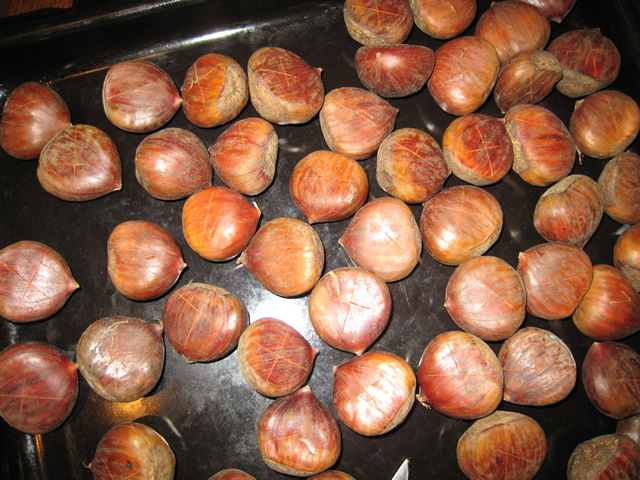
I’m leaving for India Wednesday, so we had to have our traditional Thanksgiving dinner early. The first step, which started two days in advance, was to roast and peel the chestnuts for the stuffing – unlike Martha Stewart, I cannot buy them pre-cooked and frozen or canned.

Above you see them ready to go into the oven (I had two oven pans, both almost full), with an x scored across the flat side of each with a knife, as per instructions in the Silver Palate cookbook. They didn’t all have an identifiable flat side, and I was scared of slipping with that sharp little knife and cutting my fingers.

This is how they looked partway through the roasting; it took over an hour to get the last ones done enough to peel relatively easily. Per Italian tradition I should have roasted them over an open flame in a pan with holes in the bottom (which would have been faster), but I don’t own one of those pans. Hmm. Something to get for next year.

Peeling them all took hours. Depending on degree of doneness and other mysterious factors, any given chestnut can be more or less difficult to coax out of its woody outer shell and then the papery inner one. Like walnuts, they have wrinkles and crevices from which any woody bits must be removed so that guests don’t break their teeth – you don’t always get a perfect whole chestnut as shown above.

I no longer have an oven large enough to roast a whole turkey, so in the last few years I’ve had to find another solution. An American recipe for herb-roasted turkey breast expects me to have a turkey breast with the skin still on, something you don’t find in Italy. You can order a whole turkey breast from the butcher, but it arrives skinless.

My solution was to replace the skin with thin-sliced pancetta (Italian bacon). Instead of working the herb mixture under the skin, I just slather it onto the turkey, then lay on the pancetta slices to completely cover the surface. This retains moisture in the meat, adds lots of flavor, and becomes a nice, crispy addition to the dish.

Italian poultry takes longer to cook than the estimates given in American cookbooks. The Joy of Cooking says 10-12 minutes per pound for turkey. By this calculation, this 3.8 kg (8.4 lb) turkey breast should have cooked in less than two hours. But I knew from previous experience that this was not going to happen. The turkey was perfect at three hours – cooked through, but still moist. (I used a meat thermometer, let it reach the “poultry” marking and stay there 10-15 minutes.)

I had so many chestnuts this year that I saved some whole ones out from the stuffing and put them in the roasting pan with the turkey, adding more at the end when the turkey had shrunk and there was more room. They soaked up the gravy deliciously.

Italians don’t make the flour-thickened gravy traditional in America – it’s a lot easier to just use the pan juices as-is (had I thought about it, I should have tried adding Calvados and simmering as the recipe called for – but then there wouldn’t have been enough to go around). I simply poured the juices and chestnuts into a bowl, and people spooned it onto their slices of meat.

The above photo is by Duke, a young fashion photographer trying to make a career in a tough city (Milan). I figure, if I’m going to have my picture taken at all, I should leave it to the most competent person in the room. (He also plays a mean blues guitar.)

I was too busy cooking, serving, eating, and talking to take any pictures of the actual guests – there were about 35 people present, and during the first part of the evening we managed to get them into the taverna (instead of clustering in the dining room and kitchen as people tend to do) by putting all the wine and antipasti down there!

I wasn’t the only cook. Ivo brought his justly-famous cheeseball, plus veggies and dip. Darlene’s American/Asian style cabbage salad was a great accompaniment to the main course. There were many great desserts: Maryellen’s pumpkin pie, Fabrizio and Irene’s ricotta torte, Marianna and Zeno’s apple cake, plus various yummy store-bought sweets. Andrea and Nives also brought us some authentic Genovese pesto which we will have to eat before I leave.

And somehow we always end up with more wine than we started with at these things: I didn’t even buy any, and we have 6-8 bottles left over! We finished off the Franciacorta that San Lorenzo had donated to Web Women Weekend, and I liked very much the 2007 Novello “Falò” that Andrea and Nives brought.

It was our usual mixed crowd: mathematicians, IT geeks/bloggers, neighbors, and various other friends. I was happy they all came and enjoyed themselves and the company, though I didn’t get as much time to talk to most as I would have liked. That’s what happens when you’re the hostess. But it was worth it. Happy Thanksgiving!


High Water (Not Hell) in Venice, part 6

Venice’s Bad Karma

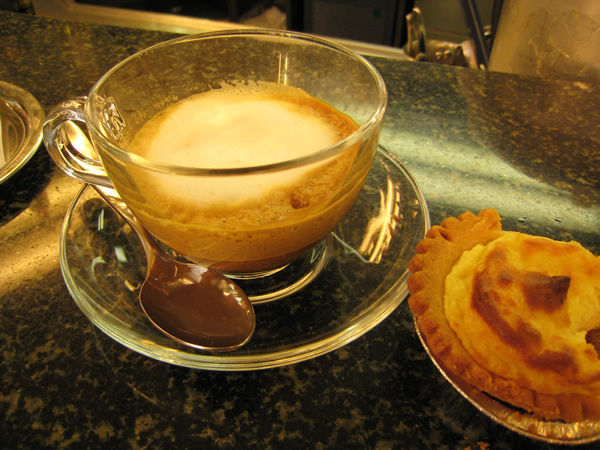
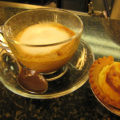
On Saturday morning, I learned what a macchiatone (“big spotted one”) is: it’s basically a caffé macchiato (coffee “spotted” with steamed milk), with a bit more milk – so, somewhere between a macchiato and a cappuccino, served in a cappuccino cup. I had it with a delicious little torta di riso (rice cake).

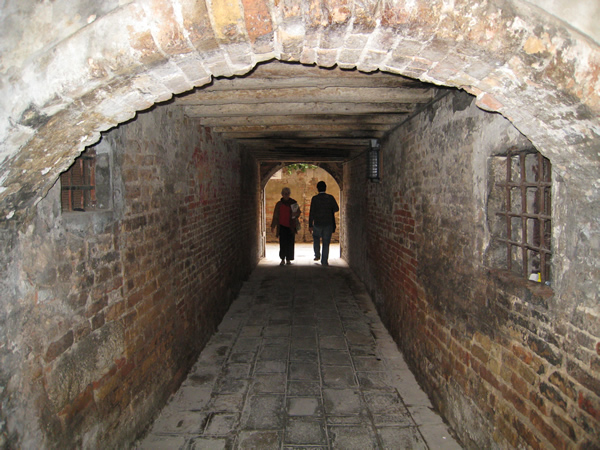
Then Enrico and I explored some more.

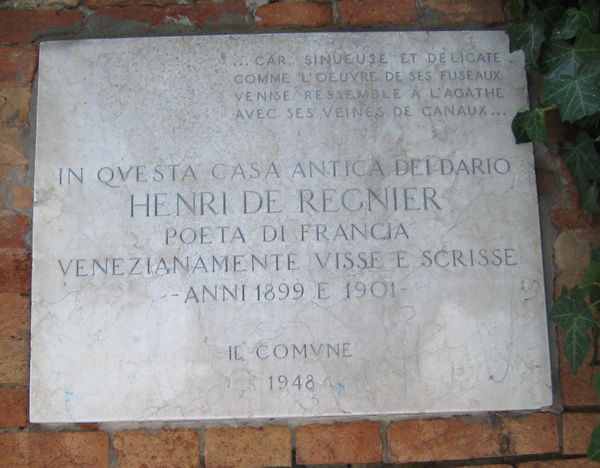
^ “In this antique home of the Dario family, Henri de Regnier, poet of France, Venetianly lived and wrote in 1988 and 1901.” Venetianly?

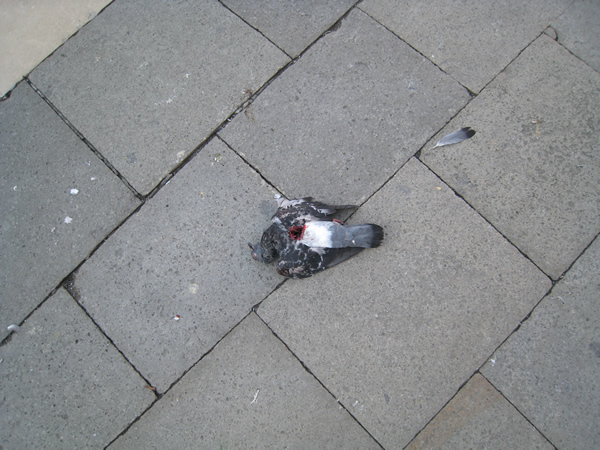
^ This was a mystery. Was the pigeon already dead when someone gored it with an umbrella?

The apartment we were staying in was owned by a Jewish family. On the wall near the kitchen was a framed edict of 1777, issued by a prince of Venice on the orders of an “Inquisitor of the Arts”, detailing horrifying restrictions on Venice’s Jewish community. Sobering reading. The Venetians invented the concept of ghetto, apparently.

Venice is indeed a beautiful city, but it has many centuries of bad karma to pay off.

Venice 1, 2, 3, 4, 5, 6, 7

restaurant

High Water (Not Hell) in Venice, part 5

When in Venice, Eat… Curry

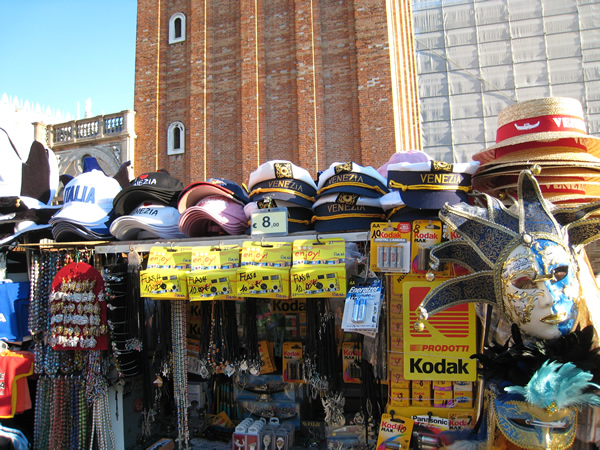
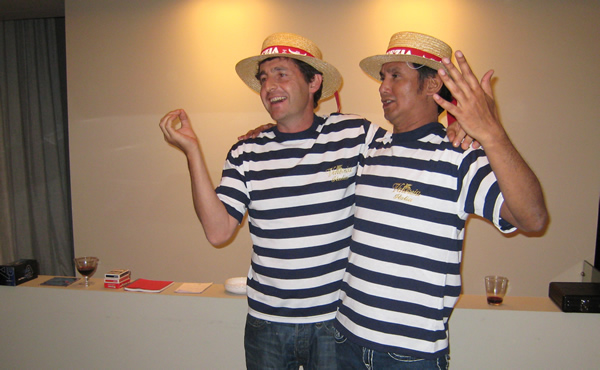
In St. Mark’s Square, Jeet bought some necessary props (above).

We returned to the apartment to greet Andrew and Victoria, arrived from Paris. Jeet and Andrew set to work making a fantastic Indian meal.

Which they served in appropriate national costumes:

(Hey, I just live my life, in all its glorious weirdness – don’t ask me to explain it!)

Jeet learned his Indian cooking from Tsering and Tenzing, old friends from Woodstock. While we were enjoying the results of their lessons in Venice, our daughter, on quarter break from school, was staying with them at their home in Mussoorie. Yes, we’re all just one big happy family!

Venice 1, 2, 3, 4, 5, 6, 7 , restaurant

Raclette: Another Way to Eat Swiss Cheese

The Swiss are a nation of cheese eaters, and have ways of eating cheese that involve special appliances – but are very easy and tasty once you have the equipment.

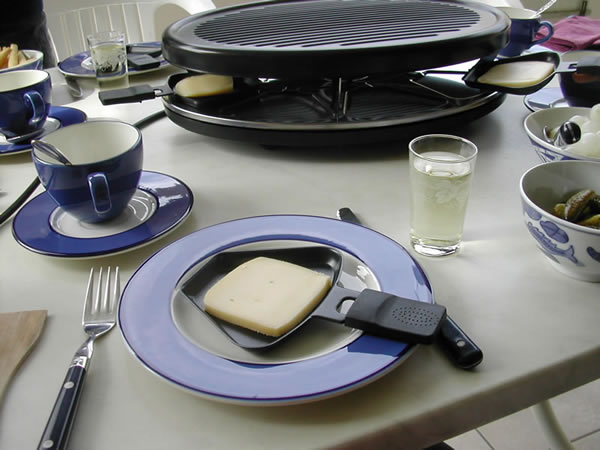
Raclette was traditionally a (large) half wheel of cheese placed with its open face near an open fire so it would start melting. The melty layer would be scraped off and eaten while you waited for more to melt. You can still have raclette that way at restaurants and mountain refuges, but you can also have it at home, with the handy-dandy raclette cooker shown above, and cheese that you buy in convenient bricks or slices.

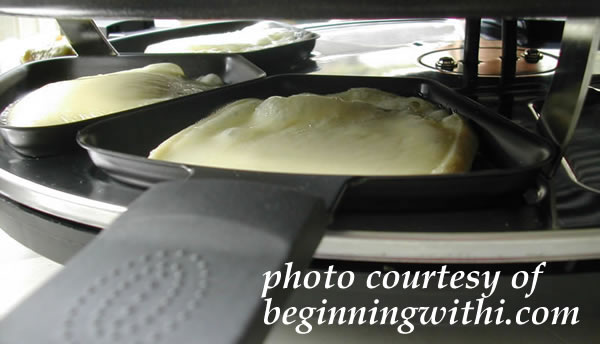
You put a slice of cheese into the little tray, put it under the raclette grill, and wait for it to melt.

waiting for the cheese to melt

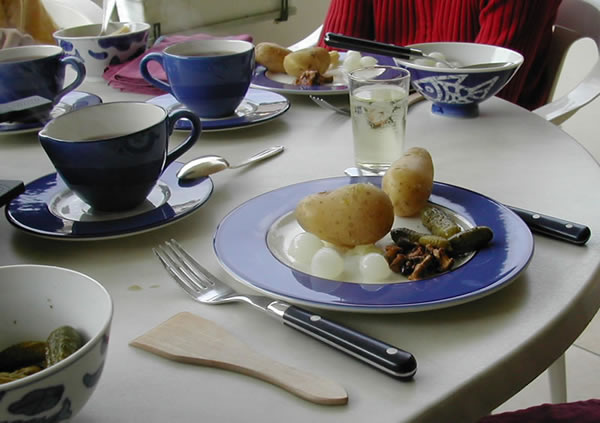
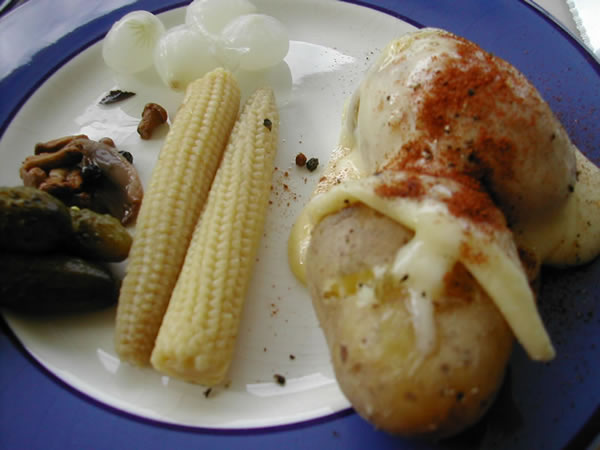
In the meantime, you heap your plate with boiled new potatoes and pickled vegetables. You must drink hot tea or cold white wine. To drink cold water with any melted cheese dish will cause the cheese to curdle in your stomach and make you sick. The Swiss firmly believe this, and who are we to buck tradition?

The little wooden spatula shown above will be used to scrape the cheese out of the tray.

raclette

^ Here the cheese is almost melty enough to eat.

raclette - ready!

And here we are! Paprika and fresh-ground pepper have been sprinkled on top. After this I stopped photographing and started eating!