Tag Archives: Italian food

Italian Recipes: Panzanella

Today’s lunch was panzanella, another good thing to eat while tomatoes are in season. I more or less follow the recipe from The New Basics Cookbook, except that I didn’t have any of the herbs. Basically, you make home-made croutons by frying chunks of dry, old bread.

…which is a great way to use up dry, old bread, BTW. We always end up with a lot, partly because we overbuy and undereat, and Italian fresh bread goes stale very quickly, sometimes within the day. Whatever I can’t use up making croutons, or bread cake (recipe another day), or crumbs, goes to the horses – horses love dry bread.

Where was I? Bread: chop into 1-inch cubes (roughly), sauté in butter and olive oil with minced garlic, fresh herbs if you have them. Pepper. Remove from pan into a large bowl, toss with fresh-ground cheese. The recipe says parmigiano, my grater currently contains odds and ends of sharp aged cheeses, I don’t even know what all.

Then chop ripe tomatoes, thinly slice red onions, toss with oil, red vinegar, salt, and pepper. When ready to eat, add the croutons.

Winetasting – Valtellina Reds

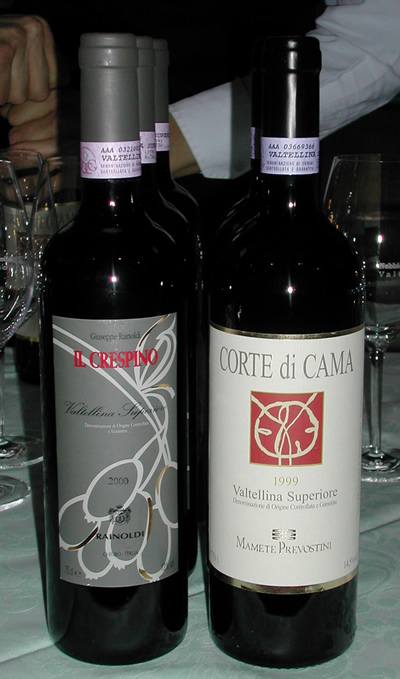
Back in February, we were invited (as Slow Food members) to attend a presentation of Valtellina wines in nearby Erba. Since we moved to Lecco, we’ve missed out on all the Milan Slow Food events, and there haven’t been many here in our area, so we were happy to go to this one even though we already know quite a few Valtellina wines – they have been our favorites for some years.

This event was a wine tasting plus dinner, at a cost of around 45 euros each if I recall correctly. Which turned out to be cheap, considering that we got a six-course meal and all the wine we could drink.

We came in towards the end of the press conference/discussion, which had about 50 attendees, most of whom seemed to be the wine producers themselves, plus a few journalists and critics who already knew Valtellina and its wines very well – very much preaching to the choir. If they really want to get these wines noticed and appreciated elsewhere, they are going to have to work harder to get the non-believers to attend their events. Amusingly, just because we were there, people seemed to assume that we were somehow involved in the industry. Enrico tried to use this to scam some free wine glasses from the head of the Triacca winery, but we never received them.

When the conference ended, we went to the reception area, where a long table was set out with about 30 different Valtellina wines, and very attentive young waiters pouring them. We could taste any or all, and between the two of us managed to get through most of them – on empty stomachs. So you’ll forgive me if I don’t remember much about the dinner!

This event happened to be the last of RistorExpo, which we had not attended – from what we saw as we passed through the expo area, next year we will definitely have to go. There had been other dinners and tastings in connection with the expo that I’m now sorry we missed. Chefs had come from other parts of Italy for some of these, so I got to chatting with a guy from New York, working at one of the famous restaurants in Tuscany, along with his delightfully extroverted Tuscan boss. We’ll have to check out that restaurant sometime.
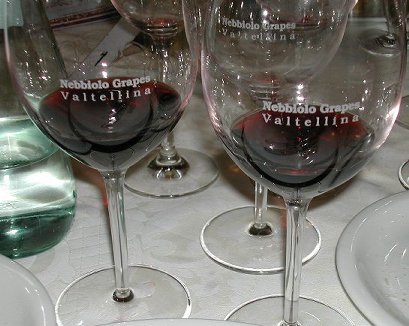
Nebbiolo Grapes - Valtellina wines At the dining tables, when we eventually reached them, each place was set with six wine glasses. We were twelve to a table, with one wine producer at each. Ours was Elena Fay, who unfortunately was sitting across the very broad round table from me, so I didn’t get to hear much of what she said. Another person at our table was a wineseller in a small town further up the lake.

As the glasses imply, Valtellina wines are made from the Nebbiolo grape, which is also the basis of many Piemontese wines. I’m not a wine expert, but I do love these rich reds, especially the Sfursat that I have written of before. Our favorite, the Cinque Stelle from Negri, has become better-known in recent years, and is now priced out of our range except for very special occasions.

Dinner was the joint effort of chefs from two different Valtellina restaurants, one of which was Il Cantinone. The dinner was so good that we went to the restaurant on another occasion, when we happened to be in Madesimo, and ate extremely well. It’s a member of the Ristoranti del Buon Ricordo group.

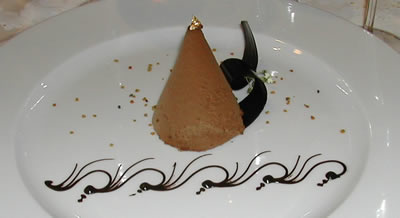
As I said, I don’t remember much about the dinner, except that it was delicious – part of the reason I’m not very good at writing descriptions of the food is that I frequently don’t remember it very well the next day! I did have the presence of mind to take a picture of the lovely dessert.

Macelleria Falorni: A Long-Standing Tradition in Greve del Chianti

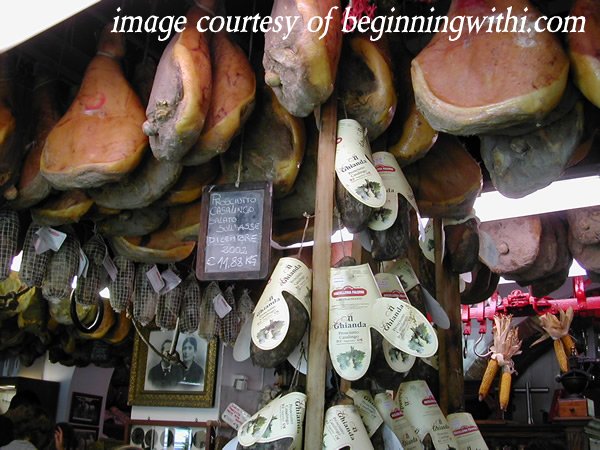
above: prosciutto and salumi, Macelleria Falorni, Greve del Chianti, Tuscany

In late July, we took a brief trip through the Chianti area, visiting our friends Rita and Lino. They live near Greve, so we visited that charming town (touristy, but tastefully so) and the famous Macelleria (butcher)Falorni.

Falorni make their own insaccati (preserved meats), such as the prosciutto (ham) and Il Ghianda (something I’d never heard of – must be native to Tuscany) that you can see here. Some of the pork products are made from the cinghiale (wild boar), others from Cinta Senese, a breed of pigs native to Tuscany.

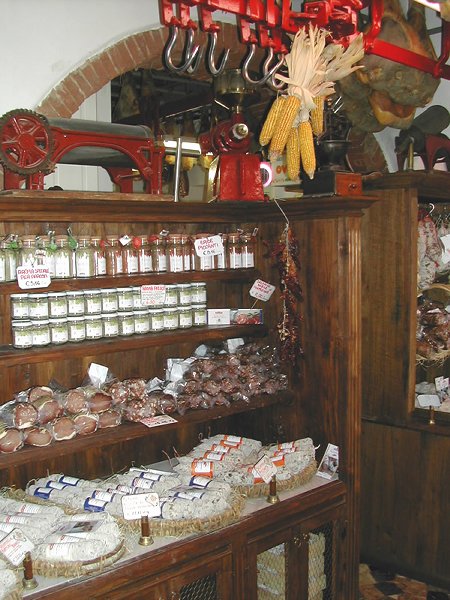
salame and canned goods,  Macelleria Falorni, Greve del Chianti, Tuscany

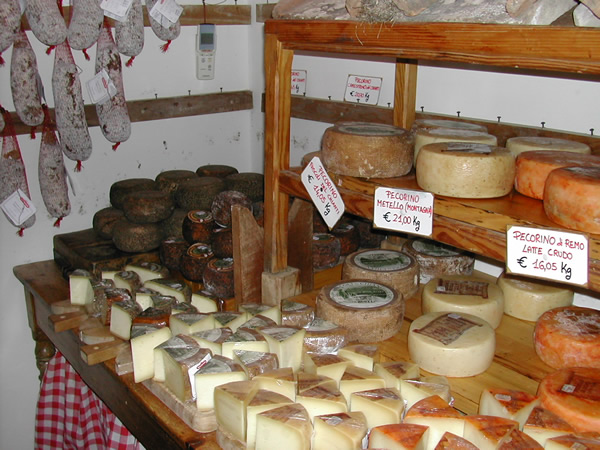
They also sell cheeses and yummy stuff in jars, and the shop is liberally adorned with farm implements, old photographs, signs, etc.

cheeses and salami,  Macelleria Falorni, Greve del Chianti, Tuscany

What photographs cannot capture, alas, is the smell! The scent of spicy, salty preserved pork is wonderful and overwhelming – vegetarians are advised to stay well clear.

Birthday Lunch at Lanterna Verde

Last Saturday we went to La Lanterna Verde, one of our favorite restaurants in the world, for the now-traditional celebration of Ross’ and Alice’s birthdays. Last year there were 11 of us, this year 10. The owners have become fond of us, though they’d like to see us more often!

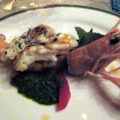
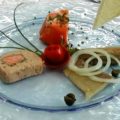
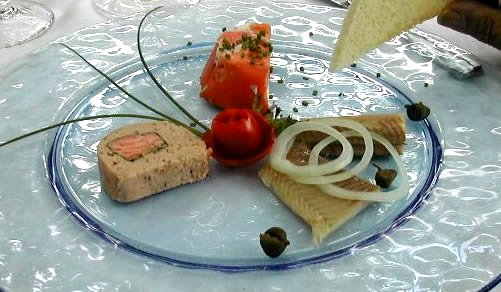
Most of us had set menus, there were six or so to choose from. Graziella had the trout meal, so her antipasto was a salmon trout mousse, ricotta (I think) wrapped in salmon trout carpaccio, and smoked trout.

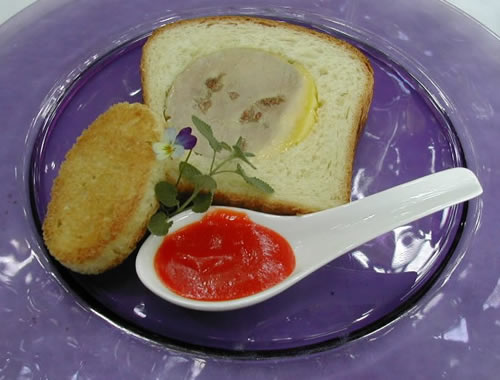
I ordered a la’ carte, and for antipasto had paté, which had figs inside and came with a sweet red pepper coulis. I actually preferred the red onion coulis they used to make – I think it’s a better complement to the paté.

paté

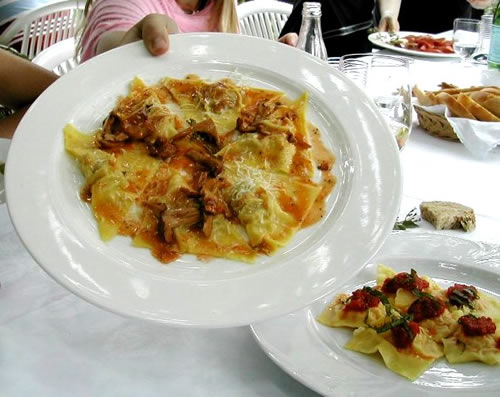
Here are a couple of primi (first course dishes): in the foreground, mushroom-filled ravioli with a chanterelle sauce and, behind, trout-stuffed ravioli with tomato and basil. This was part of the summer menu, spaghetti with a sauce of raw tomatoes, black olives, and very good olive oil.

mushroom ravioli at Lanterna Verde

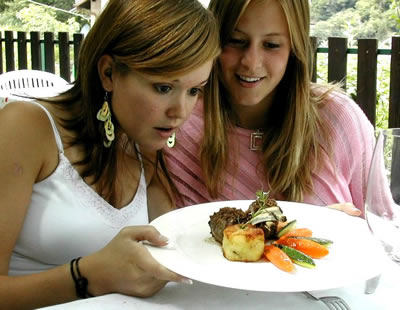
Ross and Alice in awe of Ross’ main course, I think it was lamb ribs crusted in pepper. I got distracted with eating and forgot to photograph the other main courses (we had had quite a bit of wine by then, too!).

secondo

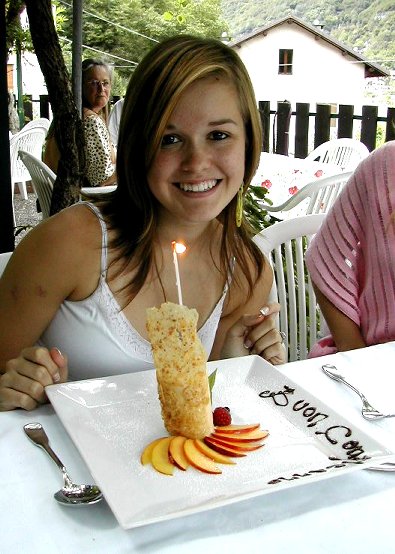
For dessert, the chef decorated the plates of our three birthday people (David and Ross share a birthday) with “Buon Compleanno” or “Auguri” in chocolate sauce.

birthday dessert

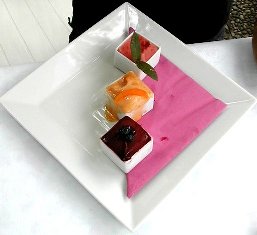
Julian had the palette of sherbets, here it doesn’t look quite as elegant as when they brought it to the table, as he had already started on it before I got this photo.

sorbet trio

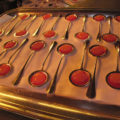
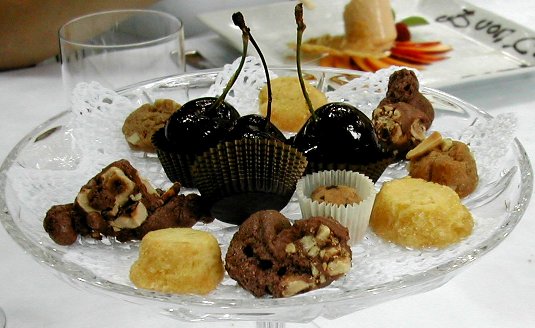
With coffee, they served these little trays of nibbles. The candy-coated cherries were amazing – a light, smooth coating of caramel on the outside, perfect sweet dark cherries on the inside.
cherries and nibbles

We like to go to Lanterna Verde during the day, because the drive up there is so pretty (it’s on the road from Chiavenna to St. Moritz, high in the Alps), and in good weather you can sit out under the pergola and enjoy a view of waterfalls on the other side of the valley.

Italian Restaurants: Osteria del Viaggiatore

I had driven past this place in Lecco many times, but it’s easily overlooked – the outside of the building is unprepossessing unpainted cement, though the large sign with a mysterious painting on it is intriguing, and we heard that it was good.

So we finally went last night. The menu is fixed-price, 30 euros for five courses, drinks extra. The first antipasto was prosciutto and raspadura – scraping – very thin slices of a local hard cheese. The prosciutto was among the best I’ve ever had: sweet and tender, melt-in-your-mouth.

After that, we had to make choices, from 6 or 7 dishes for each course. For our second antipasto, I had a tortina di zucchine in fiore, a mini-pie with cheese, zucchini, and zucchini flowers. Nice, though I would have liked it a little more salty. Enrico had cold, wafer-thin slices of turkey breast with a sauce of raw tomato, celery, and cucumber. He ate all the sauce before I got to taste it, so I can’t speak to that, but the turkey was good.

For primo, Enrico had lasagnette with fagiolini, patate, and pesto – a baked lasagna dish very similar to the Genovese-style pasta with pesto that I make at home with green beans and potatoes, and in this case, bechamel. The lasagna dough was light and airy, making this dish not as heavy as I had expected, and very tasty.

I had home-made ravioli filled with borragine (borage) with a simple dressing of melted butter, sage, and pine nuts. The bitterness of the borage contrasted very nicely with the rich butter.

For secondo, Enrico had cold roast piglet sliced very thin, very similar to porchetta from central Italy, but more tender. I had two kinds of local lake fish, lavarello (sardine-sized, but lighter in flavor) and persico (perch). Both were very lightly battered and fried, leaving plenty of room for the flavor of the fish to come through. As contorno (side dishes), we were both served a small quantity of oven-roasted potatoes.

Then came dessert. Enrico had an exquisite panna cotta (cooked cream) with a dressing of strawberries and other “forest fruits.” I had “Fondente Extra Bitter”, slices of something between a mousse and a torte, made with lots of bitter chocolate, swimming in a creme Anglaise. Wow.

We tried one of the house wines that the owner has made to order, called Aromata Coeli – basically a non-sparkling Barbera which the waitress told us had been aromatizzata (perfumed), though we weren’t clear on what that meant. It was more than palatable, and a good complement to all the variety of our courses.