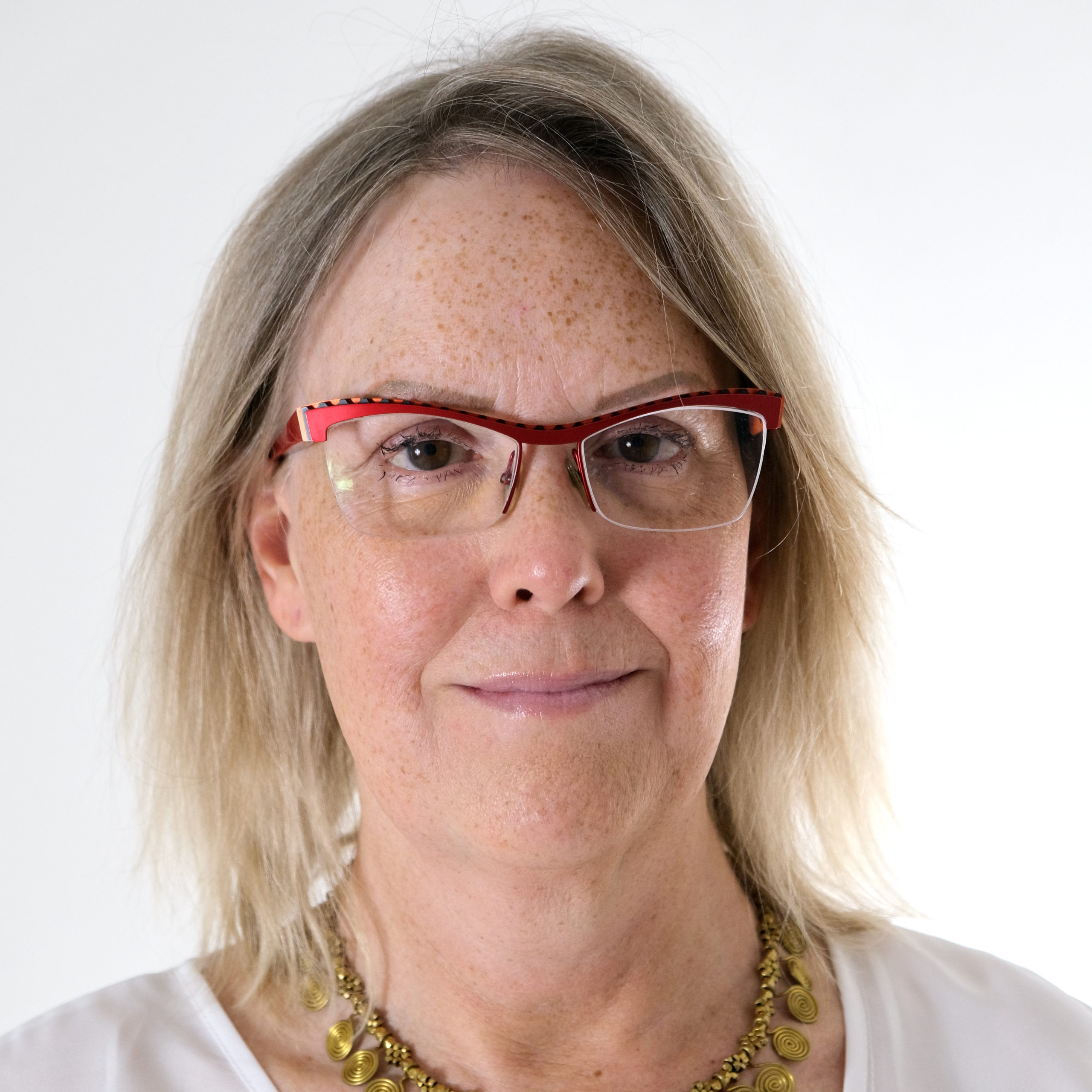
It’s rare that anyone gets a picture of me that I really like. Shawn Ferry managed it.
In NYC for CommunityOne East, March, 2009.

It’s rare that anyone gets a picture of me that I really like. Shawn Ferry managed it.
In NYC for CommunityOne East, March, 2009.
My life is lived in multiples.
I’ve read books, articles, and blogs about multicultural marriage, living, and child-raising. I have written about being a third-culture kid, raising a bilingual child, and living and trying to work in a foreign country.
But this is the big question, more difficult than any of the above: how can a marriage survive being made up of two people whose careers are equally important to each?
If you have ever been part of a two-career couple, you know how hard it can be to find jobs that make both of you happy in the same location, especially (but not only) when that location is far from home for one or both of you. When a couple expatriates for one member’s job, the “following” spouse may not even be allowed to work, depending on the working spouse’s visa in the foreign country.
When you follow a foreign spouse to settle in his or her country, there probably won’t be legal obstacles to your working (you may take on the citizenship of your spouse, or you can usually get a work visa), but there are many other hurdles: language, culture, job market, and your own feelings about who you are and what you want to do with your life.
When Enrico and I married in 1989, I gave up an interesting job just then getting off the ground (doing technical training in far-flung countries) in order to be with him in New Haven and give birth to our daughter. In retrospect, my “accidental” pregnancy was probably subconsciously designed to resolve our increasing conflict over my exotic (and from Enrico’s point of view, dangerous) travels: a baby was a reason we could both agree on for me to stay home.
And stay home I did: I was mostly a full-time mom for 18 months. I did not resent or regret this; indeed, one reason that I never had another child was that I would have wanted (and felt it fair) to do the same for any other child of mine, but, once I had got my career off the ground again, there was never a “right” time to take off 12-15 months.
Moving to Italy was, for many reasons, the obvious thing to do when we did it. Though Enrico, fresh out of a Yale PhD, could have landed a university position somewhere in the US, it would have been the usual long start to an American academic career: post-doc here, assistant position there, teach a lot, and pray for tenure.
The situation is very different in Italian universities: a ricercatore (researcher, the entry-level position) can stay in the same place as long as he or she desires, although (ideally) you eventually move up the ladder to become professore associato (associate professor) and then ordinario (full professor). Positions are few and promotion takes decades (and political savvy), but in the meantime you are guaranteed a stable, reasonably well-paid job in a single location. The teaching load is light, and Enrico can direct his own research as he pleases. Nice work if you can get it…
As for me, I didn’t have a strong desire to remain in the US, my putative homeland – I’d lived out of it as much as in it. I didn’t have a job to leave right then, nor was I established in any field. There was no strong reason for me not to move to Italy, and plenty in favor of doing so.
Enrico sought and won a university position in Italy, and to Milan we came.
I had no idea what work I might be able to do there (aside from the far-too-obvious: teach English), but I figured I’d figure something out, as I always had. In 26 years of being moved around the world mostly by others’ decisions, it had never occurred to me to express or even to have strong desires about the parameters of my own life. I simply responded as best I could to the situations in which I found myself.
It was mostly luck that I found a job in Milan; it took hard work and talent to develope that job into a career. But I was still in reactive mode: taking advantage of opportunities as they came my way, but not making any effort to create my own opportunities. It simply didn’t occur to me that I could.
The first proactive thing I did to influence my own future was the MBA (from the Open University, the world’s oldest distance-learning institution) that I began in 1999 and completed (with interruptions) in 2004. I had realized that I wanted a career in which I could really make a difference, and that an MBA was a basic requirement to thrive in the corporate world.
But it’s unlikely that I could have an important career in Italy. I work in high tech, and there’s not much original going on in high tech in Italy – not because there are no technical or entrepreneurial Italians, but because it’s so damned hard to do the American-style startup thing in Italy (which could be the topic of a long article in itself, but it would depress me too much to write it).
Many of the world’s large high-tech companies have Italian offices, but these usually concentrate on regional sales and support engineering. The things I’m good at are run mostly from US headquarters.
Twice during the Internet boom I tried to persuade Enrico that we should move to the US to let me pursue my career. The second time he agreed, reluctantly, to come with me for a year or two while I helped to launch Roxio, the software group being spun off from Adaptec in 2000-2001. For a number of reasons, that move was aborted, and I returned to Italy, beaten and frustrated, to the same distance-working situation in which I had previously felt so alienated and vulnerable. I quit after a few months, and would have been laid off soon thereafter in any case, as the bubble burst and the economic downturn began.
Fabrizio Caffarelli, my former boss at Incat Systems, is a rare example of a successful Italian high tech entrepreneur, and I was happy to join his new startup a few years later (as the consulting/tech writing gigs I’d had after leaving Roxio also dried up). I had high hopes for TVBLOB when it began, but four years in startup mode at a salary I could have equalled as a supermarket cashier… well, that got old, and personal circumstances conspired to force a change.
I began working for Sun Microsystems as a contractor in March of 2007; they hired me as a regular employee a year later, on the condition that I move to the US and work from an office.
I was ready to go. I had initially loved Sun’s willingness to let me, and many other employees, work from home. I still believe that this works very well for many people, especially those who have kids at home: workplace flexibility is a huge help in achieving the much-prized “work-life balance.”
But the year I had spent as a mostly long-distance contractor reminded me of all the problems I had experienced before, as a very long-distance employee of Adaptec. It’s hard to schedule meetings when you’re eight or nine time zones away from most of your colleagues; you end up having them late at night in Europe – not my best time of day, I’m a morning person. And when you can be neither seen nor heard by your colleagues… well, out of sight, out of mind, out of the decision-making loop – and, eventually, out of a job.
Conclusion: if I want a challenging job, I need to be in the US (or, at least, not in Italy). So here I am, with a job that I enjoy very much both for its current realities and its future possibilities.
But my life here so far is mostly about my job. So much for work-life balance (said she ruefully). It appears that I can have work or have a life, but not both. At any rate, I can’t have a regular home life with my husband, because his job is there, and mine is here, and there doesn’t seem to be any way to make the two meet.
And I don’t have an answer to that one.
Update, 2014: Enrico and I never did find a solution. We separated in 2009 and are now divorced.
Update, 2017: I have since found someone with whom I happily share both the personal and professional sides of me.
From 1967 to 1972 my family lived in Bangkok. My dad worked for the US Agency for International Development, so we were officially part of the diplomatic community, with all the rights and privileges pertaining thereto.
One of which was to live in a sort of expatriates’ ghetto, an apartment compound called Red Rose Court – eight or ten rows of three-story townhouses, all rented by falang (foreign) families. This little village was administered by Orapa, a Thai woman so fierce that her title – “landlady” – was synonymous with fear (for me, at least – I was a timid child).
Red Rose Court had a large driveway running its length, on one side bordered with a tall hedge of red – not roses! – hibiscus. The main gate opened onto the large, heavily-trafficked avenue that was Red Rose Court’s official address. Out the front gate and half a block to the right were a few shops that I was allowed to visit to buy candy.
The back gate gave onto a smaller, dirtier street where I was forbidden to go at all. Both gates were usually open during the day, but by some unwritten rule (I don’t remember whether there were guards) no one came in except people who were supposed to be there. And some of Bangkok’s teeming population of mangy, underfed, abused stray animals.
I was a timid child, but not stupid, and I loved animals. I learned early the trick of: “Mom, it followed me home, can I keep it?” My mother loves cats, so it wasn’t difficult to persuade her, and we acquired two cats that way. Dogs, too, realized that we foreigners were a soft touch, especially compared to Thais, who were often cruel with strays – I had seen Thai kids throwing rocks at dogs, and hitting them with sticks.
It didn’t take much street smarts for any animal to realize that Red Rose Court was a gold mine: 40 families with kids, many of them nostalgic for pets they had left behind in America, and most far more disposed than the locals to be kind to animals. When a small, skinny street dog made overtures, the kids in the compound responded gladly (in spite of our parents’ dire warnings about animals carrying rabies), and showered her with love and treats. She was grateful and affectionate, if not terribly clean. But the dirt didn’t show much against her coat. She was a color that would be called tortoiseshell on a cat; being a dog, she was brindled.
Street dogs all over Asia are much the same (I believe someone has written a thesis explaining why): medium height and light build, very short fur in various colors, lopped-over ears, stringy tails, and, usually, a head-down, furtive demeanour. They are also treated much the same all over Asia: badly.
We kids kept the dog for several weeks, hiding her when grownups were around because we were pretty sure they wouldn’t approve. But Orapa knew everything that went on in Red Rose Court, and she definitely didn’t approve of filthy animals sullying her property. She called in the dog catchers.
Had they arrived during school hours, the dog would have simply and quietly disappeared. But the dog catchers showed up with their big nets – just like in Warner Brothers cartoons – at a time we were all around, and we knew immediately what was up.
Instead of a quiet roundup of one insignificant dog, the catchers and Orapa found themselves confronted with a howling, weeping mob of kids of all ages. Though Orapa tried to calm us by claiming that the dog wouldn’t be hurt, we knew she was lying: in Thailand at that time there was no question of holding an animal at a shelter for adoption: she would simply be killed, immediately (and probably not “humanely”).
We led them a merry chase, always getting between the dog catchers and the dog, with Orapa screaming behind, until they finally cornered us. Then there was a standoff, the dog catchers not quite daring to physically wrest the dog from us.
My mother swooped in like an avenging angel and offered to officially adopt her. I’m not sure Orapa appreciated this – if this lowly street dog was elevated to the status of official pet, she would have to continue to tolerate its presence, and the defeat grated on her.
Duchess, as my mother named her, was one smart dog. Though she hadn’t had any contact with my mother before, she recognized her savior, and adopted our family in turn. She behaved well through being vetted and bathed, and stuck close to home ever after.
The following year my dad was posted back to Bangkok (after two years in Vietnam), and Duchess moved with us to a big house the next street over, a property also managed by Orapa. In a house like this, a watchdog was essential – housebreaking was so common, and the thieves so skilled, that we knew foreign families who lost one stereo after another, and never even heard anyone in the house.
Nothing of the sort ever happened to us. Perhaps because she had been so cruelly treated on the streets, Duchess hated Thais (though she accepted our servants as part of the family), and would attack strangers on sight, no questions asked. Workmen, gardeners, and other legitimate visitors had to be escorted through the property, and no one else got in at all. In our three years in that house, we only ever had one thing stolen: a table cloth that was drying on the clothesline near the back fence. My dad was roused by Duchess’ barking just in time to see someone scrambling over the wall – and leaving a bloody trail behind.
My parents separated in 1972 and I left Thailand with my father to return to the US, while my mother stayed behind in Bangkok and remarried. Duchess stayed with her and Gary til they, too, moved; then she stayed with Wandee, who had been our maid. Most expatriates didn’t try to carry pets from country to country – too expensive, risky for the animals, and in some places simply impossible. A constant theme of the roaming expatriate life is the repeated loss of dear, familiar fixtures in your life such as pets.
I remember another dog that got left behind by a Red Rose Court family. It stayed in Red Rose Court, adopted by another family, but every time a car came down the driveway, it would race out to see if its own, original family had finally come back. It was heartbreaking to see this dog running out, time after time, car after car, ears pricked and tail up with happy expectation. Then it would see that the car was the wrong one, and just collapse in on itself, drooping with disappointment.
I wonder if Duchess acted that way when we left.
Note: I confess that I actually wrote this several years ago, for my friend Claudia who was thinking of putting together an anthology, but apparently never found a buyer. I’ve been thinking about stories lately, so decided to dig out this one and share it.
When I wrote about leaving Italy (but not my husband), a long-time reader expressed concern about my marriage, saying that it was clear that my primary relationship is with my daughter Rossella, whereas my husband Enrico is “merely a footnote.”
I appreciate this reader’s concern, but was quick to correct (I hope) his misconception. It’s true that I have written more about Ross, and in more detail, than I do about Enrico. But that doesn’t necessarily reflect the importance of each in my life.
It’s a generational thing. Ross, having grown up with the Internet, shares her life online in a way that is completely normal for her generation, but which leaves her father shaking his head in bemusement: “When I was young, I would never have dreamed of making public some of the things she does, even if I’d had the technology.”
So it’s simply out of respect for his privacy that I don’t write much about Enrico.
This brings up a larger question that has been on my mind for some time: we all have stories to tell, and much of what I share online is, one way or another, stories. But the most interesting stories involve other people, who don’t necessarily want those stories told about them. And I can’t be sure about others’ sensitivity level. While I have rarely or never told a story with deliberate intent to cast anyone I know in an unflattering light, on a few occasions people have been unhappy about what I wrote about them. And there are lots of stories I haven’t yet told out of respect for others’ privacy. Still, I wonder: whose story is it, anyway? What legal or moral right do I have to tell my own tales when they happen to involve other people?