Tag Archives: Italian food

Imaging in Italy: A Photographic Walking Tour of Rome – Day 2

Roman cats, Oct 14, 2003

Our first activity Tuesday morning was a review of Monday’s (digital) photos, with expert commentary and pointers from Tony. He went on to talk about other aspects of imaging, but I confess I wasn’t paying as much attention as I should, distracted by these fuzzy little Romans:

After lunch (at an excellent, old-fashionedosteria, da Alfredo e Ada, via Banchi Nuovi 14) we started walking and shooting again,to Piazza Navona. This time I was looking for details:

doorknocker, Rome, Oct 2003

…but was still attracted by architecture:

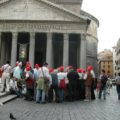
Pantheon Oct 14, 2003

People were also interesting. We chased the group in the photo at the top down several streets to get them, with their little red hats, in front of the Pantheon.

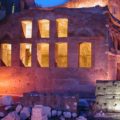
In the evening we went to the Villa Borghese gardens. The plan was to view the sunset from the Belvedere, but we were so busy making photos of everything else that by the time we got there the sun was completely gone. However, we got some interesting evening views of the Piazza del Popolo below.

We walked down the hill and ate at Ristorante al Vantaggio, good food and a good red wine, something local (Lazio region) made with Montepulciano and Sangiovese grapes.

previous daynext day

Imaging in Italy Day 12344.55 – visit the Imaging in Italy site

Imaging in Italy: A Photographic Walking Tour of Rome (and Viterbo) – Day 3

On Wednesday we took a train to Viterbo, a town with some unusual Gothic architecture. The symbol of Viterbo is the lion, which you can find in various incarnations all over town.

Evidently the town went through some rough times; some of these lions look awfully worried. Clovis Aquino, a painter who accompanied us on many of the shoots, was our expert guide to Viterbo and its history. When I mentioned the lions, he theorized that perhaps they were worried because Viterbo had once been the seat of the popes, who by that time had definitively won out over the lions!

We had lunch at a trattoria. Aquacotta (“cooked water”) belies its name; it’s a vegetable soup with bread and cheese – very filling!

Then we walked off our lunch, making more photos.

We returned to Rome in the evening and rested for a bit, then had dinner at Gigetto, a restaurant in Rome’s ghetto, famous for its traditional Italian Jewish dishes such as carciofi alla giudia (Jewish artichokes). We also had porcini (wild mushrooms), currently in season. Yum!

Imaging in Italy Day 12344.55 – visit the Imaging in Italy site

Slow Food, Good Wine, Hot Baths

Last September I joined the Slow Foodassociation, dedicated to the appreciation and conservation of good food worldwide. We’ve been to three dinners so far, two of which emphasized wine, and one in which every dish somehow involved chocolate. The wine dinners also featured excellent food, and vice-versa. The international Slow Food association is divided into local groups, in Italy called condotte. Outside of Italy they’re called convivia, which fits: after you’ve been drinking good wine together for an hour or so, everyone does get very convivial!

The most recent dinner we attended began with a tasting of Sfursat, a wine from Valtellina, an Alpine valley northeast of Lake Como. Sfursat (dialect for sforzato – “forced”) is made by drying the harvested grapes for three months before pressing, so that their sugar content – and therefore the percentage of alcohol in the wine – is high, at least 14.5%.

The best of the four Sfursat we tasted that night was Sfursat 5 Stelle from the Nino Negri vineyard, and we had the privilege of sharing a dinner table with Casimiro Maule’, the vintner who created it. He told us a great deal about winemaking in Valtellina, most of which I can’t remember (too many glasses of Sfursat and other grand Valtellina wines!). I do remember that it’s difficult to grow wine there; the terrain is steeply mountainous and the soil not extremely fertile. But Sig. Maule’s Sfursat, and other excellent wines from the region, prove that it can be done, and done very well indeed.

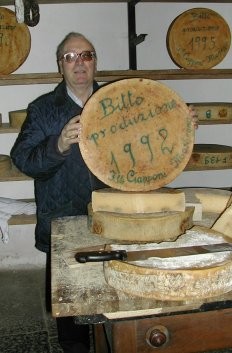
Signore Ciappone

I’m not sure how easy it is to obtain Valtellina wines outside of Italy, but if you love good wine, it would be worth the effort to track them down or demand them from your local supplier. A more common type is called Inferno – yes, it’s a hell of a wine. A good example of this is Giuseppe Rainoldi’s Inferno Barrique, which has a wonderful complex flavor because it’s aged in small wooden casks.

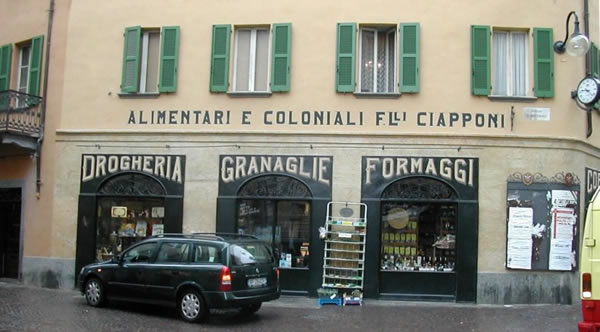
In the spirit of Slow Food, last week Enrico and I explored Valtellina, making our first stop in Morbegno at the renowned shop of Fratelli Ciapponi. We spent two hours there with one of the senior brothers Ciapponi, taking a tour of the shop and its underground wine and cheese rooms, and got a complete explanation of how the local bitto cheese is made and successfully matured. (“I caress these cheeses more than I do my wife,” said Sig. Ciapponi, probably not for the first time.) We tastedbitto of various ages. There were noticeable differences at one, two, and six years, partly due to ageing, but also because this is a handcrafted cheese that depends heavily on environmental conditions: more rainfall means better grass in the high Alpine pastures, and tastier milk from the cows and goats who produce the raw materials.

Sated with cheese, we continued on our way to Bormio, a ski resort town. I don’t ski, and it’s been a bad season for skiing anyway, so why did we go there? For the natural hot spring spas. These date back at least to the Romans; Pliny the Elder described the baths in the first century AD. The Bagni Vecchi (“Old Baths”) have been expanded and refurbished over 2000 years to their present glorious state, which includes:

  • a 30-meter y-shaped tunnel dug into the mountain, debouching into a natural steam room on one side and a channel full of very hot (46 Celsius) water on the other
  • pools with hot waterfalls – natural massage!
  • mud baths
  • steam rooms and saunas
  • an outdoor hot water pool with a view of the mountains all around

It was heaven. We spent all afternoon there, and I went back the next day while Enrico went skiing. If you love to get into hot water, this is the place to do it.

Caveat: The Bagni Vecchi are closed in May, and in the summer the water is not nearly so warm – for some odd geothermal reason, when the ground freezes, the water gets hotter. Best and least crowded times to go are probably November before the ski season really gets underway, and March/April when the season is ending.

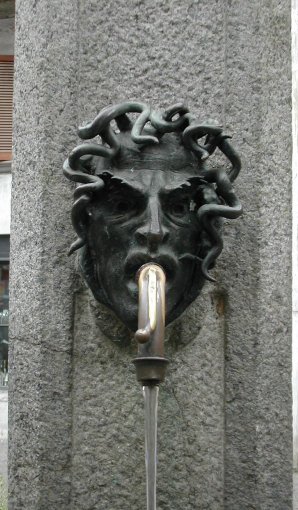
Morbegno Fountain

How to Eat Like an Italian: Fundamentals of the Mediterranean Diet

You’ve probably heard about the “Mediterranean diet”, and know that it involves a lot of carbohydrates, olive oil, tomatoes, and other fresh vegetables, as well as lots of good red wine.

So what does a typical Italian meal look like? A restaurant meal may involve up to four courses: an antipasto, primo (first course), secondo (second course), and dessert. The antipasto and dessert are optional and often skipped, but to make a comfortably full meal you’re likely to want both the first and second courses. The first course is where you get the bulk of your carbohydrates, in a dish of pasta or rice (in the form of risotto).

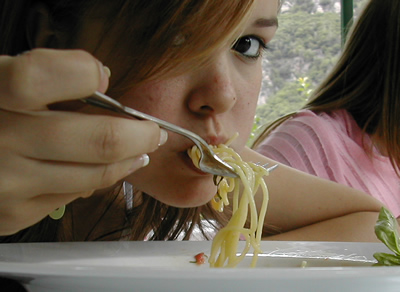
A word about pasta: I have occasionally (reluctantly) eaten in trendy Italian restaurants in the US, at the behest of colleagues who thought it would be a treat for me. I do appreciate their kind intentions, but… It’s positively alarming what Americans will do to pasta! No matter what the menu claims, any single pasta dish that involves too many ingredients (sun-dried tomatoes, olives, tomato sauce, artichoke hearts, etc.) is not likely to be an “authentic” Italian dish. Furthermore, Italians don’t eat much chicken, and I have never seen an Italian put chicken in pasta. And feta cheese, being Greek, is not typically found in Italian pasta dishes.

…where was I? Ah, yes. The second course is where you get your proteins. It usually consists of meat or fish, very simply prepared, for example grilled over a log fire. You will also want to order one or more contorni (side dishes), such as vegetables, salad, or potatoes, since the meat usually arrives completely unaccompanied.

If you’re vegetarian, there’s not a lot of choice at most restaurants, but grilled scamorza (smoked cheese) and grilled vegetables are often available, and always yummy. There are some traditional vegetarian dishes such as melanzane alla parmigiana (eggplant parmesan) but, if you are a very strict vegetarian, you should ask, as often apparently vegetarian dishes do involve meat, e.g. a risotto with mushrooms will likely be cooked in meat broth.

Italian cooking is mostly very simple. It doesn’t need to be elaborate, because the basic ingredients are so good that it would be a shame to cover up the foods’ inherent flavors with heavy sauces and spices.

You can also have a cheese course after the second course, then dessert and/or fruit, then coffee. Coffee is not served with the dessert unless you specifically ask. Caveat: ordering a cappuccino after dinner is the sure mark of a tourist (if the waiter offers it, you’re in the wrong restaurant!). Italians rarely drink cappuccino after 10 am, and never after a meal.

A friend in Milan on business went alone to a restaurant for dinner. He overheard the couple at the next table – clearly Americans. When he answered his cellphone, they realized that he, too, was American, so they said hello. “The food is good here,” they said, “but the servings of pasta are really small!”

Yes, portions are small in Italy. Or, from the European point of view, portions in America are enormous! (And Europeans often add: “No wonder so many Americans are fat!”) That’s why in Italy you generally order a first course and a second course, as well as side dishes. A meal made up of a single course is called piatto unico (single plate), but these are not common.


Castelli: Traditional Ceramics from the Hills of Abruzzo

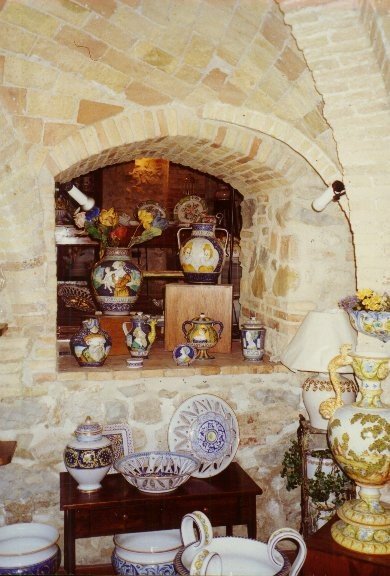
Castelli is a small town in the hills of Abruzzo (the region on the east coast of central Italy, on the Adriatic sea), famous for its hand-painted ceramics – a centuries-old tradition in the area thanks to its local deposits of clay.

You start to see shops along the road kilometers before you get there, and the town is full of shops with wares ranging from the cheap and tacky to ornate, elegant, and expensive.

The traditional designs are rich floral themes, landscapes, portraits, and animals. The people and animals are mostly copied from/inspired by San Donato, a tiny church on the outskirts of Castelli whose ceiling is entirely covered with thick, decorated ceramic “bricks”, created centuries ago as votive offerings by local families.

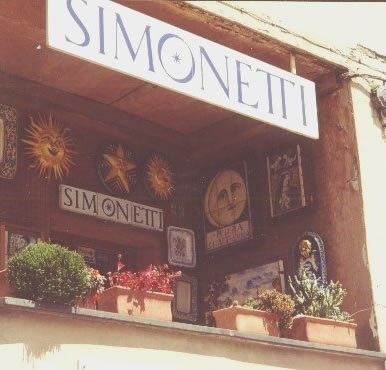
Simonetti ceramics shop, Castelli, Abruzzo, Italy

Those traditional designs are very busy, so if you prefer simple dinnerware, the Castelli style is not for you. The more elaborate pieces are better suited to hanging up as art than eating from. They are also fragile: after some years, the glaze on my serving bowl cracked when I put hot pasta sauce into it! (I still use it for salads.)

A few artisans are breaking with tradition and trying innovative, modern designs, but, at the time we visited, we didn’t see anything terribly exciting in this vein.

After extensive searching, we found a couple of simple pieces to “match” our eclectic collection of china. Then, having done enough shopping to work up an appetite, we decided it was time for lunch.

Tip: Although it’s almost impossible to eat badly in Italy, you can eat really well by asking local people for recommendations. Avoid the places advertising “tourist menus.” The food there will likely be cheap and decent, but, in Italy, you can do a lot better than decent!

We asked a shop owner to recommend a place. She sent us to Ristorante Tortella, where, she said, the Castellani themselves go when they eat out.

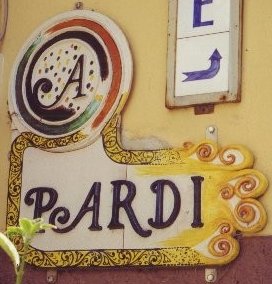
sign for Pardi ceramics shop, Castelli, Abruzzo, Italy

Lunch was indeed excellent: samples of several kinds of pasta, including maltagliati (“badly cut” – sheets of homemade pasta sliced into long triangles and rhomboids) with spinach and herbs; followed by grilled local lamb, washed down with a cheap but good local vintage of Montepulciano d’Abruzzo.

Tip: Wherever and whenever you travel in Italy, eat the local and seasonal specialties; these are almost always the tastiest items on the menu.

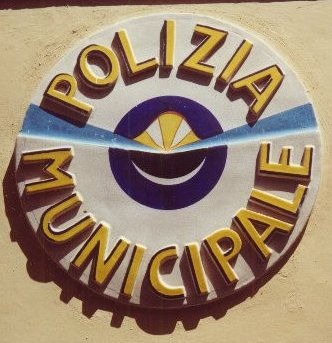
ceramic police sign, Castelli, Abruzzo, Italy