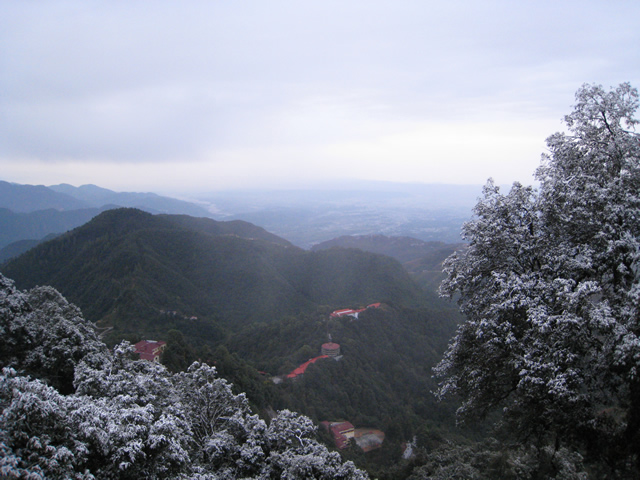
Yesterday morning I woke early to make coffee for our guest, out-of-boarding SAGE student Laura, before her 8 am exam. The sun had not yet risen when we came downstairs. I peered out the windows. “What’s that white stuff on the trees?” I wondered. “Frost? Is it that cold?”
We gazed. “It’s snow!”
We opened the door. “It’s snowING!”
We shrieked with delight. Laura, who lives in Paraguay, doesn’t usually get to see snow falling. (I, too, was raised in the tropics, and never saw snow coming out of the sky til I was 11 years old, in Pittsburgh.)
The ground was too warm for it to stick much, and the snow stopped falling after about an hour. Then the temperature plunged; last night was cold, even in Sanjay’s (unusual for Mussoorie) centrally-heated home.
This morning, the snow is back with a vengeance. Still not quite cold enough to stick, but we may be getting there…
It’s almost unheard-of for students to be around when snow begins falling in Mussoorie. Going Down Day – the end of school, when everyone heads down the hill towards home – was traditionally around December 7th, several weeks before the first snowfall was usually expected.
But this year the calendar has been experimentally changed, so school began August 8th (about two weeks later than usual), winter vacation runs December 14th to January 22nd, and the school year ends May 28th. Graduation is after that, on May 30th – ours, in 1981, was on June 25th!
The rationale for this change has not been well explained; I’ve heard that it was intended to allow more time to prepare (or less time to forget) before external exams in the spring, and/or to align better with the American school calendar.
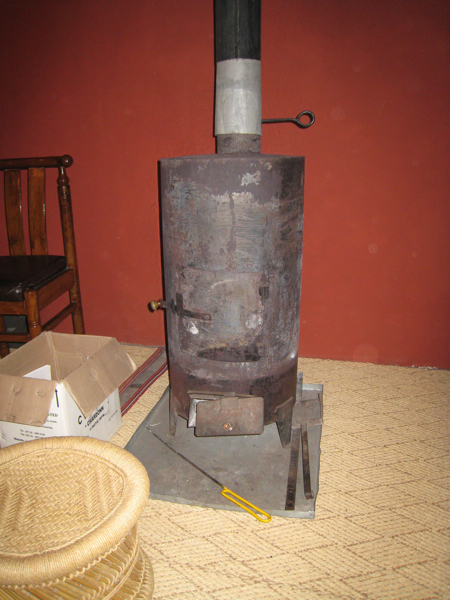
There are historical, practical reasons for the school to have a long winter vacation. The average altitude of the campus is 7000 feet: it gets cold up here! Word on the hillside is that Mussoorie is in for a colder-than-usual winter this year, and, with a looming shortage of propane in the region, the school may have trouble heating itself. Staff usually have bukharis – woodburning stoves – in their living rooms, but in classrooms and offices these have been replaced with gas heaters. Dorm rooms are not heated at all.
Students are allowed to have electric blankets which, along with flannel or fleece sheets, can make getting into bed a far less traumatic experience than it used to be. The only problem is that, eventually, you have to get out again…
Beyond mere physical discomfort, the calendar change has upset the plans of this year’s SAGE (exchange program) families. The Winter Tour, a multi-week gallop all around India, primarily – but not only – for the benefit of SAGE students, has been compressed to 31 days. For some it will be even shorter, as students join or leave the tour at odd times so that the kids also have an opportunity to go home and see their families.
This is undoubtedly a headache for the tour organizers, especially as the tour is moving so fast that it will be hard to catch up with it along the way. Ross wanted to spend some portion of her vacation relaxing in Goa, and the only reasonable solution I could find was to have her join the tour just a week before its end, in Mumbai. It’s a pity she’s missing so much. On the other hand, after a long semester she needs some rest, and this year’s Winter Tour will emphatically not provide that.
The shortened vacation also eats into a beloved staff perk: the opportunity to travel in Asia during the dry (but still warm) season. Woodstock staff don’t get paid much, so these perks count for a lot.
All things considered, I suspect this calendar change is not going to stick, at least not in as drastic a form as we see this year. It’s a pity they had to run this experiment during my daughter’s year here; it would have been nice for her Italian relatives to see her at Christmas.