FISL 2009 Interview from thesourceshow on Vimeo.
A conversation on Radio Software Livre (FISL) about using video to communicate about open software. Bruno Souza interviews (and translates for) Deirdré Straughan and Aaron Newcomb.

FISL 2009 Interview from thesourceshow on Vimeo.
A conversation on Radio Software Livre (FISL) about using video to communicate about open software. Bruno Souza interviews (and translates for) Deirdré Straughan and Aaron Newcomb.
One of my tasks since I first began working for Sun in 2007 has been to help and encourage others (mostly engineers) to communicate in various ways, including blogs.
There are many blogs at Sun (check the lower right corner of that link for today’s numbers) [well, there were at the time this was written], but, as I quickly discovered when I began analyzing their traffic and statistics, many were effectively dead: no posts since an early push to get everybody blogging in late 2005.
Not everyone turns out to be a natural blogger (and we’ve all been awfully busy), but I suspected that some could be brought back online with just a little encouragement. So I’ve been taking steps.
My first step was to gather and publish (internally) monthly statistics on blogs related to the Solaris software engineering group I work for. At the time these fell into three broad categories, which I tracked separately: storage, high availability (cluster), and high performance computing.
To further engage their attention, I set up monthly Omniture reports to be emailed automatically to each of “my” bloggers, showing their traffic for the previous month, and, in rank order, their most popular posts from the previous six months. This latter was to encourage them to think about refreshing old blog posts.
I also published and circulated some blogging tips. And, whenever I happened to meet one of my bloggers at a conference, etc., I tried to have a conversation about blogging, to gently bring them back into the fold.
All of that worked – a little. A few moribund blogs came back to life, a few people posted more often than they otherwise might have (the real effect of this kind of “awareness campaign” is hard to quantify).
In October, 2008, I decided to try a new approach: a monthly contest. Here’s how I described it to the (involuntary) participants:
For each of the blogs I track, each month I check how many posts were made in that month, how many total page views the blog got, and the percentage increase/decrease in page views over the previous month. Whichever blog publishes at least one post in a given month AND shows the greatest percentage increase (among its blog category [storage, HPC, cluster]) that month will win a prize: a nifty t-shirt I had made up with help of Sun graphic artist Dwayne Wolff.
Basing the contest on a percentage means that you don’t have to be
Jonathan or Jeff Bonwick to win [at the time, Jeff was the most popular storage blogger; these days, thanks in part to that video, (see it on YouTube) it’s Brendan]. Even if your blog doesn’t (yet) get a lot of traffic, the goal is to improve over your own personal best.
It was hard to quantify results from this, as well – again, everyone’s busy, and we’ve lost some key bloggers. But we had fun with it and people did like the shirts (in fact, a number of bloggers I wasn’t tracking, who therefore weren’t eligible, wished they could have them; in hindsight I should have made more).
Some of the shirts went on a contest to encourage people all over Sun to blog about the launch of Fishworks last November. This wasn’t strictly necessary, as the Fishworks team had the matter well in hand themselves, but it did help raise awareness across the company about a hot new product line. The first 20 people to publish blog posts on/after the launch date got t-shirts. They were supplied with the standard marketing messaging, etc., but no one was lazy about it: each of the bloggers found something different and personal to say about this launch.
After a week, I ran some stats and gave OpenSolaris logo-engraved iPods to the writers of the three posts on the topic which had gotten the most page views to date.
Now I’ve requested photos of all the winners in their t-shirts. Predictably and amusingly, they’re competing to be creative about it:

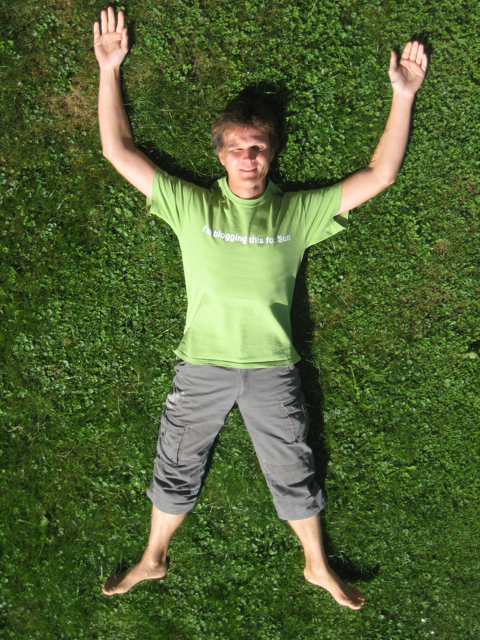
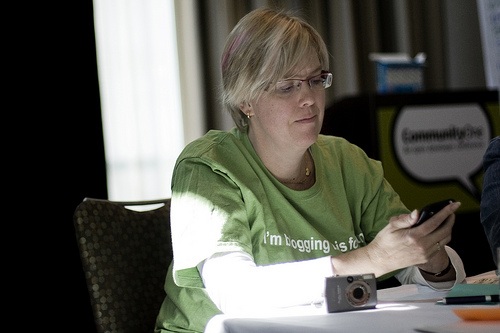
The shirts that remained by early June were given to the OpenSolaris User Group leaders who participated in our bootcamp in San Francisco (the photo at the top of the page shows me at that same bootcamp, taken by Jim Grisanzio):
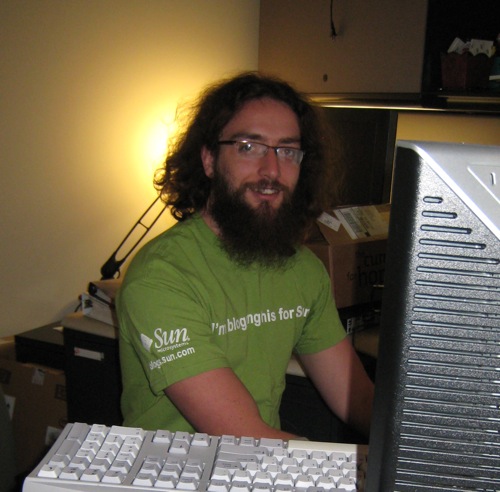
^ Clay Baenziger of the Front Range OpenSolaris User Group
Vitório Sassi took his back to Brazil and used it for marketing at FISL: he had a guy running around wearing the t-shirt taking photos and videos – blogging this for Sun.
I’ll add more photos as they come in – you know who you are and whether you have a shirt you need to send me a picture of!
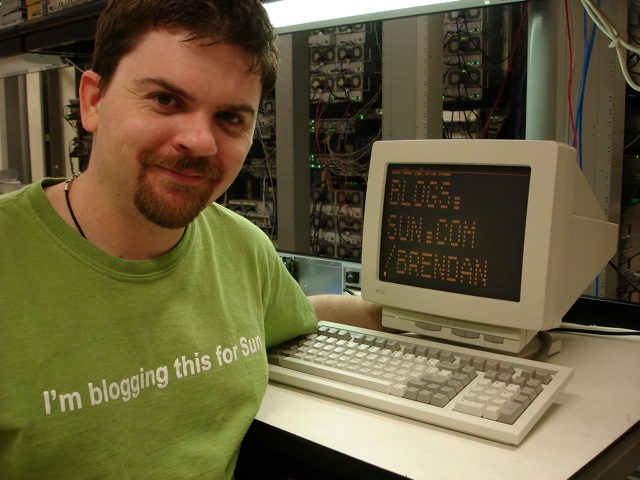
^ Brendan Gregg geeks out
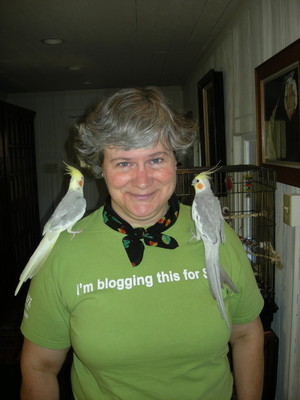
^ Katy Dickinson and friends (Photo Copyright 2009 John Plocher)
ps the solution for those who don’t blog? I stick ’em in front of a video camera.
What are some qualities about myself that are important/useful in my working life?
I thrive on interacting with people, especially from a wide range of cultures. NB: I speak fluent Italian (I can understand a lot of Spanish and French as well), used to be fluent in Hindi. I have spent significant portions of my life in Italy and India. Love to travel, anywhere and everywhere.
I think in terms of cultures, and am good at interpreting different cultures to each other (this applies to corporate / workgroup cultures as well as national ones).
I believe that everyone has an interesting story, and I love to help them tell it. This genuine interest in people makes me a great customer advocate. Having listened carefully, I bring their concerns and needs back to those who can act on them.
I connect people to each other. When someone tells me about a problem or challenge they are dealing with, or a skill or asset they have, I think: “What can I do, who do I know, to help this person achieve their goal?” Or: “How can this skill / asset be applied to a problem I’m aware of?” If I don’t have an immediate answer, I soon start noticing new things / people that could fit. Finding such solutions, e.g. putting the right bunch of people together to tackle a problem, thrills me. It feels like amazing luck sometimes, but it’s really about knowing many people, and being awake to the possibilities that each represents.
I’m constantly thinking about how things could be made better: products, processes, communications, organizations. I find new ways to solve problems.
I embrace and enjoy change.
I’m self-winding: I don’t have a problem with taking direction, but I go along fine without it; I will always think of something to do that’s useful and to the point.
I get along well with geeks. (I am one!)
Communicating. This has taken various forms: technical writing, web content, web applications, training, video. I constantly try new tools and methods to see how they answer different communications problems. Social media is simply another set of tools, and I’m an active user. On Twitter I’m @deirdres.
Translating. Not so much translating from one language to another, as translating from one culture or mind-set to another, e.g. helping explain user requirements to engineers, and helping engineers design or document their work so that users can better understand it.
Designing / improving user interfaces, including the interface between customers and companies. Everything a company does that touches a customer is part of their user experience, and I love opportunities to improve that.
Explaining / teaching, whether through documentation, presentation, teaching, or simply sharing what I know individually – I enjoy using my knowledge to help others.
Event planning. I like designing events for specific technical communities, from the overarching vision through speaker list and session flow to the nitty-gritty details, making it all come together, and ensuring that it runs smoothly on the day(s).
Measuring. I analyze, getting at real numbers (as far as possible) to help me understand what’s working and what isn’t. I’m not afraid to change my ideas when the numbers prove me wrong.
Routine. As soon as something is routine to me, I’m ready for a change. I get interested in something, see how it could be usefully applied in my life / work, learn it, do it. Then I document it, share it, teach it, hand if off – and I’m ready to learn something new. This cycle can take years, depending on the material, but once I have mastered a thing, I want to do something different.
For a more standard resume with the details of where I’ve done all this stuff, go here.
The original impetus for this (when I wrote it in August, 2009):
As someone who may be seeking a new job soon, it behooves me to prepare myself for a possible job search. Which is something I’m really, really bad at. I’m very good at doing jobs once I get them, but clueless and inept when it comes to seeking them.
The process would be easier if my experience included anything that fit neatly into established categories, but I’ve always stretched my jobs well beyond their initial descriptions. Those bosses who let me out of the box (I’ve been lucky – most have) were happy with the results. But it makes explaining what I do in my current job, or imagining what I’d like to do in future jobs, a bit tricky.
Instead of trying to identify a specific job or category to try to fit into, I might more productively reflect on the strengths and skills I’ve brought to and taken from my jobs to date, to help potential future employers picture me as part of their organizations.
I’ve done enough social media coverage of conferences now to have some ideas on my ideal set-up for this, although I have not yet achieved that ideal in practice. Here’s how I’d like to do it:
1. Have presentations available online in advance, so that:
2. Have a small laptop pre-tested with UStream and ready to go. I don’t really care about the OS (Solaris, OpenSolaris, Windows, Mac) as long as it has Flash installed in Firefox and knows what to do with a video camera attached to the Firewire port.
NB: Even on a pre-tested laptop, UStream can be a problem. When we tried to stream last night’s FROSUG meeting, UStream crashed my browser repeatedly (both Firefox and Safari), crashed Firefox on another Mac, and only worked on a Lenovo – which, unfortunately had messed-up sound so couldn’t actually be used. What’s up with that, UStream?
It pays to know your local market.
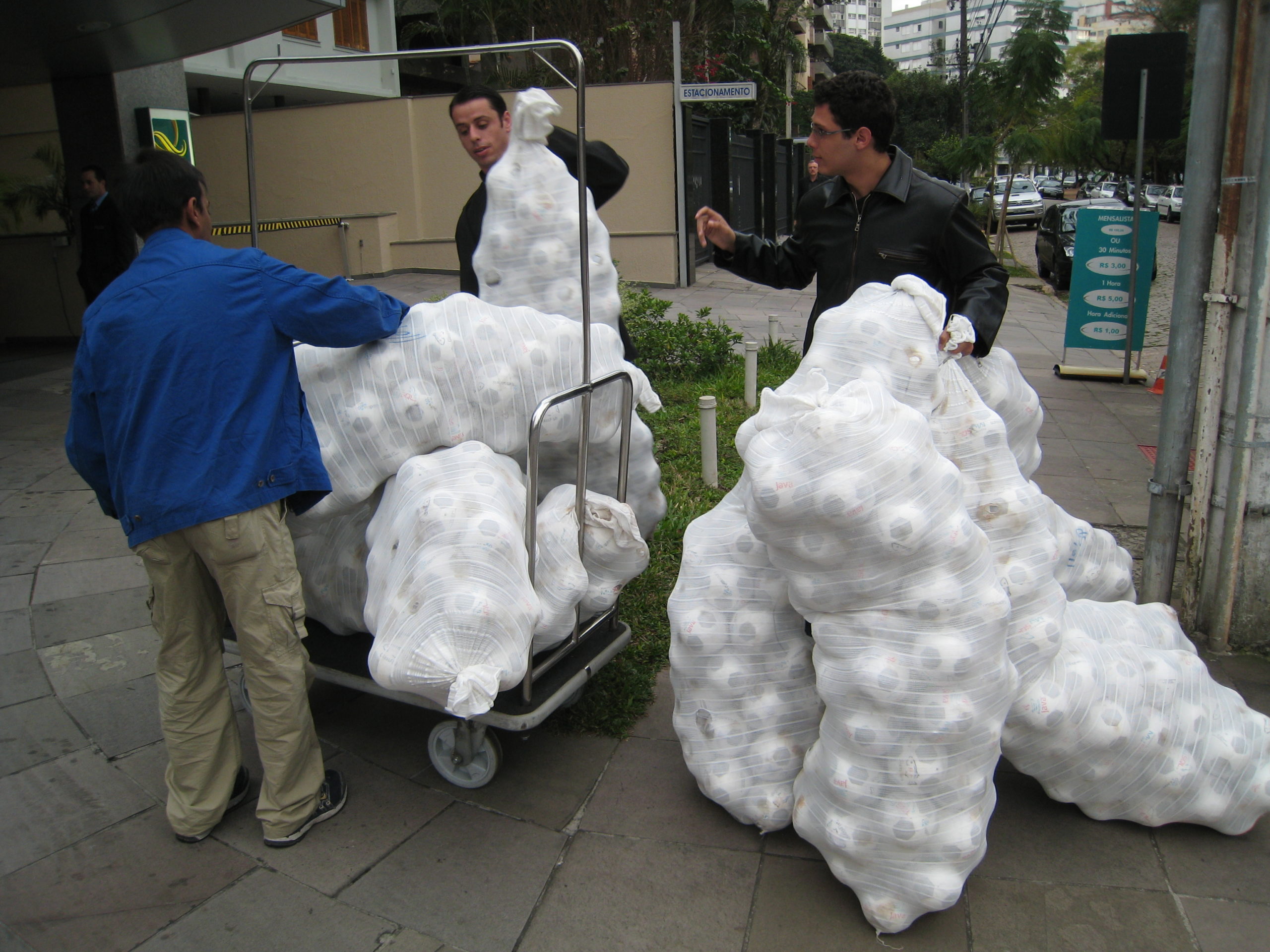
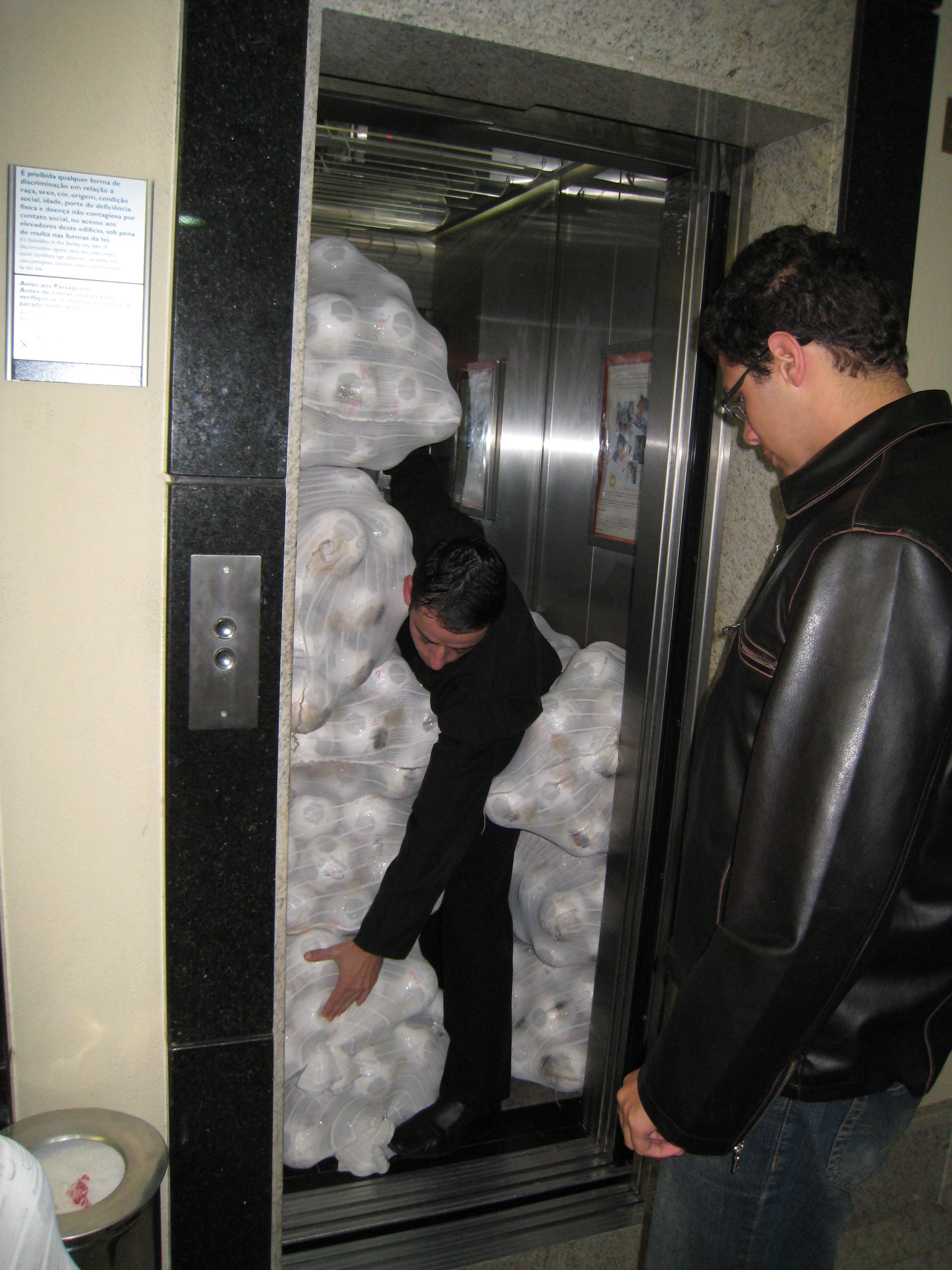
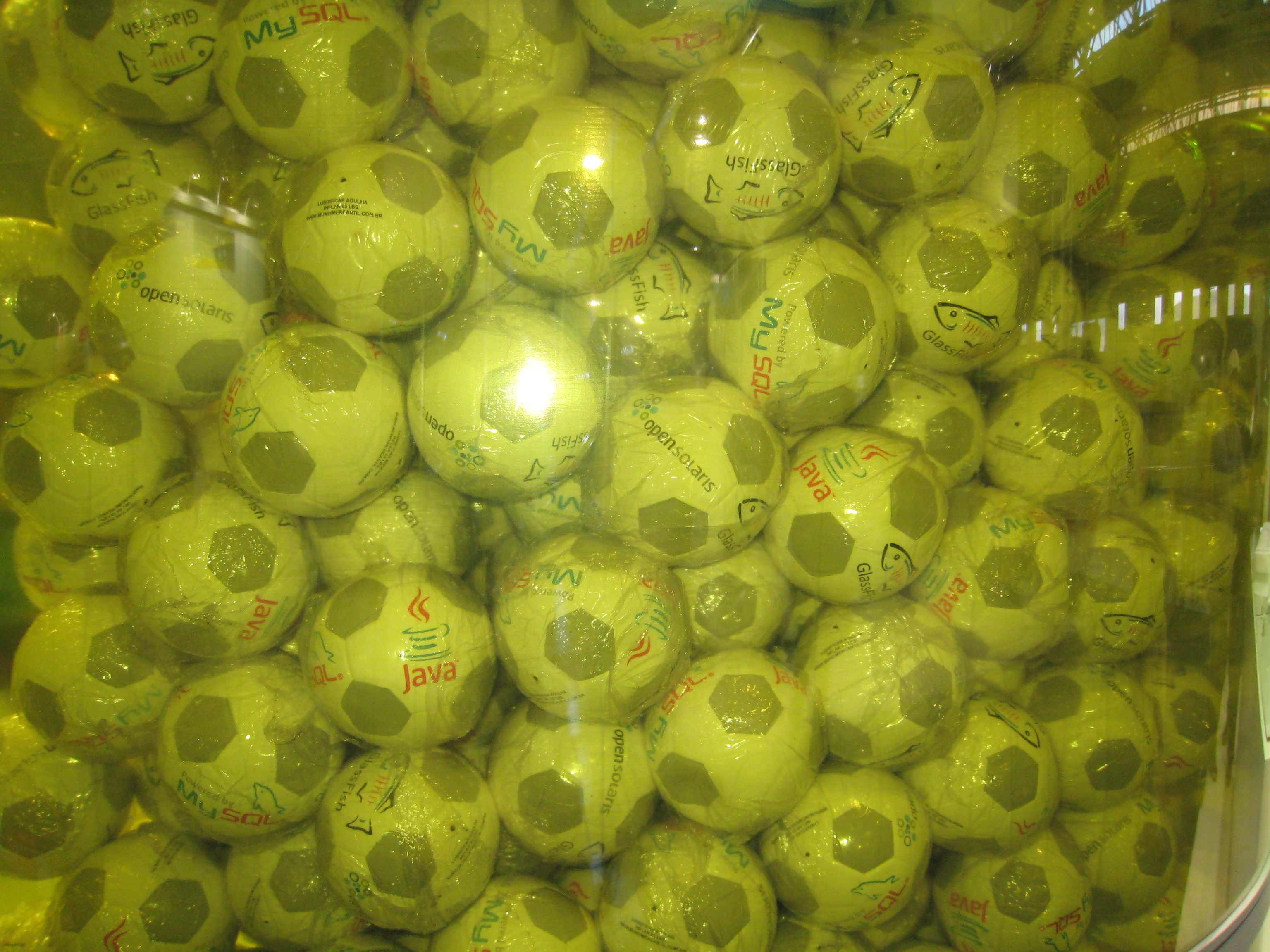
Sun’s Brazil team had the bright idea to have 2000 small soccer balls printed with logos, to use as giveaways at FISL. Along with much other show stuff, these arrived in the bus that drove from Sao Paolo to Porto Alegre. Then they had to be stored in the hotel we were all staying at…
When we finally got them to the show floor, they filled a tall column (which had holes near the bottom to extract them from):
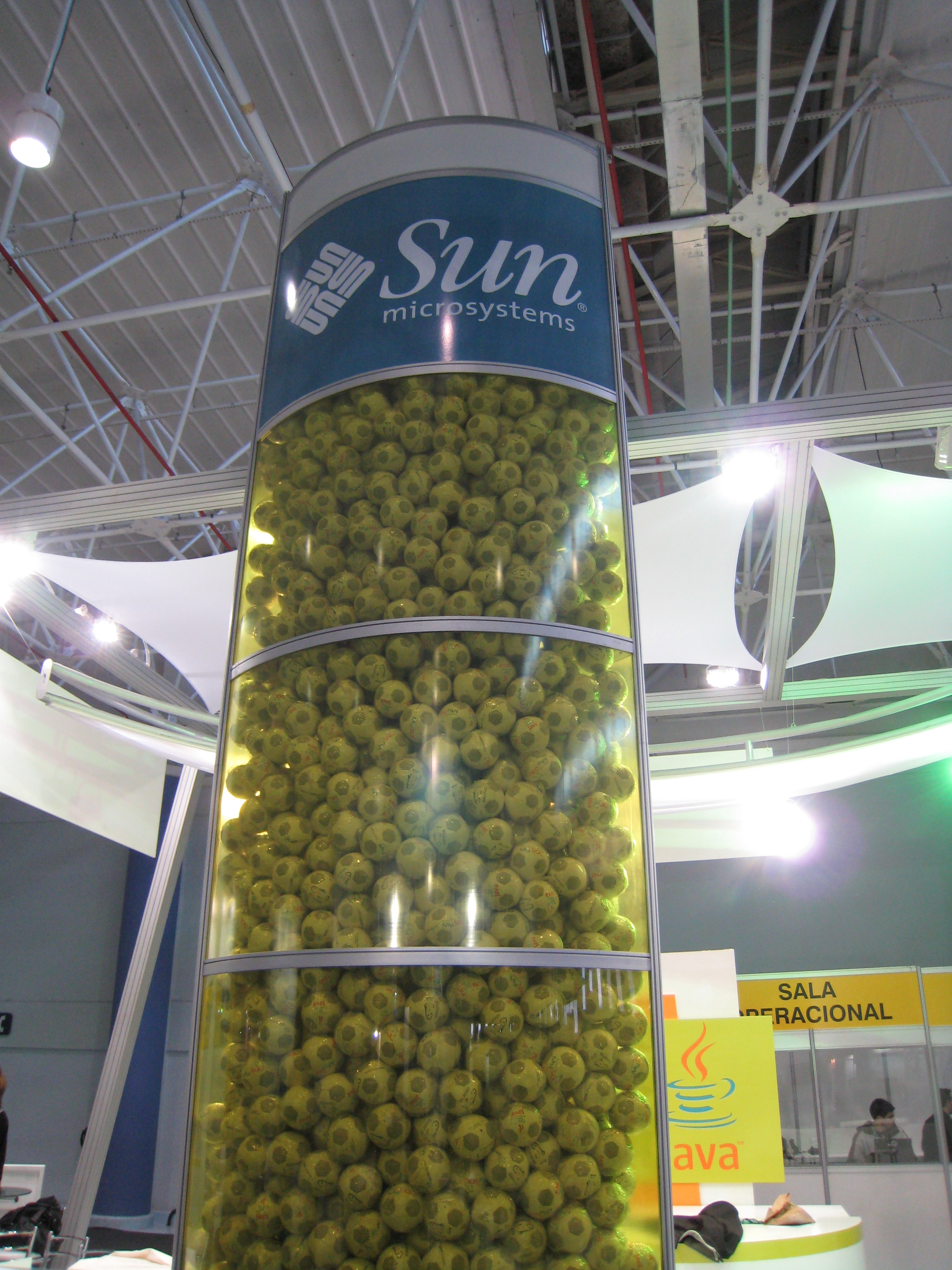
There were over 8000 attendees at FISL this year, so not everyone could have a ball just for the asking. And they did ask: we had a constant flow of people into the booth requesting a bolinha (little ball). They were cute, all right.
The few little kids at the show got one automatically, but everyone else had to work for it, usually by doing soccer tricks:
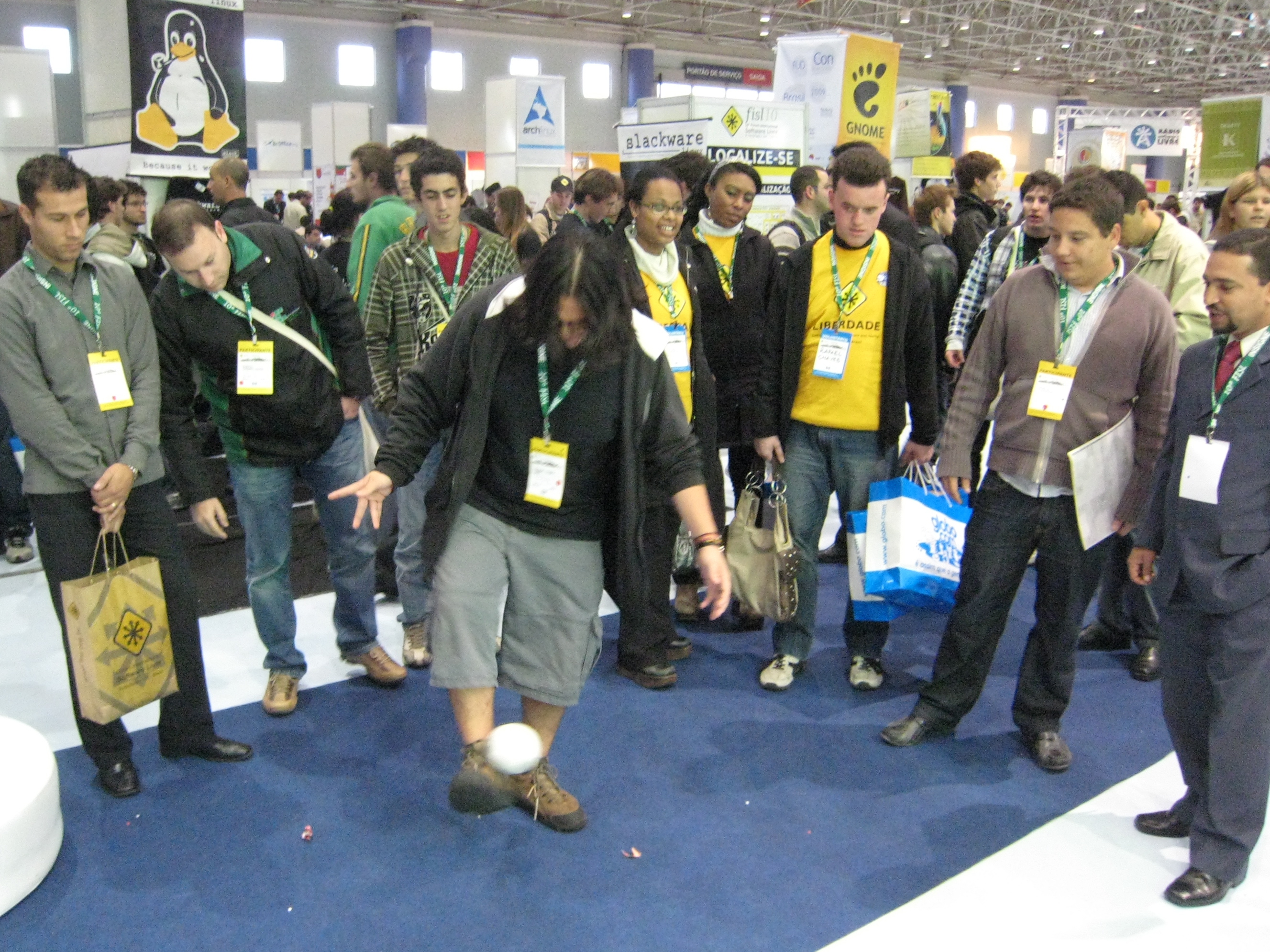
Even in Brazil, soccer ability is not a given in a geeky crowd like this, but three girls who were not only beautiful but knew how to play soccer had been hired to “coach”:
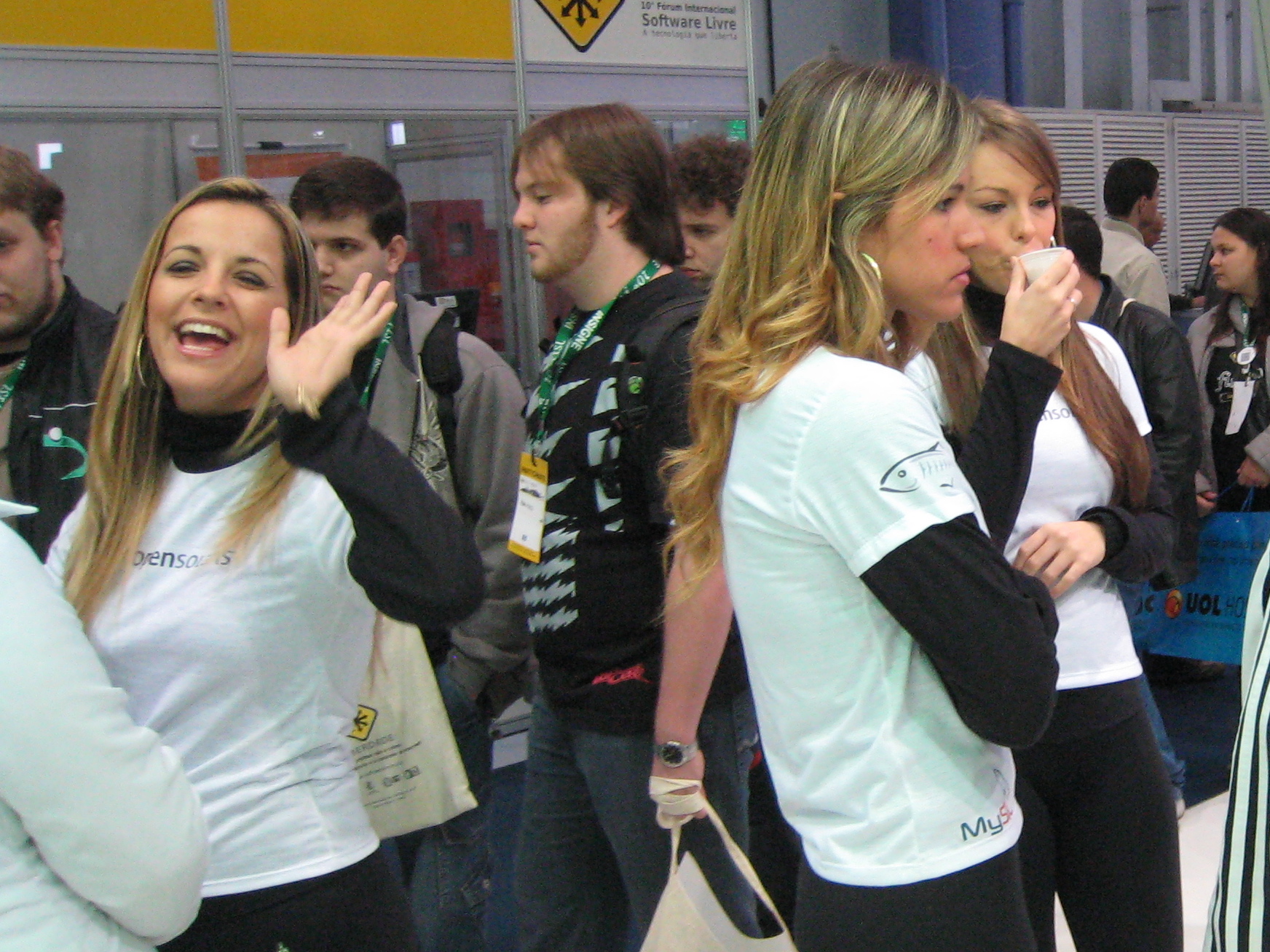
They were very popular; all the young men and boys wanted to take photos with them (a few of them also asked for photos with Teresa and me, to our surprise), but they smilingly refused – that wasn’t part of their contract (and they would have spent all day doing nothing else, had they agreed).
The girls also kept the coffee machine running, a big plus for those of us working the booth, as well as the many who happily lined up for free coffee – this was a trick discovered by Sun Brazil years ago, now imitated (with less booth-filling success) by several other companies showing at FISL.
By the end of the fourth day the tower of balls was empty, but there was a reserve bag of souvenir balls for us hard-working Sun employees. I took four, and gave them all away before I got back to the US, the last two going to Bill and Sherry’s kids in Brisbane.