USA for ItalyProduced in 1985 by the satirical music group Squallor, this song now appears uncomfortably prophetic. |
|||
| Caro Michael Jackson, tu che mandi i soldi in Africa, Perché la speranza torni a vivere, Ricordati di noi che stiamo a Napoli E un disco faccelo anche per noiE poi, mandaci i danari Tanti danari e siamo pari E se tu vuoi mandali anche a Bari E a tutti i meridionali for ItalyFacci una canzone col compare Steve Wonder E poi mandala a Sanremo o al Festivalbar Pero’ Pero’ mandaci i danari Caro Bob Dylan Appena puoi mandaci i danari Concludendo Mike E in riva la mar dollari in contanti E poi mandaci i danari [ USA For Italy Lyrics on http://www.lyricsmania.com/ ] |
Dear Michael Jackson, you who send money to Africa So that hope can return to live Remember us who are in Naples And make a record for us, too.And then, send us money Lots of money, and we’ll call it even And if you want, send some to Bari as well And to all the [Italian] southerners, for ItalyMake us a song with your buddy Stevie Wonder And then send it to Sanremo or Festivalbar* But, but send us the money Dear Bob Dylan, As soon as you can, send us the money To finish, Mike, And by the seaside [?] cash money And then, send us money |
||
|
Sanremo is a pop music festival/competition (NB: widely believed to be rigged) which takes place annually in the seaside resort town of San Remo. It used to be a very big deal in the Italian music scene, not so much anymore – every year the media wax nostalgia about declines in the TV audience. Bringing in big American stars (including some who have little or nothing to do with music) has done nothing to reverse this. Festivalbar is a summer TV concert series. |
|||


Brisbane Walkabout
Sunday (July 12) I walked around Brisbane – a lot.
Auckland: Western Springs & the Zoo
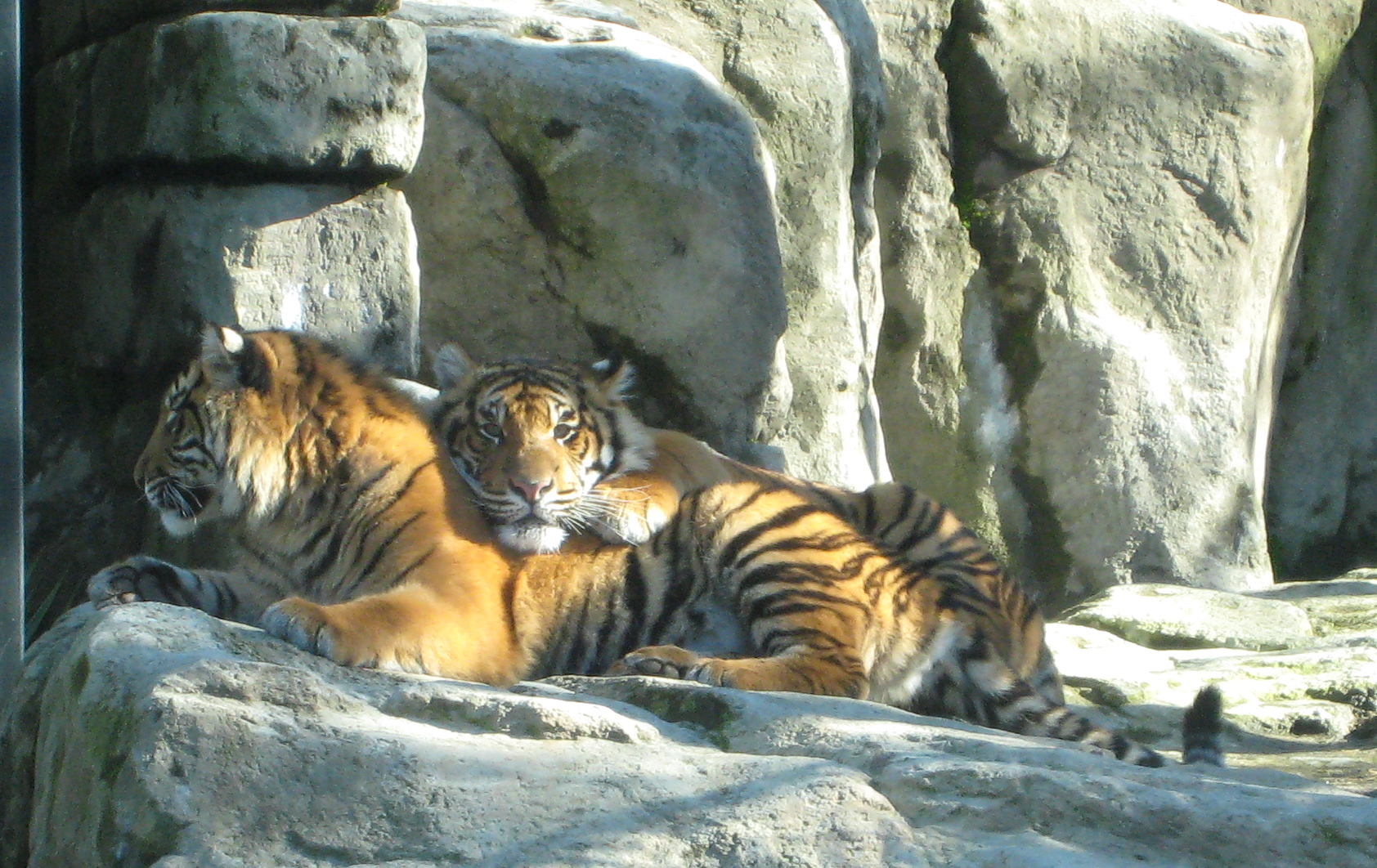
^ two of the star-attraction tiger cubs born at the Auckland zoo, in one of those moments that has the whole crowd going “awww…..”
Auckland had fair weather for my return, so I spent a few hours enjoying the sun in Western Springs park and the zoo.
You might also like:
Social Media Production: What I’m Doing in Brisbane
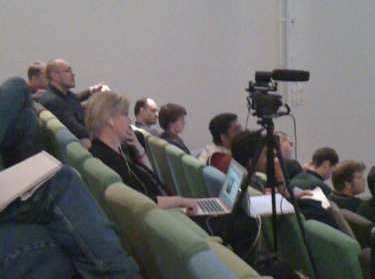
^ photo by thegreeno. This is me with two laptops in one lap, monitoring video, sound, and chat simultaneously. Not as calm as I look.
Executive Overview: What You Need to Stream Video with UStream
- videocamera with FireWire output
- laptop with FireWire input
- FireWire cable with the appropriate plugs on each end (mini/4 pin for the videocamera, Windows laptops also seem to use this type, but there are several possibilities on Macs)
- audio source with appropriate cable into laptop’s mic port – one option is to use the camera’s headset jack (if it has one)
- hard-wired Internet access close to the laptop (wifi is probably not sufficient to support the video stream)
- possibly a second laptop to monitor the stream and chats
- earphones to monitor sound quality on the stream
- tripod
- videotapes
- electrical power source close to all this, with plugs for the camera and the 1 or 2 laptops – bringing your own multiple power strip is a good idea
- local electrical adapter(s)
The Story
We thought this conference would be taped using fancy dual video systems here at the Queensland Brain Institute. Which would have made my presence here somewhat redundant.
But QBI’s auditorium just got a big upgrade this week, and the new systems aren’t fully operational yet. We couldn’t get the telepresence camera aimed at the speakers, and in any case it’s not possible to stream to the open Internet from it (maybe it’s set up for within-campus streaming as well as capture).
So it was a good thing I and my gear came along.
The setup seemed straightforward when we visited the venue Monday afternoon. There’s a hole in the floor containing power and Ethernet in the third row of the audiotorium. I could set up the camera there, borrow a laptop with FireWire (when I packed for this trip, I knew I would regret not bringing the 17″ MacBook Pro I use for video editing, but I also knew I would regret having to carry it), we’d get an audio feed of the fancy new high-tech podium, all fine and dandy.
All wrong.
Wednesday morning we realized:
No way to get audio out from the podium mic to my system. The keynote would be two speakers (both of whom are pacers), and I only have one wireless lapel mic. Okay, I’ll use the shotgun mic and pick up room sound. Not ideal for camera sound, but better than nothing.
For the video stream, James brought his Dell laptop with FireWire, and I have two FireWire cables with me, including the right one for this laptop. But, when James came back from some last-minute errand at 8:45 am and unlocked his laptop for us, we realized that he runs Solaris and hadn’t yet installed Flash. Once we did install it, the laptop still couldn’t see the camera, and we didn’t have time to figure out why.
The quickest solution was to borrow a laptop from QBI. But I didn’t have the right FireWire cable for this older MacBook (why are there so damn many types?), nor a way to get audio into it. And the conference needed to start.
So we turned the MacBook around to face the audience and used its built-in webcam and mic to stream the first session. It wasn’t great, but it worked (audio was better if you were wearing headphones on the other end of the stream). Poor video quality made the slides illegible: I followed the UStream chat from my own laptop, and typed in the slide content. We had over 40 people on the video stream during the keynote (on ZFS), and they were grateful for whatever we could do to help them participate. I also relayed questions from the UStream chat to the speakers.
This is an auditorium with rows of seats, no table, desks, or arm-desks: we had the laptop precariously balanced on the back of a seat. Of course it fell, interrupting the stream, but fortunately suffered no damage. Can’t say the same for my foot when it fell a second time…
By the time we were ready to start the second presentation, the correct FireWire cable had been located, so we were able to use the camera to stream higher-quality video. Problem: for filming, I usually focus the camera on the speaker, knowing that I will edit in the slides later as graphic overlays. But the online audience needed to see the slides during the talk, and they weren’t yet available for download. So this video will be a lot more boring footage of slides than I usually shoot. I had too many things to manage to keep the camera moving between slides and speaker as much as I would have liked.
We also needed a way to get audio into the MacBook for the UStream feed which, annoyingly, doesn’t just take the audio off the FireWire from the camera. I used my wireless lapel mic on the remaining speakers, attaching the wireless receiver directly to the MacBook’s mic input. I can’t remember how sound got into the MacBook when the three-person panel was speaking. We must have somehow left the lapel mic lying in the right place to pick up good sound.
On the second morning James Lever, a local volunteer, brought in a sound board, but we didn’t have the right cables and adapters to put it all together with my wireless mics – it would take a good-sized trunk to carry around parts and cables for every possible contingency. We continued to use my wireless lapel mic on the speakers, but this time fed it into the camera via the Beachtek mixer, then used an audio cable with 3.5 mm connectors on each end to take audio from the camera’s headphone jack to the laptop. This means the camera is getting better sound, though it seems to cause a slight hum in the UStream audio.
Lessons:
Make slides available for download in advance. This is also a service to people in the room, because many of the slides were difficult even in the room, because they were too dense or used low-contrast text and background colors, and room lighting is not ideal.
Wireless mics have a thousand uses. Don’t leave home without them.
Opotiki
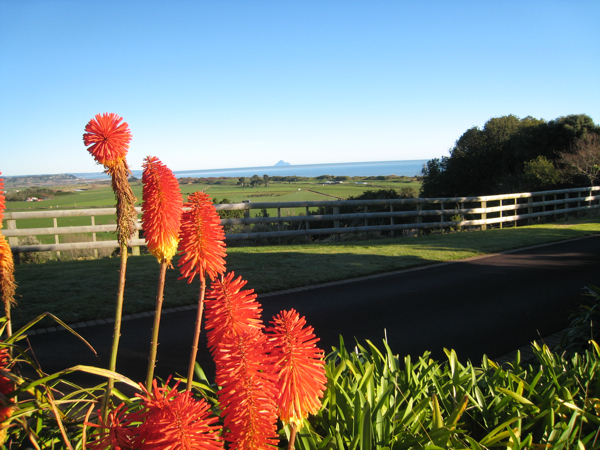
The best down time I’ve had on this trip so far was a visit to David and Sally Kibblewhite (who had been my teachers at Woodstock School) in their beautiful home in Opotiki, on New Zealand’s Bay of Plenty. The weather was beautiful: I finally got to see some sunshine after days of clouds and/or conference rooms. But there was something strange and unsettling about the light. Was my body, tuned for the high sun of the northern hemisphere summer, rebelling against the return to short winter days? Or was it that the sun was on the wrong side? I never did figure it out. I also would not have said that I knew much about the night sky, but that, too, looked wrong. I did finally see the Southern Cross, which included the brightest star I’ve ever seen in any sky, anywhere.