Back to School

Getting back to Woodstock School at the beginning of each new semester was an undertaking, and sometimes an adventure. The journey was never short: most of us lived in other countries in Asia or the Middle East. We’d take a plane or train to Delhi, then a bus or taxi to Mussoorie, 7000 feet up in the Indian Himalayas. Especially for younger students, these trips were coordinated with the school so we could be met at the airport by staff members and escorted on school-arranged buses, and more or less watched over until safely checked in at our dorms.

However, between the difficulties in communications to and within Asia 30 years ago, and the general unruliness of teenagers, the school couldn’t always keep track of everybody.

I don’t remember what year it was that I came back to Delhi after winter break and managed not to join a school party, or at least not to be on the bus with the others. It can’t have been my senior year, because a couple of kids older than myself were along on this adventure (Kim, Tajchai – do you remember this? I think you were part of this story). Somehow, five or six of us needed to get up to school, and weren’t on the school bus. None of us had much money.

There were (and are) cheap ways to travel in India, such as public long-distance bus lines (the Indian version of Greyhound) of all classes and prices, from rattling, hard-seated, overcrowded tin cans to air-conditioned “luxury” buses. But, if you were willing to stuff enough people into it to share the cost (about Rs. 500 total, if memory serves), a taxi was nearly as cheap, and at least you could ask when you needed a stop. So we pooled our resources and hired a taxi to take us from Delhi to Mussoorie, putting four in the backseat and two in the front seat (plus the driver) of a capacious Ambassador.

A taxi was more comfortable than a bus, but not by much over six or more hours of stop and go traffic on terrible roads – also very stressful driving conditions. I don’t remember what time we left Delhi, but by the time we reached Dehra Dun (the town in the valley below Mussoorie), our driver was tired, and well aware that it would take another one and a half to two hours to get us up to school. A native of India’s plains, he may also have felt daunted by the winding mountain road, falling darkness, and cold weather ahead. He decided to hand us off to a local driver in Dehra Dun for the final leg of the trip – which may have saved all our lives.

Heading up the two-lane “highway” to Mussoorie, we soon ascended into clouds, fog, and sleet. The driver went slower and slower; we could only see a few feet beyond our front bumper, then even less that that. The headlights on the taxi either hadn’t been working from the start, or failed as we were going. None of us could see anything but a dark gray fog of cloud and condensation against the car windows, but we were familiar with this road. Even though we couldn’t see it, we knew that, at many points along the way, there was no barrier to stop us plunging several hundred feet down the mountainside. Fortunately, the driver – a young local man (and a Sikh, I recall) – knew it, too.

Our group had started the day cheerful and chatty, but by now we were tired and increasingly frightened. I was nightmarishly reminded of a dim childhood memory of a similar drive up a volcano in Hawaii when I was about four.

Suddenly the car ground to a halt, crunching on roadside gravel. The driver peered out over the hood, but couldn’t see anything. He opened the door and looked down at the road. “Oh my god,” he said, quietly and hoarsely. Our front wheels were inches from a precipice.

He backed up carefully, and we continued the slow, painful journey. I don’t remember how long it took, or really anything about the trip after that point, but we obviously did eventually make it to school, and then (on foot, as ever) down to our dorms. We probably got told off for being late and not arriving with the other students.

Harrowing as it was, this wasn’t much of an adventure by Woodstock standards. Ask the students who escaped the Iranian revolution in 1979. Or the boy who, arriving home in Bombay after the partition of India in 1947, found that his parents had had to move abruptly to Lahore, and had left no forwarding address (probably didn’t know it themselves when they left). He had to make his own way, but eventually did find them, of course. Or the one who, even earlier, was home in Burma with his missionary parents for Christmas. When it was time to return to school, his father pulled out a map and said: “The Japanese are coming from here; I suggest you start walking in this [other] direction.” And he did – three weeks through the jungles with a group of missionaries fleeing the invading Japanese army, to reach Calcutta and thence take a train back to school, where he was eventually reunited with his parents.

I guess you could say that Woodstock students are resilient and know how to take care of themselves. Sometimes, we just didn’t have a choice.

The Last of OpenSolaris

The summer of 2010 was largely a painful mess. I had moved to San Francisco in April, and by late May was very ill with a sinus infection that would eventually require months of antibiotics and two procedures to clear out. On the work side, Sun had been bought by Oracle, and we were in the throes of a merger that caused enormous pain to most former Sun employees.

I had an office in building 18 of Sun’s Menlo Park (MPK) campus, but I didn’t spend much time there. The building already seemed very empty: whole teams had been laid off, and those remaining preferred to work from home so as not to be constantly reminded of those who were gone.

By midsummer, we knew for sure that MPK would be sold and we’d all be moving to Sun’s Santa Clara offices. As a minor part of preparing for the move, I was asked to clear out 10 or so storage rooms that had belonged to various groups. I was ideal for this assignment: I’m very good at sorting and packing. I also hate waste, so I was anxious to find good homes for as much stuff as possible, though this was a lot more work than just “recycling” it all.

First, I took inventory:

  • Over 3000 t-shirts. Most had been made for OpenSolaris user groups (why were there so many for Poland?!?). We were no longer allowed to give these away outside the company, because the OpenSolaris brand had been “deprecated”.
  • Hundreds of baseball caps, also OpenSolaris-logoed. Ditto.
  • A gigantic shipping pallet full of copies of the OpenSolaris Bible. The information in them was (and is) still useful, but, again – wrong branding.
  • Hundreds of copies of Solaris Internals, Solaris Application Programming, and others, but only 28 of Solaris Performance and Tools – which proved to be the most in-demand of the books.
  • Huge amounts of office supplies, which we gave to a program that gives this stuff to teachers.

There were a few unique items, such as Solaris-logoed boxer shorts. Thousands of plastic license plate frames intended for a dismally-failed promo for the Sun cloud (nothing to do with these but put them in the recycle bin).

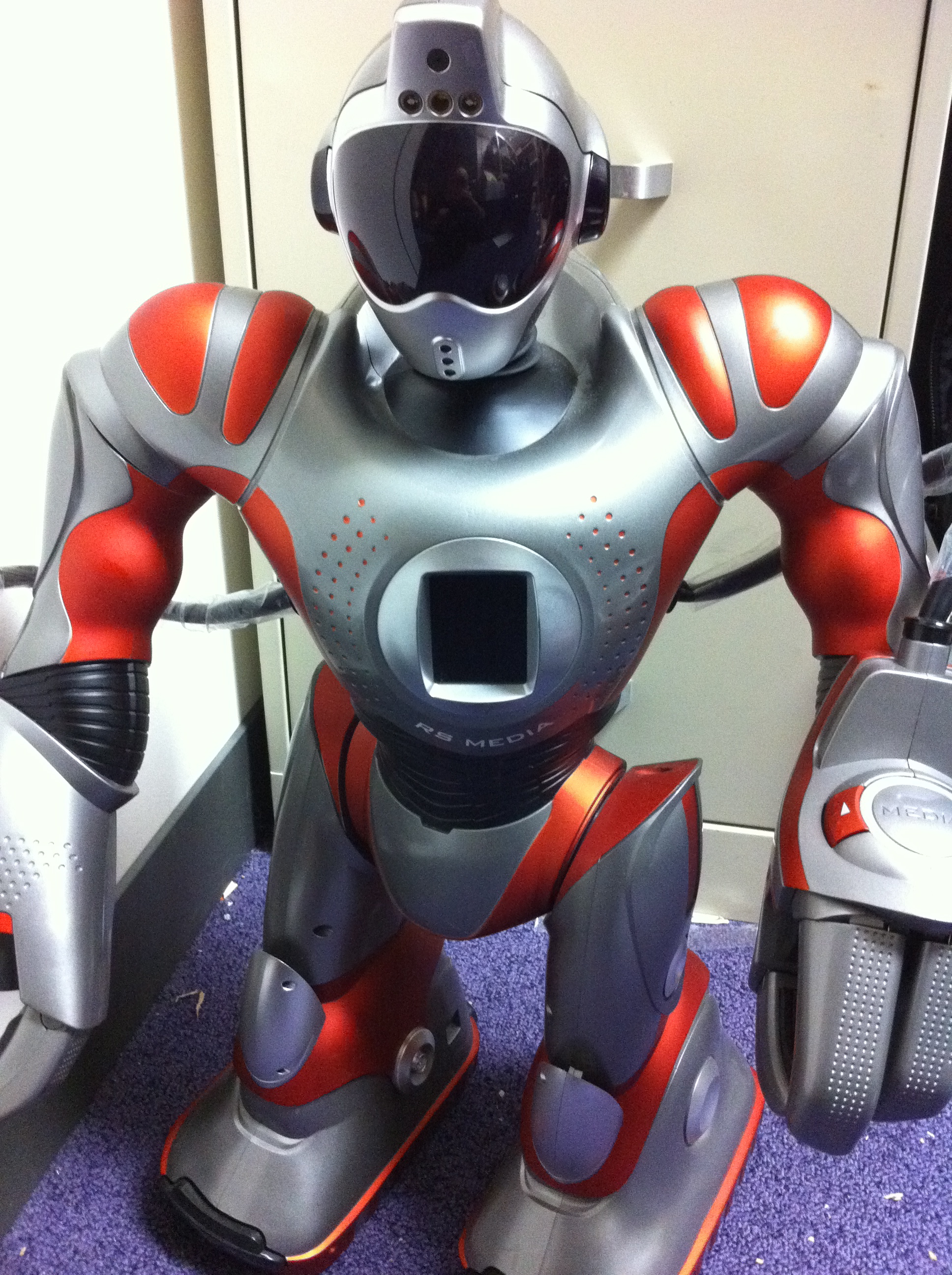
^ I found two of these robots in a closet that had belonged to the Java team. Online research showed that they had been part of one of Gosling‘s toy shows at JavaOne some years before. They came home with me; one has since gone on to pursue a career in Hollywood, the other is at the Joyent offices (matches the decor) went to live with Ben Rockwood’s family. I assume that Number 3 still lives with Gosling.

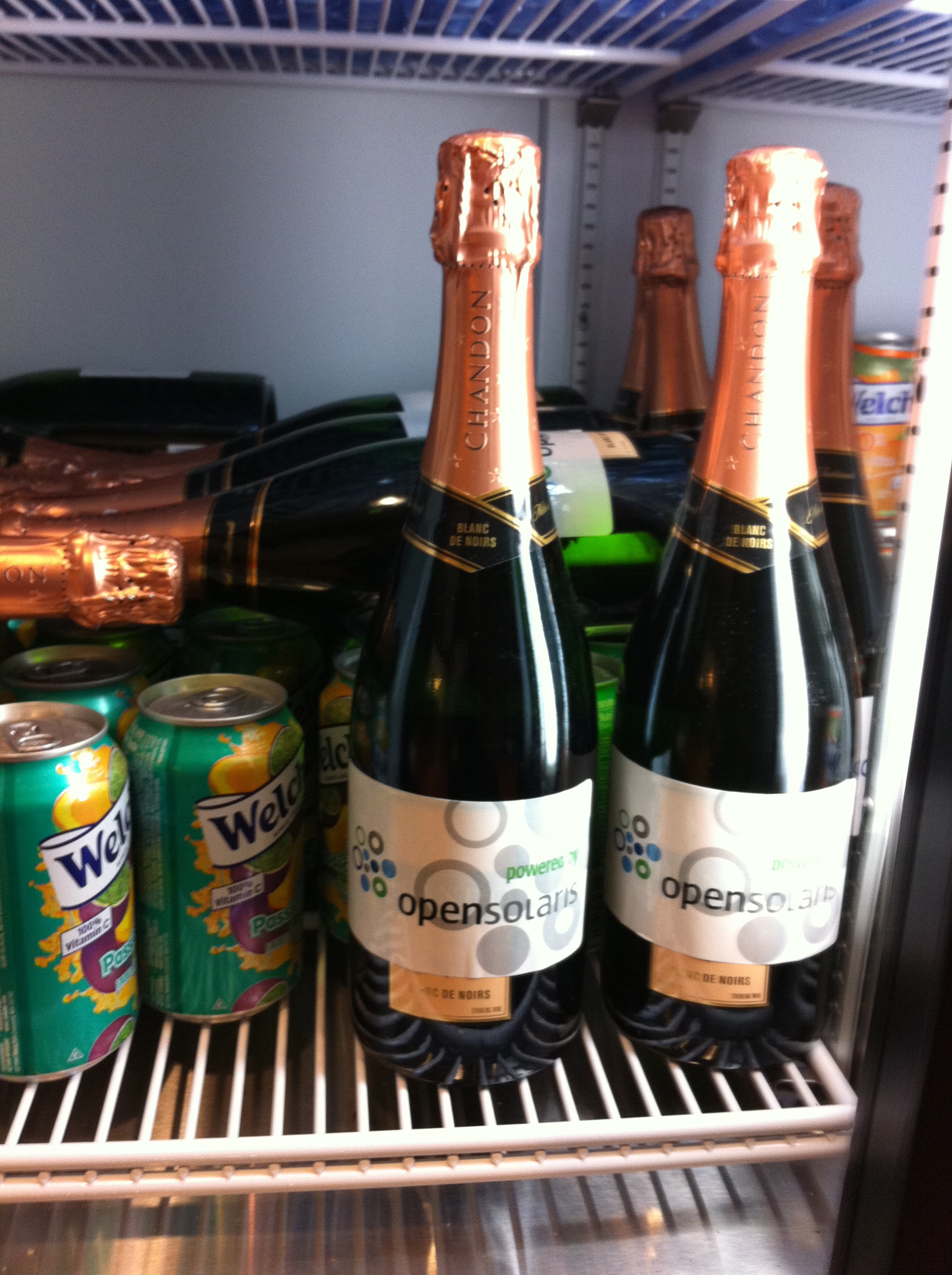
And OpenSolaris-labelled champagne:

I remembered this: it had been served at a party during CommunityOne in 2008. Lynn and I snagged a case of the remainders to take back to our colleagues in Broomfield. The case or so that I later found in a store room in MPK we served at a farewell-to-MPK party in August, 2010.

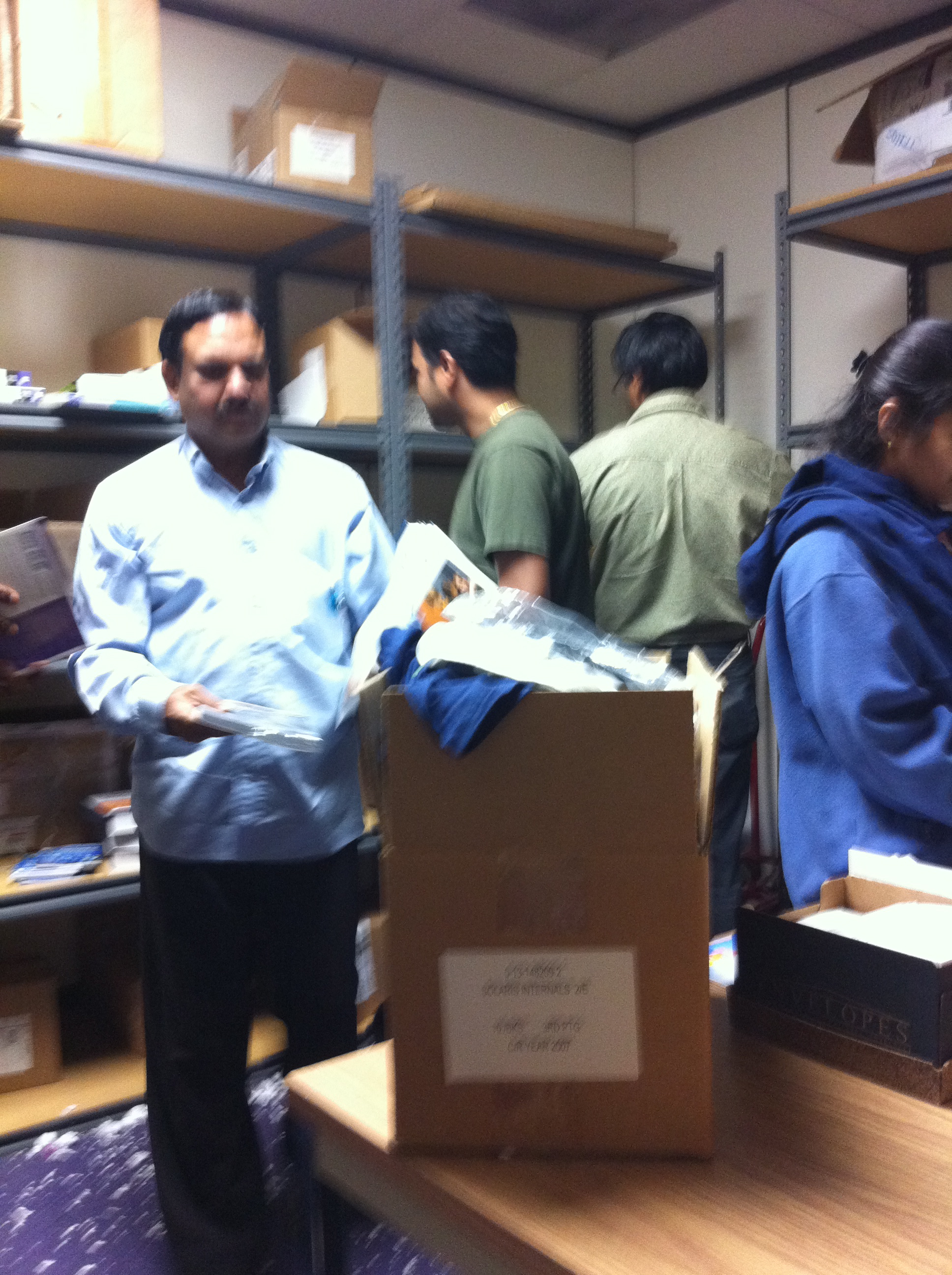
Making endless trips between buildings with trolleys full of heavy boxes, I consolidated all the books and apparel into one large storage room. Then I advertised within the company to find “buyers.” To my surprise, everyone wanted an OpenSolaris shirt. None had been given out within the company: only people who had attended conferences and user group events had them. Which left out most of the engineers who had actually created (Open)Solaris! So I packed up dozens of shirts to send to Sun offices around the world. I took piles of stuff to the engineering meetings that I attended as part of my regular job – which turned out to be a good way to warm up engineers who were previously too shy to even speak to me.

But there was still a lot of stuff left. Towards the end of summer, when I was on a deadline to get Building 18 cleared, I started having lunchtime “store hours” when people could come rifle through piles of shirts and pick up books.

An Oracle VP of software drove down from Redwood Shores to get copies of Solaris Internals for his team – said he didn’t have budget to buy them. ???

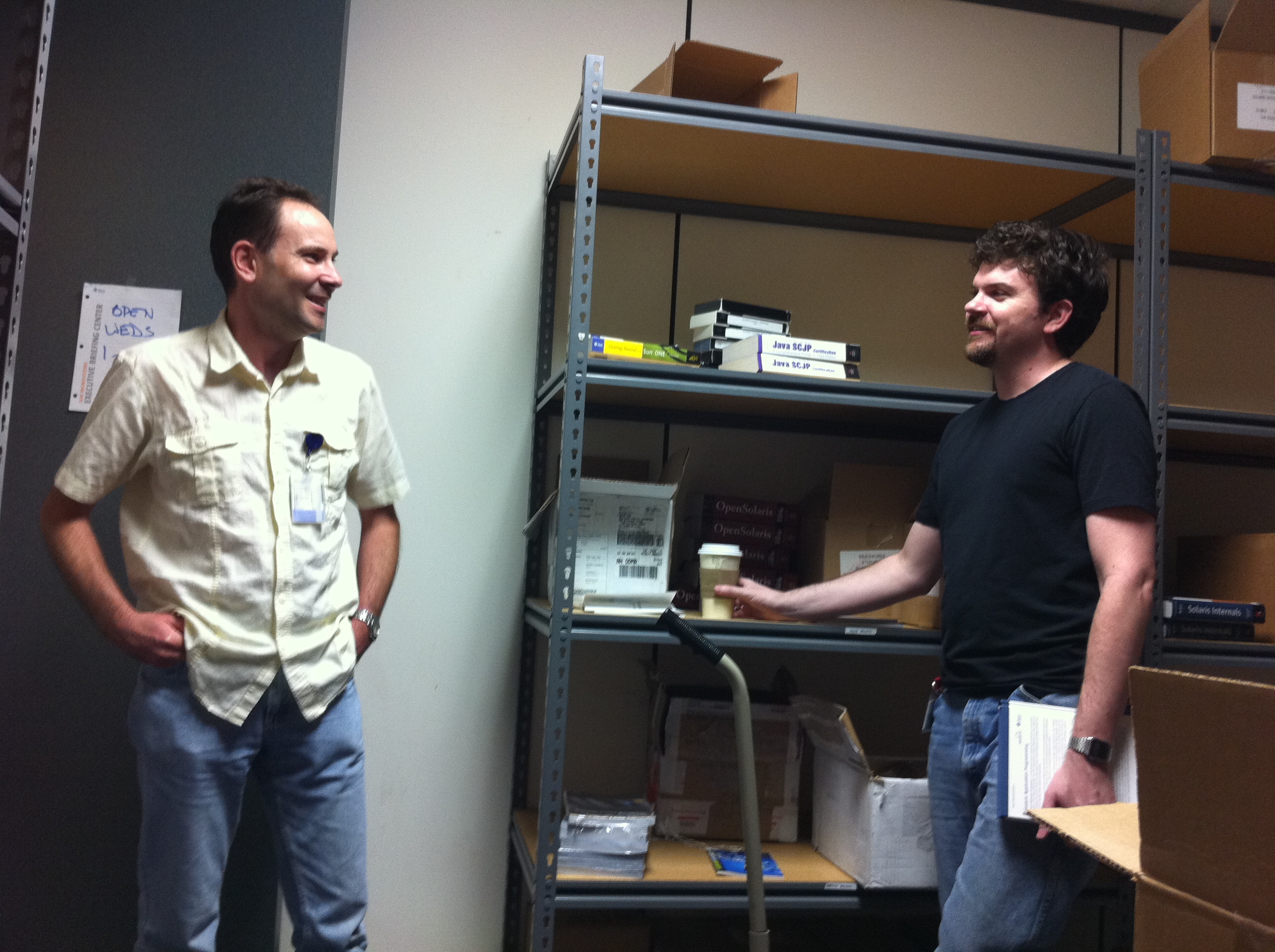
Dozens of people came to grab some remnants of Sun history. There were historic encounters, such as the above meeting in my storeroom/showroom between Solaris book authors Darryl Gove and Brendan Gregg.

Some of the schwag has had interesting later lives. Several dozen hats went to a church, to help keep people together during a hike in Yosemite. Another bunch ended up at a school event, and are still seen on that campus today. I gave a hat to a friend who had nothing to do with Solaris, but now gets chatted up by random geeks in San Francisco whenever she wears it.

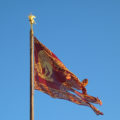
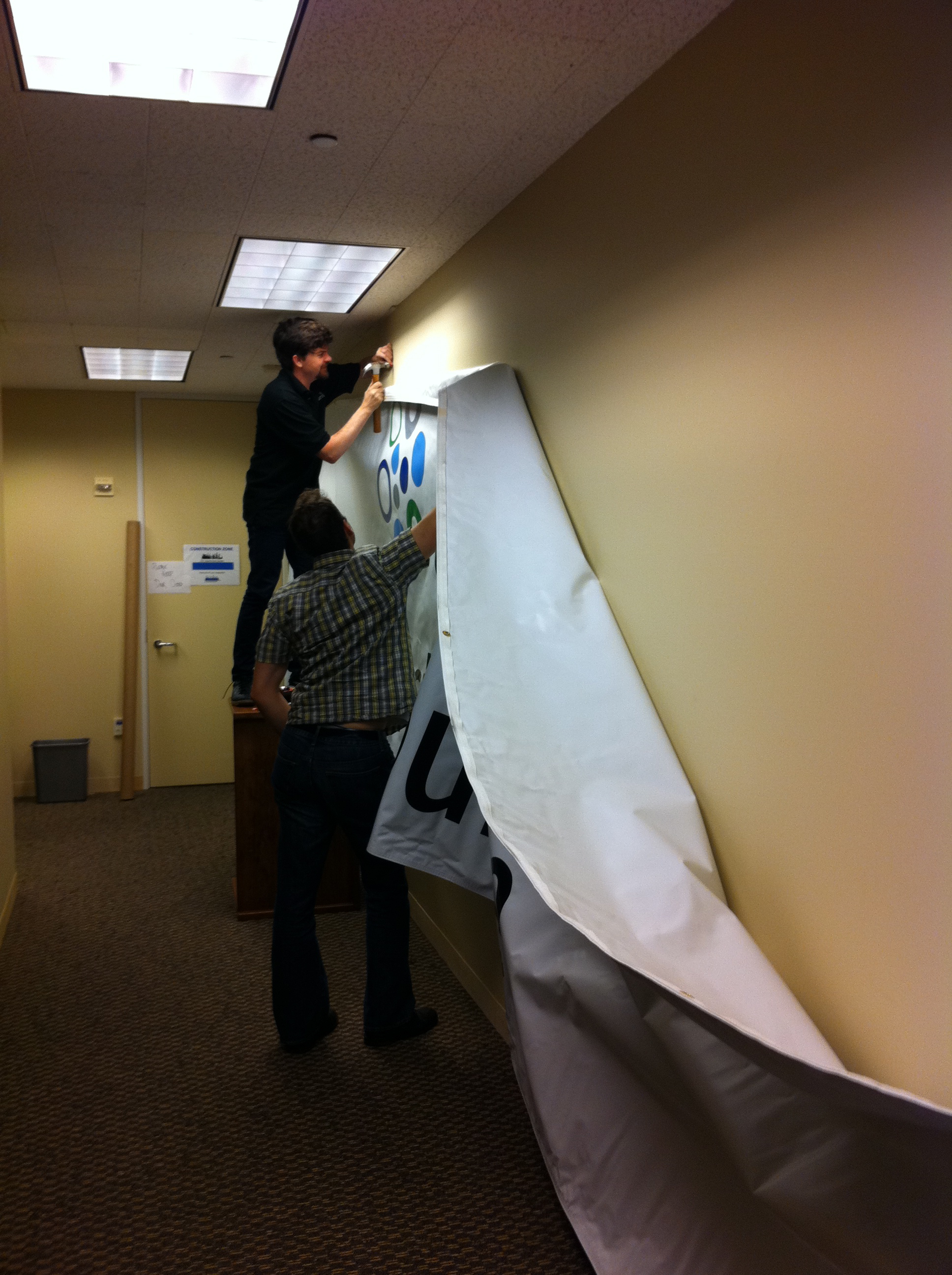
^ One of the largest things we kept was this 40-foot banner, which we later used to decorate a Solaris Family Reunion.

While the last of the OpenSolaris branding was thus being purged from Sun/Oracle, two significant things happened for the future of the technology itself:

(More history and what happened next is here.)


Part 1: Resistance is Futile: The Oracle Acquisition

Part 2: What to Expect When You’re Expecting – to Be Acquired

Part 3: Fishworks and Me

Part 4: Into the Belly of the Beast

Part 5: The Last of OpenSolaris

Coda: Letting Go of a Beloved Technology

Centro Ippico Lombardo: Gara Sociale 1999

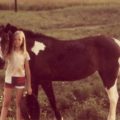
My daughter began riding at age eight at the Centro Ippico Lombardo, a stable and riding school near Milan’s San Siro stadium. This was around the same time I was starting to learn to shoot and edit my own video, so I was able to document some of her earliest events. Some of this old video – in this case an informal “social” competition in 1999 – recently came to light, on some old CD-R discs – which are holding up just fine!

For those who wish to practice conversational Italian, the last clip in this playlist is the dinner we all took part in after the event.

Woodstock School in 1979

In my digital vaults, found a digitized version of a promotional film shot at Woodstock School in 1979 by John Riber (an alumnus of Woodstock’s sister school in south India, Kodaikanal), narrated by Peter Lugg and students. Many students and staff of my generation are shown!

Loss and Found

Every now and then a friend asks how I’m coping with my dad’s death, and I wonder if I’m heartless because I don’t seem to think about it much at all. But there’s a reason I don’t.

Loss is old and familiar to me. For one thing, it’s part of the TCK lifestyle: at a young age you follow your parents to a new land. You leave behind almost everything you knew (except your immediate family): home, friends, pets, possessions – whether you want to or not.

Your parents generally do have a choice in the matter, and no parent wants to think they make choices that hurt their children. So they dwell on the advantages of expatriate life, and often do not allow their kids to decently mourn what was left behind. The kids deal with their feelings as best they can, get settled, make new friends, grow accustomed to new routines, adopt new pets – and then it’s time to leave again.

In my life, the usual TCK experiences of loss have been compounded by many other losses: my parents’ multiple divorces. My mother’s absence from my life, both emotional and physical. (Some of this was not her choice – but some was.) A similar choice by a beloved stepmother to walk out of my life. The deaths of my father-in-law and my aunt Rosie. The dissolution of my own marriage: always a loss to be grieved, even though I was the “bad guy” who finally admitted it was over. The loss of the close and easy relationship with my daughter, though I’m hopeful we will find a new way to be close.

As for physical places and possessions – hah! Left, lost, given away, destroyed. Even the memory aids that we rely on in modern life: most of my baby pictures were lost at sea in one of my mother’s moves. I now try to store my photos “permanently” in the cloud, and my public memories here on my site, but that’s more for my own future use and reference than as a hedge against loss. Sometimes I’m startled and delighted at the depth of now-forgotten detail in pieces I wrote years ago.

What got me started thinking about all this was a recent column by Roger Ebert in which he mourned the loss of old friends and the memories they held: “We exist in the minds of other people, in thousands of memory clusters, and one by one those clusters fade and disappear.” He’s two decades (and a nasty run-in with cancer) closer to death than I am, so perhaps it’s too soon for me to understand his feelings. But, for the moment, I can contemplate my own eventual death with tranquility. At least that is one loss that I won’t have to cope with. As Ebert himself said in a more sanguine moment: “there is nothing on the other side of death to fear”.

As for all my other losses, past, present and future, I suppose I do cope well with them, through long practice. There have been times when the choice was stark: “Get through this as best you can, or kill yourself. If you’re not going to kill yourself, you might as well try to be happy, because living depressed is a waste of your time and everyone else’s.”

How do I do it? I don’t aspire to be a self-help guru and don’t claim to have answers that will work for everyone, but my recipe is: delight in change. You might as well, because things are going to change whether you like it or not! Economies change, technologies change, natural wonders come and go (more often go, sadly). Cultures, languages and “rules” for living change. Verities we thought eternal (“Invest in real estate”) prove untrue.

Learn to enjoy what’s new in your life, while keeping a (light) grip on what’s important from the past. Be loyal to those who are loyal to you, let go gracefully of those who are not – including those who commit the ultimate disloyalty (<wry smile>) of dying on you.

In the end, what can we rely on? Love and friendship (if we are open to them), here and now. Yes, Roger, you’ll lose friends, and those losses will hurt. Make new friends, and make sure that you value them no less than the old ones. At some point, friends of my own generation will begin dying off in droves (hell, I might be one of the first to go). One way to alleviate that is to have a mix of ages among one’s friends. My age group have no monopoly on interestingness.

Love, be lovable, and do your best to be loved. Remember that it can all change without warning, but don’t dwell on that possibility. I’ve had good years and bad ones, but, even in the worst of my bad years, I never wanted to turn the clock back. Change is coming – and it might always be change for the better.


With so little to be sure of,
If there’s anything at all.
I’m sure of here and now and us together.

Thanks for everything we did,
Everything that’s past,
Everything’s that’s over too fast.
None of it was wasted,
All of it will last:
Everything that’s here and now and us together!
It was marvelous to know you
And it isn’t really through.
Crazy business this, this life we live in
Can’t complain about the time we’re given
With so little to be sure of in this world,
We had a moment!
A marvelous moment!

– Stephen Sondheim

Deirdré Straughan on Italy, India, the Internet, the world, and now Australia