Tag Archives: women in technology

GHC09: Becoming a Person of Influence

Still trying to catch up with my notes from the talks I attended at the Grace Hopper Celebration of Women in Computing in October…

Jo Miller was a very popular presenter at GHC08, so was invited back this year to speak on Becoming a Person of Influence. Jo, an Aussie with a somewhat confused accent after years in California, does Women’s Leadership Coaching for a living, and I suspect from this experience of her that she’s good at it.

This talk had the particular merit of being useful to everyone attending, at whatever stage of their tech career.

I was amused that she started the session saying: “Anyone caught blogging or tweeting during the session will absolutely be invited back next year!”

From my notes:

The emerging leader’s quandary: you can’t get to the higher level job without leadership experience, but you can’t get the experience without the job.

How can you establish yourself as a leader while doing your current job?

Question: Are you the best-kept secret in your organization?

“In my company, influencing skills are the single most important success factor after knowing your job.” JoAnna Sohovich, Honeywell

Are power and influence good or bad? “Power is like manure: it really stinks if you keep it to yourself, but it’s good if you spread it around.”

Wanting to be an influencer means wanting to be a person who can make a greater difference than one person alone can.

An influencer arrives at the meeting early to greet everyone, and doesn’t wait for permission to speak when it’s her area of expertise. If you walk into a room with confidence and authority, people are predisposed to hear what you say.

Don’t think about influencing a specific situation but “how do I become a person of influence?”

First impressions count, but the cumulative impact of all impressions is more important.

The dog whisperer doesn’t train the dog – he/she actually trains the owner to exude an air of calm authority.

Our behavior teaches people how to treat us.

You can influence others in every conversation you have.

Jo asked people in the room to mention what they think of as leadership qualities. Responses included:

  • know the people you’re working with, and care about them. People are not a means to an end, they ARE the end.
  • be consistent and principled, good at engaging people in interesting conversations
  • a leader makes you want to be a better leader

Countdown: The Six Sources of influence Available to Women Leaders

6. Positional influence: the influence inherent in your job title/role

For example, a woman was reorged into a situation where no one knew what she did, but her boss made a point of having her meet people.

“How are you introducing yourself?” You need an elevator pitch.

Building on positional influence:

you have an important job and people need to know about it
take every opportunity to educate others about the importance of your role and how you can help them

create a 30-second commercial:
1. name
2. title
3. I am responsible for…
4. come directly to me when you need…

You may need multiples “ads” to cover various aspects of your job.

Mine might include:

I’m Deirdré Straughan. I am responsible for helping people communicate about technology. Come directly to me when you need help/advice/training with social media, especially videoblogging and video streaming.

Or:

I am responsible for building and nurturing tech communities. Come directly to me when you need help with community strategy and execution.

One pitfall with positional influence is to over-rely on it and to imagine that, if you are higher up, influence comes naturally.

5. Expertise influence: background, qualifications, experience and expertise

Make sure you don’t let someone else take credit for your work!

Ways to build expertise influence:

  • don’t wait for an invitation to speak up about your area of expertise
  • promote your accomplishments
  • present in meetings etc.
  • write
  • speak on panels, conferences

Pitfalls: “Are men smarter than women? No, but they sure think they are.” Women underestimate their own candlepower while men overestimate theirs (2008, Newsweek). Male job candidates are not shy to claim expertise they may not necessarily have! It’s not about paper qualifications, it’s about owning and making visible the achievements you already have.

4. Resources Influence:– the ability to attract and deploy resources you need to do your job well.

e.g. budget

Ways to increase resources influence:

  • become a strong negotiator – know how to ask for and get what you need
  • learn matrixed management
  • cross-train others in your area
  • gain visibility for the importance of your work and the effort it takes
  • suggest special projects as developmental opportunities for others

3. Informational influence: being an informational powerhouse, who keeps finger on the pulse on business, personnel and organizational issues

Know the above, know who the other informational powerhouses are. Walk around and gossip, but filter useful info from noise. Seek out info about changes before they occur, e.g. new projects, opportunities, resource allocations, budget, long-range plans.

2. Direct influence aka coercive

Being firm,professional and direct when someone’s behavior is detrimental to team or org (1% rule) – when something really important is at stake. But also share a vision of what would be possible for them if they changed their behavior – show that you care.

Tips: be firm, fair, professional, direct and concise with tough news
explain what was unacceptable and why
focus on a positive vision for the future

1. Relationships influence: that which comes when you know who the key people are in your organization (and other areas of life), when you reach out to them and build authentic, trusting relationships and an influential network.

The most importnat thing you will build in your career is your network, aka your sphere of influence.

McKinsey leadership project – What drives and sustains successful female leaders? Connecting.

Think about:

Which sources of influence are you most strong in?
Which do you intend to strengthen?
My Career Strengths

What are some qualities about myself that are important/useful in my working life?

I thrive on interacting with people, especially from a wide range of cultures. NB: I speak fluent Italian (I can understand a lot of Spanish and French as well), used to be fluent in Hindi. I have spent significant portions of my life in Italy and India. Love to travel, anywhere and everywhere.

I think in terms of cultures, and am good at interpreting different cultures to each other (this applies to corporate / workgroup cultures as well as national ones).

I believe that everyone has an interesting story, and I love to help them tell it. This genuine interest in people makes me a great customer advocate. Having listened carefully, I bring their concerns and needs back to those who can act on them.

I connect people to each other. When someone tells me about a problem or challenge they are dealing with, or a skill or asset they have, I think: “What can I do, who do I know, to help this person achieve their goal?” Or: “How can this skill / asset be applied to a problem I’m aware of?” If I don’t have an immediate answer, I soon start noticing new things / people that could fit. Finding such solutions, e.g. putting the right bunch of people together to tackle a problem, thrills me. It feels like amazing luck sometimes, but it’s really about knowing many people, and being awake to the possibilities that each represents.

I’m constantly thinking about how things could be made better: products, processes, communications, organizations. I find new ways to solve problems.

I embrace and enjoy change.

I’m self-winding: I don’t have a problem with taking direction, but I go along fine without it; I will always think of something to do that’s useful and to the point.

I get along well with geeks. (I am one!)

What tasks have I enjoyed most in my various jobs?

Communicating. This has taken various forms: technical writing, web content, web applications, training, video. I constantly try new tools and methods to see how they answer different communications problems. Social media is simply another set of tools, and I’m an active user. On Twitter I’m @deirdres.

Translating. Not so much translating from one language to another, as translating from one culture or mind-set to another, e.g. helping explain user requirements to engineers, and helping engineers design or document their work so that users can better understand it.

Designing / improving user interfaces, including the interface between customers and companies. Everything a company does that touches a customer is part of their user experience, and I love opportunities to improve that.

Explaining / teaching, whether through documentation, presentation, teaching, or simply sharing what I know individually – I enjoy using my knowledge to help others.

Event planning. I like designing events for specific technical communities, from the overarching vision through speaker list and session flow to the nitty-gritty details, making it all come together, and ensuring that it runs smoothly on the day(s).

Measuring. I analyze, getting at real numbers (as far as possible) to help me understand what’s working and what isn’t. I’m not afraid to change my ideas when the numbers prove me wrong.

What should I avoid?

Routine. As soon as something is routine to me, I’m ready for a change. I get interested in something, see how it could be usefully applied in my life / work, learn it, do it. Then I document it, share it, teach it, hand if off – and I’m ready to learn something new. This cycle can take years, depending on the material, but once I have mastered a thing, I want to do something different.

For a more standard resume with the details of where I’ve done all this stuff, go here.


The original impetus for this (when I wrote it in August, 2009):

As someone who may be seeking a new job soon, it behooves me to prepare myself for a possible job search. Which is something I’m really, really bad at. I’m very good at doing jobs once I get them, but clueless and inept when it comes to seeking them.

The process would be easier if my experience included anything that fit neatly into established categories, but I’ve always stretched my jobs well beyond their initial descriptions. Those bosses who let me out of the box (I’ve been lucky – most have) were happy with the results. But it makes explaining what I do in my current job, or imagining what I’d like to do in future jobs, a bit tricky.

Instead of trying to identify a specific job or category to try to fit into, I might more productively reflect on the strengths and skills I’ve brought to and taken from my jobs to date, to help potential future employers picture me as part of their organizations.

Who’s a Guy?

One session I (and many others) attended at the Community Leadership Summit was on women in technology/communities. Frankly, I lost patience very quickly. As I said then, we all have horror stories; I’m more interested in discussing fixes. (Which, with Sara Ford to get the ball rolling, we did.)

One meme that came up repeatedly during this session was the sexism – or otherwise – of using the term “guys” to refer to a mixed group of men and women. In other words, is it offensive to walk into a room containing both sexes and say: “Hi, guys” ?

Some felt that it was sexist, though probably unconsciously so, others felt that anyone who thought so was being over-sensitive. Impasse.

A few days later during OSCON, I found myself in a Moscone Center women’s bathroom at the same time as one of the women whose job during the conference was to make sure that no unbadged person got into a session. We were the only people in the room. She said to me: “You guys are really rare at things like this.”

It took me more than a few milliseconds to parse this. She meant: “Women at technical conferences are rare.” And used the term “guys” to refer to me and women like me.

Case closed. “Guys” no longer refers to men only, so we can stop arguing about whether it’s sexist.

The First Colorado Front Range Girl Geeks Dinner: Jai Ho!

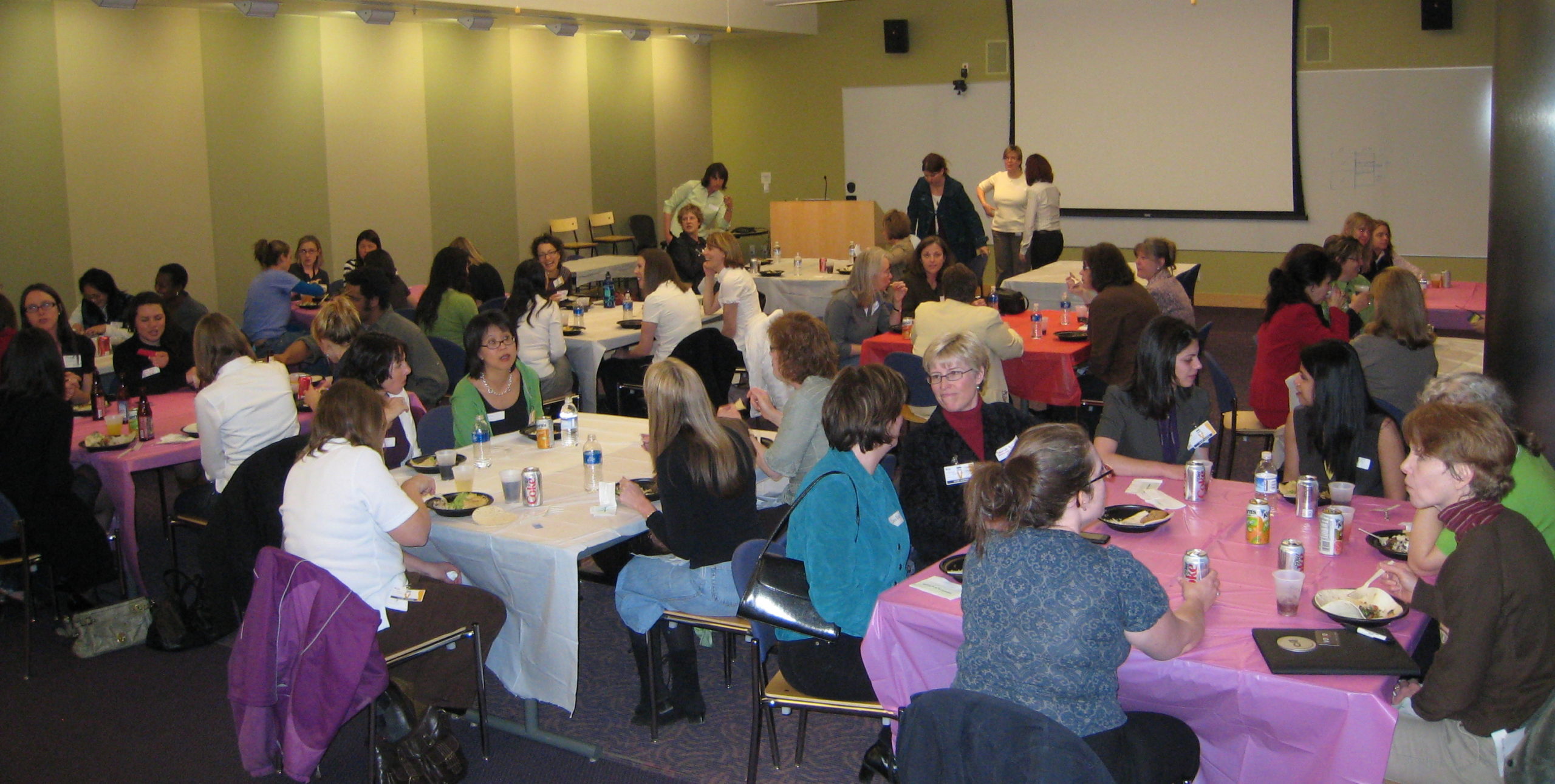
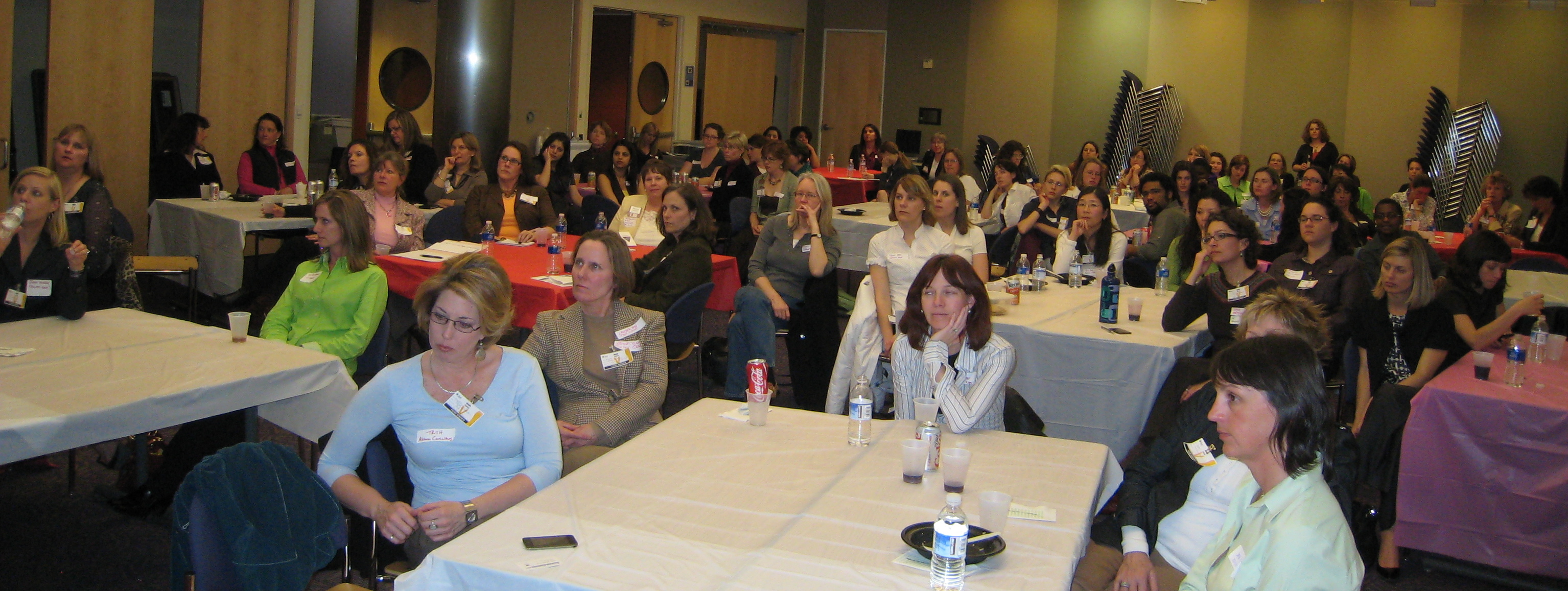
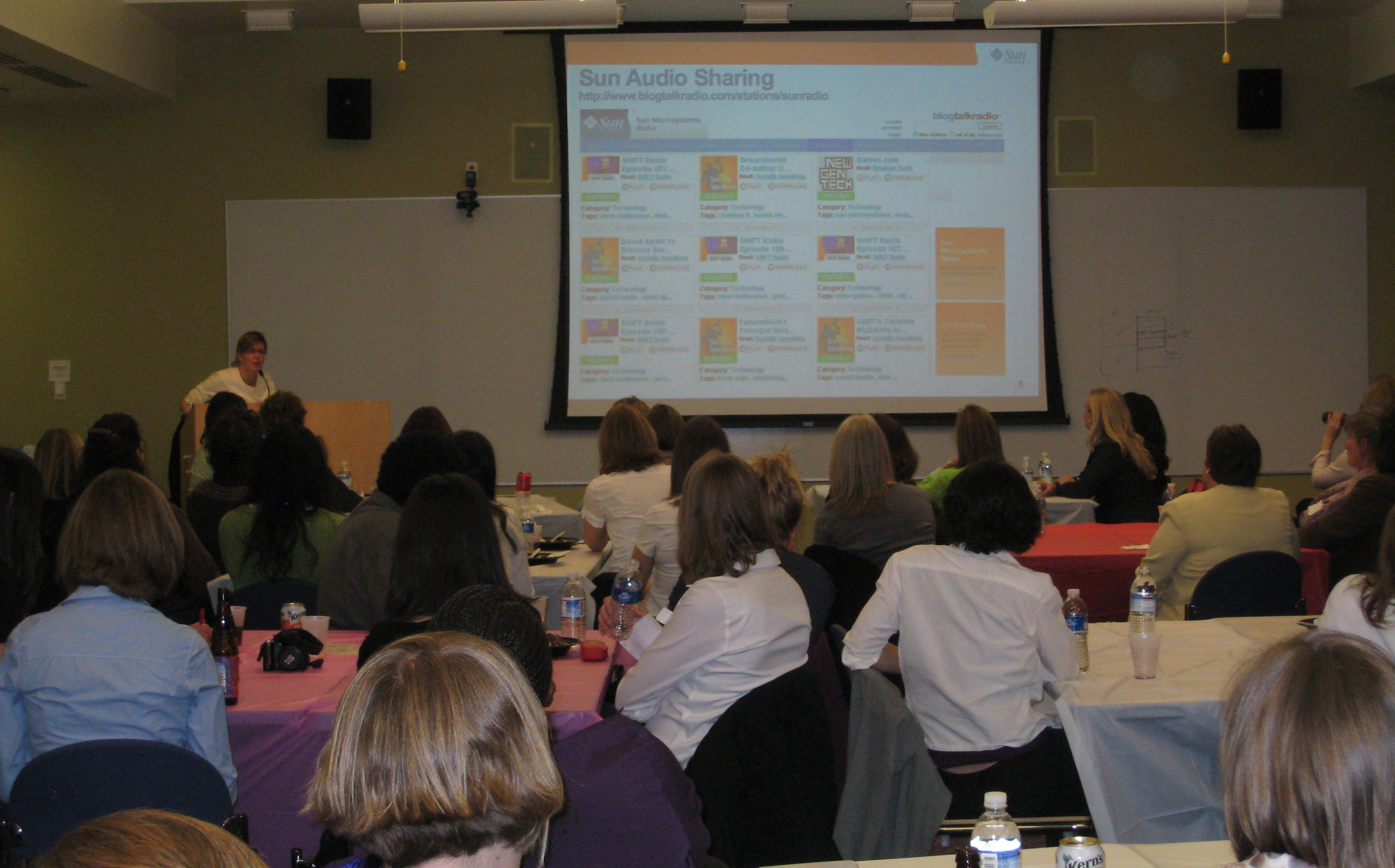
The first Colorado Front Range Girl Geek Dinner was held on Thursday, March 5th, on Sun’s Broomfield campus. More than 80 people attended, only one of whom was (a very brave) male.

Sun sponsored this first one with food, drink, and venue. There was plenty of interest from other individuals and businesses in helping with the next (contact me to be put in touch with the now-being-formed committee). Thanks to the many who helped spread the news (including Jeremy Tanner, who helped get the word out to startups and other smaller businesses). We had at least 80 attendees (probably more – I don’t think we caught quite everybody at the registration desk), and were in touch with several dozen more who couldn’t attend on this particular date but definitely want to participate.

With this kind of momentum, I think the next CO FR GGD can take place in about two months (but I’ll be leaving it up to others to organize that one as I expect to travel heavily from now through July).

The atmosphere in the room was electric and inspiring, and I hope was encouraging for those who had recently lost their jobs (or fear they might soon). Women helping women can be a powerful resource in the workplace, and that’s what Girl Geek Dinners are about.

Colorado GGD

^ listening to Linda, the “voice from on high”

Linda Skrocki put together a presentation which I ended up delivering (with her participating by phone) because she was home with a flu and didn’t want to infect the rest of us.

Our aim was to showcase Sun’s many activities in social media, in order to illustrate how other companies and individuals can use social media to enhance their own brands, win friends and clients, and influence people. Social media is important in just about any job these days, so I hope the information was useful to other women wanting to add to their work skills.


I noted a lot of interest in the room at the idea of managing one’s personal brand and identity online; that might be a topic for a future talk. One attendee wanted to talk more with us about Sun’s “radical transparency” in relation to a project she’s working on. And it seems that people want to hear more about videoblogging, which of course I’m happy to discuss anytime.

Colorado GGD

My only (personal) disappointment was that I was so busy running the show, I had very little time to talk with anybody – and there was a roomful of fascinating women I’d love to know more about. I look forward to making up for that next time!

Thanks to Kristin Tulp of Level3, we had TV coverage, with a segment by Jodi Brooks of CBS4 news (Denver) on Friday night. As part of a series on “Beating the Recession,” the piece talked about how we “Geek Girls” are rallying together to help ourselves and each other in a hard job market. I don’t know whether the segment will be posted on their site. Perhaps if enough of us ask them…? Here’s the transcript: ‘Geek Girls’ Gather In Broomfield For Networking

other coverage:

In case you’re wondering about the title: Jai Ho is the Oscar-winning song from the end titles of  Slumdog Millionaire. The song’s composer, A.R. Rahman, says that Jai Ho translates as “May victory be yours.” Which seems to me a fitting benediction for my fellow girl geeks.

Web Women Weekend

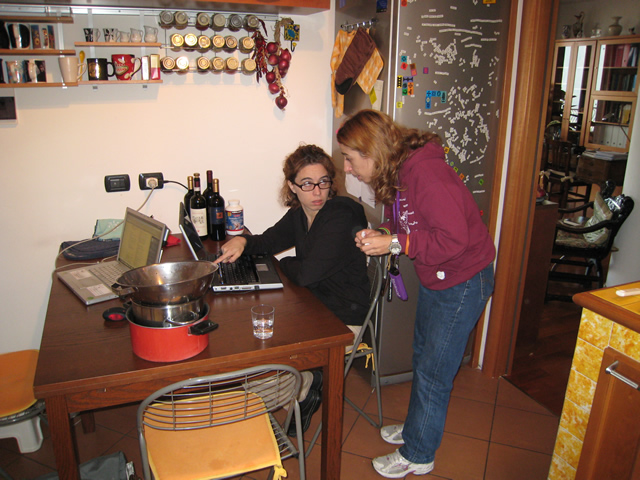
^ top: the finer points of CSS – Tara and Elena in my kitchen

Increasingly frustrated with the low visibility of women in technology in Italy, back in June I and a few like-minded ladies hatched a plan to start doing something about it.

The first step was to get together. So I invited them all up for a weekend at our house (sent Enrico off to visit his mother – yes, he is a supportive husband!).

Turnout was not as large as I had hoped (the house could have slept 14 or so), but those who came were motivated – most had to be, to trek all the way out here.

Friday night it was just me, Tara, and Elena. It had been a long week for us all, so we ate dinner, watched a movie, and went to bed.

The next morning I woke up early (as usual) and got to work cooking (while my computer was compressing video for Sun). Tara and Elena eventually wandered in and set up their laptops on the kitchen table, working separately and together on this and that. It was oddly comforting to have them there while I cooked (usually a lonely activity for me); I’d like to have girl geeks in my kitchen more often!

The crew gradually assembled and introduced themselves:

  1. Tara Kelly, founding partner of PassPack
  2. Elena Franco, aka Delymyth, sysadmin
  3. Silvia Cavallon, a former colleague of mine from Incat days, now a tech support manager for HP
  4. Sara Rosso, Internet Services Manager at Ogilvy Interactive
  5. Sara Maternini, corporate blogger and event manager for San Lorenzo, who kindly furnished us with a six-pack of Franciacorta (Italian champagne-method wine)
  6. Celia Abernethy, web designer/builder/programmer and owner of MilanoStyle
  7. Susan Quercioli, a manager of technical projects and people
  8. me

Talk flowed, mostly informally, but that doesn’t mean we weren’t sharing useful information.

There were the expected horror stories:

  • Every woman in Italy knows that being married and in età fertile (of childbearing age) is an enormous handicap in finding a job. It is perfectly legal for a prospective employer to ask your age and marital status (indeed, many job announcements specify the age range they will consider). Italy’s generous maternity leave law has backfired: no one wants to hire a woman who may go out to have a baby, costing the company money. And there are no real protections against discrimination of any sort in the Italian job market.
  • As in many other countries, women in Italy are paid less than men for the same work (and all Italian salaries are low against European averages, especially considering the cost of living here). One of the group, upon requesting a raise, was asked: “Doesn’t your husband earn enough to support you?” As if her work was just a hobby! The reality is that most women in Italy who work do so because their families need their income as much as their husbands’, so, yes, we need (as well as deserve) equal salaries.
  • We see our male colleagues getting jobs, raises, and promotions based on their skills at self-promotion as much as or more than for their actual abilities or work accomplishments – and getting paid more for doing less than we do!
  • And on, and on…

So, yes, there is plenty for women in IT in Italy to be unhappy about. But we didn’t get together just to bitch. The point of the weekend was to discuss what we can do to help ourselves, each other, and the larger community of girl geeks in Italy.

Under Sara Rosso‘s (welcome) leadership, each of us described what we hoped to get out of this event. These included:

  • “How should I write my curriculum to reflect my real-world experience, especially since I don’t have the formal qualifications that companies think they need?”
  • “I’m a female manager in a male world, and I think I can see better, let’s call them more ‘feminine’, ways of managing people. But in my job I don’t have any role models I can look to for advice or examples. I’d like to have someone to talk to about my ideas.”
  • “I’ve been badly underpaid in my career, partly because I find it hard to negotiate, partly because I don’t know the Italian market value of my skills. Where can I get information on salaries and freelance rates, and advice or training in how to negotiate?”
  • “I wanted to change jobs, but I didn’t know enough about possible Italian employers to tell which companies I might actually like to work for.”
  • “It’s great to know that I’m not the only woman in high tech in Italy, and not the only one to deal with these issues. When can we meet again?”

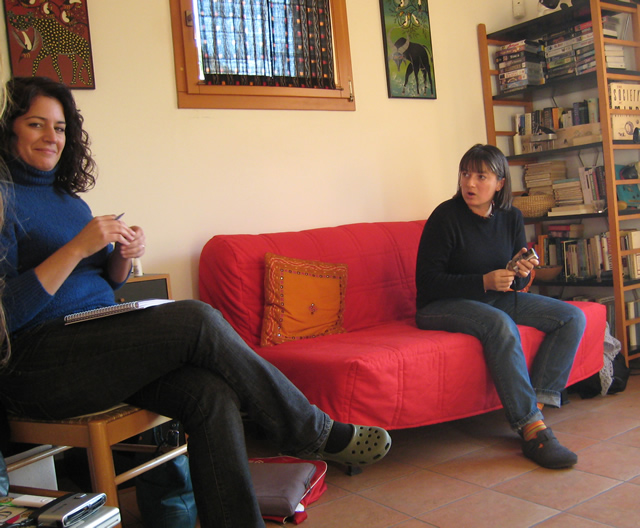
^ Sara Rosso and Susan Quercioli [Susie Q?]

Sunday morning the first-round attendees left, to be quickly replaced by:

  1. Enrica Garzilli, Sanskritist and journalist
  2. Ruhama Zayit, software engineer at TVBLOB
  3. Bruna Gardella, Senior Analyst at Etnoteam Spa

More useful experiences and information were shared (as well as an Indian lunch that I cooked).

At the end of the two days, we had some next steps:

  • Set up an online community where we can discuss and plan. For the time being, this is a Yahoo group.
  • Though we did not explicitly say so, one of the aims would naturally be to get more women to join this community – if you want to join, head on over and ask!

Possible projects for the community:

  • Periodic social events – aperitivi, Girl Geek dinners. A monthly aperitivo in Milan will probably start in November (2nd Tuesdays), organized by Lisa Morris of TVBLOB. And we’re discussing a date and a speaker for the next Girl Geeks Dinner.
  • Practical workshops where we can learn skills we feel we are lacking. One specific suggestion was negotiation – ideally, with role-playing to help us learn how to do it. We need to share info on where we might find people to do such workshops and how we would finance them (e.g., a good friend of mine is the Italy coordinator for the Open University, which might be interested in doing something relevant).
  • Job bank? At the very least, we can start sharing information on jobs we’re aware of via the Yahoo group.
  • Salary bank, with a wide range of both men’s and women’s salaries and freelance rates (in Italy), to help us see how we’re doing and price future jobs and freelance work. Bruna told us that Il Sole 24 Ore already runs quantomipagano.com, which looks very useful but does not cover freelance or contratto a progetto rates. Perhaps we can persuade Il Sole that it’s in everybody’s interest for them to expand their database to include this info. Who has a contact there?
  • Events calendar. Sometimes we don’t go to technical conferences or barcamps because we feel overwhelmed by the vast majority of men there. A shared calendar will let us track events we might be interested in, and encourage each other to go.
  • Speaker lists. Another reason we don’t go to events is because we’re not represented among the speakers – we get tired of being talked at by men. We can develop and maintain a list of women qualified, willing, and able to speak on various technical topics, and, um, gently suggest them when we know about events being organized.
  • Many of us don’t have women technical colleagues we can talk to at work, so we would like to both give and receive mentoring (on specific questions or for general support and advice).

Having this nascent supportive community of women in IT is already proving useful. Had I met Bruna a year ago and talked with her about some Italian IT companies she’s familiar with, I might not have been so much in despair about my job prospects in Italy. Celia said that, had she known us three years ago, she might not have abandoned the web business she enjoyed (and in fact she’s now thinking about getting back into it!).

Your thoughts and contributions welcome!