Category Archives: what I do

The First Colorado Front Range Girl Geeks Dinner: Jai Ho!

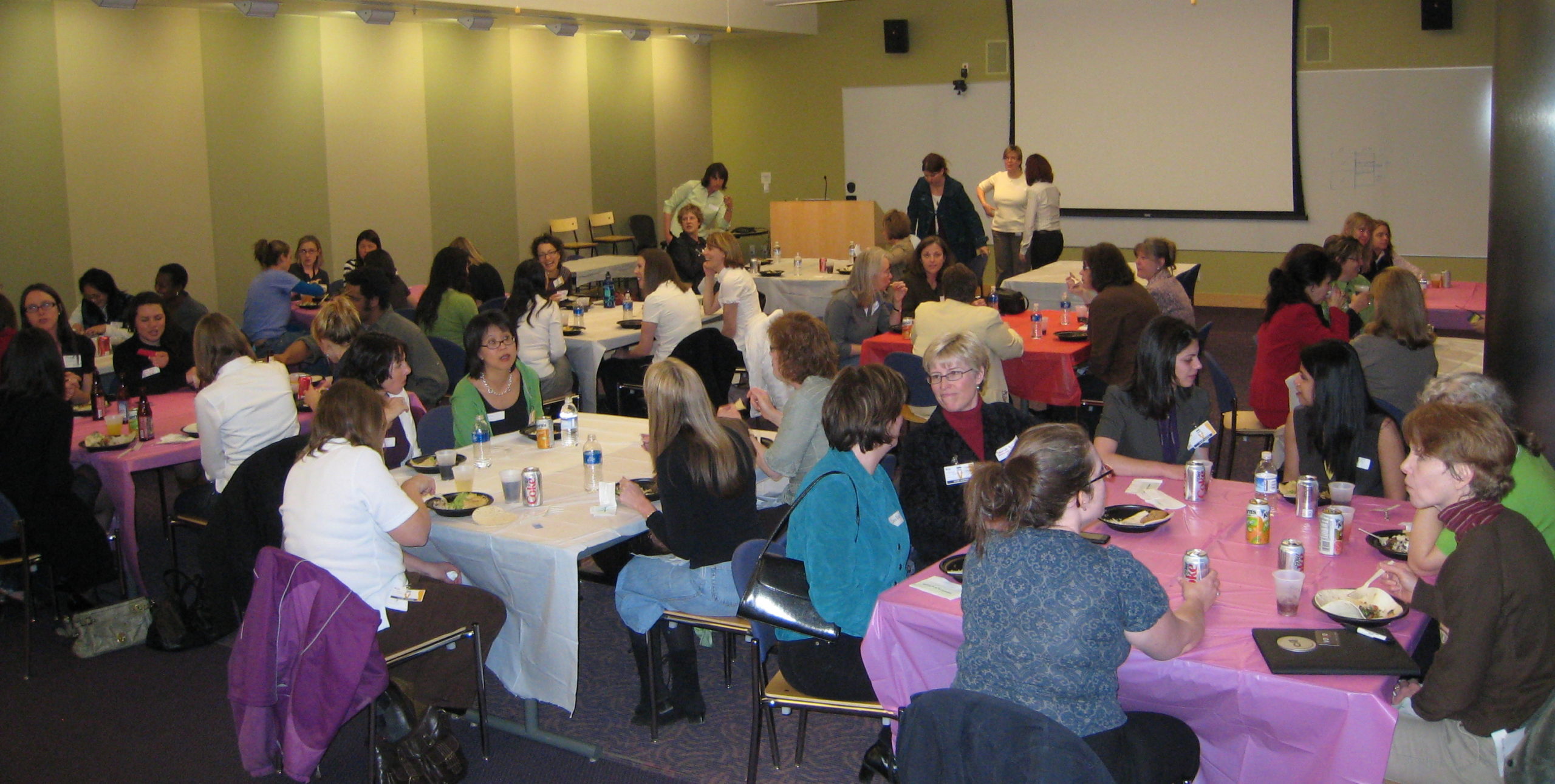
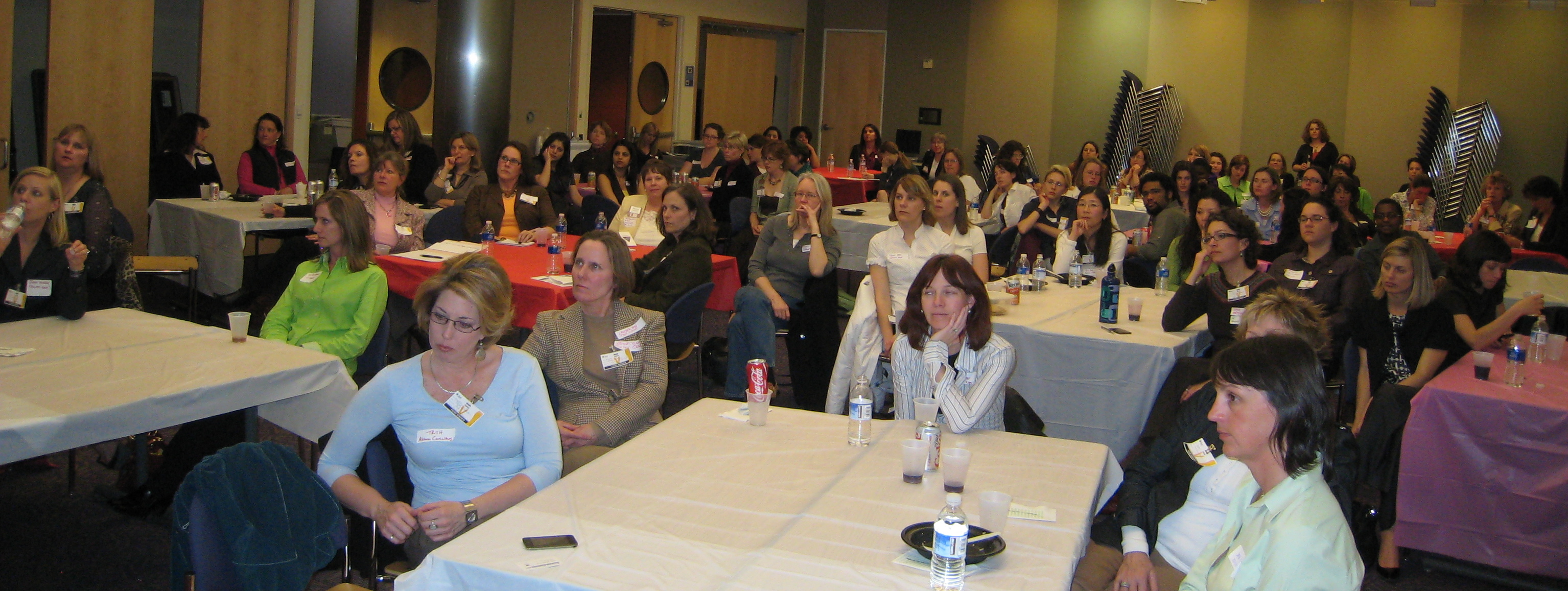
The first Colorado Front Range Girl Geek Dinner was held on Thursday, March 5th, on Sun’s Broomfield campus. More than 80 people attended, only one of whom was (a very brave) male.

Sun sponsored this first one with food, drink, and venue. There was plenty of interest from other individuals and businesses in helping with the next (contact me to be put in touch with the now-being-formed committee). Thanks to the many who helped spread the news (including Jeremy Tanner, who helped get the word out to startups and other smaller businesses). We had at least 80 attendees (probably more – I don’t think we caught quite everybody at the registration desk), and were in touch with several dozen more who couldn’t attend on this particular date but definitely want to participate.

With this kind of momentum, I think the next CO FR GGD can take place in about two months (but I’ll be leaving it up to others to organize that one as I expect to travel heavily from now through July).

The atmosphere in the room was electric and inspiring, and I hope was encouraging for those who had recently lost their jobs (or fear they might soon). Women helping women can be a powerful resource in the workplace, and that’s what Girl Geek Dinners are about.
Colorado GGD

^ listening to Linda, the “voice from on high”

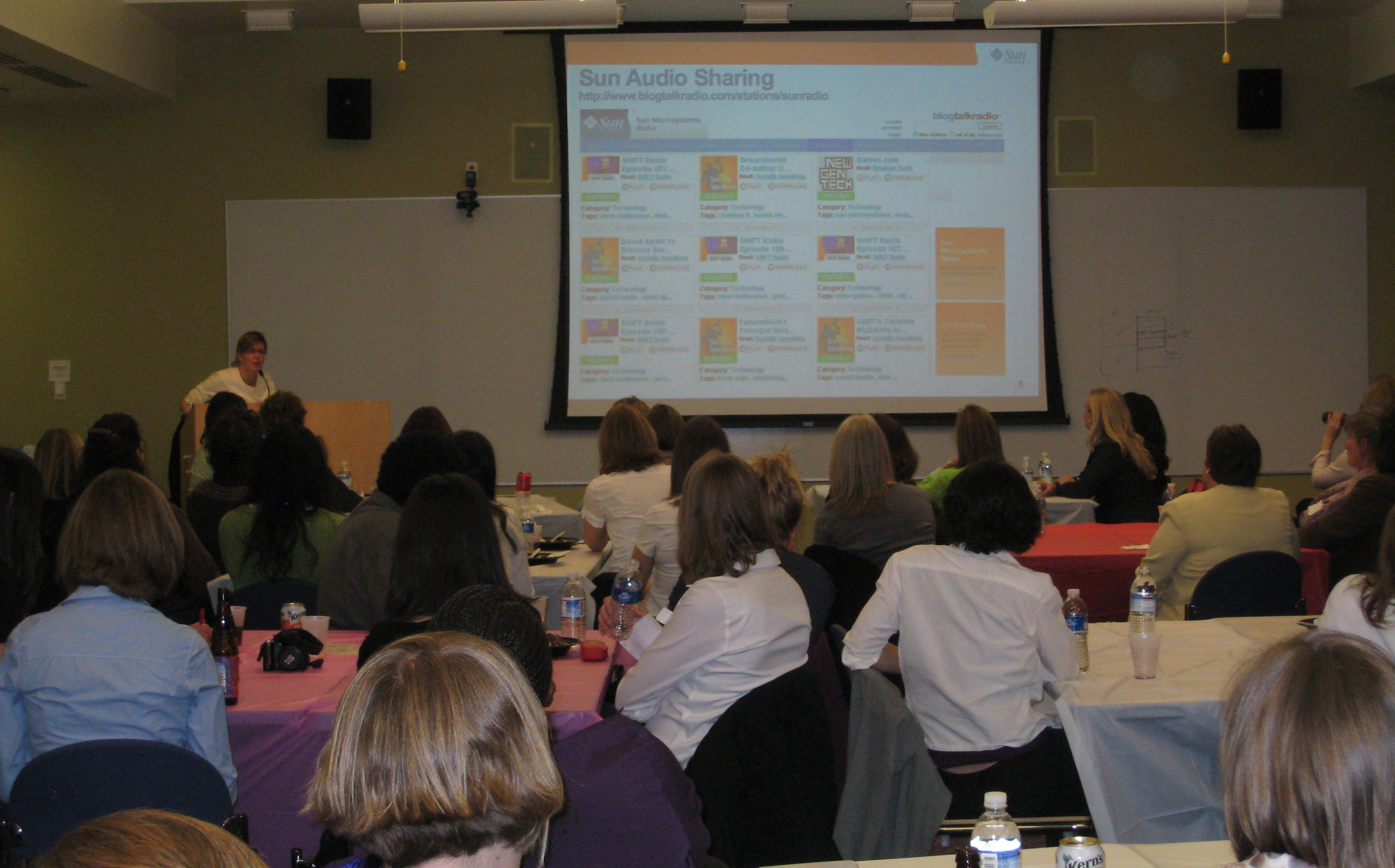
Linda Skrocki put together a presentation which I ended up delivering (with her participating by phone) because she was home with a flu and didn’t want to infect the rest of us.

Our aim was to showcase Sun’s many activities in social media, in order to illustrate how other companies and individuals can use social media to enhance their own brands, win friends and clients, and influence people. Social media is important in just about any job these days, so I hope the information was useful to other women wanting to add to their work skills.


I noted a lot of interest in the room at the idea of managing one’s personal brand and identity online; that might be a topic for a future talk. One attendee wanted to talk more with us about Sun’s “radical transparency” in relation to a project she’s working on. And it seems that people want to hear more about videoblogging, which of course I’m happy to discuss anytime.
Colorado GGD

My only (personal) disappointment was that I was so busy running the show, I had very little time to talk with anybody – and there was a roomful of fascinating women I’d love to know more about. I look forward to making up for that next time!

Thanks to Kristin Tulp of Level3, we had TV coverage, with a segment by Jodi Brooks of CBS4 news (Denver) on Friday night. As part of a series on “Beating the Recession,” the piece talked about how we “Geek Girls” are rallying together to help ourselves and each other in a hard job market. I don’t know whether the segment will be posted on their site. Perhaps if enough of us ask them…? Here’s the transcript: ‘Geek Girls’ Gather In Broomfield For Networking

other coverage:

In case you’re wondering about the title: Jai Ho is the Oscar-winning song from the end titles of  Slumdog Millionaire. The song’s composer, A.R. Rahman, says that Jai Ho translates as “May victory be yours.” Which seems to me a fitting benediction for my fellow girl geeks.


Seth Godin at TED: Tribe and Community

A very cool perk of working for Sun recently was that we had live streams of TED into the three major US campuses. It has long been a dream of mine to attend TED, though for the moment it’s well out of my price range.

I couldn’t break free of meetings to watch during the day, but I was mesmerized by the evening sessions. The first major speaker Wednesday evening was Seth Godin, whose blog I follow from time to time. Not surprisingly, his talk was based on his new book, Tribes, which I probably don’t need to read now (for the record, I haven’t read any of his other books, either).

I took away some ideas that might be useful for those of us at Sun (and elsewhere) who are doing this mysterious and fashionable thing called community building.

Seth started out by asking: “What do we [TED attendees, presumably] do for a living?”

His answer: “We try to change everything.”

In order to foster change, Godin offers the idea of tribes, which “can align large numbers of people” behind a goal or cause. He recommends this cycle:

tell a story -> connect a tribe -> head a movement -> make change -> repeat

He notes that a product that “tells a story” lets its user/consumer tell the story again and perpetuate it.

Godin says that tribes need leaders, most often self-appointed. Leaders should:

  • Challenge the status quo
  • build Culture
  • have Curiosity
  • Connect people to each other (“people want to know they’ll be missed if they go away”)
  • have Charisma (but you don’t need to be born with it; being a leader automatically endows you with charisma)
  • Commit to the cause/tribe/people

So how does this apply to Sun’s efforts to create community around our open-sourced software? Clearly, we had to be the leaders who started this (but that doesn’t mean we’ll always be the leaders of these communities).

You can’t force a community into existence; people have to want to be part of it. But you can make it fun and easy for them to participate, mostly by making it easy for them to connect with each other.

Important Note: Once they’re connected, you don’t get to control what they say to each other! Oh, you can try, but it’s a bad idea because it always backfires. Even when you’re the leader, you’re still only one member of the tribe, and the tribe insists on functioning as a democracy no matter who’s supplying the facilities.

What we can, should, and do do, however, is act as leaders.

Some Days…

We decided to send out the OpenSolaris repositories to OpenSolaris user groups worldwide on iPods. Turns out you can’t copy iPods on a USB duplicator (no big surprise), so I spent three days copying the repos to them individually… Then I made ~240 USB sticks with videos, also for the OSUGs…

Blogging Tip: Some Links Good, More Links Better

To improve search engine ranking and direct traffic to a site, we need to increase:

  • External links coming in to our pages.
  • Internal links, i.e. from a sun.com page to any other sun.com page (yes, internal links are useful).
  • Links going out – these show good webizenship (search engines like that, or at least it’s good karma). Outlinks also show the world that we are members of a community, taking part in conversations rather than trying to impose authority.

External Links

The best kinds of links are those that happen spontaneously: when someone finds something we’ve written worthy of sharing, and links to it from their own site, blog, forum post, etc.

To encourage that to happen, we need to have great content, AND we need to let people know it’s there.

Don’t be afraid to advertise. If you see a question, comment, blog post, etc. anywhere, and you know that a page or doc exists on the Sun site that would be useful, let people know in a forum response or blog comment.

If something you read elsewhere inspires you to write a blog post or formal document in response, let the source of your inspiration know that you’ve answered their question in depth, and where they can read that answer.

External links also increase direct traffic, depending on the popularity of the site the link is on and the pull of the material linked with that particular audience. But, even when a link only nets a few extra visitors here and there, it’s worth having for the Google juice.

Internal Links

Some ways to increase them:

  • In your own blog, link to others’ posts and/or documents within sun.com that are relevant to your topic.
  • Whenever you write/edit a document to be posted, keep in mind the importance of links. Instead of just putting footnotes and references, link directly from the relevant point in the document to the source – these are preserved as active links in PDF documents, and Google recognizes them.
  • When participating in forums such as OpenSolaris.org, use a signature with your name, some sort of descriptor of who you are (e.g., “iSCSI guru”), and a URL where the user can go for more information, such as your blog.

Tips for Links

Use good link text that tells the reader what he will get to by clicking that link (test: if the reader had only the link text to go on, would he click? Sun’s own Martin Hardee explains some of the reasons why “click here” is evil).