
Category Archives: portfolio
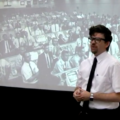

My New Baby

Isn’t it gorgeous? It’s my very own Thumper, aka Sun Fire X4500 Server.
Jeff Cheeney and I (and whoever we can rope in to help) are going to make it into a video compression/archive/streaming server. (Before you start worrying about budget, don’t: this one is rebuilt and didn’t cost us anywhere near sticker price.)
Why do I need such a thing? Take a look:

I’ve shot over 100 hours of video since I began videoblogging for Sun about a year ago, and much more is on the way. I haven’t edited even half of it, partly because I’m doing all the editing and compression a Windows laptop which I also have to use for all my other work. So it would be useful to be able to offload some of the processing onto a different machine, one that can also archive and share the results.
This is also a learning exercise, to see what we can do with all this cool technology we have around, similar to the project that Jeff and Chase distilled into a ten-minute recipe for building a NAS box. Similar also to Dominic’s new recipe series, which began recently with Configuring Sun Storage J4000 Arrays and the ZFS File System in Ten Minutes.
It will probably take some months of poking around and figuring things out, and we’re not entirely sure we’ll be able to boil this one down to “Build a Video Archive/Server in 10 Minutes” – but that’s what we’re trying for. We’ll keep you posted!
You might also like:


When a Spell Checker Won’t Save You
70 million blogs, and thousands more “professional” news sources online, collectively produce billions of words every day. I rejoice that so many people are able to publish their thoughts and seek an audience, at low or no cost – information is good, freely shared information even better.
But I cringe at the abuses I see daily heaped upon the English language. Not “just” by bloggers, but also by journalists and others who should know better, working for news organizations that once upon a time had copy editors on staff.
Why should you care about excruciatingly correct grammar, spelling, and word use?
- Anything less makes you look sloppy and amateurish, calling into question the reliability of your information. Rightly or wrongly, we are all trained to believe that information presented in polished prose is more authoritative, more likely to be accurate, than SMS-speak.
- Poor writing is harder to understand than good, distracting the reader from the gist of your argument as she tries to tease out your meaning from a welter of poorly-chosen (or misspelled) words.
The very least you can do, as a courtesy to your readers, is to use a spelling checker – which is so easy that leaving misspelled words in your writing shows contempt for your readers and, indeed, your own work.
However, there are some kinds of mistakes that a spell check won’t catch: such as when a word is spelled correctly, but used in the wrong place. This happens most often with homonyms (words that sound the same but are spelled differently). Here are a few commonly-abused homonyms that you can easily learn to use properly:
affect effect impact
Affect
- verb: to influence- “This product recall will adversely affect our profits.”
- noun: an emotional state (mostly used by psychologists): “When I saw
Mrs. Smith, she was quite depressed and had a flat affect.”
Effect
- verb: to cause or bring about – “They managed to effect a compromise between the quarrelling parties.”
- noun: a result – “Please don’t start drilling. That Novocaine has had no effect whatsoever.”
Impact used to be a noun: “The impact of his speech was enormous.”
Impact as a verb: Twenty years ago, the only thing that could be properly said to be impacted was a wisdom tooth or a bowel. Nowadays, everybody uses it as a verb (“That’s going to impact our bottom line”), a usage which has crept into the general language from bureaucratic Pentagon-speak. Ugh.
bated baited
bate means “1 : to reduce the force or intensity of : RESTRAIN <with bated breath>” (Webster’s online)
bait to entice or lure, as in fishing.
If you’re really waiting with “baited breath”, you just keep on waiting – ain’t nobody gonna kiss you!
flair flare
Flair is a noun, meaning a certain talent or ability: “As a child he had a flair for numbers, so he grew up to be an accountant.”
Flare is a verb, meaning to flame up: “Tempers flared on the field after the ref’s disastrous call.”
But it’s also a noun: “The soldiers broke the darkness by sending a flare into the sky.”
horde hoard
Horde, a noun, means a large group: “A horde of locusts descended upon the field.”
Hoard can be a verb, meaning to amass or hold aside something so as to accumulate a lot of it, or a noun – the mass so accumulated: “The dragon slept on his hoard of gold.”
(Confusingly, Genghis Khan’s Golden Horde refers to his army, not to any treasure they may have carried with them.)
its it’s
Any third-grade English teacher worth his or her salary should have taught you this, but it seems to be forgotten by many.
It’s true that ‘s indicates a possessive when tacked onto most nouns: “The boy’s ball was in the dog’s mouth.”
However, it’s is a special case: it’s a contraction for it is, just like he’s = he is, she’s = she is.
To indicate possession by an it, use its: “The dog had the ball in its mouth.”
lay lie
Lay is a transitive verb: you have to do it TO something: “Lay the gun down on the floor and move away slowly.”
It is often confused with lie, an intransitive verb meaning “to be or to stay at rest in a horizontal position“. Therefore, “Do you need to lay down for a nap?” is incorrect.
Don’t be confused by the children’s prayer “Now I lay me down to sleep” – lay is correct here because the child is (somewhat archaically) laying himself (his body) down. (That the child is then called upon to contemplate the possibility of his own death during the night strikes me as not likely to produce sweet dreams!)
lead lead led
NEW! (Because frequent mis-use of these is making me crazy.)
Lead, pronounced LEED, is the present tense verb, as in “to lead the pack.”
Spelled led and pronounced LED, it is the past tense of that same verb: “The old wolf led the pack until she died.”
Spelled lead and pronounced LED, it is a metal, as in “He killed Colonel Mustard with the lead pipe in the studio!”
Therefore, constructions such as “That question has lead a group of researchers to examine…” are WRONG.
peak peek pique
Peak is a noun for the top of a mountain: “Tenzing and Hilary scaled the peak of Everest.”
It can also be a verb, meaning to reach a height (from which you/it/something will then descend): “Brangelina fever peaked when…” – oh, who cares!
Peek can be a verb – to take a quick and/or clandestine look at something. In the UK, it’s synonymous with peep. “The children snuck down the stairs and peeked into the room to see what Santa had brought them.”
It can also be a noun: “Take a peek through this keyhole.”
Pique is most often used as a verb. Derived from the French piquer (to sting, prick, prod), it means to stimulate: “Her curiosity was piqued by the bartender’s odd behavior.”
But you can also have a fit of pique (irritation).
What you cannot do is to have a sneak peak (a sly mountaintop?) or to have your interest peaked (though your interest may peak of its own accord).
pore pour
Both are verbs, both can be used with “over”.
To pore over means to read or study attentively: “She pored over her notes for hours before the exam.”
To pour means to cause to flow in a stream: “He poured maple syrup over his pancakes.”
If your student is pouring over her notes, you’d better make her take a break!
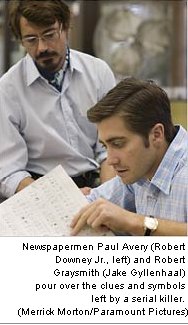
above: even the New York Times makes this mistake
prostate prostrate
The prostate is a strategically-placed male gland.
Prostrate is an adjective – (prone, lying on the ground: “They saw his prostrate form on the mountain path.”)) – or verb (to lie down on the ground, usually in front of somebody – “He prostrated himself before the golden idol.”)
Don’t confuse these two. The mental pictures conjured up are just too painful.
[free] reign or rein?
Reign is a noun meaning sovereignty or rulership: “During the reign of King Henry VIII…” Reins are what you attach to the bridle of a horse to steer by. “Free rein” means to give someone liberty to do as he likes. “Free reign” is an oxymoron.
I have not yet seen anyone offering “free rain,” and hope I never do!
tenants tenets
Tenants are the people who rent a place from you. Tenets are beliefs. You probably don’t hold core tenants, unless you need that rent money very badly.
than then
Than is a conjunction “introducing the second element in a comparison” (Webster’s New World Dictionary). “Mumbai is hotter than Miami.”
Then is an adverb, often (but not always) meaning “at that time” or “next in order of time”: ” “We’ll have dinner, then go to a movie.”
NEVER “I’m bigger then you are.”
their there they’re
Their – Possessive pronoun meaning “belonging to them”: “The kids wore their uniforms on the bus on the way to the ball game.”
There – That place: “When they got there, it was raining.”
They’re – Contraction for “they are”: “But now the sun’s out and they’re going to have a great game.”
theirs there’s
Theirs – Possessive pronoun again: “They said that no ball of theirs had ever had stitching like that.”
There’s – Contract for “there is”: “Now there’s going to be an investigation by the Little League.”
wreck havoc
The correct phrase is “wreak havoc”, wreak meaning “to cause,” “havoc” – devastation or disorder. To “wreck havoc” would presumably be a waste of time – havoc is already pretty much wrecked. To reek havoc? Let’s not even go there.
Here endeth the lesson. For today.
Feb 10 – Thanks to Jackson Day for the affect/effect grid and David Bratt-Pfotenhauer for some more pet peeves!

Creative Energies: Doing User Interaction Design
As you will have noticed, my newsletters are getting fewer and further between. Nowadays, most of my creative energies go into my work for TVBLOB. “What work is that?” you may ask. Good question. As in many startups, roles aren’t well-defined, but, basically, everything that touches our future end-user customers will somehow, someday, be my responsibility.
For the moment, my main job is designing software features, behaviors, and interfaces. This would be relatively straightforward if we were making software for the familiar Windows environment – I’ve been closely involved in the development and support of some very popular Windows software packages, and I have very clear ideas on what works and what doesn’t.
But TVBLOB’s software and services will be displayed on a television set, with a far smaller viewing area (in terms of pixels) than any modern computer monitor. Try setting your computer display to its smallest possible resolution and you’ll get the idea – except that, at least on my current computer, the smallest possible setting is 800×600 pixels, while a standard PAL (European) television set can display roughly 700×550.
Limited screen real estate is not the only design problem I’m up against. The hardware I’m designing for is not a computer with a keyboard; we expect that people will mostly use a TV-style remote control to interact with our software. And I don’t mean a huge, clunky remote with 300 buttons that are so tiny you can’t press them, let alone remember what they’re all for. Our remote will have only a few more buttons than you’d find on your average DVD player controller. So I have to use them wisely.
Not that I’m complaining. It’s a fascinating set of design challenges, and I’m having lots of fun. But the work does tend to wring all the creative juices right out of me…

About the Newsletter
[My] newsletter began shortly after I resigned from Roxio, the software company, in July, 2001. At the time I was the editor of two email newsletters (one for Windows, one for Macintosh) with a combined list of 180,000 subscribers, intended to help people to get the most out of their software. I used to write all the material myself (except for the Macintosh software, which I didn’t know well enough); later, when I got busier with the many other parts of my job, I hired outside writers for the feature articles. But there was something from me in every edition, and my signature was at the bottom every time. The return address was my personal email, so when people replied, they immediately reached a real person. This was an important feature, which Roxio has abandoned since my departure.
Because I took this personal approach, I knew that I couldn’t leave without saying goodbye to the subscribers. I included a farewell message in my final newsletter, giving my new website address and private email.
Within two days, I got about 400 messages of thanks, condolence, and farewell (one woman assumed that Roxio had fired me, and furiously offered to complain to the company’s president). A few dozen of those messages included lines like: “Whatever you write in future, I want to read it.” This was a great morale-booster, at a time when I badly needed one. Someone specifically suggested that I start a new newsletter. So I did, and invited all those kind people who had written me to join it. And they did. So the original group of subscribers were mostly people I had never met, who knew me only through my software newsletters. I have since pestered friends and relatives to sign up, and they have graciously done so.
I originally expected to keep writing about technology, something I knew my original subscribers enjoyed reading from me. But I found that I was too burned out to think that hard, and instead began writing about what I was up to, and what was on my mind. So far, most of you have done me the honor of enjoying whatever I throw at you. (I have been writing about technology, as paying freelance work: software manuals for Roxio Germany).
I’m also enjoying the freedom of not representing a company. Admittedly, a lot of my personality was detectable in what I wrote for Roxio (this seems to be part of what made it so effective), but I avoided potentially contentious topics; public relations means making people feel good, smoothing them down rather than stirring them up. In this new venue, I’m free to be myself, and, as those who know me personally can attest, “sweetness and light” is not me!
This issue is a new departure: I’m including a guest column from my dad. We were talking about the war, he said some things that struck me, and I asked him to write about them. I know that my subscribers have a wide range of experiences and opinions, and not all may agree with him; do feel free to respond! I hope to have more guest columns in future, not because I can’t write plenty myself, but because this group is made up of interesting people with interesting thoughts and stories, which you sometimes generously share with me. I find these stories fascinating, and believe the rest of you will as well.
A few practical notes:
- I send out newsletters no more than twice a week, usually much less. Lately it’s been more frequent because I’ve had more time and more to say; when I get busy with paying work, things get very quiet around here. I usually keep each issue to 4 or 5 pages.
- All the newsletters are archived, so if you want to catch up on back issues in the order and format they originally appeared, go there.
- Almost everything I publish in the newsletters I also put on this site, often adding pictures and links. For books and movies, I provide buy links to Amazon, both US and UK. If you buy via any of these links, I get a commission. So far this hasn’t made me rich, but it’s fun to see what people click through to, and a few people have actually bought (thank you!).
- The site also contains a resume section with pages about various facets of my work, and what people have thought of it (only the good opinions, of course <grin>). I need more freelance work, so if you know someone who might have a use for any of my skills, I’d be very grateful for leads.
- A fantasy novel I’ve been working on for 15 years is available for download, though it’s not quite finished.
Questions, comments, and suggestions are always welcome!