Category Archives: women in technology

GHC09: Women in the Flat Connected World

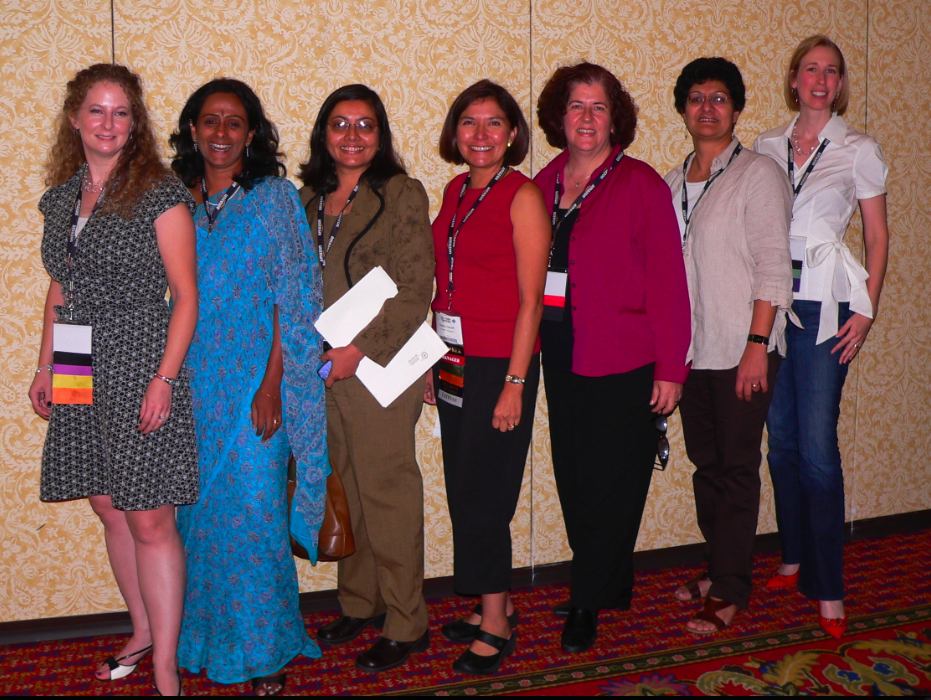
^ Panelists (L->R): Kristin Rozier (NASA); Sumitha Prashanth (Sun Microsystems-India); Radha Ratnaparkhi (IBM); Claudia Galvan (Microsoft); Bev Crair (Quantum, formerly Sun); Meenakshi Kaul-Basu (Sun Microsystems); Lydia Ash (Google) – photo from Meena

Globalization has forced companies to create new processes to empower distributed teams to collaborate. It could mean that individuals have to travel for longer periods of time across the globe, work at odd hours, and work from home or make other adjustments to accommodate a new working lifestyle.

Panelists will discuss and give their perspective on the topic, impact on women, and the technologies and strategies they use to maintain balance.”

This panel at the Grace Hopper Celebration of Women in Computing 2009, run by my colleague Meena, was one of the few sessions at GHC09 that I felt addressed the  practical needs of women currently in technology management: all of the panelists manage geographically-dispersed teams (which are increasingly the norm in high tech).

One theme that came up over and over was the importance of face-to-face interaction, especially for the managers, who therefore end up traveling a lot. Phone conferences, email, and instant messaging simply can’t build relationships in the same way. As Bev Crair said, even for teams that know each other and have worked together for a long time, “Trust breaks down after six weeks of not seeing someone.” I’ve seen this in my own experience of working remotely.

Bev added that relationships can be supported by video conferencing: “We use WebEx a lot.”

But she and others also felt strongly enough about the importance of in-person interaction that (during her time at Sun) she created a rotation program for Sun’s engineering office in China. US-based test engineers visited for three weeks at a time (the company had rented four apartments) and did their regular jobs from Beijing while also mentoring/training Chinese colleagues.

This taught the local engineers Sun standards for engineering, but it also helped the US-based engineers understand local problems so they could better represent their Chinese counterparts when they got back to US.

Kristin Rozier, NASA: “We put a lot of emphasis on face to face” within her small US reearch group. They host an annual symposium where everyone can get together.

Lydia Ash, Google: “As a manager I had to realize that bad news travels much faster than good news.” Solution: over-commuicate rather than under-.

Claudia Galvan, Microsoft: “You need to let go of driving everything from HQ and let the remote sites drive, too.”

Work-Life Balance

Bev Crair: “Working globally means there’s not a hard line between work and home life. I take time for myself and my daughter n the middle of the day. I have to set aside that time.”

Women are about connectedness, so why try to separate work from life?

Sumitha lives with her in-laws (a traditional arrangement in India), who are very supportive of her family and career. She says: “There’s no such thing as work-life balance. You figure it out as you go along. There’s no perfect situation. You have to prioritize. And don’t feel guilty about anything.”

Radha agrees that work-life balance is a myth. But there can be harmony if you have control and a support system (family, friends, community).

Two of the panelists’ daughters wouldn’t want their mothers’ jobs: “Too many phone calls.” One thinks that being an engineer is cool because you get to go to all these exotic places.

Women often end up taking care of family stuff (babies, aging parents), which leads to breaks in their career histories. Being able to “integrate” the personal with the professional is critical. Remote work allows people to deal with things e.g. cultural observations (such as the rituals around a death in the family) while still working. We need to have the tools and processes in place for this to happen.

Question from the audience: All this flexibility needs company support. How real is that?

Answer: Even the [US] federal government offers time off for family situations, e.g. up to 12 weeks to help a parent after surgery.

Tools and Pitfalls

It was mentioned that video conferencing can feel weird because of lag times (at long distance) and the fact that it doesn’t provide a sense of eye contact, because the webcam lens is not where you direct your eyes when you’re looking at the video you’re receiving. “Everyone looks stupid in a videoconference.”

Bev said they have extra monitors which display video streams from other offices, to maintain a sense of presence even when not actively participating in video conferences.

Lacking funding or tools for any of this, one manager said that her group put up photographs of their remote colleagues to enhance a feeling of connectedness. Every little thing can help.

Virtual environments (such as Google Lively and Second Life) can become informal and unprofessional very quickly. It’s important to remember that professional presence matters even in these virtual worlds. In video conferencing, watch out for bedhead and undone laundry in the background; what is the message you are sending by your video presence?

Use tool such as Writely to collaborate in real time on documents.

On the whole, a very useful panel, and I’m grateful to have had the opportunity to learn from these women.
Who’s a Guy?

One session I (and many others) attended at the Community Leadership Summit was on women in technology/communities. Frankly, I lost patience very quickly. As I said then, we all have horror stories; I’m more interested in discussing fixes. (Which, with Sara Ford to get the ball rolling, we did.)

One meme that came up repeatedly during this session was the sexism – or otherwise – of using the term “guys” to refer to a mixed group of men and women. In other words, is it offensive to walk into a room containing both sexes and say: “Hi, guys” ?

Some felt that it was sexist, though probably unconsciously so, others felt that anyone who thought so was being over-sensitive. Impasse.

A few days later during OSCON, I found myself in a Moscone Center women’s bathroom at the same time as one of the women whose job during the conference was to make sure that no unbadged person got into a session. We were the only people in the room. She said to me: “You guys are really rare at things like this.”

It took me more than a few milliseconds to parse this. She meant: “Women at technical conferences are rare.” And used the term “guys” to refer to me and women like me.

Case closed. “Guys” no longer refers to men only, so we can stop arguing about whether it’s sexist.

The First Colorado Front Range Girl Geeks Dinner: Jai Ho!

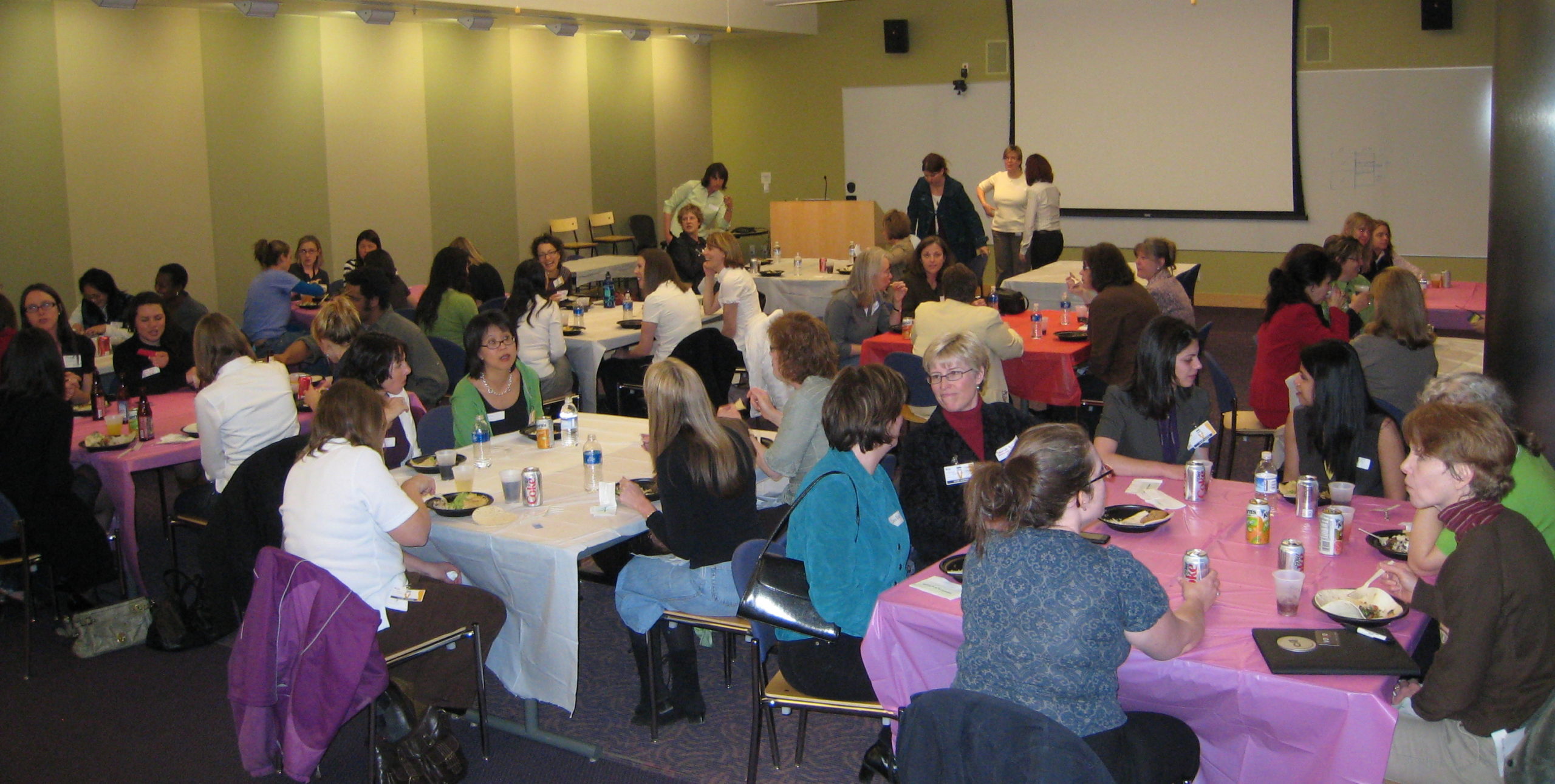
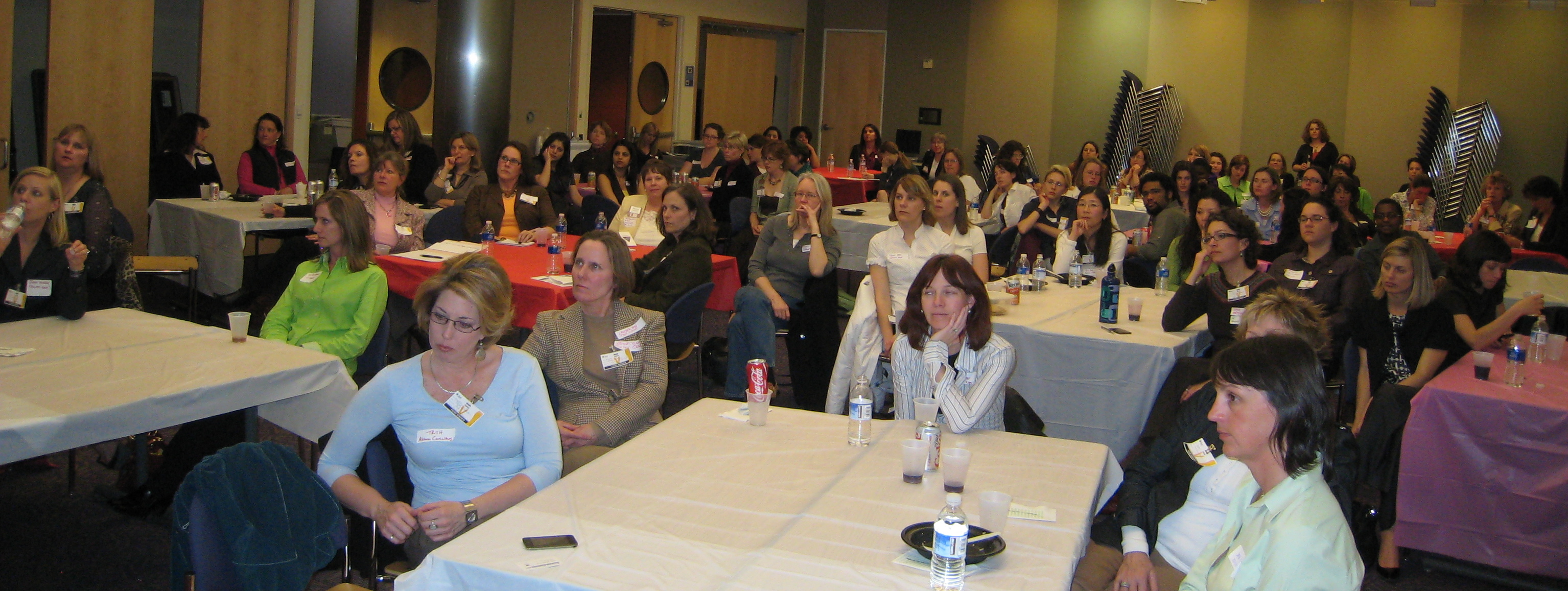
The first Colorado Front Range Girl Geek Dinner was held on Thursday, March 5th, on Sun’s Broomfield campus. More than 80 people attended, only one of whom was (a very brave) male.

Sun sponsored this first one with food, drink, and venue. There was plenty of interest from other individuals and businesses in helping with the next (contact me to be put in touch with the now-being-formed committee). Thanks to the many who helped spread the news (including Jeremy Tanner, who helped get the word out to startups and other smaller businesses). We had at least 80 attendees (probably more – I don’t think we caught quite everybody at the registration desk), and were in touch with several dozen more who couldn’t attend on this particular date but definitely want to participate.

With this kind of momentum, I think the next CO FR GGD can take place in about two months (but I’ll be leaving it up to others to organize that one as I expect to travel heavily from now through July).

The atmosphere in the room was electric and inspiring, and I hope was encouraging for those who had recently lost their jobs (or fear they might soon). Women helping women can be a powerful resource in the workplace, and that’s what Girl Geek Dinners are about.

Colorado GGD

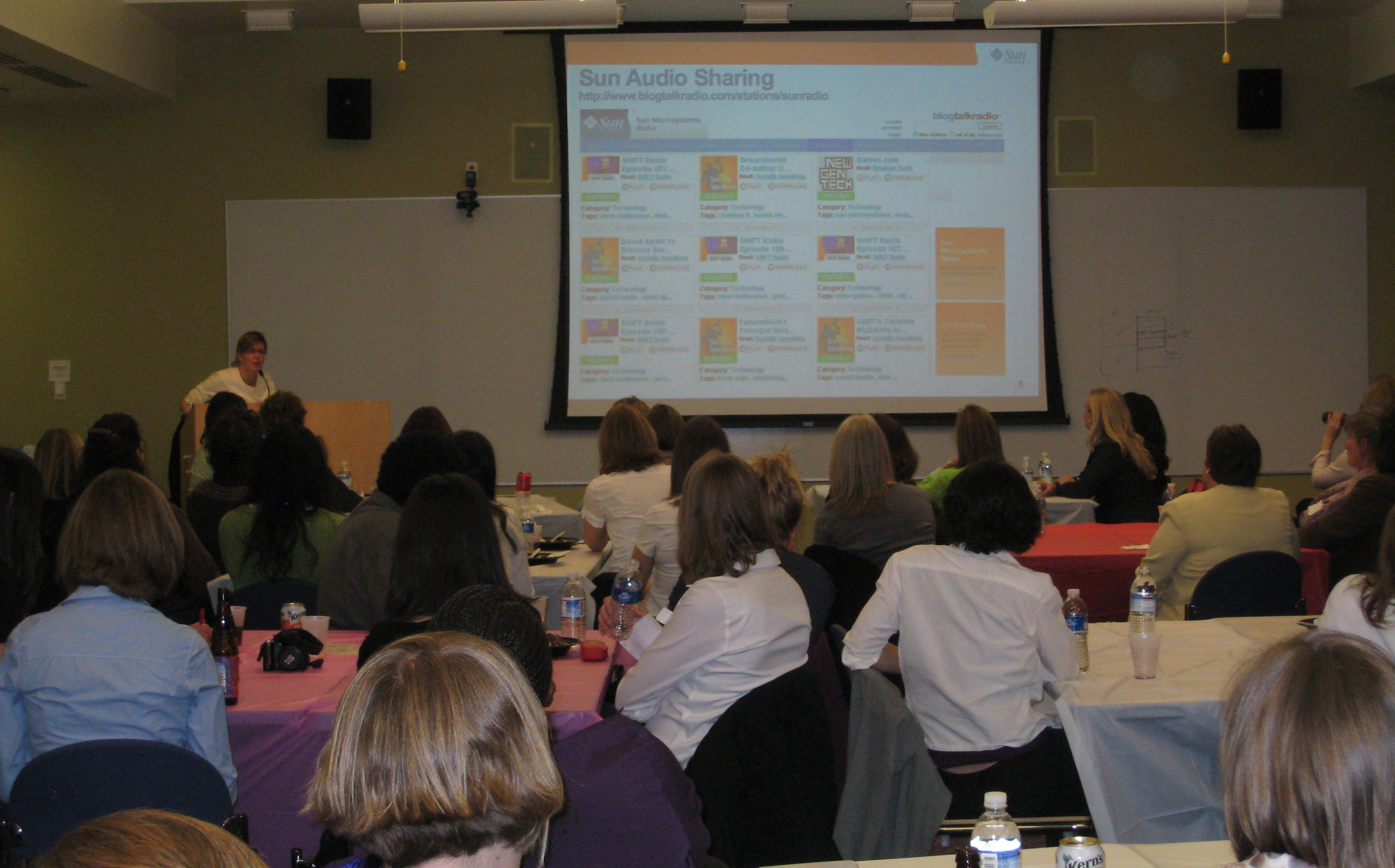
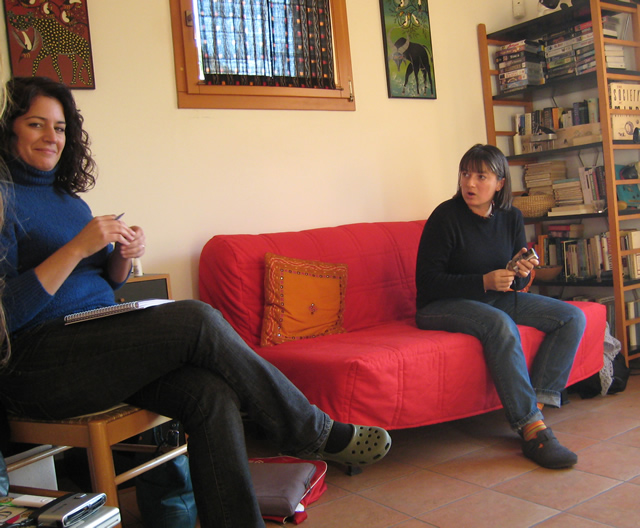
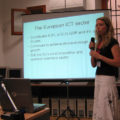
^ listening to Linda, the “voice from on high”

Linda Skrocki put together a presentation which I ended up delivering (with her participating by phone) because she was home with a flu and didn’t want to infect the rest of us.

Our aim was to showcase Sun’s many activities in social media, in order to illustrate how other companies and individuals can use social media to enhance their own brands, win friends and clients, and influence people. Social media is important in just about any job these days, so I hope the information was useful to other women wanting to add to their work skills.


I noted a lot of interest in the room at the idea of managing one’s personal brand and identity online; that might be a topic for a future talk. One attendee wanted to talk more with us about Sun’s “radical transparency” in relation to a project she’s working on. And it seems that people want to hear more about videoblogging, which of course I’m happy to discuss anytime.

Colorado GGD

My only (personal) disappointment was that I was so busy running the show, I had very little time to talk with anybody – and there was a roomful of fascinating women I’d love to know more about. I look forward to making up for that next time!

Thanks to Kristin Tulp of Level3, we had TV coverage, with a segment by Jodi Brooks of CBS4 news (Denver) on Friday night. As part of a series on “Beating the Recession,” the piece talked about how we “Geek Girls” are rallying together to help ourselves and each other in a hard job market. I don’t know whether the segment will be posted on their site. Perhaps if enough of us ask them…? Here’s the transcript: ‘Geek Girls’ Gather In Broomfield For Networking

other coverage:

In case you’re wondering about the title: Jai Ho is the Oscar-winning song from the end titles of  Slumdog Millionaire. The song’s composer, A.R. Rahman, says that Jai Ho translates as “May victory be yours.” Which seems to me a fitting benediction for my fellow girl geeks.

Web Women Weekend

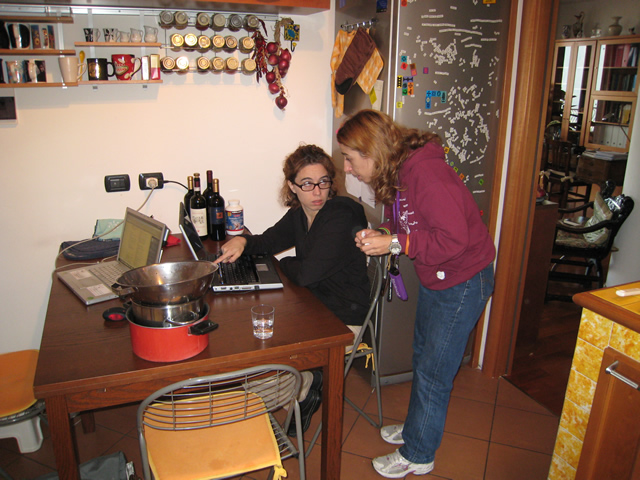
^ top: the finer points of CSS – Tara and Elena in my kitchen

Increasingly frustrated with the low visibility of women in technology in Italy, back in June I and a few like-minded ladies hatched a plan to start doing something about it.

The first step was to get together. So I invited them all up for a weekend at our house (sent Enrico off to visit his mother – yes, he is a supportive husband!).

Turnout was not as large as I had hoped (the house could have slept 14 or so), but those who came were motivated – most had to be, to trek all the way out here.

Friday night it was just me, Tara, and Elena. It had been a long week for us all, so we ate dinner, watched a movie, and went to bed.

The next morning I woke up early (as usual) and got to work cooking (while my computer was compressing video for Sun). Tara and Elena eventually wandered in and set up their laptops on the kitchen table, working separately and together on this and that. It was oddly comforting to have them there while I cooked (usually a lonely activity for me); I’d like to have girl geeks in my kitchen more often!

The crew gradually assembled and introduced themselves:

  1. Tara Kelly, founding partner of PassPack
  2. Elena Franco, aka Delymyth, sysadmin
  3. Silvia Cavallon, a former colleague of mine from Incat days, now a tech support manager for HP
  4. Sara Rosso, Internet Services Manager at Ogilvy Interactive
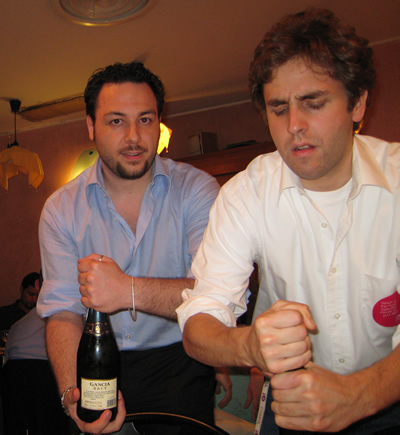
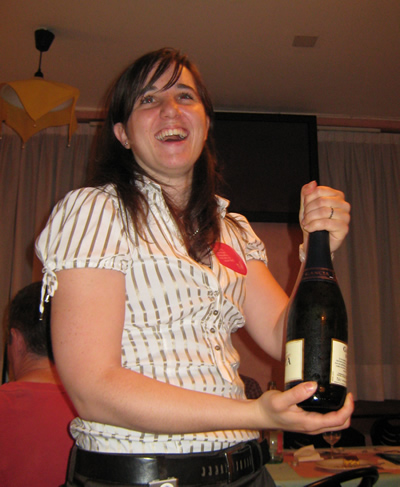
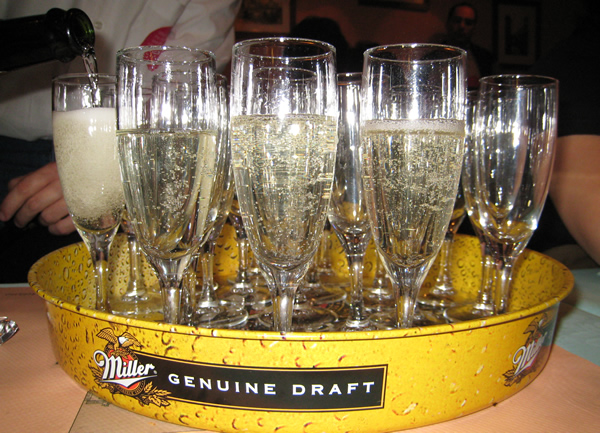
  5. Sara Maternini, corporate blogger and event manager for San Lorenzo, who kindly furnished us with a six-pack of Franciacorta (Italian champagne-method wine)
  6. Celia Abernethy, web designer/builder/programmer and owner of MilanoStyle
  7. Susan Quercioli, a manager of technical projects and people
  8. me

Talk flowed, mostly informally, but that doesn’t mean we weren’t sharing useful information.

There were the expected horror stories:

  • Every woman in Italy knows that being married and in età fertile (of childbearing age) is an enormous handicap in finding a job. It is perfectly legal for a prospective employer to ask your age and marital status (indeed, many job announcements specify the age range they will consider). Italy’s generous maternity leave law has backfired: no one wants to hire a woman who may go out to have a baby, costing the company money. And there are no real protections against discrimination of any sort in the Italian job market.
  • As in many other countries, women in Italy are paid less than men for the same work (and all Italian salaries are low against European averages, especially considering the cost of living here). One of the group, upon requesting a raise, was asked: “Doesn’t your husband earn enough to support you?” As if her work was just a hobby! The reality is that most women in Italy who work do so because their families need their income as much as their husbands’, so, yes, we need (as well as deserve) equal salaries.
  • We see our male colleagues getting jobs, raises, and promotions based on their skills at self-promotion as much as or more than for their actual abilities or work accomplishments – and getting paid more for doing less than we do!
  • And on, and on…

So, yes, there is plenty for women in IT in Italy to be unhappy about. But we didn’t get together just to bitch. The point of the weekend was to discuss what we can do to help ourselves, each other, and the larger community of girl geeks in Italy.

Under Sara Rosso‘s (welcome) leadership, each of us described what we hoped to get out of this event. These included:

  • “How should I write my curriculum to reflect my real-world experience, especially since I don’t have the formal qualifications that companies think they need?”
  • “I’m a female manager in a male world, and I think I can see better, let’s call them more ‘feminine’, ways of managing people. But in my job I don’t have any role models I can look to for advice or examples. I’d like to have someone to talk to about my ideas.”
  • “I’ve been badly underpaid in my career, partly because I find it hard to negotiate, partly because I don’t know the Italian market value of my skills. Where can I get information on salaries and freelance rates, and advice or training in how to negotiate?”
  • “I wanted to change jobs, but I didn’t know enough about possible Italian employers to tell which companies I might actually like to work for.”
  • “It’s great to know that I’m not the only woman in high tech in Italy, and not the only one to deal with these issues. When can we meet again?”

^ Sara Rosso and Susan Quercioli [Susie Q?]

Sunday morning the first-round attendees left, to be quickly replaced by:

  1. Enrica Garzilli, Sanskritist and journalist
  2. Ruhama Zayit, software engineer at TVBLOB
  3. Bruna Gardella, Senior Analyst at Etnoteam Spa

More useful experiences and information were shared (as well as an Indian lunch that I cooked).

At the end of the two days, we had some next steps:

  • Set up an online community where we can discuss and plan. For the time being, this is a Yahoo group.
  • Though we did not explicitly say so, one of the aims would naturally be to get more women to join this community – if you want to join, head on over and ask!

Possible projects for the community:

  • Periodic social events – aperitivi, Girl Geek dinners. A monthly aperitivo in Milan will probably start in November (2nd Tuesdays), organized by Lisa Morris of TVBLOB. And we’re discussing a date and a speaker for the next Girl Geeks Dinner.
  • Practical workshops where we can learn skills we feel we are lacking. One specific suggestion was negotiation – ideally, with role-playing to help us learn how to do it. We need to share info on where we might find people to do such workshops and how we would finance them (e.g., a good friend of mine is the Italy coordinator for the Open University, which might be interested in doing something relevant).
  • Job bank? At the very least, we can start sharing information on jobs we’re aware of via the Yahoo group.
  • Salary bank, with a wide range of both men’s and women’s salaries and freelance rates (in Italy), to help us see how we’re doing and price future jobs and freelance work. Bruna told us that Il Sole 24 Ore already runs quantomipagano.com, which looks very useful but does not cover freelance or contratto a progetto rates. Perhaps we can persuade Il Sole that it’s in everybody’s interest for them to expand their database to include this info. Who has a contact there?
  • Events calendar. Sometimes we don’t go to technical conferences or barcamps because we feel overwhelmed by the vast majority of men there. A shared calendar will let us track events we might be interested in, and encourage each other to go.
  • Speaker lists. Another reason we don’t go to events is because we’re not represented among the speakers – we get tired of being talked at by men. We can develop and maintain a list of women qualified, willing, and able to speak on various technical topics, and, um, gently suggest them when we know about events being organized.
  • Many of us don’t have women technical colleagues we can talk to at work, so we would like to both give and receive mentoring (on specific questions or for general support and advice).

Having this nascent supportive community of women in IT is already proving useful. Had I met Bruna a year ago and talked with her about some Italian IT companies she’s familiar with, I might not have been so much in despair about my job prospects in Italy. Celia said that, had she known us three years ago, she might not have abandoned the web business she enjoyed (and in fact she’s now thinking about getting back into it!).

Your thoughts and contributions welcome!

Pandecena Milano June ’07 – In Which a Cunning Plot is Hatched

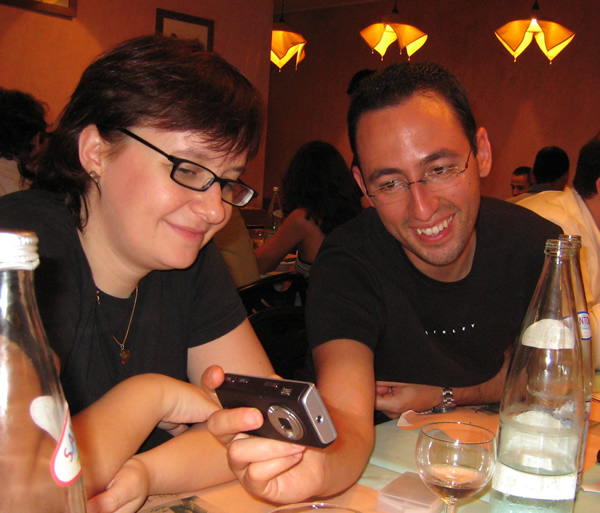
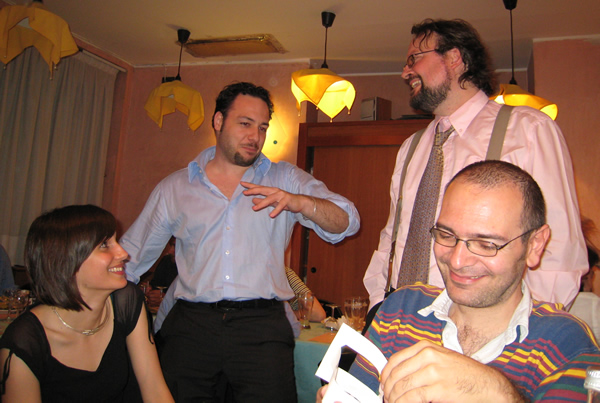
Famed Italian blogger Luca Conti (pictured at top right, showing off his Nokia to Sara Piperita) has pulled off what many bloggers dream of (and quite a few actually do, in other parts of the world): making a living by blogging. Or, at least, managing to get paid for various kinds of consulting (as a result of his blogging) while also running around the country blogging various interesting events he now gets invited to, plus other perks like fancy cellphones. The Italian PR world has figured out that bloggers are influential, and is courting them assiduously – or at least a small fraction of them. I am jealous that Luca’s job now includes boat trips on the Amalfi coast but, hey, it couldn’t happen to a nicer guy. (And I’ve got nothing to complain about: my own professional life is shaping up interestingly lately…)

Whenever Luca comes to town there’s a dinner (Pandecena), and these are excellent occasions for social and professional networking (aka lots of conversation with people I enjoy). This dinner was particularly well-populated because it had been scheduled for the night between the two days of a conference called Web 2.0 Oltre (Web 2.0 – Beyond) being held in Milan at which many of the “usual suspects” of the Italian blogosphere were panelists, speakers, etc. No one in the room had actually paid to attend the conference, for the excellent reason that it cost 1600 euros to do so!

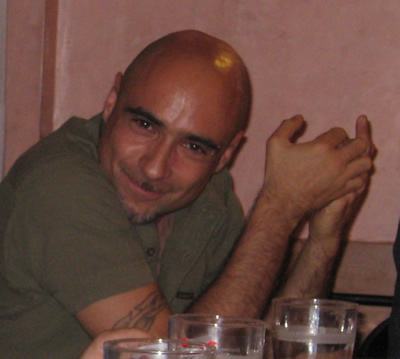
I’ve been using Twitter lately (not today – stuck til I get my password fixed), which breeds an odd sense of familiarity with people I’ve barely met, and, having seen something day-to-day of how their minds work, it’s fun to then spend some face time. One such person at this event was Marco Formento, but the photos I got of him were scary…

I also enjoyed meeting Madga of Spotanatomy, a fun and insightful blog about advertising that has been referenced on this site before.

Quintarelli, Orban

^ A woman I didn’t meet, Emanuele Quintarelli, David Orban, and Marco Palazzo of DueSpaghi, an Italian social network about restaurants. The structure of the site is due to be translated soon, but that doesn’t help with the meat of the matter, the actual reviews. Translation is a thorny problem for websites. It’s so hard (and expensive) to do it well.

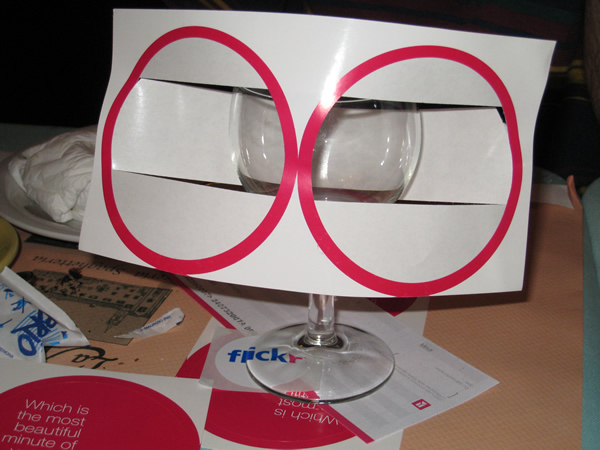
occhiali

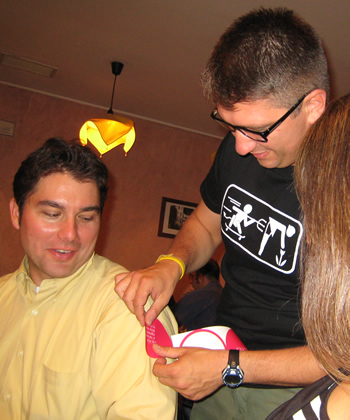
^ Marco had fun with some PR stickers.

^ Thomas Christel, a Chicagoan now living in San Benedetto del Tronto, gets tagged by Lele. How one earth did he end up in San Benedetto, you may ask? (And I did.) The usual story: married into it. But he’s managed to keep a high-tech career going, in addition to running a B&B: Thomas is an executive for Yoo+, an online project management application now in beta testing.

^ I can never resist taking pictures of Fabrizio (Biccio) Ulisse – he’s so damned cute!

^ Emanuele and Luca Mascaro manhandling the spumante, courteously supplied by Reed Business.

I did have a bone to pick with Emanuele. He was (one of? chief?) organizer of the Web 2.0 Oltre conference, which somehow did not manage to feature EVEN ONE WOMAN speaker in two days of talks and panels. I had noticed (and been irritated by) this lack on the Web 2.0 Oltre site months ago, but didn’t know then who was responsible.

later – Emanuele tells me there were three women on the stage: Daniela Cerrato (who was in the original program and I must have overlooked her – my bad), Anna Masera (who was added after I saw the program), and a manager from Renault who spoke about that company’s recent push into Second Life.

I had had a battibecco* with Emanuele a few months ago in his own blog comments about the Italian Web 2.0 boys’ club he (and others) organized. He now came over to ask whether I was happy with the presenza femminile at this dinner.

I counted. Maybe ten women out of 40 people. Not great.

“Is that our fault?” he and David Orban asked.

No, not directly, obviously – anyone who wished could join this dinner. But the women aren’t coming to these events, and we need to figure out why. For starters, about that conference of yours…

Emanuele said something about not knowing any women who could have spoken.

“I’ve been online for 25 years,” I said. “And am now a Senior Web Producer for Sun Microsystems.” At which point he asked for my card.

I probably came off as bitter and aggressive in this exchange – a woman making her points strongly always risks being labelled a bitch. So be it.

I don’t believe that Emanuele (or Lele, who also recently had a restricted-invitation event to organize, and somehow ended up with very few women) is a chauvinist (or, as Italians would say, anti-feminist). But there’s a dangerous mindset in which, when you’re drawing up a list of influencers and experts to consult, invite, etc., somehow the people who come to your mind are all male. Women aren’t consciously excluded from your thinking, but… they don’t end up on your list either, do they? And that perpetuates a vicious cycle in which men are publicly identified as the experts, and women remain on the margins, waiting to be invited to the dance.

Well, I went to a school where anybody who wanted to, got out on the dance floor and danced – both literally and metaphorically. And I am by now too old and wise and bitchy to play the wallflower.

So, ladies, it’s time to do something about it. In October I will be hosting Web Women Weekend, at my home in Lecco. It will be an opportunity for girl geeks / technedonne / web women to get together, have fun, and figure out how we can support each other. (Invitation only, so, if you’re a woman in technology in Italy, let me hear from you.)

And that will be something to celebrate.

^ Coda: I took this picture just so we could start a nasty rumor that Luca only organizes these dinners because he makes money on them.
; ) – just kidding!

* battibecco – “a clash of beaks” – umm… birdfight?

What do you think? how do we get more visibility for women in technology in Italy?