Category Archives: bio

Keeping Cool, Italian Style: Energy Efficiency and Home Safety, All in One

Although it’s hot here in the summer, Italy’s not big on air conditioning, preferring to rely on older methods for keeping cool.

Most Italian buildings are naturally insulated, being made of concrete, brick, or stone. The older they are, the thicker the walls, which of course adds to the insulation. Windows are protected by shutters, whose style varies with location and age of the building. These insulate against the weather, but also protect against thieves (housebreaking is far more common here than street mugging).

Our apartment in Milan had tapparelle: slatted, roll-down shutters operated by a pulley system with a cloth strap that you pulled, hand over hand, to raise or lower them. This was barely within the limits of my strength on our large bedroom window, even though the shutters were made of plastic – we were on the 7th floor, so security wasn’t much of an issue.

My in-laws’ apartment in Rome, being on the first floor, had to have strongtapparelle. The originals were elegant wood, but, when they began to break down with age, this proved very expensive to replace, so the new ones were steel painted a woodish sort of color. Those were even heavier than the wood, so we were thankful for the electric motor that raised and lowered the 3-meter-widetapparella in the living room – until the electricity went out…
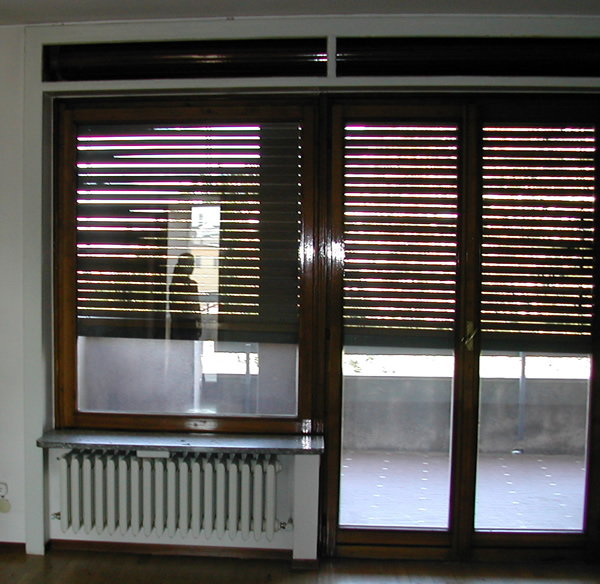
^ Wooden tapparella on our first apartment in Lecco – operated by a hand crank (not visible in this picture), it took forever to open or close. Then the slats started breaking…

The problem with tapparelle as a safety feature is that, to be safe, you have to close them at night – clever Italian house thieves have been known to use sleeping gas on homeowners to ensure easy pickings inside the house. So the shutters in Rome had to be closed, no matter how hot the night. The most you could do was leave them slightly open so that a centimeter or two of air could pass underneath and through the slim cracks between the slats.

Back in Milan, surrounded by other 7th and 8th-floor apartments, we closed thetapparelle for privacy, except on a few summer nights when we were too hot to care if the neighbors saw us naked in the moonlight (it was too hot to wear clothes or have sheets over us on the bed, either). We found a partial solution in putting a new type of frame on the bedroom tapparella, which could be tilted out on a hinge even when the shutter was fully rolled down, so we could get air in under it, and look down into the street, but no one could look across or down into us.

Here in Lecco, most houses have persiane – hinged shutters with fixed, louvered slats pointing downward, so no one can see in, but you still get some light and air. We don’t feel the need to close these most of the time, even though we don’t have curtains: the position of our house is such that no one can look into our windows, unless they use binoculars. But the persiane are useful to keep the sun out while letting air in. On summer afternoons I close everything up on the sunny side of the house – shutters and windows – and the rooms stay relatively cool til the evening breezes come and it’s time to open it all up again.

Note: Yes, we also use fans.

Lecco to Bellagio by Boat: A Beautiful Day on Lake Como

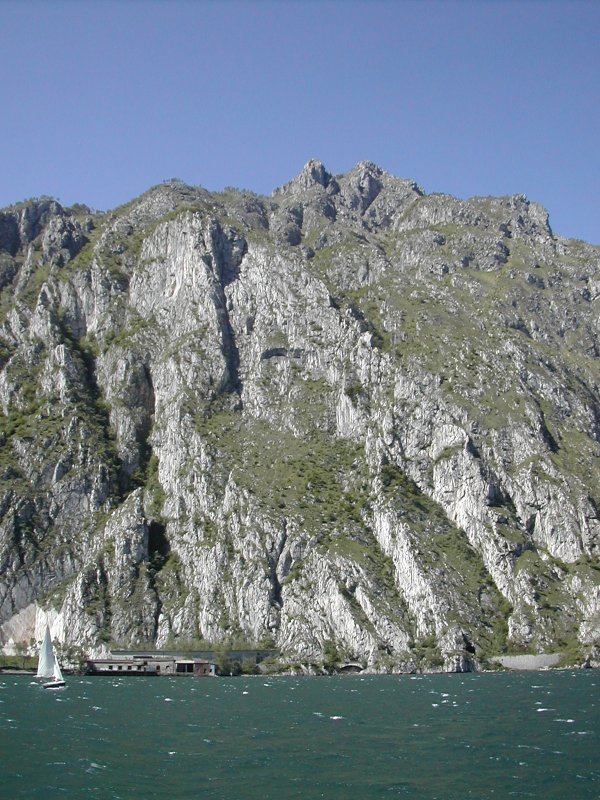
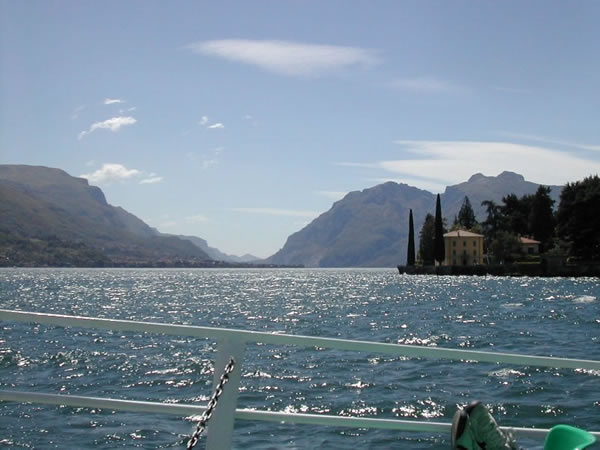
The ferry runs from Lecco (on Lake Como’s southeastern tip) only from spring to fall. The slow boat to Bellagio (one and a half hours) is the best way to see this branch of the lake. With its steep, craggy mountainsides plunging down into the water, it’s reminiscent of a Norwegian fjord.

mountainside from boat on Lake Como, Lecco

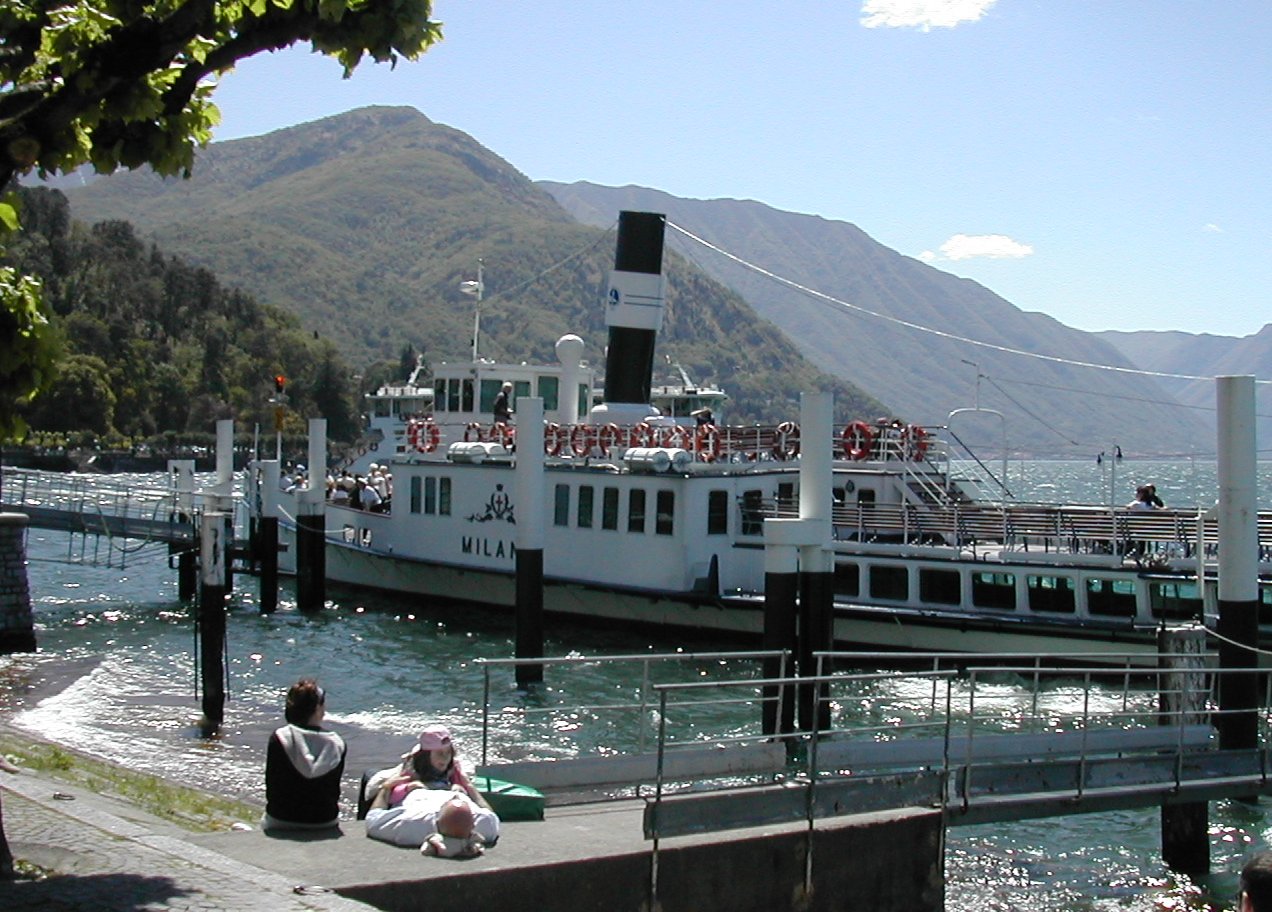
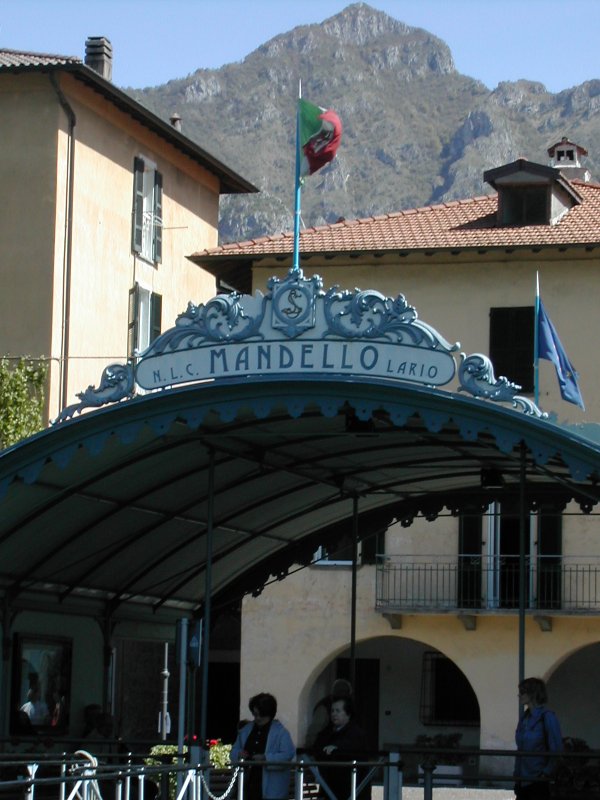
The boat hops back and forth across the lake, stopping first at Mandello.

Mandello boat dock, Lake Como

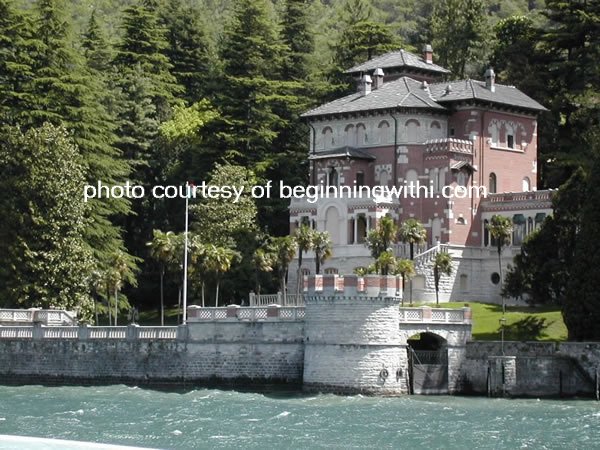
Along the way you see gorgeous lakeside villas (no, not George Clooney’s!):

villa on Lake Como, Italy

Enjoy the fresh air, sparkling water…

view from boat, Lake Como, Italy

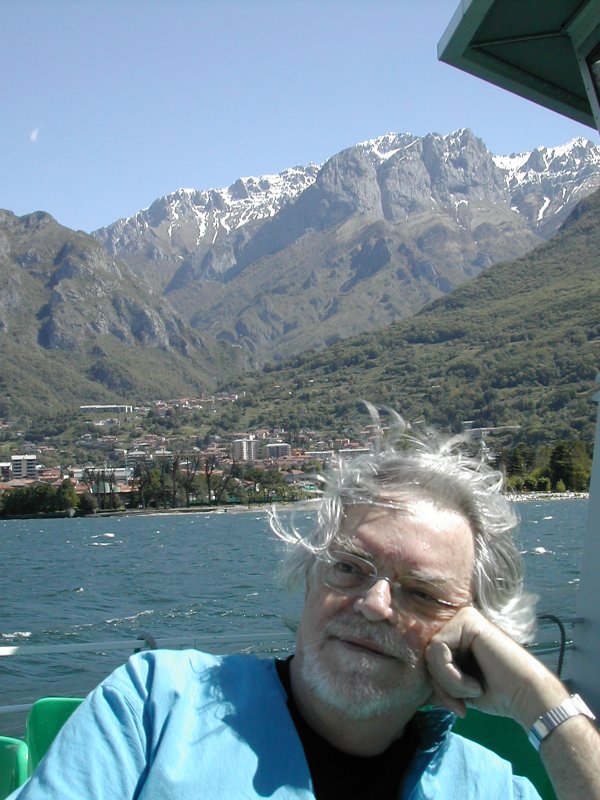
…and warm sunshine…

boat ride on Lake Como, Italy

…arriving in good time for lunch in Bellagio.

Translating Blogs and Finding New Friends – Worldwide!

Note: The images in this post were originally on a Sun site, and were lost in the Oracle transition.

About a year ago, Dan Maslowski had a simple-but-brilliant idea to increase the reach of some of Sun’s Open Solaris Storage blogs: translate them! Sun’s globalization team was initially cautious: they already had their hands full translating interfaces and documentation, and weren’t sure where this blogging thing fit into their scope of work. But they agreed to give it a shot.

We started with Bob Porras’ blog. Based on attendance at Sun Tech Days worldwide, he opted to have it translated into Chinese (first post July 9th), quickly followed by Spanish (first post August 17th) and Russian (August 20th). We’ve recently added Japanese (April 30th) and Brazilian Portugese (May 22nd).

The results were good, though not surprising: traffic increased.

What’s more interesting than the simple increase in page views is the range of countries now represented in Bob’s readership. Here’s a breakdown of traffic by (roughly calculated) language areas:

New entrants Japanese and Brazilian Portugese are already making a noticeable contribution – clearly, there was demand for material in these languages. (Note that “all others” refers to all other countries that have sent traffic to Bob’s blog – folks from these countries are obviously reading one of the six languages so far represented.)

Our geographic reach increased. For example, look at the number of Spanish-speaking countries from which people are reading Bob’s blog each month:

Jun Jul Aug Sep Oct Nov Dec Jan Feb Mar Apr May
3 6 8 8 9 13 8 10 10 12 11 11

The list varies a bit from month to month, altogether 15 Spanish-speaking countries are represented so far:

Andorra
Argentina
Bolivia
Chile
Colombia
Costa Rica
Dominican Republic
Ecuador
El Salvador
Guatemala
Honduras
Mexico
Peru
Puerto Rico
Saint Lucia
Spain
Venezuela

Some of these are tiny countries bringing us only one or two visitors a month – but that’s one or two more people we’re talking to that we weren’t before.

Now let’s look at Storage Stop, a very different kind of blog which we began translating into Chinese in November, but have neglected to since March. Umm, we’ll just claim that was a web traffic experiment, not an oversight, right?

I wonder whether translating Storage Stop is useful, because it’s primarily an aggregator, pointing at material on other blogs (so far mostly in English), and a venue for videos which are so far entirely in English. (We’re looking into ways to translate videos.) For that or whatever reason, Storage Stop never got a lot of traction in Chinese, and I may abandon that experiment to spend translation resources more productively.

Since December we’ve also been translating Scott Tracy’s blog and Lynn Rohrer’s blogs into Chinese.

But it was clear from the overall trends of traffic to Sun storage blogs that our most-valued material is mostly highly technical. So over the last few months we’ve been translating selected posts into various languages. Examples include:

These translations are mostly too recent to draw conclusions; I’ll report back after we’ve got some numbers to analyze.

We also translated one important post by Jim Grisanzio on Building OpenSolaris Communities, into multiple languages. Early returns show that this is having an effect on traffic and, more importantly, as Jim had hoped, it’s opening up new conversations.

Sun’s globalization team are now enthusiastically and ably taking over more of the blog translation process: all I have to do is identify the posts to translate, and they do the rest. With their help, more blogs are being translated all over Sun, in other technology areas such as Sun Cluster.

We’re opening up to the global conversation, and the world is talking back. Sometimes the simplest ideas have the profoundest effects.

Rajdhani Thali: Great Food, Great Price

Last day of shopping in Delhi, Ross and I still had presents to buy, and it had been impossible to get the neo-graduates out of bed at a reasonable hour. So we found ourselves facing a line of state emporiums that were mostly closed for lunch. After a few minutes’ glance around one or two that were still open, we decided to head to Connaught Place to find some lunch for ourselves.

We struck it lucky: right on the corner was Rajdhani Thali, which looked clean and appealing, and proved to be very good.

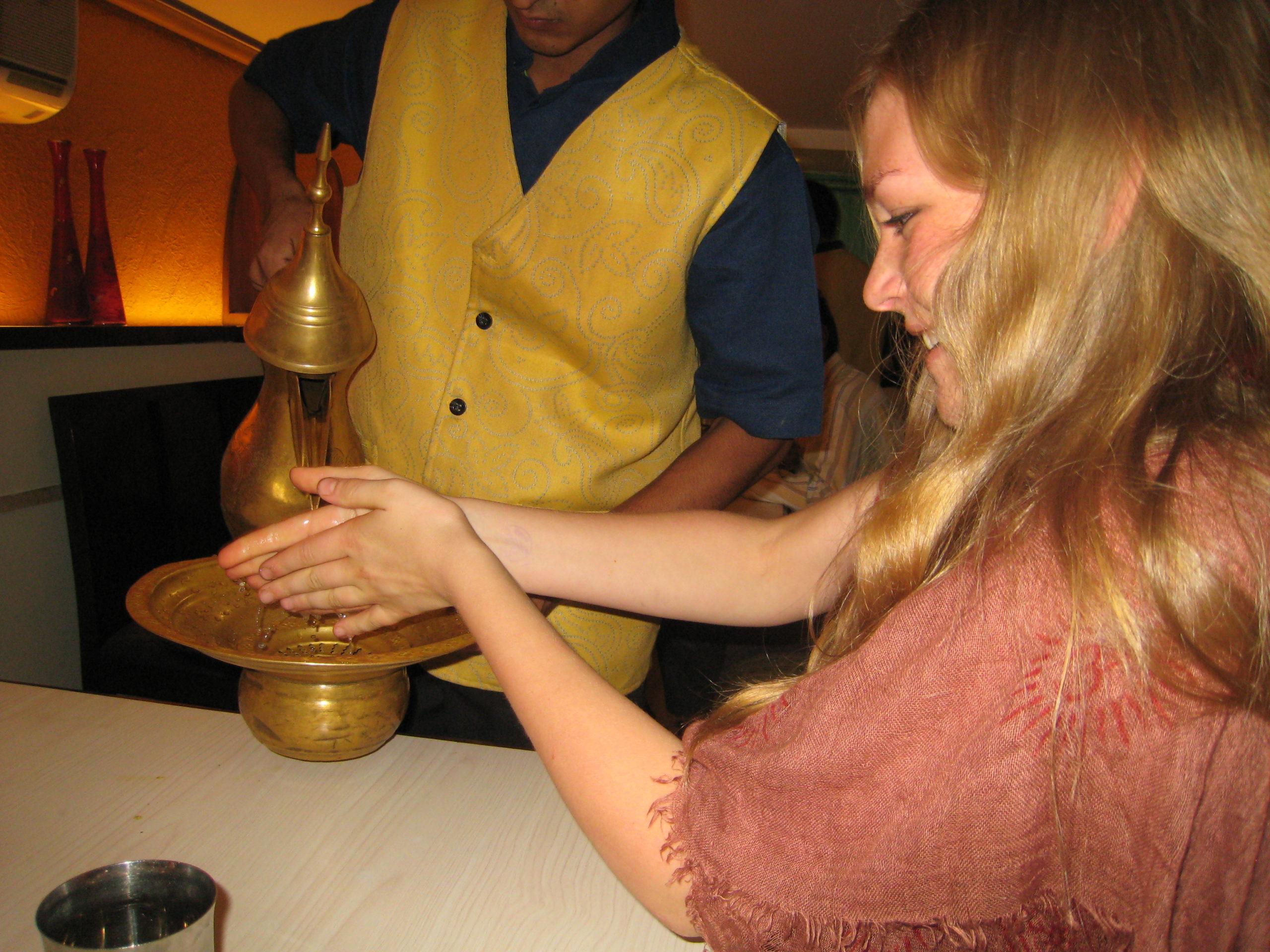
It’s a set meal (which I suppose varies with the day and season), at a fixed lunchtime price of Rs. 168 (about $4) each. After you sit down, a man comes around with a ewer and washbasin so you can wash your hands (because you’re going to be eating with them!).

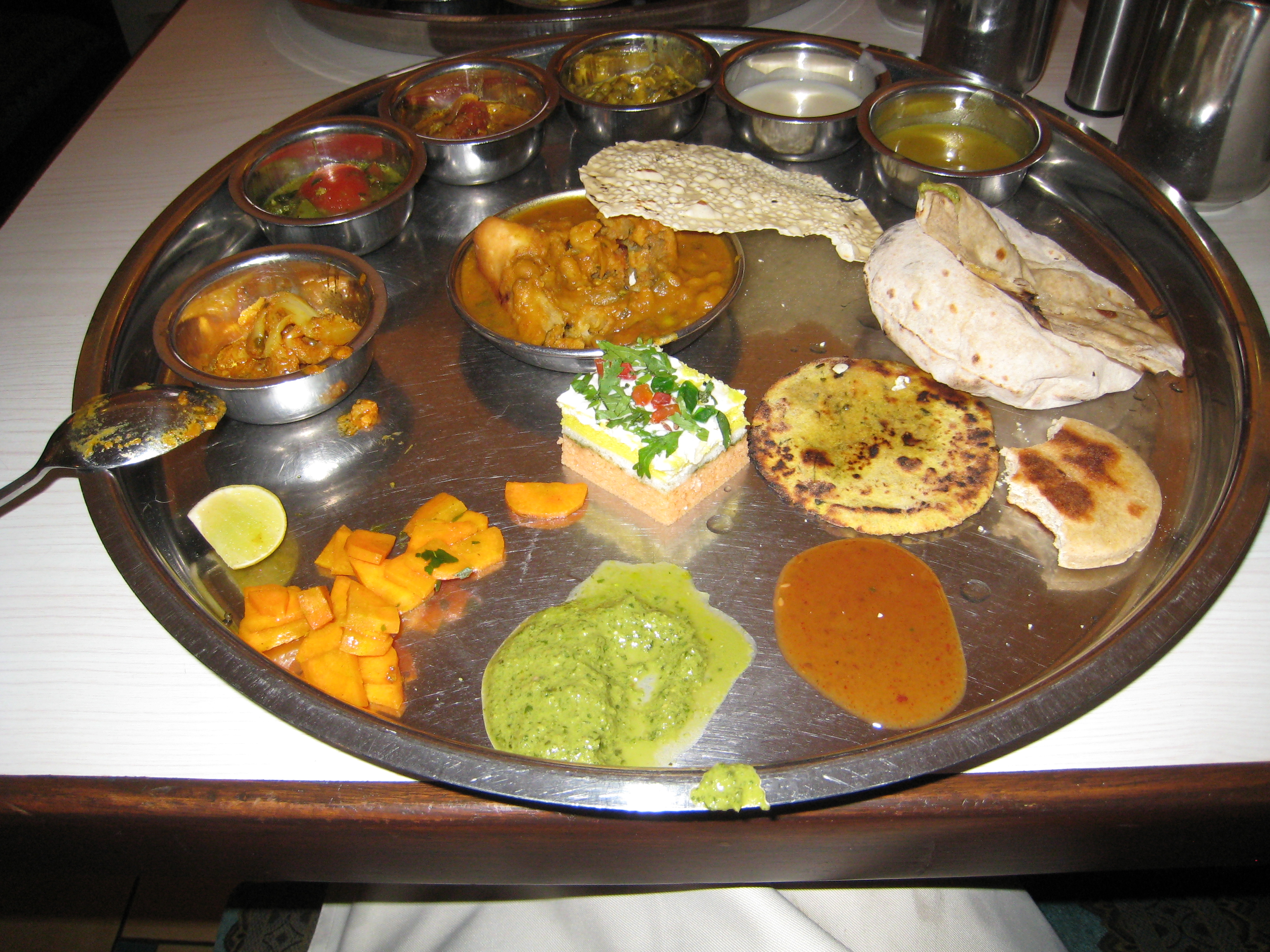
Then the thali – a big, stainless-steel tray – is brought out, empty, with some empty little bowls which are soon filled up by waiters making constant rounds. And they just keep coming, offering various dishes, seconds of whatever you want, and a variety of Indian breads fresh off the griddle. The style is Gujarathi and Rajasthani, not too spicy for most Western palates. I had no idea what most of it was, but it was all delicious (and strictly vegetarian).

Rajdhani Thali

As is usual for Indian restaurants, service was excellent.

Rajdhani Thali is a chain throughout India (and in Dubai). Highly recommended, wherever you happen to find one!

Bollywood, Bangalore

One of my reasons for coming to Bangalore was to work with the Sun Cluster team here on some short films. They had great ideas (no, I’m not going to tell you what they were – don’t want to spoil the fun before the films are edited and released), loads of enthusiasm, and the talent to back it all up.

This was my first attempt to direct anything: usually I just film what’s in front of me as best I can. I’m not sure they really needed me to do it, either, except perhaps as a catalyst. Now that the ball is rolling, I suspect the team will find inspiration to make plenty more films on their own.
Just call me Farah Khan, without the choreographic talents.

It was a privilege and a blast to work with these folks. Once we release these films, we’ll issue a company-wide challenge: I’d like to see whether any other team at Sun can do as well!