Category Archives: what I do

Video: Shooting Presentations

The formal presentation accompanied by slides and followed by Q&A is standard fare at conferences and other corporate settings. It makes sense to capture these on video whenever possible, so that you can re-use the material and get greater returns on the investment that the presenter (and the company) have made in developing the presentation, traveling to the venue, etc.

So what’s the best way to video these things? I have a few suggestions, based on LOTS of experience.

Lighting

The setting is usually a large room with a podium at the front where the speaker rests a laptop. Slides are projected onto one or two screens to the side(s) of the speaker.

These are terrible filming conditions. At large events the speaker may be spotlighted, but more often you’re stuck with room lighting, and have to fight with people who keep wanting to turn that down so   the slides can be read more easily. Resist this tooth and nail: you have enough lighting problems even with the room lights turned up as high as they will go.

Camera Position

I’ve seen people set up a camera at the back of the room, angled to get both the presenter and the projected slides in the frame, on the assumption that this way they’re capturing everything. WRONG. The slides will be illegible at that distance, and the speaker a blurry silhouette. The resulting video won’t be good for much.

My solution is to position my camera close to the front of the room, preferably on the same side that the screen is on, shooting across the room so that the speaker’s face and upper body are framed and NOT silhouetted against the screen.

The front row is ideal, as long as that’s not so close to the speaker that he/she disappears behind the podium, and also taking into account your need to connect to a good sound source. If you can’t be in the front row, you’ll need to raise the camera up enough to shoot over the heads of the audience in front of you. I usually put my tripod on a table, and use the center column to get more height (note, however, that whenever you put a tripod on a table, you are vulnerable to people jiggling the table; it’s a tossup between that and having them trip over the legs if you put the tripod on the floor).

Give yourself room to pan the camera back and forth in case the speaker paces during the presentation. Sometimes you may think the speaker is “tethered” because the podium is on a dais or stage, but don’t count on it – you’d be surprised how mobile some speakers can be in the face of all kinds of obstacles! (NB: I’m happy for speakers to move around, if that feels natural to them – it makes for more entertaining video.)

Because I zoom in on the speaker, the slides are usually not in the picture at all (unless the speaker walks over in front of the screen and gestures at the slide). As you can see in most of the videos I’ve done for Sun, I edit the slides in afterward as video overlays. To make it easier to find the right place to put each slide, during filming I try to note the timing of slide changes.

…or try to get a corner of the screen in your shot so that you’ll be able to see on the video when the slide changes.

Sound

Try to ensure that questions from the audience will be heard on the video, either by the questioners using a floor mic or the speaker repeating the question. You can’t always enforce this, so be prepared to write down the questions as well and edit them in later as subtitles – otherwise you have video of a speaker nodding wisely in total silence, then rattling off an answer that’s unintelligible without the question.

The results of all this will not be the highest-quality video, but, especially if you take care to get good sound, it will be good enough for web use, and people worldwide who could not attend the presentation in person will be grateful that you made it available.

You can see many, many examples of my video work on my YouTube channel.

Party Animal

I never planned to be an event planner, but I do have a lifelong history of entertaining in a big way. This was bred into me during my childhood as an expatriate in places like Dhaka, Bangladesh, where (in 1977) there wasn’t a lot for foreigners to do except invite each other to dinner parties, musicales, etc.

So I grew up assuming that getting a bunch of people together and letting them have fun was a normal thing to do, and worth the effort I put into it. I’ve seldom been disappointed in the results. During high school (an international residential school in India), I helped organize dorm open houses. In college, I threw dinner parties to which I invited students and professors, to the surprise of both. For my 21st birthday, with the help of my roommates, I had a big bash at my aunt’s place in the country outside Austin.

Whenever I’ve had space for it (and even when I haven’t), I have entertained. At home in Italy, Enrico and I were famous for our parties with “exotic” food (Indian, American, or barbecue) and live music (provided by Enrico and friends). Now that I’m living in a (shared) big house in suburban Colorado, I have (Italian) dinner and (Indian) movie nights for friends and colleagues.

As a very active alumna of Woodstock School, I’ve also been involved in the planning and execution of alumni events, and have learned a few hard lessons about how not to do this stuff. (Though I fear I will never learn not to over-order on food, but I guess it’s better to have too much than too little…)

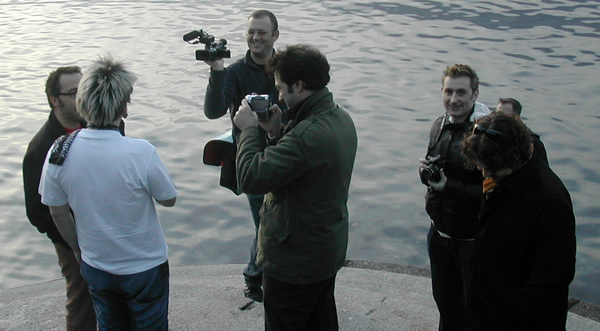
The first big event I worked on that wasn’t strictly personal or school-related was vlogEurope 2006, held in Milan and on Lake Como. That was a lot of work, but I met or re-met a bunch of cool videoblogging folks, and enjoyed taking care of everybody and helping them to get more out of a part of the world that I know very well.

Sun Events

All this considered, it’s not surprising that part of the work I now do for Sun is event planning. My job is about community development, and one of the surest ways to make people bond is to get them together and feed them (along with generous libations, for those who partake). I’ve been working with developer communities, but also with others such as Girl Geeks.

Storage Summits

I was part of the team that organized and ran the first Open Storage Summit in September, 2008, which was such a success that we followed it up with another one – with an even larger attendance – in February, 2009.

Student Events

Sun likes to meet students who are our potential future (and current) users, customers, developers, and colleagues. So we’ve been experimenting with new ways to involve them in industry and community events.

The biggest event I’ve worked on so far was for the benefit of ~400 students who came from all over the world to attend SuperComputing ’08 in Austin. We threw a party for them with great food and great music, but also gave them the opportunity to meet with some of Sun’s HPC developers and marketers – in fact, the Sun folks in attendance were kept busy talking with students the entire night. (I kept busy ensuring the steady supply of barbecue, cupcakes, and entertainment.)

We are now planning something similar for SC09 in Portland, and working with the Broader Engagement program to help bring in wide variety of students from around the world.

But, before that, there’s ISC09 in Hamburg, where we’re planning a Sun HPC workshop to kick off a coding competition, and, of course, a party. Suggestions are welcome on what kind of party and venue the students (probably mostly German) would enjoy.

And, even before that, there’s CommunityOne West in San Francisco, June 1-3. Watch this space for announcements!

The First Colorado Front Range Girl Geeks Dinner: Jai Ho!

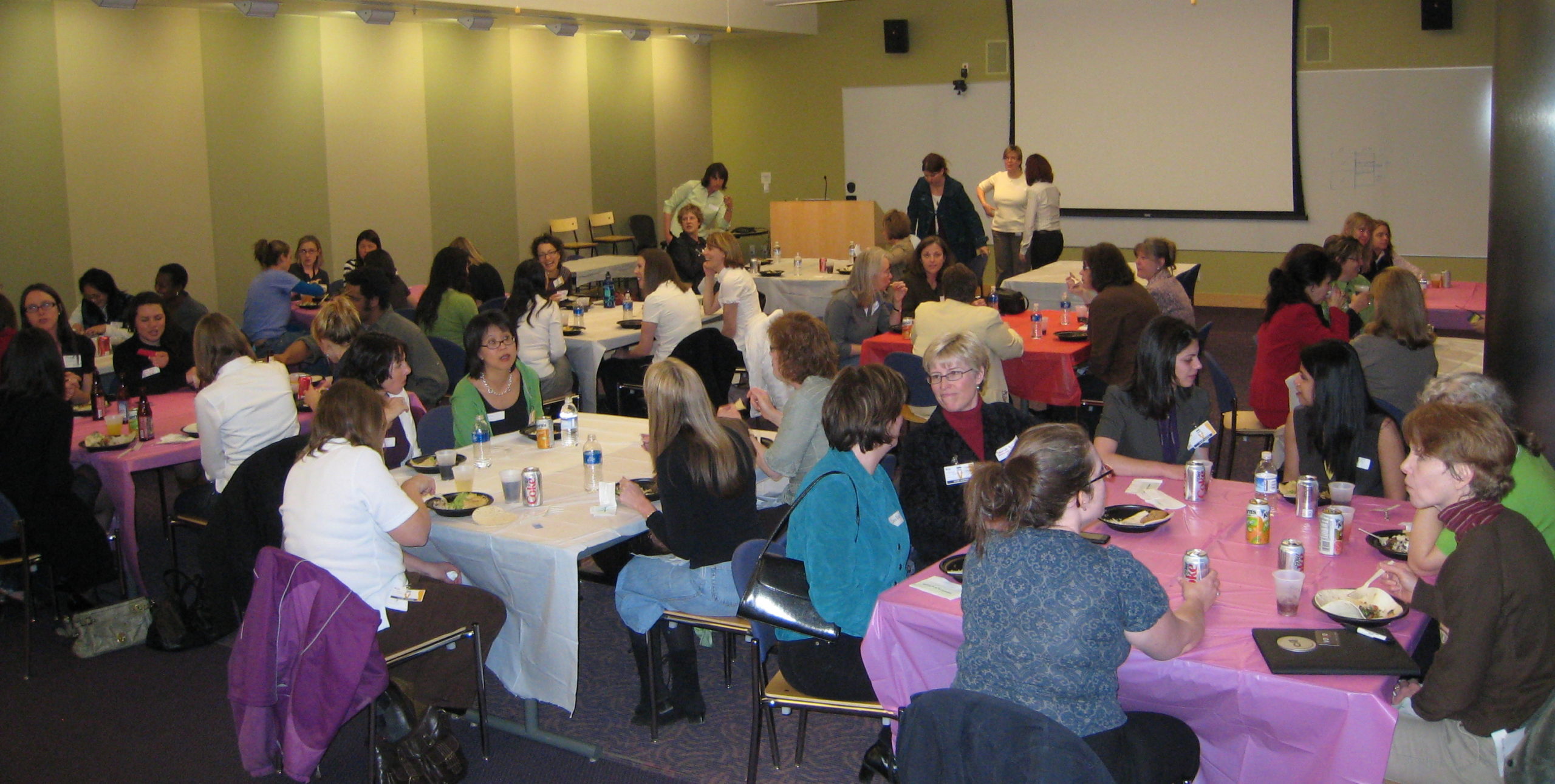
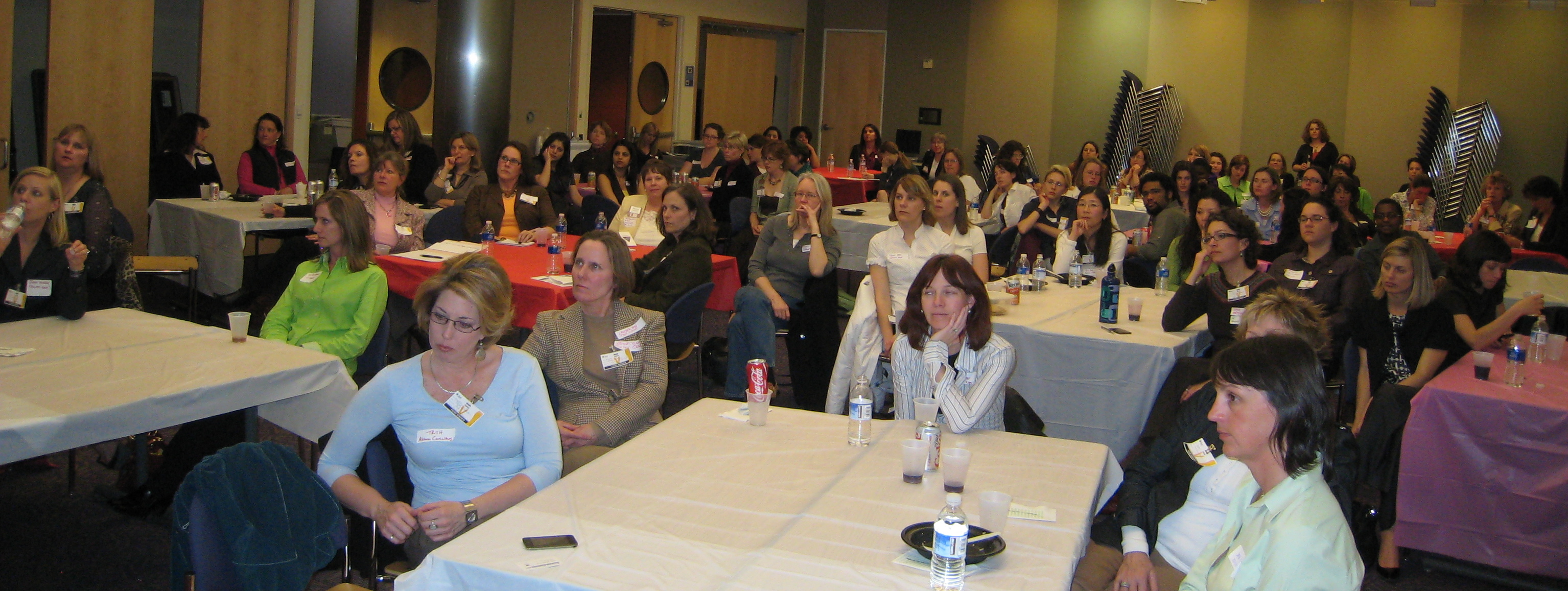
The first Colorado Front Range Girl Geek Dinner was held on Thursday, March 5th, on Sun’s Broomfield campus. More than 80 people attended, only one of whom was (a very brave) male.

Sun sponsored this first one with food, drink, and venue. There was plenty of interest from other individuals and businesses in helping with the next (contact me to be put in touch with the now-being-formed committee). Thanks to the many who helped spread the news (including Jeremy Tanner, who helped get the word out to startups and other smaller businesses). We had at least 80 attendees (probably more – I don’t think we caught quite everybody at the registration desk), and were in touch with several dozen more who couldn’t attend on this particular date but definitely want to participate.

With this kind of momentum, I think the next CO FR GGD can take place in about two months (but I’ll be leaving it up to others to organize that one as I expect to travel heavily from now through July).

The atmosphere in the room was electric and inspiring, and I hope was encouraging for those who had recently lost their jobs (or fear they might soon). Women helping women can be a powerful resource in the workplace, and that’s what Girl Geek Dinners are about.

Colorado GGD

^ listening to Linda, the “voice from on high”

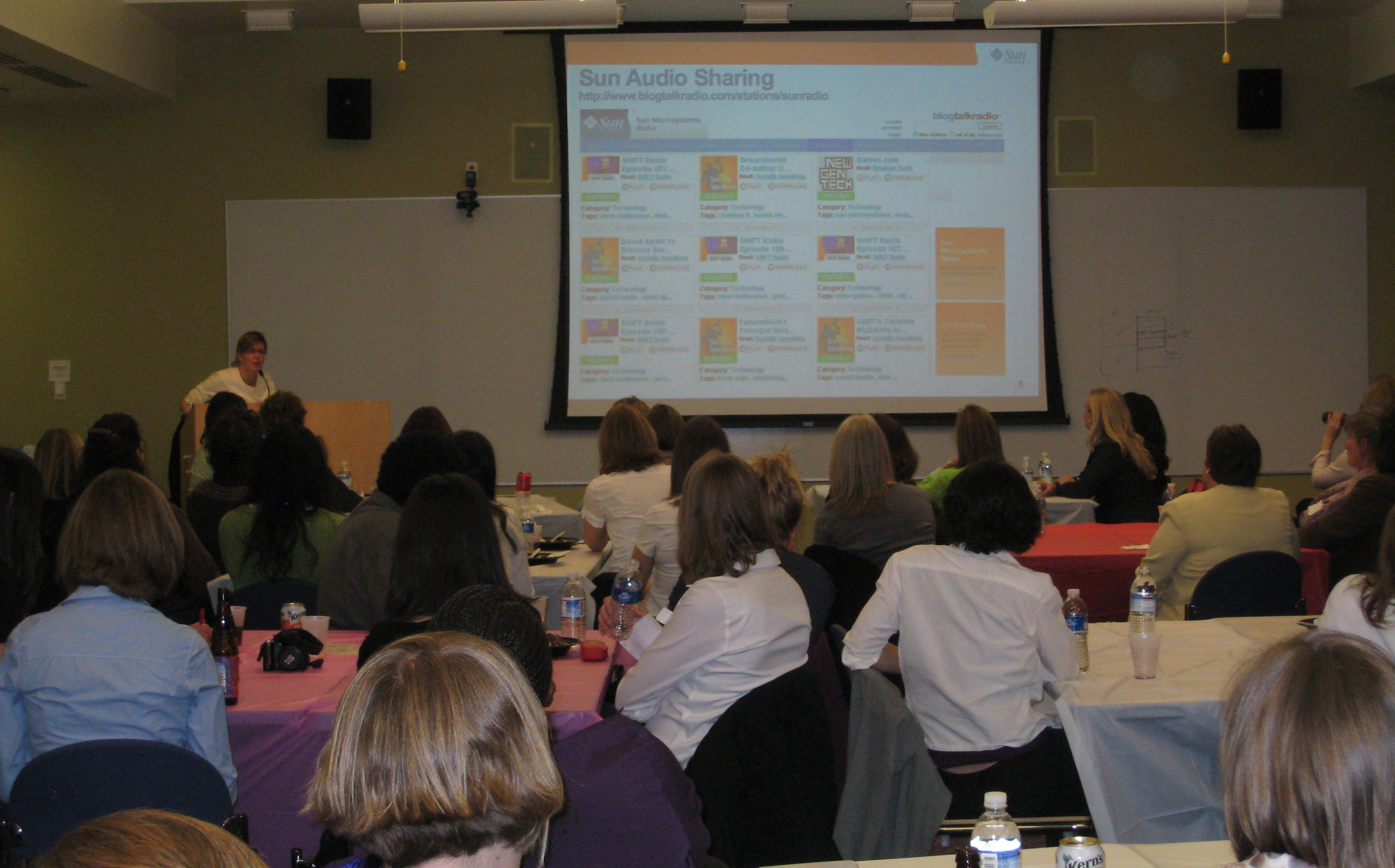
Linda Skrocki put together a presentation which I ended up delivering (with her participating by phone) because she was home with a flu and didn’t want to infect the rest of us.

Our aim was to showcase Sun’s many activities in social media, in order to illustrate how other companies and individuals can use social media to enhance their own brands, win friends and clients, and influence people. Social media is important in just about any job these days, so I hope the information was useful to other women wanting to add to their work skills.


I noted a lot of interest in the room at the idea of managing one’s personal brand and identity online; that might be a topic for a future talk. One attendee wanted to talk more with us about Sun’s “radical transparency” in relation to a project she’s working on. And it seems that people want to hear more about videoblogging, which of course I’m happy to discuss anytime.

Colorado GGD

My only (personal) disappointment was that I was so busy running the show, I had very little time to talk with anybody – and there was a roomful of fascinating women I’d love to know more about. I look forward to making up for that next time!

Thanks to Kristin Tulp of Level3, we had TV coverage, with a segment by Jodi Brooks of CBS4 news (Denver) on Friday night. As part of a series on “Beating the Recession,” the piece talked about how we “Geek Girls” are rallying together to help ourselves and each other in a hard job market. I don’t know whether the segment will be posted on their site. Perhaps if enough of us ask them…? Here’s the transcript: ‘Geek Girls’ Gather In Broomfield For Networking

other coverage:

In case you’re wondering about the title: Jai Ho is the Oscar-winning song from the end titles of  Slumdog Millionaire. The song’s composer, A.R. Rahman, says that Jai Ho translates as “May victory be yours.” Which seems to me a fitting benediction for my fellow girl geeks.

Seth Godin at TED: Tribe and Community

A very cool perk of working for Sun recently was that we had live streams of TED into the three major US campuses. It has long been a dream of mine to attend TED, though for the moment it’s well out of my price range.

I couldn’t break free of meetings to watch during the day, but I was mesmerized by the evening sessions. The first major speaker Wednesday evening was Seth Godin, whose blog I follow from time to time. Not surprisingly, his talk was based on his new book, Tribes, which I probably don’t need to read now (for the record, I haven’t read any of his other books, either).

I took away some ideas that might be useful for those of us at Sun (and elsewhere) who are doing this mysterious and fashionable thing called community building.

Seth started out by asking: “What do we [TED attendees, presumably] do for a living?”

His answer: “We try to change everything.”

In order to foster change, Godin offers the idea of tribes, which “can align large numbers of people” behind a goal or cause. He recommends this cycle:

tell a story -> connect a tribe -> head a movement -> make change -> repeat

He notes that a product that “tells a story” lets its user/consumer tell the story again and perpetuate it.

Godin says that tribes need leaders, most often self-appointed. Leaders should:

  • Challenge the status quo
  • build Culture
  • have Curiosity
  • Connect people to each other (“people want to know they’ll be missed if they go away”)
  • have Charisma (but you don’t need to be born with it; being a leader automatically endows you with charisma)
  • Commit to the cause/tribe/people

So how does this apply to Sun’s efforts to create community around our open-sourced software? Clearly, we had to be the leaders who started this (but that doesn’t mean we’ll always be the leaders of these communities).

You can’t force a community into existence; people have to want to be part of it. But you can make it fun and easy for them to participate, mostly by making it easy for them to connect with each other.

Important Note: Once they’re connected, you don’t get to control what they say to each other! Oh, you can try, but it’s a bad idea because it always backfires. Even when you’re the leader, you’re still only one member of the tribe, and the tribe insists on functioning as a democracy no matter who’s supplying the facilities.

What we can, should, and do do, however, is act as leaders.

Some Days…

We decided to send out the OpenSolaris repositories to OpenSolaris user groups worldwide on iPods. Turns out you can’t copy iPods on a USB duplicator (no big surprise), so I spent three days copying the repos to them individually… Then I made ~240 USB sticks with videos, also for the OSUGs…